
PC Slower Than It Used to Be?
A free scan shows the junk files, broken settings and background clutter dragging Windows down - then fixes them in one click.Free scan · Windows 10 & 11Outdated Drivers Are Slowing You Down
One free scan finds every outdated or missing driver and matches the right update for your exact hardware.Free scan · exact hardware matchiTechGuides is reader-supported. When you buy through links on our site, we may earn an affiliate commission. As an Amazon Associate I earn from qualifying purchases. Learn more
Elaine Hess enrolled her newborn son in England’s voluntary Generation Study. Analysis of an umbilical-cord blood sample flagged a possible C6 deficiency, allowing NHS specialists to arrange confirmatory tests, preventive treatment and family advice before he had a serious infection.
What the Generation Study found in Aidan
After Aidan was born in Derby, researchers used a non-invasive umbilical-cord blood sample collected as part of the Generation Study to analyse his genome. A few weeks later, a specialist clinician told his mother, Elaine Hess, that the screening had identified a possible C6 deficiency.
The call was not a final diagnosis. The finding was referred to NHS specialist teams, which arranged clinical assessment and confirmatory testing. Elaine described the shock this way: “My stomach flipped. You go to instant worst-case scenario but, there was no time for panic because we got access to the consultant quickly, who explained Aidan’s diagnosis and our questions were answered.”
Free tools Windows power users keep installed
One-click scans. No signup required.
What C6 deficiency means for a child
C6 deficiency affects part of the immune system’s complement pathway. Children with the condition can be vulnerable to serious bacterial infections, including meningitis. The value of finding it early is not that sequencing prevents an infection by itself; it gives clinicians time to reduce the risk and make a response plan.
#1 Best Overall
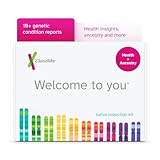
- REVIEW IMPORTANT TEST INFO: There is a lot to consider with genetic testing. Before purchasing, review important information about Genetic Health Risk* and Carrier Status* reports at 23andme. org/test-info. A portion of your purchase may be eligible for FSA/HSA reimbursement***.
- UNDERSTAND YOUR GENETIC HEALTH: Get 10+ Condition reports* that show whether you have genetic variants associated with a higher risk of certain conditions. Includes FDA-authorized reports, and you choose whether to view certain reports.
- PLAN AHEAD WITH 45+ CARRIER STATUS REPORTS*: Discover if you carry a genetic variant for inherited conditions across categories like blood, lung, and hearing health, information you can bring to family planning conversations with your healthcare provider.
- OPTIMIZE YOUR DAILY WELLNESS: See how your genes may influence lifestyle factors like deep sleep, lactose intolerance, genetic weight, and muscle composition.
- MAP YOUR ORIGINS ACROSS 5,000+ REGIONS: Explore your Ancestry Composition, trace maternal and paternal haplogroups (paternal requires a Y chromosome), and dig into your Neanderthal Ancestry. Opt in to find up to 1,500 DNA Relatives, and your Family Tree builds itself automatically.
After specialist assessment, Aidan received preventative antibiotics and additional vaccinations. His family was told to seek urgent medical advice if he developed a temperature or other signs of infection. His sister also had genetic testing, and clinical genetics staff discussed what the result could mean for future children.
Elaine said that opting into the research meant the family learned about Aidan’s condition early and knew what to watch for and how to keep him supported. The experience illustrates why a suspected genomic result must be followed by specialist care rather than treated as a diagnosis on its own.
Rank #2

- REVIEW IMPORTANT TEST INFO: There is a lot to consider with genetic testing. Before purchasing, review important information about Genetic Health Risk*, Carrier Status*, and Pharmacogenetics** reports at 23andme. org/test-info and 23andme. org/test-info/pharmacogenetics. A portion of your purchase may be eligible for FSA/HSA reimbursement***.
- UNDERSTAND YOUR GENETIC HEALTH: Receive 160+ personalized genetic reports, including 50+ Conditions* and wellness reports. Get insights into heart health, metabolic health, mental health, and more. You choose whether to view certain reports.
- TRACK HEALTH GOALS: Health Tracks(SM) show how everyday choices may shape your health over time. Opt in to the Family Health History Tree to input and track information to share with your healthcare provider.
- PLAN AHEAD WITH 45+ CARRIER STATUS REPORTS*: Find out whether you carry a genetic variant for inherited conditions across categories like blood, lung, and hearing health, information you can bring to family planning conversations with your healthcare provider.
- LEARN HOW YOUR BODY MAY RESPOND: FDA-authorized pharmacogenetics reports show how your DNA may impact the way your body processes certain medications**, including some used in heart health and mental health care. Talk to your healthcare provider before making any medication changes.
How England’s Generation Study works
Genomics England is running the study with NHS partners. It launched in 2024 and is scheduled to continue until 2027, with a target of sequencing 100,000 newborns. Whole-genome sequencing is used, but the analysis looks only for changes linked to a defined list of more than 200 rare conditions. These conditions generally appear in early childhood and have an NHS treatment, surveillance or other established care pathway.
Quick wins for a faster PC:
Repair Windows errors before they cause bigger problemsFix Now →Fix the driver behind crashes, sound loss and screen glitchesFind Drivers →Clear out junk files and repair common Windows errorsFree Scan →- Voluntary participation: Parents choose whether their baby takes part.
- Research commitment: The East Genomics explanation says participation lasts 16 years for research purposes, and families can withdraw at any time.
- Expected results: Genomics England says more than 99% of participating babies are expected to receive a “no condition suspected” result.
- Local program figure: East Genomics says about one in 100 babies in its participating-trust context receive a condition-suspected result. That is a program-level figure, not Aidan’s personal probability.
The study does not replace the standard NHS heel-prick blood-spot screen. It is an additional, voluntary research screen with a different set of conditions and a separate follow-up pathway.
Rank #3

- MAP YOUR ORIGINS ACROSS 5,000+ REGIONS: Ancestry Composition breaks down your ethnicity across 5,000+ geographic regions worldwide, the most detailed ancestry breakdown of any consumer DNA service. Ancestry Timeline estimates how many generations ago your most recent ancestor from each population lived.
- FIND LIVING RELATIVES: Opt in to DNA Relatives to see up to 1,500 people in the 23andMe database who share DNA with you, from close family to distant cousins, and message them directly. Your Family Tree builds itself automatically based on your DNA.
- DISCOVER WHAT MAKES YOU UNIQUE: See how your DNA may influence physical features, sensory preferences, and habits across 30+ traits, including cilantro taste aversion to hair texture to deep sleep.
- TRACE ANCIENT MIGRATIONS: Maternal and Paternal Haplogroup reports follow your ancestors' migration paths across continents over thousands of years (paternal haplogroup requires a Y chromosome). Find out how much of your ancestry can be traced back to the Neanderthals.
- PRIVATE BY DESIGN: Your DNA data is encrypted, protected, and always under your control. Enhanced security measures are implemented to keep your information safe. Subject to 23andMe’s Terms of Service and Privacy Statement at 23andMe online.
Newborn genomic screening versus the heel-prick screen
| Feature | Generation Study | Standard NHS heel-prick screen |
|---|---|---|
| Conditions covered | More than 200 selected rare conditions linked to early childhood and an available NHS care pathway | A defined routine set of newborn conditions screened through the NHS blood-spot program |
| Sample and timing | Umbilical-cord blood collected around birth for whole-genome sequencing | A heel-prick blood spot collected in the newborn period |
| Status | Voluntary research screening | Routine NHS screening |
| Meaning of a positive result | A condition is suspected and requires specialist confirmation | An abnormal screen also requires follow-up testing; neither screen alone is a definitive diagnosis |
| Follow-up | NHS specialist review, confirmatory testing and a condition-specific plan | Follow-up through the established NHS pathway for the condition screened |
| Consent and withdrawal | Parents opt in; the study information says families can withdraw during the 16-year research period | Operates under the NHS newborn-screening framework |
| Monitoring after a suspected finding | May include medication, extra vaccinations, surveillance, family testing and genetic counselling | Depends on the condition and the routine clinical pathway |
Why finding a condition early can change treatment
Growth hormone deficiency
A separate Cambridge case shows a benefit outside immunology. Newborn genome analysis identified isolated growth hormone deficiency in Safi Ford. She began treatment earlier and, at 13 months, had grown 15 centimetres since starting it. Her clinicians expected her adult height to be within a typical range if treatment continued. Cambridge Children’s Hospital says about 60 to 150 babies in the UK are born with isolated growth hormone deficiency each year. Her mother said the result avoided unpleasant tests and allowed treatment to start sooner.
Dr Emile Hendriks, a consultant paediatric endocrinologist at Cambridge University Hospitals NHS Foundation Trust, said the study gave the family a clear genetic diagnosis, made it easier to identify the right treatment and helped start it sooner.
Rank #4

- TOP-SELLING CONSUMER DNA TEST: From your origins in over 3,600+ places around the world to the most connections to living relatives, no other DNA test kit delivers an experience as unique and interactive as AncestryDNA.
- YOUR DATA, YOUR CONTROL: We give you full control over your genetic information. You decide what to share, and with whom.
- DNA + TRAITS: Ever wondered where your freckles came from, or why you hate cilantro? AncestryDNA + Traits lets you discover 75+ genetic traits, allowing you to explore how your genes might have influenced a range of appearance, sensory, performance, nutrient, and other personal characteristics.
- A FEW SIMPLE STEPS: Simply activate your DNA kit online and return your saliva sample in the prepaid package to our state-of-the-art lab. Your results will be available online in roughly six weeks.
- ORIGINS AND INHERITANCE: AncestryDNA is the only DNA test that can show your origins results, DNA matches, and traits by each side of the family, without your parents taking a DNA test.
ALD-associated gene changes
In another Genomics England case, a newborn result identified an ALD-associated gene change in Revan. That prompted testing of his four-year-old brother, Thorin. Both boys entered regular blood-test and MRI monitoring before symptoms developed. Carrying the gene change does not guarantee that a child will become ill, but early identification can allow surveillance and, where appropriate, treatment before irreversible complications.
What happens after a suspected result
- Specialist contact: The family is referred to an NHS team familiar with the suspected condition.
- Confirmation: Clinicians use confirmatory genetic, biochemical or other clinical tests to determine whether the child has the condition.
- Immediate protection: If the risk warrants it, the team may prescribe preventive medicine, provide additional vaccinations or set rules for urgent assessment. Aidan’s plan included antibiotics, extra vaccinations and rapid medical review for fever or infection symptoms.
- Family implications: Relatives may be offered testing, and genetics staff can explain possible implications for siblings and future pregnancies.
- Continuing care: Depending on the condition, follow-up may involve regular blood tests, imaging, specialist appointments or treatment adjustments.
Dr Lucy Cliffe, a consultant paediatrician at Nottingham Children’s Hospital, called the possibility of diagnosing primary immunodeficiencies before a baby becomes seriously unwell with an infection “a significant advancement.”
Best Value

- TOP-SELLING CONSUMER DNA TEST: From your origins in over 3,600 places around the world to the most connections to living relatives, no other DNA test kit delivers an experience as unique and interactive as AncestryDNA.
- YOUR DATA, YOUR CONTROL: We give you full control over your genetic information. You decide what to share, and with whom.
- A FEW SIMPLE STEPS: Simply activate your DNA kit online and return your saliva sample in the prepaid package to our state-of-the-art lab. Your results will be available online in roughly six weeks.
- ORIGINS AND INHERITANCE: AncestryDNA provides more precise ancestral origins with greater geographic detail. Our innovative SideView technology takes your results even further by showing your origins and matches by parental side. *Some DNA features require an Ancestry subscription.
- BUILD YOUR FAMILY TREE: Combine what you learn from your DNA results with an Ancestry subscription and gain access to millions of family trees and the world's largest collection of online family history records. *Access to record collections varies depending on subscription level.
What the result does—and does not—promise
A suspected finding can bring anxiety and does not predict a child’s entire future. It cannot guarantee that a child will remain well, and it does not mean every gene change will cause symptoms. Its practical benefit is earlier awareness: families and clinicians can confirm the finding, begin treatment or surveillance when indicated, and know which warning signs require urgent help.
NHS England National Medical Director Professor Frankie Swords said that learning a baby is at risk of a serious condition is incredibly difficult, but knowing early can make a major difference. Genomics England chief executive Professor Rich Scott has similarly said that participating families help establish how genomics can be used safely, responsibly and effectively in the NHS.
For Aidan’s family, the result led to a concrete prevention plan and informed relatives’ care. It is an example of research screening informing clinical action—not a replacement for the NHS heel-prick test and not a diagnosis that should be acted on without specialist confirmation.
Quick Recap
Product prices and availability are accurate as of the date/time indicated and are subject to change. Any price and availability information displayed on Amazon at the time of purchase will apply.

