
iTechGuides is reader-supported. When you buy through links on our site, we may earn an affiliate commission. As an Amazon Associate I earn from qualifying purchases. Learn more
The fastest way to maximize an air conditioner is to improve airflow, control runtime, block heat before it enters, and keep the equipment clean and correctly sized. Start with the filter and thermostat, then address vents, sunlight, fans, ducts, installation and maintenance. The right procedure depends on whether you have central HVAC or a room unit, so do not apply central-system advice to a window or portable air conditioner without checking its manual.
These steps target comfort, energy use and equipment life. Published savings are not guarantees: climate, utility rates, equipment condition, insulation and household behavior all change the result.
Know which air-conditioner advice applies to your system
Central air conditioning cools multiple rooms through supply ducts and return grilles. A window or portable unit cools one zone and generally has its own controls, filter and airflow path. The maintenance target, capacity decision and sealing work are therefore different.
| Decision area | Central HVAC | Room or window AC |
|---|---|---|
| Controls | A wall thermostat usually controls the system; programmable or smart models must be compatible with the equipment and wiring. | The unit’s control panel or remote normally sets temperature, mode and fan speed. A whole-home thermostat may not control it. |
| Airflow | Air moves through supply ducts and return grilles. Blocked registers, dirty filters or leaking ducts reduce delivery. | Air moves directly through the appliance. The filter, coils, intake and discharge must remain unobstructed. |
| Where sealing matters | Seal and insulate ducts, especially in attics, crawlspaces, garages and unheated basements. | Seal the window opening or exhaust connection and follow the supplied mounting and insulation instructions. |
| Capacity | Use the system’s design and whole-home load; do not compensate for poor airflow by selecting colder settings. | Match capacity to room area, sun exposure, shading, occupants and heat from cooking appliances. |
| Off-season care | Keep the outdoor component clear and arrange annual service. | Removable units may need careful removal, storage or winter protection according to the manufacturer. |
How can I maximize my air conditioner?
1. Clean or replace the filter on a schedule
A dirty filter restricts airflow, so the equipment runs harder to deliver the same cooling. ENERGY STAR recommends checking the filter monthly during heavy-use periods and replacing it when dirty; its general guidance is to replace at least every three months. Treat that as a minimum reminder, not a universal interval.
#1 Best Overall
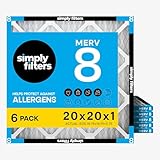
- Universally Compatible: Measuring 20" x 20" x 1", with an actual size of 19.75"x19.75" x 0.75", Simply Filters works with almost any brand. Comparable to 3M Filtrete MPR 600, Filterbuy AFB Silver, and Honey well FPR 5.
- Cleaner Air Everywhere: Our filters capture dust, mold, pet dander, and pollen in homes, offices, schools, hospitals, and commercial spaces, trapping 90% of airborne particles, promoting a healthier living environment with clean and fresh indoor air.
- Advanced Pleated Technology: With a higher pleat count than most retail, our meticulously crafted filters offer superior capture coverage, optimizing airflow and efficiency.
- Long-lasting Filtration & Easy Installation: Enjoy up to 3 months of resilient filtration. Hassle-free replacement for air conditioning units or HVAC systems. Follow airflow arrows and insert into the filter slot for central units or return grilles.
- Made in USA: Our filters are made using 100% American components, including recycled materials, ensuring superior performance and quality. Experience exceptional filtration and support local manufacturing.
Use the size and filter type specified for your equipment. A filter that does not fit can let air bypass it or create excessive resistance. Turn the system off before removing the filter, note the airflow arrow, and install the replacement in the correct direction. For a room unit, use the access panel and cleaning method described in its manual. The U.S. Department of Energy’s 2016 HomeCooling101 guidance says routine filter cleaning or replacement can lower an air conditioner’s energy consumption by 5–15 percent; that is an attributed range, not a promise for every home.
2. Set the temperature only as low as comfort requires
Every degree of extra cooling can add runtime, so choose the highest setting that feels comfortable rather than treating the thermostat as a race to the lowest number. ENERGY STAR’s room-air-conditioner guidance uses 78°F as a typical comfortable setting, but comfort, humidity, health needs and local conditions differ.
When the home or room is unoccupied, reduce unnecessary cooling if your equipment and household requirements allow it. Avoid repeatedly changing the setting by large amounts; use a predictable schedule and allow the system time to reach the target. A colder setting does not make an air conditioner cool at a faster maximum rate; it simply asks for cooling for longer.
The Tool Desk
Outbyte PC Repair FREERepair Windows errors before they cause bigger problemsFix Now →Outbyte Driver Updater FREEFix the driver behind crashes, sound loss and screen glitchesFind Drivers →3. Add a compatible programmable or smart thermostat when it fits
A schedule can reduce runtime while everyone is away or asleep, but thermostat compatibility is system-specific. Check the air-conditioner and heating equipment requirements, wiring, power needs and manufacturer instructions before buying or installing a control. Some central systems use staged cooling, heat pumps or proprietary wiring that a generic thermostat cannot operate correctly.
Rank #2

- Manufacturer: THERMWELL
- Manufacturer Part Number: F1524
- Frost King Washable Foam Air Filter For Air Conditioners, 24X15X1/4 In. - 471002
- 15-Inch X 24-Inch X 1/4-Inch Air Conditioner Filter
- Frameless Polyurethane Design
Room units generally rely on their own controls rather than a central thermostat. ENERGY STAR reports that homes with high heating and cooling bills or that are unoccupied much of the day may save approximately $100 per year with a certified smart thermostat. That figure is a program estimate for qualifying situations, not guaranteed personal savings. The useful feature is the schedule; connected features do not compensate for an incompatible installation or an unrealistic temperature target.
4. Keep supply vents, returns and the unit’s intake clear
Furniture, rugs, curtains and boxes can block the path between the air conditioner and the room. Keep central supply registers open and unobstructed, and leave return grilles clear so air can circulate back to the system. Closing several registers may increase pressure and make distribution worse rather than directing more cooling to one room.
For a window or portable unit, leave space around the intake and discharge specified by the manual. Do not drape fabric over the appliance or push it against shelving. If one area continues to receive weak airflow after the filter and grilles are clear, investigate the cause instead of continually lowering the thermostat; persistent restriction can require professional diagnosis.
What’s actually slowing this PC down?
Pick the symptom - the matching free tool is one click away.
5. Seal and insulate central-system ducts
Leaky ducts can lose conditioned air before it reaches living spaces and can draw dusty or hot air into the system. Prioritize accessible ductwork in attics, crawlspaces, garages and unheated basements, where temperature differences are greatest. A qualified contractor can inspect joints, connections and insulation and use materials intended for duct sealing.
Rank #3

- MAKE YOUR HOME YOUR SANCTUARY: 2-pack of 3-month pleated Filtrete 20x25x1 MERV 11 MPR 1000 AC Furnace Air Filter helps capture unwanted particles from your household air to contribute to a cleaner, fresher home environment
- EXCLUSIVE TECHNOLOGY: Designed with Filtrete 3-in-1 technology to pull in and trap unwanted particles, allowing cleaner air to flow through
- COUNTLESS MICROPARTICLES: With a 1000 MPR and MERV 11 rating, your Filtrete Filter will help capture many microparticles from the air passing through it
- CERTIFIED: This furnace filter is CERTIFIED asthma and allergy-friendly (2) and helps capture dust, lint and other allergens in your household air
- CHANGE YOUR FILTER OFTEN: For optimal performance, make sure to change your filter at least once every 90 days
ENERGY STAR says sealing and insulating ducts can improve heating and cooling system efficiency by as much as 20 percent, and sometimes more. That is potential system-efficiency improvement, not a guaranteed 20 percent reduction in your utility bill. Room air conditioners do not have a house duct network; their equivalent sealing task is making the window opening or exhaust connection fit tightly as directed.
6. Block direct sunlight before it becomes indoor heat
Solar gain through glass can make a room feel hot even when the air conditioner is operating normally. Close shades, blinds or drapes on sunny windows during the warmest part of the day, especially on the side of the home receiving direct sun. Exterior shading is often more effective because it stops some heat before it passes through the glass, but use the window treatments and ventilation practices appropriate for your home.
Keep window coverings from blocking a central supply register or a room unit’s intake. The goal is to reduce heat entering the space without restricting the air conditioner’s airflow.
Quick wins for a faster PC:
Repair Windows errors before they cause bigger problemsFix Now →Scan for outdated or missing drivers - takes under a minuteDriver Scan →7. Use fans to improve perceived comfort, then switch them off
Fans move air across skin and can make occupants feel cooler without lowering the room temperature. The Department of Energy says a ceiling fan can allow a thermostat setting about 4°F higher without affecting comfort. Use that flexibility to reduce compressor runtime, not to cool an empty room.
Rank #4

- Cut to Fit: We offer you two larger sizes of air conditioner replacement filters, 15.7" x 27.6" and 15.7" x 59". The larger size allows for more cutting and use. You can cut it according to your home needs to fit various air conditioners and purifiers.
- Experience Cleaner Air: Our cut to fit foam pad pre filter efficiently captures large particles such as hair and dust, protecting your filter and prolonging its lifespan. It eliminates impurities like pet hair, lint, smoke, and VOCs, leaving fresh, breathable air behind. This ensures a safer environment for pets, kids, and families.
- Thickness of 5/16 in: Unlike other ultra-thin cut to fit air filters, our window air conditioner filters are 5/16 in thick, which can effectively block large particles and provide a better filtration effect. After use, you can clean it and use it again to extend its service life.
- Compatible Design: Our air conditioner foam filter is suitable for various appliances like air purifiers, Air conditioners, range hood filters, humidifiers, vents, computer mainframe fans, etc. The cuttable design allows it to be compatible with a variety of most electrical appliances.
- Warm Reminder: Since we are vacuum packaging, we recommend that you disassemble the foam pad pre filter and leave it for 2-3 days until it fully rebounds before using it. We recommend replacing the carbon filter every 1 to 2 months for a better purification effect.
DOE’s HomeCooling101 guidance puts it plainly: “Turn off your fans when you leave the room — fans cool people, not rooms.” Set ceiling fans to the direction recommended for warm weather by the manufacturer, and use a room unit’s fan setting when it improves air distribution. Fans do not remove heat or humidity, so they supplement an air conditioner rather than replace it.
8. Choose room-unit capacity for the space, not the biggest number
For a window or portable air conditioner, follow the current ENERGY STAR room-area sizing guidance and adjust for conditions the table identifies: strong sun, heavy shade, the number of occupants and heat from a kitchen. Measure the room or connected area that the unit is expected to cool rather than guessing from its appearance.
An oversized unit can lower the air temperature quickly but shut off before removing enough moisture, leaving the room clammy. An undersized unit may run continuously and still fail to reach a comfortable temperature. Capacity is therefore a comfort and humidity decision as well as an energy decision. Central systems require a whole-home load and distribution assessment; do not use room-unit sizing rules to select a replacement central system.
9. Install a window unit tightly and according to its instructions
Correct installation prevents outdoor heat and air from bypassing the appliance. Follow the supplied mounting brackets, side-panel insulation and weather-sealing directions. Keep the unit level in the orientation specified by the manufacturer, support its weight as directed, and close gaps around the sash or frame.
Best Value

- 20x25x1 AIR FILTER FOR FURNACE & AC SYSTEMS - Filtrete MERV 5 furnace filters designed for standard HVAC systems. Each 6-pack includes filters with actual dimensions 19.69" x 24.69" x 0.81." Compatible with furnace and air conditioner units requiring 20x25x1 size filters for whole air filtration
- MAKE YOUR HOME YOUR SANCTUARY: 6-pack of 3-month pleated Filtrete 20x25x1 MPR 300 AC Furnace Air Filter helps capture unwanted particles from your household air to contribute to a cleaner, fresher home environment
- DIFFERENT FROM NOMINAL SIZE: Slightly different from the nominal size, this air filter’s exact dimensions are 19.69 x 24.69 x 0.81
- EXCLUSIVE TECHNOLOGY: Designed with exclusive Filtrete 3-in-1 technology to pull in and trap unwanted particles, allowing cleaner air to flow through
- COUNTLESS PARTICLES: With a 300 MPR and MERV 5 rating, your Filtrete Filter will help capture many particles from the air passing through it
Keep lamps, televisions and other heat sources away from the unit’s thermostat because nearby heat can make the control sense a warmer condition than the rest of the room. Do not improvise supports or block drainage paths. At the end of the season, follow the manual for removal, storage or a protective cover; a removable unit may need different care from a permanently installed model.
10. Perform only basic outdoor and drain maintenance
For a split central system, switch the equipment off before clearing leaves, grass and other debris from around the outdoor component. Maintain the clearance specified by the manufacturer and do not bend delicate fins while cleaning. Check accessible drain channels for blockage and look for standing water or visible overflow.
These are homeowner-level inspection tasks, not an invitation to open electrical compartments or handle refrigerant. A room unit’s filter, intake and exterior surfaces can usually be cleaned using the procedure in its manual. Stop if cleaning requires disassembly beyond the documented access panels or if you see damaged wiring, oil-like residue or repeated water leakage.
Free tools Windows power users keep installed
One-click scans. No signup required.
11. Schedule an annual tune-up and use a professional for repairs
ENERGY STAR recommends yearly system maintenance. A qualified technician can inspect operation and connections, clean components that are not intended for routine homeowner access, verify controls and identify developing problems before peak cooling demand. Schedule service before the hottest part of the season when possible.
The Department of Energy advises hiring a trained professional for work beyond basic maintenance, including refrigerant leaks, recharging, electrical repairs and sealed-system faults. Do not attempt to charge refrigerant, open energized components or bypass safety controls. Give the technician the model information, symptoms, filter history and any error codes so the visit can focus on diagnosis rather than guesswork.
Independent reader supportYour contribution helps us test, update, and keep practical guides available for everyone.A practical order for improving efficiency
- Start with airflow: inspect the filter, clear vents and returns, and verify that a room unit’s intake and discharge are unobstructed.
- Set controls: choose a realistic comfort temperature and create an away schedule when compatible with the equipment.
- Reduce heat gain: close sun-facing shades and use fans only in occupied rooms.
- Address the system type: inspect central ducts for sealing and insulation needs, or correct the fit and insulation around a window or portable unit.
- Maintain safely: clear outdoor debris and accessible drains, then arrange annual professional service for work beyond the manual’s basic tasks.
Track comfort, runtime and utility use after each change rather than assuming a published percentage will appear on your bill. The 5–15 percent filter figure, up-to-20-percent duct-efficiency figure, approximately $100 smart-thermostat estimate and 4°F fan guidance come from the agencies named above under their stated conditions; household results will vary.
Quick Recap
Product prices and availability are accurate as of the date/time indicated and are subject to change. Any price and availability information displayed on Amazon at the time of purchase will apply.

