
What’s actually slowing this PC down?
Pick the symptom - the matching free tool is one click away.
iTechGuides is reader-supported. When you buy through links on our site, we may earn an affiliate commission. As an Amazon Associate I earn from qualifying purchases. Learn more
Yes, a magnetic stirrer can affect your results—but the effect depends on the reaction, sample, vessel, bar, speed and setup. A 2025 JACS Au study found position- and stirring-related differences in reaction rates, nanoparticle properties, catalyst preparation and conversion in specific parallel-synthesis examples. That is a reason to test and standardize stirring, not proof that every experiment is affected.
The quickest way to find out is to observe whether the bar stays smoothly coupled, remove excessive speed and bubbles, standardize the hardware and vessel position, then compare a relevant measurement under the original and controlled setup.

What a magnetic stirrer can change
Stirring controls how quickly material, heat and dissolved gases move through a sample. If the bar intermittently loses coupling, leaves part of the vessel unmixed, creates a large vortex or entrains bubbles, two nominally identical runs may not have the same local conditions. The measured difference might appear as a reaction-rate change, incomplete dissolution, altered particle properties or an inconsistent analytical result.
Evidence is method-specific. Ananikov and coauthors reported reproducibility problems associated with vessel location and stirring conditions in several reaction examples, including parallel catalytic cross-coupling and catalyst or nanoparticle preparations. Their 2025 article, Magnetic Stirring May Cause Irreproducible Results in Chemical Reactions, recommends control experiments and recording apparatus and placement: JACS Au (2025). It does not establish a percentage of all laboratory experiments that are affected, and no population-level prevalence estimate is available.
#1 Best Overall
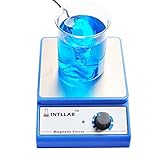
- Corrosion-Resistant 316 Stainless Steel Top Plate: Ensures durability and excellent performance.
- Large Capacity for Various Needs: With a capacity of up to 3000ml, it is ideal for home brew yeast starters.
- Easy-to-Use Design: Offers stepless adjustable stirring speed, allowing for speed regulation up to 3000 rpm.
- Long-Term Warranty: Comes with a 1-year warranty as it is designed to have a long lifespan.
- Versatile and Portable: It is perfect for use in scientific research, industry, agriculture, homebrew and other fields, convenient for you to take it for different applications.
Treat the stirrer as one controlled experimental variable. If a standardized setup produces the same result, the original stirrer arrangement is less likely to explain the discrepancy. If the result changes, report the finding for that particular method and sample rather than claiming that magnetic stirring universally caused the problem.
How to find out whether your stirrer is affecting results
1. Watch the bar, not just the liquid surface
Look through the vessel while the sample is running. A healthy setup keeps the bar rotating smoothly and centrally for the entire mixing period. Warning signs include rattling, repeated skipping, stopping, visible off-center orbiting, sudden changes in vortex shape or a bar that is thrown to the vessel wall.
A surface vortex can look vigorous even when the bar is not mixing the lower part of the sample. High speed can make a bar spin off-center and reduce effective mixing, as the University of Wisconsin–Madison chemistry teaching guidance explains: Hotplate/Magnetic Stirrer: Stirring.
Quick wins for a faster PC:
Clear out junk files and repair common Windows errorsFree Scan →Fix the driver behind crashes, sound loss and screen glitchesFind Drivers →2. Ramp the speed from low to adequate
- Place the vessel centrally over the drive magnet before starting.
- Begin at the lowest setting that initiates rotation.
- Increase gradually until solids or dissolved material move throughout the sample.
- Stop increasing when mixing is adequate. Do not chase the largest possible vortex.
- Back off immediately if the bar rattles, spins off-center, splashes, draws air into the liquid or forms a deep vortex.
There is no universal RPM that is correct for every bar, vessel and sample. The useful endpoint is stable, complete mixing without the failure signs above. Record the instrument’s displayed setting or RPM, but also record the bar, vessel, volume and temperature because the same setting can behave differently after any of those changes.
Rank #2
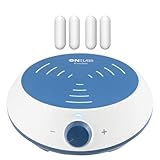
- Compact Design and Easy Use: Compact design with small footprint for Portable use, 12 Voltage available for mobile use, lightweight and quiet operation. Not suitable for highly viscous solutions
- High Lab Quality Material:Maintenance free brushless DC motor enable stable and strength operation with stepless speed and long lifespan
- Powerful Functions: Max stirring quantity 3L; Default PET top provides excellent chemical resistance and easy cleaning
- Wide Use: Perfect for stirring in scientific research, industry, agriculture, health and medicine, homebrew, like brew yeast starters, wine making, Juice mixing, wine decanting and etc
- 1 Year Service: we are manufacturer which has more than 20 years experience in the field of lab products. . Any quality problem, we will provide free replacement
3. Check for bubbles and splashing
Bubbles can change a measurement, not merely make the setup look untidy. In Karl Fischer titration, METTLER TOLEDO warns that excessive stirring can create bubbles and falsify measured values, while too little stirring or too short a time can leave the sample incompletely dissolved. That guidance is specific to volumetric Karl Fischer work; it should not be generalized to every analytical method: Fluctuating results in volumetric Karl Fischer titration.
For a bubble-sensitive method, inspect the sample during the actual measurement window, not only during a preliminary mix. A visually clear liquid can still contain fine bubbles on an electrode, probe or vessel wall.
4. Inspect the bar and its coupling path
Remove and clean the bar, then examine its coating, edges and shape. A chipped coating, corrosion, seized internal magnet or residue can cause erratic rotation or contamination. Confirm that the bar fits through the vessel opening and is not scraping the bottom or striking an internal feature.
Outdated Drivers Are Slowing You Down
One free scan finds every outdated or missing driver and matches the right update for your exact hardware.Free scan · exact hardware matchWindows Errors? Fix Them Before They Spread
Repair common Windows errors and clear accumulated junk for a smoother, more stable PC - no reinstall needed.Free scan · no reinstallCoupling weakens when the bar is too far from the drive magnet. Thick vessel bases, adapters, raised platforms and excessive liquid depth can all increase that distance. High viscosity, suspended solids or an unusually large volume can also exceed what a small bar and laboratory plate can reliably move.
The SP Scienceware selection guide recommends matching bar length and shape, coating, vessel geometry, sample viscosity and abrasiveness to the application: Magnetic Stirring Bar Selection & Use. Replacing a damaged or unsuitable bar is sensible, but a new bar alone cannot guarantee a better result if the vessel, sample or drive is the limiting factor.
5. Verify position and repeatability
For a single vessel, mark or photograph its position relative to the plate’s center. For a multi-position plate, record the exact well, vial or vessel location for every run. The 2025 JACS Au study found location-associated differences in its parallel reaction and catalyst-preparation examples, so plate position should be treated as a factor to test rather than ignored.
To check this experimentally, keep the chemistry and all non-stirring variables constant while comparing positions or setups. Use the same stirrer model, vessel type, bar type, sample volume, temperature and timing. If practical, include a single-vessel control in which the vessel is centered and mixed under a documented setting.
6. Compare the measured outcome
- Define the result that matters: conversion, reaction rate, particle size or distribution, dissolved concentration, titration value or another method-specific endpoint.
- Run replicate samples with the original setup and with the standardized setup.
- Hold reagent lots, concentrations, order of addition, atmosphere, temperature, timing and analysis constant.
- Record bar behavior and any bubbles, splashing, spinout or temperature drift during each run.
- Compare the actual measurement and its variability, not only whether the vortex looked similar.
A change under controlled conditions supports a stirring- or position-related contribution for that method. It does not prove that stirring caused an earlier discrepancy unless the comparison rules out other variables.
Rank #4

- POWERFUL STIRRING: this magnetic stirrer has an adjustable and powerful stirring speed up to 3000 rpm. You can change and select the suitable stirring speed as per your need.
- BIG CAPACITY: This stir plate has the maximum of 3000ML. It is very good choice for home brew yeast starters.
- WIDE USE: the ANZESER magnetic stir plate can be used for stirring and mixing in food processing, school laboratory, industry, agriculture and home brew, etc. Not suitable for stirring high viscosity liquids, such as epoxy resins, etc.
- EASY USE: Simple single-button design. Stepless adjustable stirring speed, mixing speed regulation up to 3000 rpm, and rotate to the left end is off.
- LIFETIME WARRANTY: We ensure topnotch quality and durability, and offer a lifetime warranty on our products. Contact us at any time to discuss a replacement if you have any issues with your magnetic stirrer plate.
Symptoms, likely causes and corrective actions
| What you observe | Possible cause | What to test or change |
|---|---|---|
| Bar repeatedly flies to the side or stops | Excessive speed, weak coupling, unsuitable bar, viscous sample or off-center vessel | Lower speed; center the vessel; reduce magnet-to-bar distance; try a bar suited to the vessel and viscosity |
| Strong surface vortex but poor dissolution | Bar too short, sample too deep, solids settling or circulation limited to the surface | Inspect the bar’s position; use a better-matched length or shape; reduce volume or validate another mixing method |
| Fine bubbles appear during measurement | Speed too high, vortex too deep or air entrainment | Reduce speed and vortex depth; allow bubbles to clear only if the method permits; validate the revised timing |
| Results vary by well or plate position | Different magnetic field coupling, vessel placement, heating or local geometry | Map positions; randomize or balance locations where appropriate; run a centered single-vessel control |
| Bar rattles or contaminates the sample | Damaged coating, residue, contact with the vessel or incompatible shape | Clean and inspect; replace the bar if damaged; confirm clearance and material compatibility |
| Mixing fails as viscosity or solids increase | Magnetic drive cannot deliver enough torque through the sample | Assess an overhead stirrer or another validated mixer rather than simply increasing speed |
How to choose a speed without destabilizing the sample
Set speed by the mixing requirement and measurement sensitivity. A low-viscosity solution may need only gentle circulation; a suspension may need enough motion to prevent settling; a bubble-sensitive titration may require a slower, shallower vortex. “Faster” is not a proxy for “better.” Once the entire sample moves and remains coupled, additional speed can add splashing, evaporation, heating or gas entrainment without improving homogeneity.
- For dissolution: confirm that material does not remain at the bottom or on vessel walls, then stop increasing speed.
- For suspensions: verify that solids remain acceptably distributed for the method’s sampling interval; document how long the sample is mixed before sampling.
- For temperature-sensitive reactions: check whether the stirrer or hotplate adds heat as speed changes, and record the actual sample temperature.
- For bubble-sensitive measurements: use the slowest setting that maintains homogeneity and inspect the electrode or probe area.
Because the cited sources do not provide a universal RPM, publish or transfer a method using observable acceptance criteria—stable coupling, adequate circulation, no splashing and no measurement-interfering bubbles—alongside the instrument setting.
Match the bar, vessel and sample
Effective magnetic stirring is a coupled system. The drive magnet must transmit torque through the vessel bottom to a bar that can move the sample. Changing one component can change the result even when the displayed speed is unchanged.
| Factor | Why it matters | Standardization record |
|---|---|---|
| Bar length and shape | Determines swept area, stability and clearance from walls and bottom | Length, shape, coating and supplier or catalog identifier |
| Bar condition | Damage, residue or a seized magnet can cause erratic motion or contamination | Cleaning method, inspection result and replacement date |
| Vessel geometry | Bottom thickness, diameter, height and internal features alter coupling and circulation | Vessel type, dimensions and position mark |
| Sample volume and viscosity | Increase torque demand and can leave unmixed regions | Volume, approximate viscosity or formulation and solids loading |
| Drive and plate | Different magnet layouts and strengths produce different coupling | Stirrer model, position and displayed setting |
| Temperature | Changes viscosity and can introduce position-dependent heating | Setpoint and measured sample temperature |
When changing from a glass vial to a tube, from a small capsule bar to a longer oval bar, or from a dilute solution to a viscous formulation, revalidate mixing rather than copying the old speed.
Best Value

- Powerful:Mini Electric Magnetic with stepless speed regulation 350-3000RPM and max stirring quantity 3000ML Luiqd.
- Easy Use:Magnetic stirrer with compact design, easy to operate, 12v voltage for mobile use, maximum speed 3000RPM, please use our dedicated power plug, otherwise it may affect the machine speed
- High Lab Quality Material:Magnetic Stirrer Maintenance-free brushless DC motor enable stable and strength operation,Frosted countertop are wear-resistant, corrosion-resistant and easy to clean.
- Widely used:The magnetic stir plate mixer is suitable for stirring and mixing in scientific laboratory, industry, agriculture, health and medicine, self-made, wine making, juice mixing, wine decanting,coffee stirrers electric and other fields.Tip: Not suitable for stirring high viscosity liquid.
- Notice For Use: Please use a beaker or a container with a flat and thin bottom. Put the stir bar into the container first, and then slowly turn the knob to keep the stir bar synchronized with the magnetic field, so as to obtain the best use effect.Please note there's no beakers in our package.
When magnetic stirring is the wrong tool
Magnetic stirring is generally most effective for lower-viscosity samples and moderate volumes. IKA’s comparison of magnetic and overhead stirring notes that overhead systems are better suited to higher viscosity, larger quantities and applications requiring greater torque: Choosing the Right Mixer: Magnetic vs. Overhead Stirring Explained.
| Approach | Best fit | Limitations to validate |
|---|---|---|
| Magnetic stirrer | Low- to moderate-viscosity liquids, sealed or small vessels, clean and simple setups | Torque falls with viscosity, solids, large volume or excessive magnet-to-bar distance |
| Overhead mechanical stirrer | Higher viscosity, larger batches, suspensions or samples needing stronger torque | Shaft and impeller introduce geometry, sealing, cleaning and potential contamination considerations |
| Stir-only plate | Materials that must be mixed without intentional heating | Confirm the plate cannot unintentionally heat the sample and follow the equipment manual |
If heating is prohibited or could change the chemistry, do not rely on an integrated hotplate by simply leaving the temperature control untouched. The University of Pennsylvania Environmental Health and Radiation Safety guidance discusses using stir-only plates when heating is not appropriate: Fact Sheet: Heating Reactions. Any alternative mixer should be validated against the same endpoint and documented in the method.
Build a reproducible stirring record
A short equipment log prevents “same conditions” from meaning only “same displayed RPM.” Record these fields for every development run and for any method transferred to another instrument:
Recommended Free Tools
- Stirrer make and model, plate position and software or firmware setting if applicable.
- Bar material or coating, length, shape, condition and cleaning status.
- Vessel material, dimensions, bottom geometry, volume and position mark.
- Sample volume, viscosity or solids description and temperature.
- Start speed, final speed, ramp time and total mixing time.
- Observed bar behavior, vortex depth, splashing, bubbles and settling.
- Whether the sample was heated, the setpoint and the measured temperature.
- Measured endpoint, replicate identity and any deviations.
For parallel experiments, assign positions before starting and preserve the map with the data. If positions cannot be randomized because of the instrument or workflow, include position as a recorded factor and test representative locations during validation.
Safety checks before unattended or heated operation
Do not treat a stable vortex as proof that unattended operation is safe. The National Academies’ Prudent Practices in the Laboratory discusses ignition hazards around flammable vapors and calls attention to equipment failure, overload and blocked motion during prolonged or unattended operation: Working with Laboratory Equipment.
Quick Recap
- Follow the stirrer, hotplate, vessel and chemical-specific operating manuals.
- Keep flammable vapors away from ignition sources and use the required ventilation and controls.
- Check that the bar cannot jam against the vessel or an internal probe.
- Do not exceed the instrument’s load, temperature or operating-time limits.
- Use secondary containment where a spill, splashing or vessel breakage could create a hazard.
- For long runs, define what happens on power loss, overheating, bar loss or a blocked shaft, and inspect the setup at intervals required by local rules.
A concise decision path
- See instability? Lower speed, center the vessel and inspect the bar.
- Still unstable? Check coupling distance, vessel geometry, viscosity, solids and bar suitability.
- Stable but results vary? Standardize instrument, bar, vessel, position, speed and temperature, then run a method-relevant control.
- Bubbles or incomplete dissolution? Adjust speed and mixing time for the specific measurement; do not transfer Karl Fischer limits to another method.
- Sample remains difficult to mix? Validate an overhead or other appropriate mixer instead of forcing a magnetic bar to run faster.
- Control changes the endpoint? Report a stirring- or setup-related effect for that experiment and preserve the controlled conditions in the method.
Product prices and availability are accurate as of the date/time indicated and are subject to change. Any price and availability information displayed on Amazon at the time of purchase will apply.

