
iTechGuides is reader-supported. When you buy through links on our site, we may earn an affiliate commission. As an Amazon Associate I earn from qualifying purchases. Learn more
Logi Bolt and Logitech Unifying are different wireless systems, and their USB receivers cannot substitute for one another. Bolt uses Bluetooth Low Energy wireless technology, while Unifying uses Logitech’s proprietary 2.4 GHz radio-frequency protocol. A Bolt device will not pair with a Unifying receiver, and a Unifying device will not pair with a Bolt receiver. Identify the logo on both the receiver and the underside of the mouse or keyboard before replacing a lost dongle.
Logi Bolt and Unifying at a glance
The names look similar because both describe Logitech wireless ecosystems, but they are not versions of the same receiver. Each family has its own radio technology, pairing process and compatible hardware.
| Decision point | Logi Bolt | Logitech Unifying |
|---|---|---|
| Wireless basis | Bluetooth Low Energy wireless technology | Logitech proprietary 2.4 GHz radio-frequency protocol |
| Receiver compatibility | Does not pair with Unifying receivers | Does not pair with Bolt receivers |
| Receiver marks | Bolt logo; Logitech sells USB-A and USB-C receiver types | Unifying logo; the commonly shown receiver is USB-A |
| Replacement rule | Buy a Bolt receiver for a Bolt-compatible device and select the required connector | Buy a Unifying receiver only for a Unifying-compatible device |
| Use beside the other family | Can share one computer with Unifying through its own receiver, or use Bluetooth when that particular device supports it | Can share one computer with Bolt through its own receiver, or use Bluetooth when that particular device supports it |
| Multiple devices per receiver | No capacity figure is established here | Logitech states that one receiver can support up to six Unifying devices |
The practical consequence is simple: a receiver’s physical fit in a USB port does not prove compatibility. The device and receiver must belong to the same Logitech family.
What wireless technology does each system use?
Logi Bolt uses Bluetooth Low Energy
Logitech describes Logi Bolt as being based on the global wireless standard for simple, secure connectivity: Bluetooth Low Energy Wireless Technology. In a Bolt setup, the Bolt-marked receiver communicates with Bolt-compatible peripherals using that system. Some Bolt products can also connect directly over Bluetooth, depending on the model and the computer’s Bluetooth support.
#1 Best Overall

- TECHNICAL REQUIREMENT: This is not a standard plug-and-play receiver. It strictly requires -downloading the official Logitech Unifying Software to sync and pair with your compatible keyboard or mouse
Bluetooth capability is a property of the individual product, not a guarantee for every device carrying the Logitech name. Check the specifications or connection instructions for your exact mouse or keyboard before assuming that you can remove its receiver and use Bluetooth instead.
Unifying uses Logitech’s proprietary 2.4 GHz protocol
Logitech Unifying is a proprietary 2.4 GHz radio-frequency wireless protocol developed by Logitech. A Unifying receiver and a Unifying-compatible peripheral use that protocol for their wireless link. The Unifying logo identifies the family; an ordinary small Logitech 2.4 GHz dongle without the Unifying mark is not automatically a Unifying receiver.
This difference is architectural, not a software setting that can be changed. Installing another pairing utility cannot turn a Unifying receiver into a Bolt receiver or vice versa.
Recommended Free Tools
Why the protocol distinction matters in everyday use
Both systems are designed to provide a wireless link for Logitech peripherals, so their exterior can be misleading. A tiny black receiver, the Logitech name and a USB plug describe the physical accessory, not the radio family inside it. The protocol determines which device firmware can recognize the receiver during pairing. That is why a receiver can be electrically fine and still appear to do nothing with the wrong mouse or keyboard.
It also explains why changing operating systems, reinstalling software or moving the dongle to another USB port does not resolve a family mismatch. Those steps can help with an otherwise compatible connection, but they cannot translate between Bolt and Unifying.
Are Bolt and Unifying receivers cross-compatible?
No. Logitech states that Logi Bolt wireless products cannot be paired with a Logitech Unifying USB receiver and that the reverse is also true. If a Bolt mouse has lost its receiver, purchasing a Unifying dongle will not restore it. The same applies when a Unifying keyboard is missing its receiver: a Bolt dongle is not a replacement.
Both receivers may look like compact USB adapters and may fit the same USB-A port, which makes this mistake common. Compatibility is determined by the radio family and the device firmware, not by the connector shape, color or the fact that both products came from Logitech.
What “not compatible” means
In this context, incompatibility means the receiver cannot be used to pair and operate the other family’s peripheral. It is not merely a limitation of one particular pairing application. A Bolt receiver does not become a Unifying receiver after a reset, and a Unifying receiver does not gain Bolt support from a firmware update described in Logitech’s pairing instructions.
If a listing uses vague language such as “Logitech wireless receiver,” treat that as insufficient information. Look for the exact Bolt or Unifying designation and compare it with the marking on your device. Generic 2.4 GHz receivers form a separate category and should not be assumed to work with either named family.
How to tell whether your device is Bolt or Unifying
1. Inspect the receiver itself
- Unplug the receiver, if it is still connected, and look for a printed logo or symbol.
- A receiver carrying the Bolt mark belongs to the Logi Bolt family.
- A receiver carrying the Unifying mark belongs to the Unifying family.
- Do not classify a receiver solely as “Logitech 2.4 GHz.” Logitech also sells non-Unifying 2.4 GHz receivers, and those are a separate category.
- Note the connector: Logitech distinguishes Bolt USB-A and Bolt USB-C receiver versions. A Unifying receiver is commonly shown as USB-A.
2. Check the underside of the mouse or keyboard
Turn the peripheral over and look near the model label, power switch or pairing button for the matching Bolt or Unifying symbol. The mark on the device should agree with the mark on the receiver. If the device has no visible logo, use its exact model number in Logitech’s support documentation rather than guessing from its appearance.
Rank #2
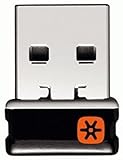
- Logitech Unifying receiver for mouse and keyboard
- Logitech Unifying receiver (M/N:C-U0007)
- Will work with any product that display the Unifying Logo
- The unifying receiver working with 7 mice and keyboards in the same time.
- Compatible with: Logitech wireless mouse M505 Marathon Mouse M705 Logitech Mouse M905 Logitech keyboard K340 Logitech keyboard K350
3. Treat a mismatch as a stop sign
If a device says Bolt and the loose receiver says Unifying, they are from different families. Do not keep trying to pair them or assume that a reset will solve the problem. Find the matching receiver family first, then verify the connector and the product’s replacement instructions.
Do these 3 things before closing this tab:
1Fix the driver behind crashes, sound loss and screen glitches2Clear out junk files and repair common Windows errors3Scan for outdated or missing drivers - takes under a minute4. Check both pieces before buying
When a household has several Logitech peripherals, identify every loose receiver before discarding one. Marking a receiver with the product model or storing it with the matching keyboard can prevent a later mix-up. If a receiver is missing, photograph the logo and model label on the device before shopping. That gives you two checks—family and exact product—instead of relying on a product photograph that may show a different connector or generation.
What receiver should you buy as a replacement?
Use a two-part check before ordering: family first, connector second. Logitech provides separate replacement paths for Unifying products and Bolt products.
- Bolt device: choose a Logi Bolt replacement receiver. Confirm whether your computer requires a USB-A or USB-C receiver, or whether an adapter is necessary.
- Unifying device: choose a Logitech Unifying replacement receiver. It must be explicitly described as Unifying-compatible.
- Unmarked or generic 2.4 GHz device: do not assume that either family will work. Identify the exact product and its receiver type before purchasing.
A Unifying receiver does not work with products that are not Unifying compatible. Logitech likewise directs Bolt users to a separate Bolt replacement route. Keep the product page or support instructions for the exact model open while checking the listing; a receiver that looks identical in a photograph can belong to the wrong ecosystem.
A safe replacement-order checklist
- Read the logo on the underside of the mouse or keyboard.
- Confirm whether the original receiver was Bolt, Unifying or an unmarked 2.4 GHz type.
- For Bolt, select the USB-A or USB-C version that matches your host computer, unless you deliberately plan to use a suitable adapter.
- For Unifying, verify that the listing explicitly names Unifying compatibility rather than merely saying “Logitech wireless.”
- Review the exact model’s supported connection options and pairing procedure.
- After delivery, pair the device before throwing away packaging or the old receiver.
These checks matter especially when a seller’s title abbreviates the product name. “USB receiver” describes a connector, not a wireless standard. The family name should appear in the technical description, and it should agree with the symbol printed on the peripheral.
Crashes, No Sound, or Screen Glitches?
Random freezes, missing sound and display glitches usually trace back to one bad driver. Find and replace yours safely.Free scan · under a minutePC Slower Than It Used to Be?
A free scan shows the junk files, broken settings and background clutter dragging Windows down - then fixes them in one click.Free scan · Windows 10 & 11Why connector type matters
Family compatibility and physical connectivity are separate questions. A Bolt USB-A receiver may be the correct radio family but unusable directly on a computer that has only USB-C ports. Conversely, a USB-C Bolt receiver still will not make a Unifying device compatible. Solve the radio-family match first, then choose the connector that fits your host computer or use a suitable physical adapter.
An adapter changes the physical plug shape only. It does not change Bolt into Unifying, and it does not make a generic 2.4 GHz receiver part of either ecosystem. If a hub is used, keep the receiver fully inserted and test the peripheral after connecting it; the hub can address a port shortage, but it cannot fix an incorrect receiver family.
Can Bolt and Unifying work on the same computer?
Yes. Logitech describes using a combination of wireless products on one computer: leave the Bolt device on its Bolt receiver and the Unifying device on its Unifying receiver. The host can communicate with both systems at the same time because each receiver maintains its own compatible link.
- Connect the Bolt receiver to an available USB port and pair the Bolt-compatible peripheral using Logitech’s supported setup process.
- Connect the Unifying receiver to another USB port and pair the Unifying-compatible peripheral.
- Test each mouse or keyboard separately. If one does not respond, check its receiver mark and pairing status rather than swapping receivers.
There is no requirement to replace one family merely because the other is already installed. A workstation can therefore retain an older Unifying keyboard while adding a newer Bolt mouse, provided each device uses its matching receiver. Keep the receivers labeled so that routine troubleshooting does not turn into an accidental swap.
What’s actually slowing this PC down?
Pick the symptom - the matching free tool is one click away.
If USB ports are scarce, Logitech also describes Bluetooth as an alternative for supported devices. This is conditional: not every Unifying product has Bluetooth, and a computer must provide Bluetooth connectivity. A Unifying keyboard that lacks Bluetooth still needs its Unifying receiver even if another Logitech device on the same computer can connect directly over Bluetooth.
Rank #3

- 993-000439
- Logitech Unifying receiver for mouse and keyboard with Unifying Logo
- The unifying receiver working with 6 mice and keyboards in the same time.
- Will work with any product that has the Unifying Logo (orange star) on them.
- Compatible with: Logitech wireless mouse M505 Marathon Mouse M705 Logitech Mouse M905 Logitech keyboard K340 Logitech keyboard K350
What if the computer has only USB-C?
Start by identifying the family, then choose a receiver with a connector that the computer accepts. Logitech distinguishes Bolt USB-C and Bolt USB-A receivers. For a USB-A receiver, a suitable physical adapter or hub may provide the port, but the radio family must still match the device. Do not purchase a USB-C Unifying receiver simply because the computer has USB-C: connector format does not create Unifying compatibility where it did not exist.
How many devices can one Unifying receiver support?
Logitech states that one Unifying receiver can support up to six Unifying devices. The devices must be Unifying-compatible; Bolt and generic non-Unifying 2.4 GHz products do not count toward that arrangement.
This capacity can reduce USB-port use when you have several compatible mice and keyboards. It does not make the receiver universal. A Bolt mouse still requires a Bolt connection, and a non-Unifying receiver still follows its own compatibility rules.
Free tools Windows power users keep installed
One-click scans. No signup required.
What happens if you move a Unifying device to another receiver?
Moving a Unifying mouse or keyboard from one Unifying receiver to another requires reconnecting it. Plugging the second receiver into the computer does not automatically transfer the device. Keep the original receiver available until the new pairing has been completed and tested.
If several Unifying devices are being moved, plan to reconnect each one individually. The six-device statement is a capacity limit for compatible Unifying products, not a promise that devices migrate automatically. A Bolt peripheral cannot be added to that group, even if an unused slot remains.
Security wording: what Logitech does and does not establish
Logitech’s comparison material describes Logi Bolt as based on a global wireless standard for simple, secure connectivity. That statement is a vendor description of Bolt’s foundation. It is not, by itself, a quantified security comparison between Bolt and Unifying.
The available comparison does not establish independent test results, a common attack-resistance benchmark or a detailed ranking of the two systems. Choose between them primarily on device compatibility, receiver availability, connector requirements and the way you intend to connect—not on a security score that Logitech’s comparison does not provide.
For a purchasing decision, the practical security-related step supported by Logitech’s guidance is to use the intended receiver family and follow the product’s pairing instructions. Avoid treating a receiver from another family as an acceptable substitute simply because it is a Logitech-branded accessory.
Troubleshooting: the right branch for each symptom
The receiver is plugged in but the device will not pair
- Read the receiver logo and the device’s underside mark.
- If one says Bolt and the other says Unifying, stop: they cannot pair.
- If both marks match, follow the pairing procedure for that family and make sure the receiver is fully inserted.
- For a replacement, confirm that the receiver is genuine to the correct family and that its connector is appropriate for the computer.
You bought a receiver that fits but does nothing
Physical fit is not a compatibility test. A USB-A Unifying receiver can fit the same port as a USB-A Bolt receiver while remaining unusable with a Bolt product. Return to the identification steps and compare the logos. Also rule out a generic 2.4 GHz receiver being mistaken for Unifying.
You have no free USB port
First check whether the device supports Bluetooth and whether the computer has Bluetooth enabled. If it does, use the device’s Bluetooth connection and reserve the USB ports for products that require receivers. If the device does not support Bluetooth, a compatible receiver, hub or suitable adapter is necessary; changing from Unifying to Bolt is not a workaround.
Rank #4

- Easily connect up to 6 compatible keyboards and mice to one computer – without the hassle of multiple USB receivers.
- You get a powerful, reliable connection up to 10 metres (33 feet) away with virtually no delays or dropouts.
- You can leave the tiny receiver in your notebook, so there's no need to unplug it when you move around.
- Model number: 910-005931
You replaced the receiver and only one of several devices works
For a Unifying setup, reconnect each device to the new Unifying receiver. Logitech’s stated six-device capacity applies to Unifying-compatible products, but switching receivers still requires pairing. A Bolt product cannot be added to that Unifying receiver; it needs its own Bolt connection.
Quick wins for a faster PC:
Scan for outdated or missing drivers - takes under a minuteDriver Scan →Clear out junk files and repair common Windows errorsFree Scan →The device has no visible logo
Do not infer the family from the color, age or shape of the peripheral. Record the exact model number, inspect any original receiver for a mark and consult Logitech’s model-specific support information. An unmarked receiver may be a non-Unifying 2.4 GHz product, so buying a named-family replacement without identification can create a second incompatibility.
The receiver was lost and the original pairing is unknown
Begin with the device, not with the replacement listing. Find the Bolt or Unifying symbol on its underside, then select the corresponding replacement path. If no symbol is present, identify the model before spending money. Once the correct family is established, connector choice and the product’s pairing instructions are the remaining checks.
Independent reader supportYour contribution helps us test, update, and keep practical guides available for everyone.Questions readers commonly ask
Can I use a Logi Bolt receiver with a Logitech Unifying mouse?
No. Logitech states that Bolt products cannot be paired with Unifying receivers, and the reverse is also true. Use a receiver from the mouse’s own family.
Can software convert one receiver into the other?
No. The two systems use different wireless families and compatible hardware. Pairing software cannot turn a Bolt receiver into a Unifying receiver or make a Unifying peripheral a Bolt product.
The Tool Desk
Outbyte Driver Updater FREEFix the driver behind crashes, sound loss and screen glitchesFind Drivers →Outbyte PC Repair FREERepair Windows errors before they cause bigger problemsFix Now →Is every Logitech 2.4 GHz receiver a Unifying receiver?
No. Logitech distinguishes Unifying receivers from generic or non-Unifying 2.4 GHz receivers. Look for the Unifying mark rather than relying on the Logitech name or the 2.4 GHz description.
Can a Bolt receiver be used in a USB-A port?
Yes, if it is the USB-A Bolt version and the device is Bolt-compatible. A USB-C Bolt receiver is a separate physical version. Connector fit still does not affect cross-family compatibility.
Can I connect Bolt and Unifying devices at the same time?
Yes. Keep each peripheral on its matching receiver. Logitech also describes Bluetooth as an option for supported devices when USB ports are limited.
Does every Unifying device support Bluetooth?
No. Bluetooth availability depends on the individual product. A Unifying device without Bluetooth still requires its compatible Unifying receiver.
How many Unifying devices can share one receiver?
Logitech states that one Unifying receiver can support up to six Unifying devices. This does not include Bolt or generic non-Unifying 2.4 GHz products.
Best Value

- Unifying receiver for mouse and keyboard
- Unifying receiver (M/N:C-U0007)
Will a Unifying device move automatically to a new Unifying receiver?
No. Reconnecting the device to the new Unifying receiver is required. Keep the old receiver until the new pairing works.
A quick decision checklist
- Does the device or receiver show the Bolt logo? Use the Bolt family.
- Does it show the Unifying logo? Use the Unifying family.
- Is there no Unifying or Bolt mark? Identify the exact model before buying anything.
- Are you replacing a lost receiver? Match the family, then check USB-A versus USB-C.
- Are you combining products? Keep each receiver with its own family, or use Bluetooth only where the specific device supports it.
- Are you moving a Unifying device to another receiver? Plan to pair it again.
- Does a listing say only “Logitech wireless receiver”? Treat that as incomplete until the family is stated.
- Does the replacement fit physically but fail to pair? Recheck the logo before trying more software or resets.
Bottom line for choosing between them
Neither system is a universal Logitech receiver standard. Logi Bolt is the Bluetooth Low Energy-based family; Logitech Unifying is Logitech’s proprietary 2.4 GHz family. They can coexist on one computer, but they cannot share receivers. The safest purchase or troubleshooting method is to match the logo on the peripheral to the logo on the receiver, verify the connector, and check the exact model’s supported connection options before ordering a replacement.
Frequently Asked Questions
What is the main difference between Logi Bolt and Unifying?
Logi Bolt is based on Bluetooth Low Energy wireless technology. Logitech Unifying uses Logitech’s proprietary 2.4 GHz radio-frequency protocol. They are separate systems with separate receivers.
Are Logi Bolt and Unifying receivers interchangeable?
No. A Bolt device cannot pair with a Unifying receiver, and a Unifying device cannot pair with a Bolt receiver.
How can I identify my receiver?
Inspect the receiver for the Bolt or Unifying logo, then look for the matching symbol on the underside of the mouse or keyboard. Do not assume an unmarked Logitech 2.4 GHz dongle is Unifying.
Which replacement receiver should I buy?
Match the device family first: buy a Bolt receiver for a Bolt device and a Unifying receiver for a Unifying device. Then verify the connector, particularly USB-A versus USB-C for Bolt receivers.
Can both systems work on one computer?
Yes. Connect each device through its matching receiver. Supported devices may also use Bluetooth when USB ports are limited, but Bluetooth availability is model-specific.
PC Slower Than It Used to Be?
A free scan shows the junk files, broken settings and background clutter dragging Windows down - then fixes them in one click.Free scan · Windows 10 & 11Crashes, No Sound, or Screen Glitches?
Random freezes, missing sound and display glitches usually trace back to one bad driver. Find and replace yours safely.Free scan · under a minuteHow many devices can one Unifying receiver support?
Logitech says one Unifying receiver can support up to six Unifying devices. Bolt and generic non-Unifying 2.4 GHz products are not included.
Will moving a Unifying device to another receiver happen automatically?
No. You must reconnect the device to the new Unifying receiver. Keep the original receiver until the new pairing is tested.
The Bottom Line
Match the Bolt or Unifying logo first, then verify the connector. The receivers are not cross-compatible, although both families can coexist on one computer.
Quick Recap
Product prices and availability are accurate as of the date/time indicated and are subject to change. Any price and availability information displayed on Amazon at the time of purchase will apply.

