
What’s actually slowing this PC down?
Pick the symptom - the matching free tool is one click away.
iTechGuides is reader-supported. When you buy through links on our site, we may earn an affiliate commission. As an Amazon Associate I earn from qualifying purchases. Learn more
Neither lock-on nor free-aim melee combat is universally better. Lock-on is usually the better fit when a fight rewards keeping one opponent centered, reading that opponent’s attacks, and making deliberate strikes. Free-aim or unlocked combat is often preferable when you must choose attack direction, move fluidly between threats, or maintain a broad view of a group. The right choice depends on how a particular game handles target selection, camera movement, switching, off-screen enemies, and accessibility settings.
“Lock-on” is also an imprecise label. In one game it may only select a target; in another it may steer the camera, preserve a target after it leaves the screen, switch automatically when that enemy dies, or combine all of those behaviors. Compare the actual settings and behavior rather than assuming every lock-on system works the same way.
| # | Preview | Product | Price | |
|---|---|---|---|---|
| 1 |
|
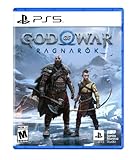
God of War Ragnarök - PlayStation 5 | $37.95 | Buy on Amazon |
| 2 |

|
God of War Ragnarök | $31.95 | Buy on Amazon |
| 3 |
|
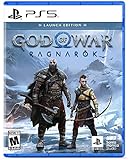
God of War Ragnarök Launch Edition - PlayStation 5 | $27.99 | Buy on Amazon |
| 4 |

|
God of War Ragnarök (PS5) | $37.02 | Buy on Amazon |
| 5 |

|
God Of War Ragnarok | Launch Edition | PS5 Game (PlayStation 5) | Brand NEW | PS6 PS5 Upgrade Soon | $46.44 | Buy on Amazon |
What lock-on and free-aim actually control
Lock-on is a group of possible assists
A lock-on system normally gives the game responsibility for at least one part of combat orientation. You may press a button to select an enemy, after which the game can keep that enemy highlighted, bias attacks toward it, rotate or follow the camera, or preserve the selection while you move. Some systems keep the target selected until it dies; others release it when it leaves range, goes off-screen, or triggers a special move.
Those behaviors matter because “locked” does not tell you whether the camera follows, whether attacks are redirected, or whether a new target is selected automatically. A setting called Lock-On Camera may primarily affect framing, while a setting called Auto-Lock Target in Combat may affect selection. Read the individual options.
#1 Best Overall
- Feel your journey through the Norse realms, made possible by immersive haptic feedback and adaptive trigger functionality.
- Take advantage of multidirectional 3D Audio; hear enemies approaching from any direction. (3D audio with stereo headphones (analog or USB))
- Bask in the beautiful worlds you travel through, brought to life by precise art direction and arresting attention to detail.
- Switch between full 4K resolution at a targeted 30 frames per second, or dynamic resolution upscaled to 4K at a targeted 60fps. (4K resolution requires a compatible 4K TV or display)
Free-aim means the player supplies more direction
In an unlocked system, attack direction may follow the character’s facing, the camera, movement input, or a combination of those inputs. The player turns toward a threat and chooses when to change direction. Some games still provide soft assistance, aim correction, camera recentering, or generous hit detection without selecting a specific opponent, so “free-aim” does not necessarily mean completely unaided combat.
The key trade-off is control allocation: lock-on reduces the work needed to stay oriented toward one enemy, while free aim leaves more of that orientation to the player. Neither approach automatically produces better hit rates, faster completion, or more enjoyment across different games. The official documentation available for the examples below describes features and options, not controlled comparisons of those outcomes.
Where each approach tends to work best
| Combat situation | Lock-on strengths | Free-aim strengths |
|---|---|---|
| One dangerous enemy or a boss | Keeps the opponent centered for telegraphs, spacing, parries, and deliberate counters. | Lets you disengage, reposition the camera, or attack a different angle without first releasing a target. |
| Several nearby enemies | Provides an explicit target and, in some games, quick switching or automatic reacquisition. | Lets you sweep attacks through a group and choose direction without target-selection friction. |
| Enemies outside the screen | Can preserve or select an off-screen opponent if the game supports it; this may prevent surprises. | Preserves a wider manual view, but you must turn the character or camera to engage threats behind you. |
| Fast movement and traversal | May keep the camera useful while circling a target, but can pull the view away from the route. | Offers direct camera control and fewer unexpected rotations during movement. |
| Precision accessibility needs | Target selection and camera assists can reduce continuous right-stick or mouse corrections. | Manual direction, remapping, and sensitivity controls may be preferable for players who dislike camera pull. |
These are design tendencies, not guarantees. A strong lock-on can be excellent against a boss and awkward in a crowd; a well-tuned free-aim system can feel precise against groups but demanding in a duel.
The five tests that reveal whether a system suits you
1. Target selection
Check how the game chooses the initial opponent. Does the nearest enemy win, or does the game prioritize the enemy in the center of the screen? Can you select a target behind your character? Are targets indicated clearly enough to distinguish one enemy from another?
Then test manual switching. In a group, use the target-switch input repeatedly and watch whether selection follows distance, screen position, or a fixed order. A lock-on that is easy to activate but difficult to switch can become a liability as soon as a second enemy enters the fight.
2. Camera behavior
Separate target lock from camera follow. A game may keep an enemy selected while allowing completely manual camera rotation, or it may rotate the camera behind your character without selecting anyone. Look for settings named Camera Follow, Camera Follow Lock, Recenter Camera on Attack, or similar.
Rank #2
Ask whether the camera frames the enemy, your character, or both. A tight frame helps you read a duel but can hide an archer or an incoming attack. A loose frame gives better group awareness but may make a small target harder to read.
Free tools Windows power users keep installed
One-click scans. No signup required.
3. Switching and reacquisition
Break the system intentionally. Lock onto an enemy, make it leave the screen, defeat it, interrupt the fight with a traversal move, and then return. Does the lock release, remain active, or select another target? If the current enemy dies, does the game switch immediately, wait for your input, or choose a target you cannot see?
Reacquisition is especially important in arenas with repeated waves. A system that feels perfect in a one-on-one tutorial can become frustrating if it chooses a distant target after every defeat.
4. Off-screen targeting
Some games allow an on-screen lock to persist when an enemy moves outside the visible frame; others offer a separate option to target enemies that are already off-screen. Off-screen support can warn you about a threat you cannot currently see, but it can also rotate the camera toward an enemy you were not trying to fight.
5. Input and accessibility controls
Look for adjustable lock strength, camera-follow toggles, automatic target selection, target-switch behavior, sensitivity, button remapping, and alternate control schemes. A system that gives you several independent switches is more adaptable than one all-or-nothing mode.
How the settings differ in real games
God of War Ragnarök: separate lock and camera choices
God of War Ragnarök documents a Lock-On Camera setting with four choices: Off, Classic, Auto-Target, and Auto Target+. The player activates lock-on with the Lock-On Button and uses the Move Stick to switch targets.
Rank #3
- Launch Edition includes in-game downloadable content Kratos Risen Snow Armor & Atreus Risen Snow Tunic (Cosmetic)
- Feel your journey through the Norse realms, made possible by immersive haptic feedback and adaptive trigger functionality.
- Take advantage of multidirectional 3D Audio; hear enemies approaching from any direction. (3D audio with stereo headphones (analog or USB)
- Bask in the beautiful worlds you travel through, brought to life by precise art direction and arresting attention to detail.
- Switch between full 4K resolution at a targeted 30 frames per second, or dynamic resolution upscaled to 4K at a targeted 60fps. (4K resolution requires a compatible 4K TV or display)
- Classic: keeps an enemy in view until it dies. Aiming can temporarily release the lock, and special moves or range can break it.
- Auto-Target: persists while aiming and switches to a new on-screen target after the current target dies.
- Auto Target+: adds targeting of enemies outside the current screen.
The game also has a separate Recenter Camera on Attack group of modes. These options move the camera behind the player during melee attacks, with priority modes that center the nearest on-screen or off-screen enemy. This is a useful example of why “lock-on versus free aim” is too broad a description: target persistence and attack-camera movement can be tuned independently.
Star Wars Jedi: Survivor: auto-lock, target switching, and camera follow
EA’s accessibility documentation lists Auto-Lock Target in Combat as an on/off option. It also lists Auto-Switch Target on Enemy Death with three choices: Off, Visible Enemies Only, and Always. A Camera Follow Lock slider controls how strongly the camera follows a locked target.
That combination lets you test separate questions: whether a target should be selected automatically, whether a defeated enemy should trigger a new selection, and how much the camera should rotate. The game also exposes distinct combat difficulty settings that affect enemy resistance and parry windows. Those difficulty options should not be confused with evidence that auto-lock is more effective; the documentation establishes availability, not a performance advantage.
The Tool Desk
Outbyte Driver Updater FREEScan for outdated or missing drivers - takes under a minuteDriver Scan →Outbyte PC Repair FREERepair Windows errors before they cause bigger problemsFix Now →Immortals Fenyx Rising: target lock and camera follow as accessibility options
Ubisoft describes Target Lock-On as a way to lock specific enemies for abilities or combat. It separately documents Camera Follow, which can move the camera behind the player at a fixed distance or leave it still for manual rotation.
This separation is valuable for players who want a stable target indicator but dislike automatic camera movement. It also shows why a game’s accessibility menu can be more informative than its marketing description: target selection and camera behavior are different controls even when both are described as “lock-on.”
Lock-on in a duel: the advantages and costs
Advantages
- Consistent framing: keeping one opponent visible makes attack tells, weapon range, and recovery timing easier to read.
- Lower camera workload: you can spend more attention on dodging, blocking, parrying, and stamina rather than constantly correcting the view.
- Reliable directional attacks: when the game steers attacks toward the selected enemy, circling does not require repeated camera adjustments.
- Clear priority: a visible target marker tells you which opponent your next attack or ability will address.
Costs
- Narrower awareness: a centered opponent can push other enemies, hazards, or objectives toward the edge of the screen.
- Camera conflict: automatic rotation may fight your attempt to look at a route, projectile, or incoming enemy.
- Target-selection errors: the system may choose a nearby but strategically unimportant opponent.
- Awkward disengagement: releasing a lock to run, climb, aim, or change direction can add an extra input at the wrong moment.
Free-aim melee in a group: the advantages and costs
Advantages
- Attack-direction choice: you can turn a swing toward the threat you actually want to hit instead of the currently selected target.
- Broader spatial control: manual camera movement can keep several enemies, hazards, and escape routes in view.
- Fewer unwanted rotations: attacks and movement remain aligned with your chosen facing rather than a target’s position.
- Smoother transitions: moving from one enemy to another does not require waiting for a lock to release or switch.
Costs
- More continuous input: you must manage camera position, character facing, and attack direction at the same time.
- Missed alignment: a small camera error can send an attack past a target, particularly during fast movement.
- Harder duels: keeping a mobile boss in view while also reading its attack can be demanding.
- Manual rear defense: threats outside the current facing require deliberate camera or character rotation before you can respond.
These costs are not proof that free aim is inferior. They describe where the game asks the player to supply more orientation work.
Rank #4
A practical setup procedure
Use the following short test whenever you start a game with multiple combat-camera options. It takes only a few fights and produces a more useful answer than the setting’s name.
- Start with the least assistive option. Turn off automatic target selection and camera follow, or choose the game’s equivalent. Fight a single mobile enemy and note whether your attacks follow the camera, character, or movement direction.
- Enable target selection only. Turn on lock-on while leaving camera follow off if the game permits it. Test circling, backing away, aiming, and attacking from the enemy’s side.
- Enable camera follow separately. Increase the follow strength gradually. Stop when the camera keeps the enemy readable without overriding your attempt to look elsewhere.
- Test a group. Fight at least three enemies. Switch targets manually, defeat one enemy, and observe whether the next target is selected automatically and whether it is visible.
- Test an off-screen threat. Let an enemy move behind you or outside the frame. Check whether the lock persists, releases, or selects the off-screen opponent.
- Test recovery. Interrupt combat with a dodge, traversal move, ranged attack, or special move. Confirm how quickly you can regain the intended target.
- Save the setting that reduces mistakes. Judge the option by missed attacks, camera surprises, and delayed reactions—not by whether it is labeled “advanced” or “assistive.”
Choosing by game type and player preference
Choose stronger lock-on when you mostly fight deliberate one-on-one encounters
Start with a persistent target and moderate camera follow for bosses, elite enemies, and fights where parry or dodge timing depends on reading one opponent. If the camera hides other threats, reduce follow strength before abandoning target lock entirely.
Choose lighter lock-on or free aim for crowded arenas
Use manual target selection, no automatic switching, or a fully unlocked camera when positioning and threat awareness matter more than keeping one enemy centered. This is particularly useful when attacks have broad arcs or when you frequently need to turn toward a new enemy.
Use a hybrid setup when the game exposes independent controls
A hybrid configuration might use manual lock-on with camera follow disabled, automatic lock-on with Visible Enemies Only switching, or a strong target marker with a low camera-follow value. The examples above show why this is often the most practical starting point: selection, persistence, switching, and framing do not have to be controlled by one switch.
Prioritize comfort and accessibility over convention
Players with limited camera-control range, motion sensitivity, or difficulty tracking several moving objects may benefit from target and camera assists. Other players may experience discomfort when the camera rotates without an explicit input and may prefer manual rotation, lower follow strength, or no lock. There is no accessibility hierarchy in which one mode is inherently better.
Do these 3 things before closing this tab:
1Clear out junk files and repair common Windows errors2Fix the driver behind crashes, sound loss and screen glitches3Repair Windows errors before they cause bigger problemsJonathan Bedard, Ubisoft Quebec’s director of user experience, described target lock-on and camera follow as part of a broader effort to include more accessibility features: “We have subtitle options and other things that are traditionally offered, but we also made a concerted effort to include more features, like target lock-on, camera follow, and five difficulty levels for people that need them.” That rationale supports offering the controls; it does not establish a universal combat winner.
Best Value
- Those who break fate: Atreus seeks knowledge to help him understand the prophecy of "Loki" and what role he is to play in Ragnarök. Kratos must decide whether he will be chained by the fear of repeating his mistakes or break free of his past to be the father Atreus needs.
- Weapons of war : The Leviathan Axe, Blades of Chaos and Guardian Shield return alongside a host of new abilities for both Kratos and Atreus. As they take on gods and monsters from across the Nine Realms, Kratos's deadly Spartan skills will be tested like never before as he fights to protect his family.
- Explore the realms :Journey to dangerous and stunning landscapes and face a wide variety of enemy creatures, monsters and Norse gods as Kratos and Atreus search for answers and allies.
- Please note that this item is not for sale to people under the age of 18. By placing an order for this product, you declare that you are 18 years of age or older. This item must be used responsibly and appropriately.
Common problems and fixes
The camera keeps showing the wrong enemy
Try manual target switching, a target-priority option based on screen position, or a lower camera-follow setting. If the game offers automatic switching after death, use a visible-target-only mode rather than an always-switch mode.
The lock breaks whenever you aim or use a special move
Check whether the game intentionally releases the lock during aiming, special moves, or long-range separation. If that behavior cannot be disabled, treat lock-on as a close-range framing aid rather than a persistent target guarantee.
The camera turns toward enemies you cannot see
Disable off-screen targeting or choose an on-screen-only mode. In games with separate camera recenter controls, turn off recentering while preserving target selection.
You lose track of the group while locked
Use shorter lock periods, manual camera control, or free aim between attacks. A lock is not a requirement to remain active throughout an encounter; release it when group awareness becomes more important than duel precision.
Free aim feels inaccurate
Check camera and stick sensitivity, attack-assist settings, and whether attacks follow character facing or camera direction. Practice with a stationary enemy before judging the system in a crowded fight. If the game offers a soft camera assist without hard targeting, that can provide alignment help without taking away manual choice.
What the available evidence can and cannot show
The official pages for God of War Ragnarök, Star Wars Jedi: Survivor, and Immortals Fenyx Rising establish that these games provide specific lock, camera, switching, and accessibility options. They do not provide controlled tests comparing hit rate, completion time, player preference, or accessibility outcomes between lock-on and free aim.
One Ubisoft article reports that about 95% of players kept subtitles on throughout their Assassin’s Creed Odyssey gameplay, according to Jonathan Bedard. The article does not provide the underlying study, sample size, or method. That figure concerns subtitle use, not combat-control preference, so it cannot be used to argue that most players prefer lock-on or free aim.
Quick wins for a faster PC:
Repair Windows errors before they cause bigger problemsFix Now →Fix the driver behind crashes, sound loss and screen glitchesFind Drivers →Clear out junk files and repair common Windows errorsFree Scan →Verdict: compare behavior, then choose the least distracting option
Lock-on works best when the central problem is staying oriented toward one enemy. Free aim works best when the central problem is choosing direction and preserving awareness of several threats. In many games, the best answer is a hybrid: keep target selection available, reduce camera automation, limit switching to visible enemies, and enable off-screen behavior only if it helps rather than surprises you.
Before deciding, test five things: who gets selected, where the camera points, what happens when a target dies, how off-screen enemies are handled, and which accessibility controls can be adjusted independently. Those behaviors—not the label in the settings menu—determine whether a combat system feels precise, fluid, or frustrating.
Quick Recap
Product prices and availability are accurate as of the date/time indicated and are subject to change. Any price and availability information displayed on Amazon at the time of purchase will apply.

