
Recommended Free Tools
iTechGuides is reader-supported. When you buy through links on our site, we may earn an affiliate commission. As an Amazon Associate I earn from qualifying purchases. Learn more
Local AI runs the model on your device; cloud AI sends your request to a provider’s remote servers. Neither approach is automatically more private, cheaper, or faster. The right choice depends on the task, the model’s capability, your hardware, your connection, the service’s data controls, and how much setup you are willing to manage. Hybrid systems use both, keeping suitable work local while escalating larger or harder requests to the cloud.
What “local” and “cloud” AI actually mean
“Local AI” describes where inference occurs: the installed model and runtime process a prompt on a laptop, phone, desktop, or other device. “Cloud AI” sends the prompt, attached files, or other inputs to infrastructure operated by a service provider, which runs the model and returns a result. The distinction concerns inference location, not the entire application.
A local application can still contact the internet for account authentication, updates, telemetry, synchronization, retrieval, backups, safety checks, or a fallback model. Conversely, a cloud service can offer contractual retention limits and regional processing that materially reduce exposure. Evaluate the complete data path of the specific feature rather than treating “local” and “cloud” as privacy labels.
Hybrid AI is a routing choice
Hybrid systems decide whether each request is handled on the device or remotely. Apple describes Apple Intelligence this way: requests that fit the on-device model stay local, while more complex requests can use Private Cloud Compute (PCC). A hybrid design can preserve offline operation and local handling for routine work, but users need to know which prompts leave the device and under what conditions.
#1 Best Overall

- Efficient Intel Processor N150 delivers reliable performance for everyday computing tasks including web browsing, document editing, video streaming, and multitasking. 4GB DDR4 RAM ensures smooth operation when running multiple applications simultaneously. Perfect for students, home users, and professionals who need dependable performance for productivity work, online learning, video conferencing, and entertainment without lag or slowdowns.
- 128GB UFS storage provides fast boot times and quick application loading while offering ample space for documents, photos, videos, and essential software. Includes one-year subscription to Microsoft Office 365 Personal with Word, Excel, PowerPoint, Outlook, and 1TB OneDrive cloud storage—everything you need to create professional documents, spreadsheets, presentations, and manage email right out of the box.
- 14" HD (1366 x 768) anti-glare display delivers clear, comfortable viewing for extended work sessions with reduced eye strain. Narrow bezels maximize screen real estate for immersive content consumption. Integrated Intel UHD Graphics handles everyday visual tasks, HD video playback, and light photo editing. Ideal screen size balances portability with productivity—large enough for comfortable multitasking yet compact enough to carry anywhere.
- Comprehensive connectivity includes Wi-Fi 6 (802.11ax) for faster wireless speeds and improved network efficiency, Bluetooth 5.0 for wireless peripherals, USB-C port for modern accessories and fast data transfer, USB 3.2 ports, HDMI output for external displays or projectors, and 3.5mm audio jack. HD webcam with integrated microphone enables crystal-clear video calls for remote work, online classes, and staying connected with family and friends.
- Windows 11 Home operating system provides intuitive interface with enhanced productivity features, improved security, and seamless integration with Microsoft services. Full-size keyboard with numeric keypad for efficient data entry. Lightweight and portable design makes it easy to work from anywhere—home, office, classroom, or coffee shop. Long battery life supports all-day productivity. Backed by HP’s quality and reliability with customer support available.
Privacy: is local AI more private?
It can be, for a supported request, because the prompt need not be transmitted to a remote model. That advantage disappears if the application uploads the conversation for another feature or routes difficult requests to a server without making the handoff clear. Check telemetry, account sync, tool calls, crash reports, backups, and escalation behavior in addition to the model location.
What local processing does—and does not—guarantee
- A model that is installed and run entirely on the device can process its prompt without sending that prompt to a remote inference service.
- The application may still transmit metadata, diagnostics, files used by tools, or synchronized conversation history.
- Operating-system backups and enterprise device-management policies can copy local data elsewhere.
- Offline operation is available only when both the application and the selected feature support the task without a network connection.
Microsoft’s Windows AI FAQ says Windows AI APIs process data locally and do not send input data to Microsoft servers. That statement applies to those APIs; it is not a blanket description of every AI product that runs on Windows.
Cloud privacy depends on the exact service
Cloud policies differ by consumer application, business subscription, API, account setting, region, and model endpoint. Before submitting confidential material, check:
What’s actually slowing this PC down?
Pick the symptom - the matching free tool is one click away.
- What data is retained, for how long, and whether administrators can set or shorten retention.
- Whether prompts or outputs may be used to train or fine-tune models, and what opt-out or permission mechanism applies.
- Where processing occurs and whether regional or EU data-boundary commitments have exceptions.
- Which subcontractors, logging systems, safety reviewers, or connected tools can receive the request.
- Whether the controls apply to your plan and endpoint, rather than only to an enterprise or API tier.
Microsoft 365 Copilot documentation describes stored interaction data and administrator retention controls through Purview, along with regional routing and EU Data Boundary provisions that include stated exceptions. Google Cloud says customer data for its managed Gemini Enterprise Agent Platform models is not used to train or fine-tune AI or machine-learning models without prior permission or instruction. OpenAI documents controls such as Modified Abuse Monitoring and Zero Data Retention for eligible customers and endpoints, and publishes separate security information for business products. These statements are service-specific; they should not be generalized to every account or product from the same company.
Apple’s private-cloud design
Apple says PCC uses only the personal data relevant to fulfilling a request and that this data is not accessible after the response is returned. That is Apple’s stated design and security commitment for PCC, not evidence that all cloud AI services have identical handling.
“The on-device Apple Intelligence model is useful for apps that need an always-available solution that doesn’t require a network connection.”
— Apple Developer Documentation, “Adding server-side intelligence with Private Cloud Compute”
Do these 3 things before closing this tab:
1Repair Windows errors before they cause bigger problems2Scan for outdated or missing drivers - takes under a minute3Clear out junk files and repair common Windows errorsSpecial offer. See more information about Outbyte and uninstall instructions. Please review EULA and Privacy policy.Rank #2
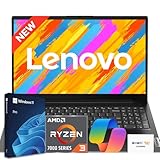 Lenovo V15 Business Laptop 2026 Edition, AMD Ryzen 3 7000-Series(Beat i7-1065G7), 15.6" FHD Display, 16GB DDR5 RAM, 1TB NVMe SSD, Wi-Fi 6, RJ-45, Dolby Audio, Windows 11 Pro, no Mouse
- 【Smooth AMD Ryzen Processing Power】Equipped with the Ryzen 3 7320U CPU featuring 4 cores and 8 threads, with boost speeds up to 4.1GHz, this system handles multitasking, everyday applications, and office workloads with fast, dependable performance.
- 【Professional Windows 11 Pro Environment】Preloaded with Windows 11 Pro for enhanced security and productivity, including business-grade features like Remote Desktop, advanced encryption, and streamlined device management—well suited for work, school, and home offices.
- 【High-Speed Memory and Spacious SSD】Built with modern DDR5 memory and PCIe NVMe solid state storage, delivering quick startups, faster data access, and smooth responsiveness. Configurable with up to 16GB RAM and up to 1TB SSD for ample storage capacity.
- 【15.6 Inch Full HD Display with Versatile Connectivity】The 1920 x 1080 anti-glare display provides sharp visuals and reduced reflections for comfortable extended use. A full selection of ports, including USB-C with Power Delivery and DisplayPort, HDMI, USB-A 3.2, and Ethernet, makes connecting accessories and external displays easy.
- 【Clear Communication and Smart Features】Stay productive with an HD webcam featuring a privacy shutter, Dolby Audio dual speakers for crisp sound, and integrated Windows Copilot AI tools that help streamline daily tasks and collaboration.
Apple’s Foundation Models documentation describes the on-device model for requests that can be handled locally and PCC for more complex requests. Read the current policy and feature documentation before relying on either path for regulated or confidential information.
Offline use and connectivity
Local AI can work without internet access when the model files, runtime, and feature are installed on the device. You can then draft, classify, summarize, or run another supported task during an outage or away from a network. A local model cannot fetch online sources, call a remote tool, synchronize state, or escalate to a larger server model while disconnected.
Cloud AI requires a connection for every request. Network latency, captive portals, VPNs, provider outages, queueing, and regional service restrictions can prevent a response even when your own device is working normally. A hybrid application should make the fallback visible: indicate that a request is staying local, being queued, or leaving the device for cloud processing.
Capability and context: what fits on the device?
Local capability is limited by the model you can store and run, available memory, compute throughput, runtime support, and thermal limits. Cloud providers can serve larger models and longer contexts without requiring you to buy equivalent hardware. That can improve reasoning, document handling, tool use, or multimodal performance, but it introduces the provider’s policy and connectivity dependencies.
PC Slower Than It Used to Be?
A free scan shows the junk files, broken settings and background clutter dragging Windows down - then fixes them in one click.Free scan · Windows 10 & 11Crashes, No Sound, or Screen Glitches?
Random freezes, missing sound and display glitches usually trace back to one bad driver. Find and replace yours safely.Free scan · under a minuteApple’s Foundation Models documentation gives a concrete, product-specific example. The on-device SystemLanguageModel has a 4K-token context and does not support reasoning. The network-required PrivateCloudComputeLanguageModel has a 32K-token context and offers multiple reasoning levels. Those figures describe Apple’s framework models; they are not universal limits for local and cloud AI.
Context size is not the same as answer quality. A longer window can accept more text, while a smaller model may still be preferable for a routine, private classification task. Compare equivalent models, prompts, context, output limits, and quality criteria rather than judging location alone.
Cost: compare the whole bill, not just token prices
Local inference has no per-request token charge once the model and software are available, but it is not free. Include the cost of a new computer or GPU, electricity, storage, setup time, model downloads, updates, troubleshooting, and the value of maintaining the system. If you already own suitable hardware and run moderate workloads, local processing may avoid recurring API charges. If you must purchase a powerful machine for occasional use, cloud access may cost less.
Rank #3

- BUILT FOR COLLEGE. AND BEYOND — MacBook Air with the M5 chip packs blazing speed and powerful AI capabilities into an incredibly portable design. And with up to 18 hours of battery life,* this thin and light powerhouse is ready to take on almost any major, just about anywhere.
- TEAR THROUGH TOUGH ASSIGNMENTS — With its faster CPU and unified memory, the M5 chip delivers even more performance and fluidity across apps, making multitasking and creative workflows smooth and responsive. A powerful Neural Engine and next-generation GPU with Neural Accelerators give you a powerful platform for AI.
- MAKE QUICK WORK OF YOUR TO-DO LIST — Apple Intelligence helps you write, express yourself, and get things done effortlessly — whether it’s for school or everyday life. With groundbreaking privacy protections, it gives you peace of mind that no one else can access your data — not even Apple.*
- UP TO 18 HOURS OF BATTERY LIFE — MacBook Air delivers incredible battery life with amazing performance, so you can power through a full day of classes without worrying about plugging in.
- A BRILLIANT 13.6-INCH DISPLAY* — The gorgeous Liquid Retina display on MacBook Air supports 1 billion colors, making photos and videos pop with rich contrast and sharp detail, and text appears supercrisp. So everything — from class presentations to movies to games — looks truly stunning.
Cloud pricing arrangements
Cloud services generally use either a subscription or usage-based billing. A subscription buys access under a plan’s limits; an API bill depends on input tokens, output tokens, model, context, processing tier, and date. Do not compare a monthly subscription directly with an API rate without estimating the workload each arrangement permits.
The Tool Desk
Outbyte PC Repair FREERepair Windows errors before they cause bigger problemsFix Now →Outbyte Driver Updater FREEFix the driver behind crashes, sound loss and screen glitchesFind Drivers →OpenAI’s live API pricing page lists model-specific prices per one million tokens and notes a 10% uplift for eligible regional-processing endpoints for models released on or after March 5, 2026. Google’s live Gemini API pricing page lists model-specific token rates and tier terms, with some rates shown as scheduled to change on January 1, 2027. These are dated examples, not a neutral cross-provider price comparison or a prediction of your bill.
Estimate your own break-even point
- Measure usage: record requests per day, average input tokens, average output tokens, and the percentage of requests that include large documents, images, tools, or retrieval.
- Apply the current rate: use the provider’s pricing page for the exact model, token type, tier, region, and date. Include cached-token, tool, or priority-processing charges where applicable.
- Add fixed cloud costs: include subscriptions, storage, gateway services, monitoring, and any minimum commitments.
- Calculate local costs: allocate the device price over its expected useful life, then add electricity, storage, cooling, setup, maintenance, and model-update time.
- Compare equivalent quality: a cheaper small local model is not a saving if you need repeated retries or manual correction to match the cloud result.
A worked calculation is meaningful only when it states its provider and model, input and output token counts, billing tier, date, and exclusions such as taxes, subscriptions, tools, cached tokens, and hardware. Without those assumptions, a claimed monthly saving is not transferable.
Speed: latency and throughput are different
Local inference removes the network round trip and can feel immediate for short prompts. It is bounded by your processor, memory bandwidth, model size, quantization, runtime, thermal throttling, and other applications competing for resources. A small local model may generate slowly or produce a weaker answer than a large server model.
Cloud inference adds upload time, network delay, provider queueing, and service configuration, but server hardware can generate tokens faster than an ordinary laptop. A nearby, lightly loaded service may beat a local device; a congested connection or provider may not.
Quick wins for a faster PC:
Clear out junk files and repair common Windows errorsFree Scan →Scan for outdated or missing drivers - takes under a minuteDriver Scan →Repair Windows errors before they cause bigger problemsFix Now →How to make a fair speed test
- Use the same model family or clearly document differences in model capability.
- Keep prompt, retrieved context, and requested output length constant.
- Record time to first token separately from total completion time.
- Report device, operating-system, runtime, model version, quantization, and whether the model was already warm in memory.
- Record network type, round-trip conditions, provider region, queueing observations, and whether tools or retrieval ran.
- Repeat enough times to expose variation instead of quoting one unusually fast response.
If those measurements are unavailable, describe the variables rather than declaring local or cloud AI categorically faster.
Independent reader supportYour contribution helps us test, update, and keep practical guides available for everyone.Hardware and memory requirements
Model weights are only part of the memory requirement. Quantization or precision, the context window, runtime overhead, temporary working buffers, operating-system use, and other applications all consume memory. Leave headroom so the system does not swap to storage, which can drastically reduce responsiveness.
Rank #4

- 【Key Features】HP Laptop 14" – Simple, Reliable Everyday Computing for Students & Casual Users: This HP 14 laptop is designed for users who want a straightforward, easy-to-use device for browsing, streaming, studying, and daily tasks. Powered by Intel Processor N150 and built-in Intel Graphics, it delivers smooth performance for essential productivity, making it an ideal choice for students, seniors, and first-time laptop users looking for a dependable hp laptop experience.
- 【Efficient Performance for Everyday Tasks】Intel Processor N150 + Essential Multitasking: Equipped with an Intel Processor N150 (up to 3.6GHz) and 16GB DDR4 RAM, this hp 14 laptop handles web browsing, online classes, documents, and video streaming with stability and efficiency. It is optimized for light multitasking and daily productivity without unnecessary complexity, perfect for schoolwork and home use.
- 【Fast & Flexible Storage】128GB UFS + 256GB Expansion for Daily Needs: Enjoy fast boot times and responsive file access with 128GB UFS storage, plus an additional 256GB expansion for a total of 384GB combined storage. This HP laptop provides enough space for documents, school projects, apps, and media, making it a practical hp laptop 14 inch solution for everyday storage needs.
- 【Clear Display & Portable Design】14” HD Anti-Glare Screen for Comfort Viewing: The 14-inch HD (1366 x 768) micro-edge anti-glare display offers clear visuals and reduced eye strain, ideal for long study or browsing sessions. Lightweight at just 3.24 lbs, this portable hp 14 laptop is easy to carry between home, school, or travel, making it perfect for on-the-go lifestyles.
- 【Smart Features for Modern Users】Copilot AI, Wi-Fi 6 & Microsoft 365 Included: Stay productive with built-in Microsoft Copilot AI assistance, Wi-Fi 6 connectivity for faster internet speeds, and a 1-year Microsoft 365 subscription for Word, Excel, and PowerPoint. Enjoy a secure and simplified computing experience with Windows 11 Home in S Mode. Built‑in Stereo Speakers.
RAM and unified memory
Google’s Gemma 4 materials describe the 12B model as laptop-ready for systems with 16 GB of RAM or unified memory. That is Google’s guidance for that model variant, not a universal minimum for local AI. Larger models, longer contexts, higher precision, multimodal inputs, or concurrent applications can require substantially more memory. A laptop with at least 16 GB is a reasonable category for experimenting with smaller local models, but first check whether your current machine already meets the selected model’s requirements.
NPU claims need context
Microsoft describes Copilot+ PCs as Windows 11 systems with a neural processing unit capable of more than 40 trillion operations per second (TOPS). This is a threshold for a class of supported Windows experiences, not a minimum requirement for every local model. An NPU helps only when the operating system, runtime, and model support it; its TOPS rating alone does not predict language-model speed or answer quality.
Microsoft’s Phi Silica transparency documentation also describes hardware-dependent local inference. Check the specific model’s supported processors, drivers, memory, and operating-system version rather than selecting hardware from a TOPS number alone.
What to check before installing a model
- Available RAM or unified memory after the operating system and normal applications are running.
- Free storage for model files, multiple quantized variants, caches, and updates.
- CPU, GPU, or NPU support in the chosen runtime and operating-system version.
- Thermal behavior during sustained generation, especially on thin laptops.
- Whether the model’s license permits your personal, commercial, or organizational use.
- Whether your feature needs an internet connection for retrieval, authentication, or escalation.
How to choose: a practical decision process
- Classify the data. Separate public text, internal business material, personal information, regulated records, and trade secrets. The more sensitive the data, the more important exact retention, training, routing, and regional terms become.
- Define the task. Simple extraction, classification, rewriting, and short summaries may fit a local model. Long documents, advanced reasoning, current web information, specialized tools, or high-volume multimodal work may favor a cloud model.
- Check offline needs. Choose a local-capable path if the task must continue during travel, outages, or restricted connectivity.
- Inventory existing hardware. Record usable memory, storage, processor or accelerator support, and sustained thermal performance before buying anything.
- Read the exact policy. Confirm retention, training use, administrator controls, regional processing, endpoint eligibility, and whether prompts can be reviewed or routed to tools.
- Estimate total cost. Use measured token volume for cloud and amortized hardware, power, and maintenance for local.
- Benchmark the real workflow. Compare quality, first-token latency, total time, failure rate, and correction effort on representative prompts.
- Set routing rules. In a hybrid setup, define which tasks stay local, which may use cloud, and how the application signals an escalation.
Common pitfalls and fixes
Assuming “local” means nothing leaves the device
Fix: inspect network permissions, telemetry settings, synchronization, backups, connected tools, and fallback behavior. Test with network access disabled if the feature claims offline support.
Buying hardware from a single specification
Fix: match the exact model and quantization to available memory, then reserve headroom for context and the operating system. Treat TOPS, RAM, and parameter count as inputs to a compatibility check, not as speed guarantees.
Comparing unlike prices
Fix: distinguish subscriptions from API billing and state the model, token volume, tier, date, taxes, tools, and hardware assumptions. Recalculate when provider rates or plan limits change.
Calling one side faster after one test
Fix: measure first-token and total completion time under repeated, equivalent workloads, including warm-up, network, queueing, and tool use.
Uploading confidential text before checking terms
Fix: verify the specific account and endpoint’s retention, training, regional, administrator, and deletion controls. If the terms do not meet your requirements, keep the task local or remove sensitive content.
When local, cloud, or hybrid is the better fit
| Priority | Usually favors local inference | Usually favors cloud inference | Hybrid approach |
|---|---|---|---|
| Privacy control | Supported prompts can remain on the device, subject to application behavior. | Requires trust in service terms, settings, retention, and regional processing. | Keep sensitive routine work local and make escalation explicit. |
| Connectivity | Works offline when the installed feature supports the task. | Needs an active connection and service availability. | Use local fallback during outages and cloud when connected. |
| Capability | Bound by local model, memory, and runtime. | Can provide larger context and server hardware. | Route simple tasks locally and demanding tasks remotely. |
| Cost | No local token fee, but hardware, power, setup, and upkeep apply. | Subscription or usage charges vary by model and volume. | Use measured workloads to decide which requests justify cloud cost. |
| Control | You choose model files, runtime, updates, and data location. | The provider controls serving infrastructure and availability. | Keep policy-sensitive workflows local while outsourcing selected capability. |
Local AI is most compelling when offline operation, data control, predictable repeated workloads, or existing capable hardware matters. Cloud AI is most compelling when you need a model or context window your device cannot run, want minimal setup, or have bursty workloads that do not justify new hardware. Hybrid AI is practical when those requirements coexist, provided the routing and data handling are visible to the user.
Quick Recap
Product prices and availability are accurate as of the date/time indicated and are subject to change. Any price and availability information displayed on Amazon at the time of purchase will apply.

