
What’s actually slowing this PC down?
Pick the symptom - the matching free tool is one click away.
iTechGuides is reader-supported. When you buy through links on our site, we may earn an affiliate commission. As an Amazon Associate I earn from qualifying purchases. Learn more
Short answer: Evidence supports the possibility that water has two liquid forms—low-density liquid (LDL) and high-density liquid (HDL)—but scientists have not directly confirmed two stable phases in pure, bulk liquid water. A 2023 terahertz-spectroscopy study reported relaxation behavior that its authors interpret as evidence for two forms. Earlier work on a deeply supercooled salt solution and on amorphous ice is relevant, yet each studies a different system or state. The central question—whether pure water undergoes a liquid–liquid phase transition—remains open.
What the two-liquid-water hypothesis actually says
The hypothesis is not that ordinary tap water suddenly separates into two visible layers. It proposes that, under particular pressure and deeply supercooled temperatures, water could exist in two distinct liquid states with different densities and molecular structures.
Low-density liquid and high-density liquid
The proposed states are called low-density liquid (LDL) and high-density liquid (HDL). Both would remain liquids, but their hydrogen-bond networks would be arranged differently enough to produce measurably different densities and response to temperature or pressure.
Crashes, No Sound, or Screen Glitches?
Random freezes, missing sound and display glitches usually trace back to one bad driver. Find and replace yours safely.Free scan · under a minuteWindows Errors? Fix Them Before They Spread
Repair common Windows errors and clear accumulated junk for a smoother, more stable PC - no reinstall needed.Free scan · no reinstallThe proposed liquid–liquid transition
In the liquid–liquid critical point hypothesis, LDL and HDL are separated by a first-order liquid–liquid phase transition. That boundary would end at a critical point, just as the boundary between liquid water and steam ends at the familiar liquid–vapor critical point. Above the proposed critical point, the distinction between LDL and HDL would fade into a continuous range of structures.
#1 Best Overall

- 17 IMPORTANT PARAMETERS: The Varify Premium Drinking Water Test Kit offers an unrivaled, complete analysis of your drinking water by testing for 17 essential parameters. This includes crucial tests for chlorine, fluoride, lead, iron, bacteria, and more, ensuring that you're fully informed about the quality of your water. With this extensive range of testing capabilities, you can detect contaminants and imbalances that could affect your health, providing a holistic view of your water's safety.
- PREMIUM QUALITY: Varify stands out with its professional-grade quality, ensuring that every test strip in the kit meets the standards of precision and reliability. Crafted with meticulous attention to detail, this kit is designed to provide you with a dependable and thorough analysis of your water's composition.
- EASY TO USE: Varify's water test strips and Bacteria Test kits feature a user-friendly, color-coded system for quick and precise water quality assessments. With clear color changes indicating various parameters, these strips make complex data easily understandable, ensuring you can evaluate your water's safety effortlessly in just minutes.
- ACCURATE AND RELIABLE: Varify's water test kit comes with 100 strips in 5 separately sealed pouches (20 strips each), preserving freshness and extending shelf life for dependable testing. It also includes 2 easy-to-use bacteria tests that deliver results in 48 hours, ensuring thorough and accurate assessment of your water's safety and cleanliness. This design ensures precision and convenience in monitoring your water quality.
- WATER TESTING KITS THAT GIVE BACK: With every Varify test kit, not only do you secure the safety of your drinking water with our precise and easy-to-use testing solutions, but you also contribute to a global cause. A portion of proceeds goes to Water For Good, fighting water poverty in Central Africa. This means each test not only brings peace of mind to you but also supports #CleanWaterWorldwide, making a real difference in communities in need.
This is a framework for explaining water’s unusual behavior, not an established phase diagram. The hypothesis is difficult to test because the predicted transition lies in a deeply supercooled region where water tends to crystallize into ice before the liquid can be examined.
What has actually been measured?
The evidence comes from experiments that probe molecular motion, density, or structural changes. Those experiments do not all test the same material, and they do not all observe liquid phases directly. The differences matter:
| Evidence | System studied | Method or observation | What it shows | What it does not establish |
|---|---|---|---|---|
| 2023 terahertz study | Water, measured from supercooled conditions toward near boiling | High-precision terahertz dielectric spectroscopy | Several relaxation processes and behavior the authors interpret as two liquid forms with different transition temperatures and thermal activation energies | It does not by itself prove two separately observed bulk phases of pure water |
| 2018 transition report | Deeply supercooled hydrazinium trifluoroacetate solution | Measurements of a transition in the solution | Provides evidence that a water-containing system can show behavior relevant to the liquid–liquid-transition idea | The result is not a direct demonstration that pure water has the same transition |
| Amorphous-ice studies | Low-density and high-density amorphous ice | Interconversion under pressure changes | Shows two structurally distinct, noncrystalline forms of solid water that may be related to LDL and HDL | Glassy ice forms are not the same thing as two directly observed liquid phases |
What the 2023 terahertz study found
Vinh and coauthors used a high-precision terahertz spectrometer to measure water’s dielectric response across a broad temperature range, from supercooled liquid conditions to near boiling. Terahertz measurements are sensitive to how molecules and hydrogen-bond networks respond to an oscillating electromagnetic field.
Three kinds of molecular relaxation
The measured response included relaxation processes associated with:
- Collective orientation: groups of water molecules reorienting together.
- Single-molecule rotation: individual molecules changing orientation.
- Structural rearrangement: hydrogen bonds breaking and reforming as the local network changes.
According to the study’s abstract, these processes do not all vary with temperature in the same way. The authors report behavior consistent with two liquid forms, each having its own transition temperature and thermal activation energy. The accessible report does not provide the numerical values of those temperatures or energies, so they should not be treated as established headline numbers.
Rank #2

- Clear Range: This house water testing kit offers clear, easy to read results and acceptable ranges for all substances. The water contaminant tester delivers clear results on any type of water
- Easy to Use: The water hardness test kit for water softener is as easy as adding the water, setting a timer, and reading the results. The pH strips for water testing come with an easy-to-read results guide
- Easy to Understand: The water tester for drinking water comes with a clear guide on the outside of the bottle that lines up with each strip, from alkaline level to soft characteristic readings
- Data Sheet Included: These water testing kits for drinking water include a data sheet to record readings for later analysis. The complete water tester for chemicals has it all
- Peace of Mind: This well water test kit comes with a 17-in-1 test strip and 2 separate bacteria tests to check for coliform and e coli. Knowing what’s in the water for peace of mind is easy
Why the interpretation is important but not decisive
A spectroscopic signal is a measurement of molecular dynamics. Calling those dynamics evidence for LDL and HDL requires a physical model that maps the signal onto two phases. The 2023 authors make that interpretation, and their result strengthens the case for continued testing, but the measurement is not the same as watching two bulk liquids separate and coexist in a container.
The correct description is therefore precise: the study reported evidence that its authors interpret as two liquid forms. It is not accurate to state without qualification that the experiment settled the existence of two phases in pure water.
What the 2018 supercooled-solution experiment contributes
A separate 2018 study reported a transition in a deeply supercooled solution of hydrazinium trifluoroacetate. The solution contains water, but it is not pure water. That distinction is central to interpreting the result.
Why a solution can be informative
Adding a solute can alter freezing behavior and make it possible to probe temperatures at which pure water would crystallize too quickly. A transition in such a system can reveal how a water-rich hydrogen-bond network reorganizes under extreme conditions. It can therefore test whether phenomena resembling the proposed LDL–HDL change are physically plausible.
Why it cannot serve as proof about pure water
Hydrazinium trifluoroacetate ions interact with water molecules and change the solution’s thermodynamics. The observed transition could depend on the solute, its concentration, or the way the mixture avoids crystallization. The experiment itself does not show that unmodified bulk water has an identical transition.
Rank #3
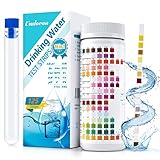
- 🌍 【16-in-1 Water Test Kit】- With Umlecoa water quality test kit, you may know level of Water Hardness, Free Chlorine, Iron, Copper, Lead, Nitrate, Nitrite, Mps, Total Chlorine, Fluoride, Cyanuric Acid, Ammonia Chloride, Bromine, Total Alkalinity, Carbonate, pH easily. Covers main influencing factors which pollute your swimming pool ,hot tub or drinking water quality.
- 🌍【Fast & Accurate Results】- Get accurate results in minutes in just 3 steps. ①Dip an testing strip into water for 2 sec. ②Remove it and hold horizontally for 30-60 sec (Please don't shake excess water off). ③Compare to color chart with up to 99% accuracy. It’s never been this easy to take a drinking water testing, even a child can do it, save your time and money from long trip to laboratory.
- 🌍 【Wide Applicability】- Umlecoa 16 in 1 water test strips can be applied to a wide range of water inspection, including drinking water, pool, hot tub, spa, pond, aquarium and industrial waste water and more water quality test, it is ideal for water testing at home, laboratory or school. For the health of you and your family, please use the professional water test strips to detect water quality standards.
- 🌍 【Home Test Kit】- Package includes: 125 test strips, test tube with cap (help with testing). Ready to use, for your convenience. All kits have safety measures to ensure the quality of your test strips. Economical 125pcs test strips for water in a handy bottle with color card, easy to carry to test anywhere according to your own needs (Tip: Be sure to tighten the cap after taking out the test strip).
- 🌍【Healthy Water & Happy Life】- We promise, we follow a strict quality control on each package and each batch, so you never need to worry about inconsistent or faulty readings on these test strips. If you have any concerns about our water test kit, please contact us now! Umlecoa after-sales service team is online 7*24 hours. Our expert team will provide an efficient and satisfactory solution.
The published account attached the limitation directly to the result. Alan Soper of the Rutherford Appleton Laboratory said, “The experiment looks sound, but whether it has anything to do with pure water is an open question.” That is an assessment reported in the 2018 science coverage, not a formal consensus statement.
Recommended Free Tools
Pablo Debenedetti of Princeton University expressed the same standard for a definitive test: “Ultimately, the reality of dual liquid phases in metastable water needs to be demonstrated or falsified in the pure liquid.” Eugene Stanley of Boston University, who was not involved in the study, called the experiments “the most striking experimental evidence so far supporting this hypothesis.” Those comments describe the significance of the result while preserving its limitation: the sample was a solution.
How amorphous ice fits into the picture
Water can form noncrystalline, glass-like solids known as amorphous ice. High-density amorphous ice and low-density amorphous ice can interconvert when pressure changes. Their different structures resemble the density contrast proposed for HDL and LDL, which is why they are relevant to the hypothesis.
Glassy states are not liquid phases
Amorphous ice is solid, even though it lacks the orderly crystal lattice of ordinary ice. Molecular motion in a glass is constrained in a way that differs fundamentally from a freely flowing liquid. A pressure-driven conversion between two amorphous ices therefore cannot be presented as direct observation of two liquid waters.
The connection is indirect but scientifically useful. If two structurally distinct forms of solid water can exist, that supports the idea that hydrogen-bond networks may have more than one large-scale arrangement. Whether those arrangements persist as separate liquids under supercooled conditions is a separate question that requires liquid measurements.
Quick wins for a faster PC:
Clear out junk files and repair common Windows errorsFree Scan →Scan for outdated or missing drivers - takes under a minuteDriver Scan →Repair Windows errors before they cause bigger problemsFix Now →Rank #4

- Every test counts: Water insecurity can cause health problems, and having suffered from it myself, I am keenly aware that I do not want to see any more families affected. HEVEIS is committed to encouraging families in the United States to be aware of water quality issues and to take steps to test water quality regularly and resolve problems in a timely manner. To eliminate the physical effects of water quality. Small actions add up to a big difference, so take action now for the health of you and your family
- Complete and comprehensive: Water testing kits for drinking water offers the most extensive and comprehensive drinking water test kit, so if you want to test your drinking water quality quickly and comprehensively, it's all you need! Once you have it, you'll have peace of mind for the whole family
- Easy to use for everyone: No need to be a specialist, even a child can do it independently; results are obtained in 3 simple steps and the home water test kit is accompanied by clear graphic instructions
- Easy-to-read, real-time record: Still worried about the bottle's colorimetric difficulties and indicator results you can't remember? The water quality test kit is equipped with an independent color comparison chart and record card; by comparing the test strip with the color comparison chart, the results are instantly available and can be recorded on the record card immediately. The record card is also convenient for later analysis of water quality
- In-depth understanding of water quality: Based on actual test results and compared to the EPA standards book, you can clearly understand the meaning and implications of each indicator to help protect your and your family's health. The drinking water testing kit includes EPA standards and detailed descriptions of each indicator. Please contact us if you require a numerical description
Why direct confirmation is so difficult
The “no-man’s-land” problem
The proposed liquid–liquid transition is expected in deeply supercooled water. As water is cooled below its ordinary freezing point, it can remain liquid temporarily, but the probability of ice nucleation rises. A sample may crystallize before an instrument can collect enough data to determine whether a liquid–liquid transition occurred.
Metastable water changes the experimental standard
Supercooled water is metastable: it can exist for a time even though ice is the more stable state under those conditions. Any claimed transition must be distinguished from ordinary freezing, surface effects, impurities, pressure changes, and the influence of confinement or dissolved substances. Researchers therefore need measurements that are both fast and sensitive, along with careful control experiments.
Different probes answer different questions
Terahertz spectroscopy measures frequency-dependent dielectric response and molecular relaxation. Scattering techniques can probe spatial structure. Calorimetry can detect heat-capacity or enthalpy changes. Simulations can test whether molecular models produce two liquid-like populations. None of these methods automatically proves a macroscopic first-order phase boundary; the conclusion depends on how the observations fit together and whether alternative explanations are excluded.
Independent reader supportYour contribution helps us test, update, and keep practical guides available for everyone.What would count as convincing evidence?
A strong case for two liquid phases in pure water would require several observations that converge on the same conclusion:
Do these 3 things before closing this tab:
1Repair Windows errors before they cause bigger problems2Scan for outdated or missing drivers - takes under a minute3Clear out junk files and repair common Windows errors- Pure, bulk water: The sample would need to be water without a solute whose presence could create the transition.
- Controlled pressure and temperature: Researchers would have to map behavior across the predicted region while recording the exact thermodynamic conditions.
- A reproducible discontinuity or coexistence: A first-order transition should produce a measurable jump or two-phase coexistence in properties such as density, structure, or enthalpy, rather than only a smooth change in relaxation time.
- Independent measurement methods: Spectroscopy, scattering, and thermodynamic measurements should agree on the location and character of the transition.
- Separation from crystallization: The signal must be shown to arise in liquid water before ice forms, not from a mixture of liquid and newly formed solid.
- Repetition across laboratories: Independent groups should reproduce the behavior with different instruments and sample preparations.
Until those conditions are met, the most defensible conclusion is that experiments are probing behavior compatible with the LDL–HDL idea, not that two liquid phases have been conclusively established.
Best Value

- The Earth Force Low Cost Water Monitoring Kit can be used to test fresh, brackish, or saline aquatic environments.
- This complete kit includes a manual with step-by-step, diagrammed instructions; an easy-to-use laminated color chart, and all the necessary apparatus and non-hazardous TesTabs to test ten water samples (three samples for coliform).
- A popular, economical tool for learning the basics of water quality.
- Students will have fun analyzing sample water for eight different test factors.
How to read headlines about “two forms of water”
Headlines often compress several distinct claims. Use these checks when evaluating one:
- Ask what was in the sample. “Water” may mean pure water, a salt solution, water in a narrow pore, or amorphous ice.
- Check the physical state. Evidence from a glassy solid is not direct evidence from a liquid.
- Separate observation from interpretation. A change in a spectroscopic relaxation process is measured; assigning it to LDL and HDL is a model-based interpretation.
- Look for pressure and temperature. The hypothesis concerns unusual supercooled conditions, not room-temperature water.
- Check whether the result is a transition or a crossover. A smooth change in molecular dynamics can occur without a first-order phase boundary.
- Look for replication. One striking experiment can motivate a hypothesis, but confirmation requires independent tests.
What the evidence supports today
The evidence supports a carefully limited statement. Water may have two liquid forms, LDL and HDL, connected by a liquid–liquid transition that terminates at a critical point. The 2023 terahertz study adds a significant pure-water measurement whose authors interpret as evidence for that picture. The 2018 solution experiment shows related transition behavior in a water-containing mixture, while amorphous-ice work demonstrates structurally distinct noncrystalline forms that may be connected to the proposed liquids.
Those findings do not yet amount to direct, unambiguous observation of two coexisting phases in pure bulk liquid water. The crystallization barrier, the use of solutions in some experiments, and the difference between glassy ice and liquid water all leave important alternatives open. The scientific debate is therefore not about whether the measurements exist; it is about what those measurements demonstrate.
Free tools Windows power users keep installed
One-click scans. No signup required.
Why the question matters to water science
Confirming or rejecting the liquid–liquid transition hypothesis would clarify how hydrogen bonds organize in supercooled water and how microscopic rearrangements produce macroscopic properties. It would also test whether several unusual features of water can be explained by proximity to a hidden critical point. Conversely, if the proposed transition cannot be reproduced in pure water, models would need to explain the observed anomalies without invoking two liquid phases.
For now, “evidence mounts” is a fair description of an active scientific case, provided it is followed by the qualification that the decisive experiment in pure liquid water has not yet been achieved.
Quick Recap
Product prices and availability are accurate as of the date/time indicated and are subject to change. Any price and availability information displayed on Amazon at the time of purchase will apply.

