
The Tool Desk
Outbyte Driver Updater FREEScan for outdated or missing drivers - takes under a minuteDriver Scan →Outbyte PC Repair FREEClear out junk files and repair common Windows errorsFree Scan →iTechGuides is reader-supported. When you buy through links on our site, we may earn an affiliate commission. As an Amazon Associate I earn from qualifying purchases. Learn more
Use the laboratory hazardous-waste route first if a research prototype is chemically, biologically, or radiologically contaminated, contains an unknown residue, or has a damaged battery. Institutional environmental, health and safety (EHS) personnel should determine whether it is hazardous and whether decontamination is acceptable. Only a prototype that EHS has documented as clean, with batteries removed or separately managed, should be offered to an electronics recycler.
This distinction matters because a lab-built instrument can look like ordinary electronic scrap while carrying solvent, heavy-metal, biological, radioactive, mercury, lamp, or pressure hazards. EPA guidance says potential chemical or biological contamination can make recycling problematic or infeasible. The following workflow is based on U.S. EPA requirements and guidance; state, local, national, and institutional rules can change the result.
Make the route decision before shipping anything
| What you find on or in the prototype | First route | What must happen next |
|---|---|---|
| Documented decontamination; electronics only; battery removed or separately accepted | Certified electronics recycling | Get written acceptance from the receiving recycler and retain the decontamination record. |
| Chemical, biological, or radiological contamination that remains | Institutional laboratory hazardous-waste process | Use the central accumulation area or a permitted treatment, storage, or disposal facility through EHS. |
| Unknown residue or unknown contents | Laboratory hazardous-waste decision process | Do not send it to an electronics recycler until trained personnel characterize and clear it. |
| Damaged, swollen, hot, leaking, or otherwise compromised lithium battery | Battery or hazardous-waste emergency procedure | Isolate it only as directed by EHS or the receiving facility; arrange a destination equipped for damaged batteries. |
| Intact removable lithium battery with a clean device | Separate battery management plus e-waste for the device | Remove only when safe, protect terminals, and send the battery to an approved battery recycler or hazardous-waste destination. |
A recycler’s willingness to accept a device does not override a hazardous-waste determination. Acceptance is a second check after the prototype has been characterized and, where appropriate, decontaminated.
Do these 3 things before closing this tab:
1Clear out junk files and repair common Windows errors2Fix the driver behind crashes, sound loss and screen glitches3Repair Windows errors before they cause bigger problemsWhy a research prototype is not automatically ordinary e-waste
Commercial electronics normally have a known bill of materials and an established recycling stream. A research prototype may combine an instrument enclosure, custom circuit boards, sensors, tubing, reaction cells, lamps, vacuum or pressure components, and temporary modifications. The device’s history can be more important than its appearance: a clean-looking housing may have held corrosives, solvents, infectious material, radioactive tracers, or heavy-metal solutions.
#1 Best Overall

- UN Approved Container for Dry Cell Batteries -- Easily recycle various dry cell batteries such as Alkaline, Nickel Cadmium (NiCad), Zinc-Carbon (Zn), Rechargeable Lithium-ion, Nickel-Metal Hydride, mercury, Silver-Oxide, AA, AAA, C, D and 9 Volts.
- Easy and Convenient Recycling Process -- Our kit offers an easy process. You will receive a container in a box, and a free return label. Just drop your batteries, attach the label, and send for recycling—no stress or extra fees.
- Prevention of Landfill Disposal -- Recycling makes sure that lithium batteries don't end up in landfills. This prevents dangerous materials from getting into the environment and helps keep our ecosystems safe.
- Recycling You Can Trust -- We are certified recycling experts who share our dedication to the environment. Your batteries will be handled responsibly, reducing the negative impact of improper disposal.
- Be a Part of Something Bigger -- Recycling batteries isn't just responsibility – it's a step towards a circular economy. By doing your part, you're helping to conserve valuable resources and lessen the demand for new materials.
Contamination is the controlling question. EPA’s I-WASTE DST guidance states that “Potential contamination with chemical or biological agents would make recycling problematic, as a minimum, and possibly infeasible.” That warning applies even when the prototype no longer operates. Residues can enter a recycler’s dismantling, shredding, heating, or wastewater processes and expose workers or contaminate recovered materials.
Hazardous components also matter when the surrounding device is clean. Examples include mercury switches or lamps, cadmium-containing parts, lead-bearing components, pressurized cylinders, compressed-gas cartridges, and damaged energy-storage cells. EPA guidance notes that more than 90% of cadmium combusted is found in fly ash and more than 70% of mercury combusted is found in filter cake. Those figures describe combustion residues in WEEE guidance, not a recommendation to burn or otherwise dispose of a prototype; they illustrate why hazardous constituents must be controlled before processing.
Step 1: Inventory the prototype and stop informal disposal
Before cleaning, dismantling, or packaging, place the unit in a controlled area and prevent it from entering ordinary trash or mixed recycling. A supervisor, principal investigator, or lab manager should identify who owns the device and who can authorize its disposition.
Free tools Windows power users keep installed
One-click scans. No signup required.
Record the physical and experimental history
- Write down the model or project identifier, serial number, location, and date removed from service.
- List every experiment, process fluid, reagent, biological agent, tracer, gas, and cleaning chemical that contacted the unit.
- Identify components added during prototyping, including sensors, pumps, lamps, heaters, capacitors, cooling loops, pressure vessels, and custom battery packs.
- Note leaks, corrosion, cracked housings, swelling, unusual odor, heat, damaged wiring, and any missing labels.
- Photograph the device and labels without opening sealed or pressurized parts.
Flag hazards that change handling
Look specifically for lithium-ion or lithium-metal batteries, mercury lamps or switches, cadmium-containing parts, lead-bearing glass or solder, radioactive labels, biohazard markings, compressed-gas connections, and containers that may retain pressure. Treat an unlabeled residue as unknown, not as harmless water or dust. Do not power up a device merely to test it if a battery is damaged, contamination is suspected, or a pressure hazard exists.
Step 2: Obtain an EHS determination and plan decontamination
Institutional EHS personnel should decide whether the unit is hazardous waste, can be decontaminated, or requires a specialized contractor. Under EPA’s academic-laboratory rule, eligible institutions use a Laboratory Management Plan and trained professionals make hazardous-waste determinations. The rule does not make every prototype exempt; it establishes a managed process for identifying and routing laboratory waste.
Give EHS enough information to make a defensible decision
- Provide the inventory, experimental records, safety data sheets, and photographs.
- Identify the parts that contacted material and whether those parts can be removed without spreading contamination.
- Explain whether the device was inside a hood, glovebox, containment cabinet, cleanroom, radiation area, or animal or clinical facility.
- State whether a battery, lamp, gas cylinder, or other regulated component is damaged or inaccessible.
- Ask what documentation EHS requires: a decontamination certificate, wipe-test results, radiation survey, biological inactivation record, or waste profile.
Do not improvise a cleaning protocol. The correct method depends on the contaminant and the materials being cleaned. A solvent that removes one residue can spread another, damage seals, create a flammable atmosphere, or turn a solid into a more mobile waste.
Rank #2
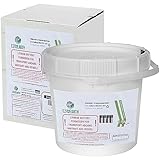
- Container for Wide range of Lithium Batteries -- Easily recycle various lithium batteries from diverse devices, promoting hassle-free disposal and reducing electronic waste. Hold up to 41.8 lbs of Lithium batteries.
- Easy and Convenient Recycling Process -- Our kit offers an easy process. You will receive a container in a box, and a free return label. Just drop your batteries, attach the label, and send for recycling—no stress or extra fees.
- Prevention of Landfill Disposal -- Recycling makes sure that lithium batteries don't end up in landfills. This prevents dangerous materials from getting into the environment and helps keep our ecosystems safe.
- Recycling You Can Trust -- We are certified recycling experts who share our dedication to the environment. Your batteries will be handled responsibly, reducing the negative impact of improper disposal.
- Be a Part of Something Bigger -- Recycling your lithium batteries isn't just responsibility – it's a step towards a circular economy. By doing your part, you're helping to conserve valuable resources and lessen the demand for new materials.
When decontamination is not appropriate
Keep the prototype in the hazardous-waste stream when contamination cannot be identified, when the device cannot be safely opened or cleaned, when residues remain after the approved procedure, or when a hazardous component is integral and the receiving recycler is not permitted to manage it. EHS may direct the unit to the institution’s central accumulation area and then to a permitted treatment, storage, or disposal facility.
Step 3: Follow the laboratory-waste branch when contamination remains
Once EHS classifies the prototype as laboratory hazardous waste, use the institution’s established containers, labels, accumulation limits, manifests, and pickup process. Do not place the whole unit in a solvent drum unless EHS has approved that packaging; large equipment may require a compatible overpack, a waste profile, or disassembly by a qualified contractor.
Packaging and labeling questions to resolve with EHS
- Is the waste regulated by chemical characteristic, listed constituent, acute hazard, infectious property, radioactive material rule, or a state-specific category?
- Can the device be packaged without shorting batteries, releasing liquid, or damaging containment?
- Does the transporter need a hazardous-material description, UN number, or other shipping documentation?
- Must the unit remain upright, temperature-controlled, shielded, or secured against movement?
- Which records prove transfer to the permitted facility?
Keep contaminated accessories with the prototype only when EHS directs that choice. Separating tubing, reservoirs, absorbents, lamps, and batteries can reduce risk, but unapproved dismantling can expose workers and create several waste streams that are harder to control.
Step 4: Handle lithium batteries as a separate safety problem
Lithium-ion batteries can ignite when crushed, punctured, overcharged, or shorted. EPA states that “Lithium-ion batteries and devices containing these batteries should NOT go in household garbage or recycling bins.” That prohibition applies even when the rest of the prototype is clean.
Recognize a battery that needs specialized handling
- Swelling, bulging, hissing, smoke, electrolyte odor, leakage, corrosion, or unusual heat.
- A pack that was dropped, punctured, submerged, crushed, or involved in a fire.
- Unknown chemistry, missing protection circuitry, exposed terminals, or a pack that cannot be removed without cutting or prying.
Move a damaged battery only under EHS or emergency guidance. Do not puncture, compress, freeze, immerse, or place it in a metal container unless the receiving program specifically requires that container. If it is hot, smoking, or venting, follow the site’s fire and emergency procedure rather than attempting routine recycling.
What’s actually slowing this PC down?
Pick the symptom - the matching free tool is one click away.
Prepare an intact removable battery
- Ask EHS or the receiving facility whether removal is safe and permitted.
- Power down and disconnect the prototype using the manufacturer’s or lab’s approved procedure.
- Prevent short circuits by taping exposed terminals with non-conductive tape or placing each battery in an individual protective bag, as directed by the recycler.
- Use compatible non-metallic containment for staging. A purpose-made lithium-battery collection container can reduce contact and shorting risk, but buying a container does not establish that its seller is an authorized recycler.
- Send the battery to a battery recycler or hazardous-waste destination that confirms it accepts that chemistry and condition. Do not put it in household garbage, curbside recycling, or a mixed electronics box unless the program explicitly accepts and protects batteries.
For shipping, follow the carrier’s current dangerous-goods rules and the receiving facility’s packaging instructions. A battery removed from a device can have different transport requirements from a battery installed in equipment, and damaged batteries can require additional controls.
Rank #3

- UN Approved Container for Dry Cell Batteries -- Easily recycle various dry cell batteries such as Alkaline, Nickel Cadmium (NiCad), Zinc-Carbon (Zn), Rechargeable Lithium-ion, Nickel-Metal Hydride, mercury, Silver-Oxide, AA, AAA, C, D and 9 Volts.
- Easy and Convenient Recycling Process -- Our kit offers an easy process. You will receive a container in a box, and a free return label. Just drop your batteries, attach the label, and send for recycling—no stress or extra fees.
- Prevention of Landfill Disposal -- Recycling makes sure that batteries don't end up in landfills. This prevents dangerous materials from getting into the environment and helps keep our ecosystems safe.
- Recycling You Can Trust -- We are certified recycling experts who share our dedication to the environment. Your batteries will be handled responsibly, reducing the negative impact of improper disposal.
- Be a Part of Something Bigger -- Recycling batteries isn't just responsibility – it's a step towards a circular economy. By doing your part, you're helping to conserve valuable resources and lessen the demand for new materials.
Step 5: Clear a clean device for electronics recycling
An electronics route is appropriate only after EHS has accepted the decontamination and the recycler has confirmed it can handle the equipment. “Clean” means more than visibly dry: it means the responsible institution has assessed the materials that contacted the prototype and has records supporting the release.
What to send the recycler
- A concise equipment description, dimensions, weight, and photographs.
- Confirmation that chemicals, biological agents, radioactive materials, and removable batteries are absent or separately managed.
- A decontamination statement or other documentation required by the recycler.
- Details of mercury lamps, capacitors, refrigerants, pressure parts, or other components that remain.
- Any data-bearing storage, access credentials, or proprietary research information that must be removed or destroyed.
Obtain written acceptance before delivery. Ask whether the facility dismantles, refurbishes, resells, shreds, or exports components; which downstream processors it uses; and how it handles batteries and hazardous fractions. EPA identifies two accredited certification standards for electronics recyclers: the Responsible Recycling (R2) Standard and the e-Stewards Standard for Responsible Recycling and Reuse of Electronic Equipment. A recycler certified to one of these standards is a stronger starting point, but you still need confirmation that it accepts your specific prototype and condition.
Protect research data and intellectual property
Custom instruments may contain flash storage, removable media, calibration files, network credentials, or unpublished data. Follow the institution’s media-sanitization policy before release. If storage cannot be wiped reliably, ask EHS, information security, and the recycler whether the drive can be removed and destroyed under documented chain of custody. Decontamination records and data-destruction records serve different purposes; keep both when both risks exist.
Compare the two routes using the risks that actually decide the case
| Decision factor | Laboratory hazardous-waste route | Electronics-recycling route |
|---|---|---|
| Contamination | Used when contamination remains, is unknown, or cannot be documented as removed. | Used only after EHS-approved decontamination or a documented clean history. |
| Battery condition | Required for damaged, leaking, inaccessible, or unknown batteries when a specialized destination is needed. | Possible for a clean device only after batteries are removed or the recycler confirms safe acceptance. |
| Facility qualification | Institutional central accumulation area and a permitted treatment, storage, or disposal facility. | Recycler that confirms acceptance; EPA recognizes R2 and e-Stewards certification standards. |
| Documentation | Waste determination, profile, labels, manifests, and transfer records as required by the jurisdiction. | Decontamination release, acceptance confirmation, asset or data records, and downstream documentation. |
| Legal geography | Federal rules plus state, local, and institutional requirements. | Federal rules plus state electronics, universal-waste, battery, and transport requirements. |
The table is a routing aid, not a substitute for EHS approval. If any factor is unresolved, pause the shipment and escalate the question.
Check state, local, and cross-border requirements
U.S. EPA guidance is a baseline, not a universal permit. States can add electronics to universal-waste programs, define additional categories, impose stricter battery rules, or regulate components that federal rules treat differently. Local authorities may control collection events and facility approvals. Confirm the current requirements with the state environmental regulator, local authority, or institutional EHS office before moving the device.
Cross-border shipments add export, import, customs, and hazardous-material controls. A recycler’s website or certification cannot by itself establish that an international shipment is legal. Ask the institution’s environmental compliance and shipping specialists to review the destination, material description, and carrier requirements.
Rank #4

- Durable Metal Construction: Made from sturdy metal material for long-lasting use.
- Large Size: Measures 11.5 inches long, 6 inches wide, and 6 inches high for ample storage.
- Multipurpose Use: Ideal for recycling and storing cell phones, batteries, and accessories.
- Easy to Use: Comes with built-in hinges for easy opening and closing.
- Compact Design: Slim profile takes up minimal space in your home or office.
Chain of custody: keep proof of what happened
Retain a simple file that follows the prototype from inventory to final destination. Include the asset identifier, photographs, contamination history, EHS determination, decontamination method and date, battery disposition, recycler acceptance, pickup or shipment record, and final certificate or receipt. For hazardous waste, retain manifests and facility documentation for the period required by the applicable rule and institutional policy.
Windows Errors? Fix Them Before They Spread
Repair common Windows errors and clear accumulated junk for a smoother, more stable PC - no reinstall needed.Free scan · no reinstallCrashes, No Sound, or Screen Glitches?
Random freezes, missing sound and display glitches usually trace back to one bad driver. Find and replace yours safely.Free scan · under a minuteChain of custody protects more than compliance. It shows that a contaminated device was not quietly placed in an electronics bin, demonstrates that batteries were separated, and helps the institution answer questions about data, ownership, and downstream processing months later.
Common mistakes and how to correct them
“It is only a circuit board, so it is e-waste.”
A circuit board that contacted an unknown solution is not automatically clean. Stop, document the history, and ask EHS for a determination.
“We wiped it with alcohol, so it is decontaminated.”
Visible cleanliness and a generic wipe do not prove removal or inactivation of every hazard. Use the contaminant-specific procedure approved by EHS and retain the record.
“The recycler said it accepts all electronics.”
Obtain written acceptance for this device, including its battery, lamps, pressure parts, and contamination status. General marketing language is not a waste determination.
“The battery is small, so it can go in the trash.”
Do not place lithium-ion batteries or devices containing them in household garbage or recycling bins. Separate and route the battery through an approved program.
Best Value

- Durable and Secure Design: Made from sturdy plastic with secure latch to keep contents safe and secure.
- Compact Size: Measures just 6.5 x 5 x 3.5 inches, perfect for small spaces.
- Easy to Use: Simply place used batteries and cell phones inside for recycling.
- Convenient and Environmentally Friendly: Helps recycle used batteries and cell phones, reducing waste.
- Trusted Brand: Part of the Call2Recycle program, a leader in battery and cell phone recycling.
“We will remove the battery ourselves.”
Stop if the pack is swollen, glued in, damaged, hot, or connected to hazardous equipment. Removal can create a short, puncture, or exposure; obtain EHS or receiving-facility instructions first.
“A certified recycler accepts every risk.”
Certification improves confidence in management systems but does not replace accurate disclosure. Tell the recycler what the prototype contacted and what components remain.
Worked examples
Clean optical sensor with a removable battery
The lab documents that the sensor was used only in a dry test fixture, has no chemical or biological contact, and passes EHS review. The battery is intact and removable. EHS records the release, the battery is taped or bagged and sent to an accepted battery program, and the battery-free sensor is shipped only after an electronics recycler confirms acceptance.
Quick wins for a faster PC:
Fix the driver behind crashes, sound loss and screen glitchesFind Drivers →Clear out junk files and repair common Windows errorsFree Scan →Scan for outdated or missing drivers - takes under a minuteDriver Scan →Microfluidic prototype with unknown residue
The unit contains tubing and a reaction cartridge from an experiment whose final reagent is not recorded. The correct first route is laboratory hazardous waste, not an electronics bin. EHS can characterize the residue, prescribe a cleaning or disposal method, and decide whether any portion can later be released.
Instrument with a swollen lithium pack
The prototype is unplugged and isolated according to the site’s battery-emergency procedure. Staff do not pry out or puncture the pack. EHS arranges a destination that accepts damaged batteries and separately determines how to manage the remaining electronics.
Radiation-measurement prototype
A radiation survey and release documentation are required before any electronics recycler sees the device. If the survey cannot establish release, the unit remains in the applicable radioactive-material or hazardous-waste process.
A practical release checklist
- Experimental and component history is recorded.
- Chemical, biological, radiological, battery, lamp, pressure, and mercury hazards are identified.
- EHS has made or approved the hazardous-waste determination.
- Decontamination follows an approved method and is documented where applicable.
- Damaged or removable lithium batteries have a separate, confirmed destination.
- The electronics recycler has accepted the exact equipment and condition in writing.
- State, local, and shipping requirements have been checked.
- Data-bearing media and proprietary information have been sanitized or placed under documented custody.
- Pickup, shipment, manifest, and final-receipt records are retained.
If any checklist item is unanswered, keep the prototype in controlled storage and ask EHS rather than guessing.
Quick Recap
Product prices and availability are accurate as of the date/time indicated and are subject to change. Any price and availability information displayed on Amazon at the time of purchase will apply.

