
iTechGuides is reader-supported. When you buy through links on our site, we may earn an affiliate commission. As an Amazon Associate I earn from qualifying purchases. Learn more
Yes—if your priorities are a large screen, long battery life and everyday photography at a lower launch price. The iPhone 16 Plus delivers the same 2024-generation Apple platform and a nearly as large display, but it is not a feature-equivalent substitute for the iPhone 16 Pro Max.
The Pro Max earns its premium with a 120Hz ProMotion display, a dedicated 5x telephoto camera, ProRes and 4K/120 video, faster USB transfers, a titanium build and 256GB starting storage. Whether those advantages matter depends on how you shoot, play, transfer and store content.
Which phone fits which buyer?
| Your priority | Better fit | Why |
|---|---|---|
| Large iPhone screen and strong battery value | iPhone 16 Plus | It provides a 6.69-inch display and lower entry price. |
| Smoothest scrolling and high-refresh-rate gaming | iPhone 16 Pro Max | Its display runs at 120Hz instead of 60Hz. |
| Everyday family, food and travel photos | Either | Both have a 48MP main camera, a 12MP front camera and computational photography features from the same generation. |
| Distant subjects, concerts and sports | iPhone 16 Pro Max | The dedicated 5x telephoto camera gives it substantially more native reach. |
| Professional video capture | iPhone 16 Pro Max | It adds ProRes and 4K Dolby Vision recording at up to 120 frames per second. |
| Large wired video or photo transfers | iPhone 16 Pro Max | Its USB 3 connection reaches up to 10Gb/s; the Plus is limited to USB 2 speeds. |
| Lighter large-screen phone | iPhone 16 Plus | It weighs 199 grams, compared with 227 grams for the Pro Max. |
In practical terms, the Plus is the value-oriented large iPhone. The Pro Max is the specialist model for people who will use its display, camera, video, storage or transfer advantages regularly.
Recommended Free Tools
Price and storage: the $300 launch gap is not the whole story
Tom’s Guide listed the 2024 United States launch prices at $899 for iPhone 16 Plus and $1,199 for iPhone 16 Pro Max. That is a $300 difference, or roughly one-third of the Plus’s launch price. The launch prices were also £899 versus £1,199 in the United Kingdom and AU$1,599 versus AU$2,149 in Australia.
#1 Best Overall

- 6.7" Super Retina XDR OLED, HDR10, Dolby Vision, 1000nits (typ), 2000nits (HBM), 2556x1179px at 460ppi, 4674mAh Battery
- 128GB, 8GB RAM, Apple A18 (3nm), Hexa-core (2x4.04 GHz + 4x2.20 GHz), Apple GPU 5-core, 16‑core Neural Engine
- Rear camera: 48MP, f/1.6, wide + 12MP, f/2.2, ultrawide, Front Camera: 12MP, f/1.9, wide, iOS 18, upgradable to iOS 18.5
- 4G LTE: 1/2/3/4/5/7/8/12/13/14/17/18/19/20/25/26/28/29/30/32/34/38/39/40/41/42/48/53/66/71, 5G: n1/2/3/5/7/8/12/14/20/25/26/28/29/30/38/40/41/48/53/66/70/71/75/76/77/78/79 - Dual eSIM
- Unlocked for freedom to choose your carrier. Compatible with both GSM & CDMA networks. The phone is unlocked to work with all GSM Carriers & CDMA Carriers Including AT&T, T-Mobile, Verizon, Straight Talk., Etc.
| Model | U.S. launch price | U.K. launch price | Australia launch price | Starting storage | Highest storage stated in the cited specifications |
|---|---|---|---|---|---|
| iPhone 16 Plus | $899 | £899 | AU$1,599 | 128GB | Not stated |
| iPhone 16 Pro Max | $1,199 | £1,199 | AU$2,149 | 256GB | 1TB |
The Pro Max starts with twice the Plus’s base storage. That changes the value calculation for anyone who would otherwise need to pay for more capacity. A 128GB Plus may be sufficient for a light user who streams media and regularly moves photos to a computer or cloud service; it is less comfortable for someone who records a lot of 4K video or keeps large offline libraries.
These are 2024 launch figures, not a promise of current retail pricing. By 2026, availability, discounts, trade-in offers and remaining storage configurations can differ by country and seller. Compare the exact capacity and warranty offered today rather than assuming the original $300 gap still applies.
Display and design: size is close, motion is not
| Specification | iPhone 16 Plus | iPhone 16 Pro Max |
|---|---|---|
| Measured display size | 6.69 inches | 6.86 inches |
| Refresh rate | 60Hz | 120Hz ProMotion |
| Frame material | Aluminum | Titanium |
| Weight | 199g | 227g |
| Water and dust resistance | IP68 | IP68 |
| Physical controls | Camera Control and Action button | Camera Control and Action button |
The screen-size difference is only 0.17 inches diagonally, so both phones qualify as large-screen iPhones for video, reading and split-view-friendly apps. The more consequential difference is refresh rate. The Plus redraws at 60Hz, while the Pro Max can operate at 120Hz through ProMotion.
When 120Hz is worth paying for
Scrolling through long web pages, rapidly moving between home screens and panning around games look smoother at 120Hz. Touch feedback can also feel more immediate because the display updates more frequently. If you notice motion judder on a 60Hz phone or play games in which camera movement is constant, the Pro Max’s panel is a meaningful quality-of-use upgrade.
A 60Hz screen remains adequate for messaging, email, photographs, streaming films and ordinary productivity. Video content is commonly delivered at frame rates below 120fps, and a viewer who does not care about scrolling smoothness will see little practical benefit from paying for ProMotion.
Rank #2

- The larger 6.9-inch display enhances productivity and media consumption, giving extra room for multitasking, side-by-side apps, and immersive viewing without feeling unwieldy in hand.
- Camera improvements focus on ultra-wide performance, capturing more detail at the edges of the frame and reducing distortion, making landscape shots, group photos, and architecture photography cleaner.
- Refined gesture controls and haptic feedback make interactions feel more precise, so scrolling, tapping, or switching between apps is smoother and more satisfying compared to previous Plus models.
- Audio enhancements optimize speaker output for spatial awareness, delivering clearer separation between instruments and voices in music, video playback, and FaceTime calls without relying on headphones.
- Durable yet lightweight materials balance heft and portability, with a subtly textured back and reinforced edges that improve grip while maintaining the premium appearance expected from the Plus series.
Handling and materials
The Plus is 28 grams lighter. That difference is noticeable when holding the phone one-handed or carrying it in a pocket, especially because both devices are physically large. The Pro Max substitutes titanium for the Plus’s aluminum construction and has the heavier build. Both models retain IP68 water and dust resistance, the Camera Control and the Action button, so those controls and the stated protection level do not distinguish the purchase.
Camera systems: decide whether 5x reach and pro video are essential
| Camera or function | iPhone 16 Plus | iPhone 16 Pro Max |
|---|---|---|
| Main rear camera | 48MP Fusion | 48MP |
| Ultrawide rear camera | 12MP | 48MP |
| Telephoto option | 2x optical-quality effect from the main sensor | 12MP dedicated 5x telephoto |
| Dolby Vision recording | Up to 4K at 60fps | Up to 4K at 120fps |
| ProRes | Not available | Supported |
| Front camera | 12MP | 12MP |
What the Plus camera is good at
The Plus’s 48MP Fusion main camera covers the situations most people photograph: people nearby, food, documents, pets and scenes in which a wide field of view is useful. Its 2x optical-quality effect uses the central portion of the main sensor, giving you a tighter composition without carrying a separate telephoto module. The 12MP ultrawide handles broader landscapes and group shots, while the 12MP front camera is the same resolution as the Pro Max’s for selfies and video calls.
Quick wins for a faster PC:
Fix the driver behind crashes, sound loss and screen glitchesFind Drivers →Clear out junk files and repair common Windows errorsFree Scan →Scan for outdated or missing drivers - takes under a minuteDriver Scan →For a buyer who normally uses the main camera at 1x or 2x and records finished clips rather than editing camera originals, the Plus does not create an obvious everyday compromise. The absence of ProRes matters only if your editing workflow specifically needs that format.
Where the Pro Max pulls ahead
The Pro Max’s dedicated 12MP 5x telephoto preserves a much longer native perspective than the Plus’s 2x option. It is useful for a performer on a stage, a child playing at a distance, wildlife, sports and architectural details that cannot be approached safely. You can crop a Plus photo, but cropping does not provide the same reach as an optical 5x camera.
The Pro Max also has a 48MP ultrawide rather than 12MP. That gives it a higher-resolution ultrawide capture option, although the value is greatest for people who routinely frame with that lens or crop those images later.
Rank #3
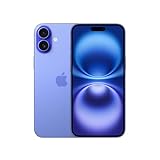
- 6.7" Super Retina XDR OLED, HDR10, Dolby Vision, 1000nits (typ), 2000nits (HBM), 2556x1179px at 460ppi, 4674mAh Battery
- 256GB, 8GB RAM, Apple A18 (3nm), Hexa-core (2x4.04 GHz + 4x2.20 GHz), Apple GPU 5-core, 16‑core Neural Engine
- Rear camera: 48MP, f/1.6, wide + 12MP, f/2.2, ultrawide, Front Camera: 12MP, f/1.9, wide, iOS 18, upgradable to iOS 18.5
- 4G LTE: 1/2/3/4/5/7/8/12/13/14/17/18/19/20/25/26/28/29/30/32/34/38/39/40/41/42/48/53/66/71, 5G: n1/2/3/5/7/8/12/14/20/25/26/28/29/30/38/40/41/48/53/66/70/71/75/76/77/78/79 - Dual eSIM
- Unlocked for freedom to choose your carrier. Compatible with both GSM & CDMA networks. The phone is unlocked to work with all GSM Carriers & CDMA Carriers Including AT&T, T-Mobile, Verizon, Straight Talk., Etc.
For video creators, ProRes is an important workflow feature because it preserves editing latitude at the cost of very large files and more demanding storage. The Pro Max can record 4K Dolby Vision at up to 120fps, enabling high-frame-rate capture and slow-motion treatments that the Plus’s 4K/60 ceiling cannot provide. If your videos are destined for quick social posts, the Plus’s 4K/60 recording is usually sufficient; if you grade footage, hand off camera files or deliberately shoot high-frame-rate 4K, the Pro Max is the appropriate tool.
Windows Errors? Fix Them Before They Spread
Repair common Windows errors and clear accumulated junk for a smoother, more stable PC - no reinstall needed.Free scan · no reinstallCrashes, No Sound, or Screen Glitches?
Random freezes, missing sound and display glitches usually trace back to one bad driver. Find and replace yours safely.Free scan · under a minutePerformance and Apple Intelligence
| Component | iPhone 16 Plus | iPhone 16 Pro Max |
|---|---|---|
| System-on-chip | Apple A18 | Apple A18 Pro |
| CPU | Six-core | Six-core |
| GPU | Five-core | Six-core |
| Neural Engine | 16-core | 16-core |
| Apple Intelligence | Supported on the 2024 platform | Supported on the 2024 platform |
Both phones use six-core CPUs and 16-core Neural Engines, so the Plus is not a cut-down experience for ordinary apps, communication or the Apple Intelligence features supported by this generation. Apple describes the system this way on its iPhone 16 Pro Max technical specifications page: “Built into your iPhone, Apple Intelligence is the personal intelligence system that helps you write, express yourself, and get things done effortlessly.” Apple documents Apple Intelligence on both models.
The A18 Pro adds a sixth GPU core. On paper, that gives the Pro Max more graphics headroom for sustained gaming, complex 3D scenes and demanding video operations. The difference is less important for web browsing, messaging, photo sharing and short gaming sessions. A buyer who does not run graphics-heavy games or edit demanding footage should not treat the A18 label on the Plus as a major limitation.
Battery life and charging
| Apple playback rating | iPhone 16 Plus | iPhone 16 Pro Max |
|---|---|---|
| Video playback | Up to 27 hours | Up to 33 hours |
| Streamed video playback | Up to 24 hours | Up to 29 hours |
| Audio playback | Up to 100 hours | Up to 105 hours |
| MagSafe charging | Up to 25W | Up to 25W |
Apple’s controlled ratings give the Pro Max a six-hour advantage for local video, five hours for streamed video and five hours for audio. Those are laboratory-style playback ceilings, not guarantees for a particular day. Cellular signal, screen brightness, camera use, gaming, background activity and settings can move real-world endurance substantially in either direction.
Both phones support MagSafe charging up to 25W, so choosing the Pro Max does not buy a faster stated MagSafe ceiling. The wired connection is different: the Plus uses USB 2 at up to 480Mb/s, while the Pro Max supports USB 3 at up to 10Gb/s. The latter is valuable when moving large ProRes files, long 4K recordings or a full photo library to a computer. For charging alone, the port-speed difference is irrelevant.
The Tool Desk
Outbyte PC Repair FREERepair Windows errors before they cause bigger problemsFix Now →Outbyte Driver Updater FREEScan for outdated or missing drivers - takes under a minuteDriver Scan →Rank #4

- 6.7" Super Retina XDR OLED, HDR10, Dolby Vision, 1000nits (typ), 2000nits (HBM), 2556x1179px at 460ppi, 4674mAh Battery
- 128GB, 8GB RAM, Apple A18 (3nm), Hexa-core (2x4.04 GHz + 4x2.20 GHz), Apple GPU 5-core, 16‑core Neural Engine
- Rear camera: 48MP, f/1.6, wide + 12MP, f/2.2, ultrawide, Front Camera: 12MP, f/1.9, wide, iOS 18, upgradable to iOS 18.5
- 4G LTE: 1/2/3/4/5/7/8/12/13/14/17/18/19/20/25/26/28/29/30/32/34/38/39/40/41/42/48/53/66/71, 5G: n1/2/3/5/7/8/12/14/20/25/26/28/29/30/38/40/41/48/53/66/70/71/75/76/77/78/79 - Dual eSIM
- Unlocked for freedom to choose your carrier. Compatible with both GSM & CDMA networks. The phone is unlocked to work with all GSM Carriers & CDMA Carriers Including AT&T, T-Mobile, Verizon, Straight Talk., Etc.
USB transfer speed can change the best choice for creators
Many phone comparisons mention camera resolution but overlook the time required to get footage off the device. USB 2’s 480Mb/s ceiling on the Plus is suitable for occasional photo imports and short clips. Large video projects can take considerably longer when transferred over a cable.
The Pro Max’s USB 3 connection reaches up to 10Gb/s, subject to a compatible cable, computer and storage device. That bandwidth does not improve image quality by itself; it reduces the bottleneck between the phone and an editing workstation. If your workflow is cloud-based or wireless, this advantage may never affect you. If you routinely copy hundreds of gigabytes, it can justify part of the premium independently of the camera hardware.
What the Plus gives you for less
- A large 6.69-inch display that is only slightly smaller diagonally than the Pro Max’s panel.
- The same generation of CPU and Neural Engine, with Apple Intelligence support documented for both models.
- A 48MP main camera, 12MP ultrawide, 2x optical-quality framing and 4K Dolby Vision recording at up to 60fps.
- Long Apple-rated playback endurance and MagSafe charging up to 25W.
- A lighter aluminum design with the same stated IP68 rating, Camera Control and Action button.
- A lower launch price, although current prices may differ from the 2024 figures.
What you give up by choosing the Plus
- ProMotion: the display is 60Hz rather than 120Hz.
- A dedicated 5x telephoto camera and the Pro Max’s 48MP ultrawide.
- ProRes recording and 4K Dolby Vision capture at 120fps.
- USB 3 transfer speeds; the Plus is limited to USB 2’s stated 480Mb/s.
- The Pro Max’s titanium construction.
- The Pro Max’s 256GB starting storage and its stated 1TB option.
- Some of the Pro Max’s additional battery headroom under Apple’s playback ratings.
Choose the iPhone 16 Plus if these statements describe you
You want the largest practical screen without the Pro Max price
The Plus provides a genuinely large display and keeps the phone lighter. If you watch video, read documents or use a phone as a travel entertainment device, its screen area is the main experience; the missing 120Hz mode may not matter to you.
Your camera use is mostly 1x and 2x
Family photos, meals, pets and nearby travel scenes fit the Plus’s main and ultrawide cameras. The 2x optical-quality effect covers the tighter framing many people use instead of a long telephoto.
You deliver finished video rather than camera originals
4K Dolby Vision at up to 60fps is a substantial capture mode. If you do not need ProRes, 4K/120 or a high-speed cable workflow, the Pro Max’s video additions may sit unused.
Best Value

- 6.7inch Super Retina XDR display. Aluminum with color-infused glass back. Ring/Silent switch
- Dynamic Island. A magical way to interact with iPhone. A16 Bionic chip with 5-core GPU
- Advanced dual-camera system. 48MP Main | Ultra Wide. Super-high-resolution photos (24MP and 48MP). Next-generation portraits with Focus and Depth Control. 4X optical zoom range
- Emergency SOS via satellite. Crash Detection. Roadside Assistance via satellite
- Up to 26 hours video playback. USB C, Supports USB 2. Face ID
You prefer less weight
The Plus removes 28 grams from an already large phone. That matters for prolonged reading, one-handed use and carrying the phone all day.
Choose the iPhone 16 Pro Max if these statements describe you
You regularly photograph distant subjects
Concerts, sports, wildlife and children on a field are the clearest cases for the dedicated 5x telephoto. A longer optical perspective can be the difference between filling the frame and relying on a heavy crop.
You notice 60Hz displays
If smooth scrolling and high-refresh-rate gaming are priorities, the Plus cannot reproduce the ProMotion experience. This is a daily interaction difference rather than a specification you see only in a camera app.
You edit video seriously
ProRes, 4K/120 capture and USB 3 transfers form a coherent creator workflow. Each feature addresses a different stage: recording, high-frame-rate production and moving large files to an editor.
You want 256GB before installing anything
The Pro Max’s base capacity is twice the Plus’s base capacity. That reduces the need to manage storage immediately, especially for people who keep offline media or record substantial 4K footage.
A practical buying decision
- List your non-negotiables. Mark whether you require 120Hz, 5x optical reach, ProRes, 4K/120, USB 3 or at least 256GB. Any single must-have points toward the Pro Max.
- Check your current phone habits. Review how often you use telephoto framing, high-refresh-rate screens and wired file transfers. Do not pay for capabilities you never invoke.
- Estimate storage honestly. Include downloaded video, photographs, games and the space consumed by 4K recordings. The Plus’s 128GB starting point is a capacity decision, not merely a price tier.
- Compare today’s exact prices. The cited prices are 2024 launch figures. Check the current country, storage configuration, warranty and trade-in terms before deciding that the original $300 difference still applies.
- Test motion if possible. Scroll through text and a photo-heavy feed on a 60Hz phone, then compare a 120Hz ProMotion device. Some buyers immediately see the difference; others do not.
- Account for accessories. Both models support MagSafe up to 25W, but select protection and mounts for the exact iPhone model you buy rather than assuming large-phone accessories are interchangeable.
Bottom line on value
The iPhone 16 Plus is a good alternative when “large iPhone” means screen size, battery and dependable everyday photos. It preserves the core 2024 platform, Apple Intelligence support, Camera Control and Action button while weighing less and launching at a lower price.
It is not a sensible substitute for the iPhone 16 Pro Max if your definition of value includes 120Hz motion, long-range photography, professional video formats, fast wired transfers, titanium or 256GB as the minimum capacity. Those are functional differences, not cosmetic branding. Match the phone to the features you will use every week, and the Plus is the better buy for many large-screen shoppers; otherwise, the Pro Max’s premium has a clear technical purpose.
What’s actually slowing this PC down?
Pick the symptom - the matching free tool is one click away.
Specification and availability note
The specifications in this comparison describe the 2024 iPhone 16 generation. Retail prices, stock, trade-in values, software availability and regional configurations can change, so verify those details for your country and purchase date. Apple’s playback figures are controlled ratings, and real-world battery life varies with network conditions, brightness, workload and settings.
Quick Recap
Product prices and availability are accurate as of the date/time indicated and are subject to change. Any price and availability information displayed on Amazon at the time of purchase will apply.

