
Quick wins for a faster PC:
Fix the driver behind crashes, sound loss and screen glitchesFind Drivers →Clear out junk files and repair common Windows errorsFree Scan →Scan for outdated or missing drivers - takes under a minuteDriver Scan →iTechGuides is reader-supported. When you buy through links on our site, we may earn an affiliate commission. As an Amazon Associate I earn from qualifying purchases. Learn more
Yes, conditionally. The Ford 7.3L Godzilla V8 is a sensible daily-driver choice when you genuinely need a Super Duty’s towing, payload, chassis strength, or naturally aspirated gasoline power. It is a poor fit when your main goal is inexpensive commuting, easy parking, or car-like maneuverability. The engine can be practical; the full-size heavy-duty truck around it determines whether everyday ownership works for you.
The short answer depends on the truck, not just the engine
A 7.3L Super Duty can handle ordinary commuting, errands, and highway travel without requiring diesel-specific equipment. Its naturally aspirated gasoline design is straightforward to operate, and Ford rates the 2026 version at 430 horsepower and 485 lb-ft of torque. Those figures provide ample reserve for a loaded truck or trailer.
That capability comes with a heavy-duty vehicle’s compromises. Cab and bed length affect parking, garage fit, turning space, and maneuverability. An unloaded Super Duty may feel unnecessarily large if your route is mostly narrow streets, crowded lots, or short urban trips. Fuel spending can also be substantial, but Ford’s published material reviewed for this question does not provide a representative daily-driving or towing MPG figure. A number from another owner is not a reliable forecast for your truck.
The Tool Desk
Outbyte Driver Updater FREEScan for outdated or missing drivers - takes under a minuteDriver Scan →Outbyte PC Repair FREERepair Windows errors before they cause bigger problemsFix Now →Use the 7.3L for daily duty when the truck’s capacity solves a real problem. If you only need transportation and rarely haul or tow, a smaller vehicle is usually the more rational daily tool.
#1 Best Overall

- Compatible with 2020-present Gas V8 7.3 and 6.8 Godzilla Engines found in Super Duty Trucks
- Full 1/4" STEEL Construction - Others use thin 3/16" or aluminum - MAY NOT BE STRONG ENOUGH on a span this wide with small hardware
- Made in the USA - Finest quality, design and engineering
- Powder coated tough finish will look good for many engine swaps to come!
- Includes necessary Grade 10.9 Hex Flange Head Cap Screws and washers - extra tough!!!
What the 7.3L Godzilla is on current Super Duty trucks
Ford’s 2026 Super Duty specifications and owner manual identify the engine as a 7,293-cm³ (445-cubic-inch) gasoline V8. The manual lists a 10.5:1 compression ratio and 87-octane minimum fuel. The 430-hp and 485-lb-ft figures are Ford’s model-year capability claims, not independent dynamometer or road-test results.
| Specification | 2026 Ford information | What it means for daily use |
|---|---|---|
| Engine displacement | 7,293 cm³ (445 in³) | Large displacement supports heavy loads without relying on turbocharging. |
| Rated output | 430 hp | Strong acceleration potential for a heavy truck; it does not make the truck compact or economical. |
| Rated torque | 485 lb-ft | Useful for carrying and towing; actual response depends on vehicle configuration and load. |
| Compression ratio | 10.5:1 | Follow the fuel requirement in the manual supplied with the specific vehicle. |
| Minimum fuel | 87-octane gasoline | Regular gasoline is the stated minimum; regional fuel availability and pricing still affect operating cost. |
| Vehicle context | Ford Super Duty heavy-duty pickups and related applications | The chassis, dimensions, tires, and suspension matter as much as engine output to daily comfort. |
Specifications can vary by model year, market, and configuration. Ford’s 2020 Owner’s Manual cautions that the manual supplied with the vehicle is the primary information source because online content can differ. Treat that instruction literally when checking fluids, service intervals, fuel requirements, or equipment on a particular truck.
When it works well as a daily driver
You regularly use the truck’s capacity
The strongest case is an owner who commutes during the week and routinely carries construction materials, equipment, livestock supplies, a slide-in camper, or a substantial trailer. The large gasoline V8 gives that owner one truck for work and personal transportation instead of maintaining a separate tow vehicle.
Do these 3 things before closing this tab:
1Fix the driver behind crashes, sound loss and screen glitches2Repair Windows errors before they cause bigger problems3Scan for outdated or missing drivers - takes under a minuteRank #2
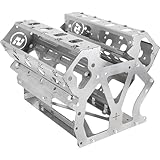
- OEM Compatibility: Patent-pending SoloSwap short block is fully compatible with all Ford 7.3L and 6.8L Godzilla bolt-ons including intake manifolds, headers, oil pans, and accessories for accurate fitment
- Lightweight Design: Weighing only 27 lbs, this steel mock up block can be easily installed and removed by one person without an engine hoist, making engine swap setup faster and safer
- Accurate Fitment Testing: Replicates all 2020–current Godzilla engines for Ford vehicles, allowing precise mock up of mounts, header clearance, accessory drive alignment, and full chassis integration
- Heavy-Duty Construction: Built from durable 12-gauge laser-cut steel, offering superior strength versus foam or plastic blocks and holding up to repeated use, fabrication, and mounted components
- Flexible Build Options: Short block version accepts OE and aftermarket cylinder heads and all bolt-on components, enabling full mock engine assembly for swap planning and measurement accuracy
Your trips suit a full-size truck
Longer suburban or rural routes, open parking areas, and a garage that can accept the chosen cab-and-bed combination reduce the everyday penalties. Before buying, measure the truck’s total length, width with mirrors, height, and turning space against your parking location. Check whether a trailer, toolbox, or bed cover changes those measurements.
You prefer gasoline simplicity
Some buyers specifically want a gasoline powertrain and do not need diesel-oriented equipment or operating practices. The 7.3L accepts the 87-octane minimum listed in the 2026 manual, so the owner does not have to select premium fuel merely to satisfy the published requirement. That does not establish that gasoline will be cheaper overall; fuel prices, mileage, maintenance, purchase price, and towing frequency all vary.
When it is a poor everyday fit
Your commute is mostly short, slow, and urban
Frequent stop-and-go driving, tight parking garages, narrow lanes, and many short trips expose the truck’s size and mass every day. The engine may be perfectly capable, but capability you never use still comes with a space and fuel penalty.
Rank #3

- Material - Made with high quality ABS material
- Package include - 2Pcs Emblems (As the first picture)
- 3D design, excellent quality, rustproof and waterproof, never fade
- Installation - Self- adhesive make this nameplate replacement sticker are very easy to install, not need any tools
- AFTER-SALES SERVICE - We promise resend or refund if have any quality issue happen in guarantee period
You expect passenger-car running costs
No authoritative source reviewed here supplies a typical MPG value for a 7.3L Super Duty in daily driving or while towing. Consumption changes with cab, bed, axle, drivetrain, tire choice, speed, terrain, weather, payload, trailer aerodynamics, and idling. Do not build a budget around a single online anecdote. Instead, ask for fuel records from the exact truck or estimate your own route using a comparable configuration, then leave room for seasonal and load-related variation.
You rarely haul or tow
If the truck will spend nearly all of its life carrying one or two occupants with an empty bed, its heavy-duty advantages may not justify the purchase and running costs. A smaller pickup, van, or SUV may provide easier maneuverability and lower routine expense while meeting your actual needs.
Fuel economy: how to make a defensible estimate
Ford’s official materials cited for the 2026 truck do not provide a representative MPG estimate for the daily-driver question. Owner discussions show that people ask about “real world” gas mileage both unloaded and while towing, but those posts are informal observations rather than a controlled survey or test.
Rank #4

- Engine-Specific Fitment: Designed for Ford Godzilla 6.8L and 7.3L engines, this BlockDock long-style lift plate ensures proper alignment and lifting balance for safe engine handling.
- Protective Valley Cover: Full-length design shields the valley and intake ports from debris during storage or service, helping maintain a clean and ready-to-install engine.
- Heavy-Duty Construction: Built from welded steel with a 1/8-inch mounting plate and 3/16-inch lifting plate, rated for up to 1,000 lbs—ideal for complete engine and transmission assemblies.
- Adjustable Lifting Points: Features five reinforced holes to customize lift angles, with included mounting hardware that stores neatly on the plate when not in use.
- Shop-Friendly Features: Satin black powder coat resists wear, while raised end caps form a convenient tray area to keep small tools and hardware secure during engine work.
- Identify the exact truck. Record model year, cab, bed, two- or four-wheel drive, axle configuration, tire size, and any major accessories.
- Match the route. Separate city, highway, grades, traffic, winter conditions, and idling instead of averaging unlike use.
- Use several tanks. A single fill-up can be distorted by weather, towing, or a different route. Keep a log over normal weeks.
- Price the fuel assumption. Apply a conservative local gasoline price and your annual miles; show a range rather than one precise promise.
- Recalculate for towing. Trailer weight, frontal area, speed, and headwinds can change consumption dramatically, so use separate unloaded and towing budgets.
This approach gives you a route-specific planning number without pretending that an anecdote represents every 7.3L truck.
Gasoline 7.3L versus a diesel: compare the use case
The right comparison is not “gas is always cheaper” or “diesel is always better.” Compare complete vehicle configurations and your ownership pattern:
| Decision factor | Questions to answer | Why it matters |
|---|---|---|
| Daily distance | How many miles are unloaded commuting versus work or towing? | Short routine trips and annual mileage affect the value of any higher-cost powertrain. |
| Trailer and payload | What is the trailer’s loaded weight, frontal area, and frequency of use? | Occasional light towing does not create the same requirement as frequent heavy towing. |
| Fuel access | Are gasoline or diesel stations convenient on your normal routes? | Availability and local prices are geography-specific. |
| Service plan | Can you meet the selected powertrain’s maintenance requirements and downtime needs? | Service cost and scheduling should be based on the exact vehicle and dealer network. |
| Purchase cost | What is the price difference between otherwise comparable trucks? | A fuel-cost advantage cannot be judged without the initial price difference. |
| Parking and comfort | Will the cab, bed, mirrors, and turning radius fit home, work, and errands? | Daily convenience is determined by the whole truck, not the engine badge. |
The available evidence does not establish a universal ownership-cost winner. Make the calculation with your fuel prices, annual mileage, expected load, purchase quotes, and maintenance assumptions.
Best Value

- Engine Compatibility – Designed for mock-up use; fits all 2020-current 7.3L and 6.8L Ford Godzilla engine blocks, including use with the SoloSwap short block
- Durable Steel Construction – Built from laser-cut 12-gauge steel that resists damage and lasts far longer than typical foam mock-up components
- Swap Planning Utility – Provides accurate replication of factory mounting locations for valve covers, intake systems, accessory brackets, and other bolt-on parts
- Easy Assembly & Storage – Ships flat and bolts together quickly with included hardware; panels can be disassembled for compact storage when not in use
- Versatile Mock-Up Use – Supports custom fitment planning for builds ranging from street cars to specialty chassis, allowing precise placement of components before final engine installation
Reliability evidence and what it does—and does not—show
Ford TSB 25-2572 (July 2025)
Ford’s July 2025 technical service bulletin covers specified North American applications, including 2020–2025 F-Super Duty vehicles equipped with the 7.3L. It describes a possible upper-engine ticking or tapping noise at idle. Customers may also report rough performance, an engine misfire, or a malfunction indicator with P0301 through P0308 codes. Ford says the condition may involve excess camshaft and/or valve-tappet wear and instructs technicians to diagnose vehicles that meet the bulletin’s criteria.
A technical bulletin is a diagnostic and repair instruction, not a failure-rate study. It does not state how many vehicles are affected, the percentage of engines involved, or that every 7.3L has the condition. A quiet engine does not prove that a used truck has never had a related issue, and a noise alone does not prove the bulletin applies.
Customer satisfaction program 20B15
Ford’s 2020 customer satisfaction program 20B15 provides an engine-replacement procedure for certain 2020 F-250 through F-550 and 2021 E-Series vehicles equipped with the 7.3L gasoline engine. The limited vehicle group should not be generalized to all model years or all Godzilla engines. Eligibility depends on the vehicle identification number and program terms.
How to evaluate a used 7.3L before purchase
- Run the VIN. Ask a Ford dealer and check applicable Ford and National Highway Traffic Safety Administration records for open campaigns, recalls, and completed repairs.
- Obtain service documents. Look for oil-service history, diagnostic work, engine replacement paperwork, and records that identify the actual mileage and repair date.
- Listen at a cold start and warm idle. Note persistent ticking or tapping, rough running, misfire symptoms, warning lights, and unusual exhaust behavior. Do not diagnose from sound alone.
- Scan for codes. A qualified technician should check for stored or pending P0301–P0308 misfire codes and perform the manufacturer’s diagnostic procedure when symptoms or records warrant it.
- Inspect the complete truck. Examine frame, suspension, brakes, tires, cooling system, transmission, four-wheel-drive hardware, hitch components, and evidence of overloading. An engine decision cannot compensate for neglected chassis parts.
- Match the configuration to your parking. Confirm dimensions with mirrors, bed accessories, and any trailer equipment before signing a contract.
For a truck showing symptoms, obtain a written diagnosis and repair estimate before purchase. A VIN check without service records is useful but incomplete.
Warranty and ownership planning
Ford’s 2025 F-250 XLT product information lists 3 years or 36,000 miles of bumper-to-bumper coverage; coverage is model-year and market dependent, so verify the warranty for the exact truck. A warranty term does not eliminate the need to follow the owner manual or confirm campaign eligibility.
- Keep the supplied owner manual in the vehicle and use its maintenance schedule and fuel guidance.
- Record oil changes, filters, inspections, and any warning-light diagnosis.
- Budget for tires, brakes, fluids, and suspension wear associated with a heavy-duty pickup, not only engine repairs.
- Ask how towing, commercial use, modifications, and previous ownership affect remaining coverage.
Who should buy it?
Good match
- You need Super Duty payload or towing capacity several times a year.
- You have parking and routes that accommodate a large pickup.
- You prefer a naturally aspirated gasoline V8 and accept variable fuel costs.
- You will verify the vehicle’s VIN, records, and condition rather than relying on general reputation.
Look elsewhere
- Your primary goal is the lowest possible commuting cost.
- You spend most days in dense traffic, tight garages, or narrow residential streets.
- You almost never use heavy-duty payload or towing capability.
- You need a guaranteed MPG figure or a universal gas-versus-diesel cost answer; neither is established for every configuration.
Bottom line
The 7.3L Godzilla is a credible daily-driver engine when its Super Duty platform earns its keep. Ford’s current rating of 430 hp and 485 lb-ft, regular-gasoline minimum, and naturally aspirated layout suit an owner who combines commuting with serious hauling or towing. The purchase becomes harder to justify when the truck is mainly an oversized commuter. Decide from your route, parking, annual mileage, loads, fuel records, and VIN-specific service history—not from horsepower alone.
Quick Recap
Product prices and availability are accurate as of the date/time indicated and are subject to change. Any price and availability information displayed on Amazon at the time of purchase will apply.
Free tools Windows power users keep installed
One-click scans. No signup required.

