
iTechGuides is reader-supported. When you buy through links on our site, we may earn an affiliate commission. As an Amazon Associate I earn from qualifying purchases. Learn more
Smartsheet is fairly approachable for basic task tracking, but learning to build sophisticated workflows takes more work. Start with a single sheet and its rows, columns, and hierarchy. Forms, reports, dashboards, formulas, and automation add useful capabilities—but each introduces more concepts to learn.
What makes Smartsheet easier—or harder—to learn?
The learning curve depends on what you want to do. A sheet is the main starting point: it organizes work in rows and columns, with columns describing each item. Creating a simple task list and keeping it up to date is a smaller learning task than connecting information across sheets or building an automated reporting workflow.
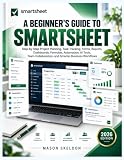


Smartsheet also offers more than one way to work with information. You can start with a sheet, then add forms to collect information, reports to bring together relevant data, and dashboards to present a summary. Sharing and automation bring in additional questions about coordination, permissions, and workflow design. The platform is therefore easier to approach when you learn only the features your immediate task needs.
Free tools Windows power users keep installed
One-click scans. No signup required.
What should you learn first?
Smartsheet’s official Level 1: Foundations path is designed for getting started. It covers creating and navigating sheets, rows and columns, hierarchy, and introductory topics such as forms, automation, alerts, sharing, and account settings.
- Learn the sheet basics. Create a sheet, add columns for the information you need, enter work as rows, and practice grouping related items with hierarchy.
- Start with a real, small task. Use a modest task list or project tracker so you can learn the interface while solving a concrete problem. Smartsheet’s guidance describes templates and imports as ways to start with existing structures or data.
- Add one feature when you need it. Try a form for collecting information, then a report for gathering relevant information, and a dashboard if you need a summarized view for others.
- Move on to formulas and automation for a specific purpose. Learn the feature in the context of a workflow you want to improve rather than trying to absorb every option at once.
The guide to creating sheets and other items describes sheets as a core building block and covers related items, including templates and imports.
Which skills are beginner, intermediate, and advanced?
Smartsheet’s Learning Guides separate material into beginner, intermediate, and advanced levels, alongside project fundamentals and premium-feature tracks. That progression is a useful way to set expectations: not every feature belongs in a beginner’s first session.
| Learning scope | What it involves | Why it changes the learning curve |
|---|---|---|
| Beginner foundations | Sheets, rows, columns, hierarchy, navigation, and introductory sharing or forms | You are learning to organize and work with information in a single starting point. |
| Working across a team or process | Forms, alerts, automation, and reports | Collecting or combining information involves workflow choices and coordination, not just data entry. |
| Advanced solution building | Cross-sheet formulas, project timelines, resource allocation, dashboards, and scaled workflows | These tasks involve connecting information or designing solutions that serve broader project and reporting needs. |
A dashboard is a presentation layer for summarizing or sharing information; reports can gather information from multiple sheets. The official dashboard overview explains their role and notes template options. These tools can be useful, but you do not need to master them before learning basic sheet work.
How long does it take to learn Smartsheet?
There is no supported fixed time-to-proficiency estimate in the official learning materials cited here. “Learn Smartsheet” can mean anything from entering tasks in one sheet to designing a multi-sheet solution with formulas, automation, and dashboards, so a single number would be misleading. A more useful measure is whether you can complete the specific task you have in mind.
Quick Recap
Where can you learn Smartsheet?
- Level 1: Foundations: A starting path for sheets, navigation, hierarchy, and introductory features.
- Learning Guides: A broader curriculum organized by skill level, with project and premium-feature tracks.
- Help Center: Step-by-step guidance on sheets, forms, formulas, workflows, dashboards, integrations, and collaboration.
- Onboarding Webinars: Introductory and hands-on sessions, including a session about taking work from data to dashboards.
- Smartsheet University self-paced eLearning: Includes “Working in Smartsheet,” a course for new users navigating sheets, reports, and dashboards. The page says learners must be on a Smartsheet or Brandfolder plan; check the current eligibility details before enrolling.
Product prices and availability are accurate as of the date/time indicated and are subject to change. Any price and availability information displayed on Amazon at the time of purchase will apply.

