
Free tools Windows power users keep installed
One-click scans. No signup required.
iTechGuides is reader-supported. When you buy through links on our site, we may earn an affiliate commission. As an Amazon Associate I earn from qualifying purchases. Learn more
Phantom Blade Zero is best described as Soulslike-adjacent, not as a conventional Soulslike. It uses recognizable ideas such as timed dodges, parries, difficult boss encounters and bell-based rest or fast travel, but S-Game says it is pursuing a faster, cinematic wuxia action game rather than the slower strategic-action model it associates with Soulslikes. The result is a game that may feel familiar to Soulslike players while putting martial-arts choreography, elaborate animations and adjustable challenge at the center.
What the Soulslike label means here
“Soulslike” has no single official rulebook. Players usually use it for action games built around deliberate combat, readable enemy attacks, high-stakes mistakes, boss fights, interconnected exploration, checkpoints or rest sites, and some form of death-and-recovery pressure. A game can share several of those traits without reproducing every convention associated with Dark Souls, Sekiro or other FromSoftware games.
That distinction matters for Phantom Blade Zero. Steam’s product page currently carries user-defined tags including “Souls-like,” “Hack and Slash,” “Action RPG” and “Martial Arts.” Those tags document how Steam users categorize the game; they are not a developer-certified genre definition. The strongest description combines those tags with S-Game’s stated goals and hands-on observations from pre-release demos.
On that evidence, the most accurate answer is: it borrows Soulslike-readable combat and exploration signals, but its intended identity is a high-speed wuxia action game.
#1 Best Overall

- Each box contains 24 packs1 Pack: 6pcs + 1pcs
What S-Game says it is trying to make
S-Game has explicitly framed Phantom Blade Zero against what it calls the slower, strategic side of modern action games. In a 2023 PlayStation Blog article, founder and CEO Soulframe Liang wrote: “What’s more popular today is ‘strategic action game’, such as Soulslikes and Monster Hunter.” The point was not that the studio wanted to copy that formula. It was explaining why its own project would emphasize sleek kung-fu-movie movement and immediate spectacle instead.
The same article describes a combat system designed around simplified inputs that can produce elaborate chains. Rather than requiring a separate command for every flourish, the game lets a relatively small set of controls trigger authored sequences. Liang also wrote: “Combat moves in Phantom Blade Zero have to be made with handcrafted animation, because motion capturing can’t do it justice.” That statement is evidence of the animation philosophy, not proof that the finished game cannot be classified as a Soulslike.
Wuxia choreography comes before genre purity
The goal is a playable martial-arts film: rapid transitions, dramatic counters and camera-ready exchanges are part of the design pitch. Creative Bloq’s October 9, 2026 hands-on feature described its demo as feeling like a playable kung-fu movie, while GamesRadar+ characterized the action as fluid and cinematic. Those are preview impressions from limited sessions, but they explain why the game can look more aggressive and spectacular than the measured rhythm many players expect from a traditional Soulslike.
Player-controlled spectacle
Handcrafted animations are intended to preserve movements that motion capture would not reproduce cleanly. The practical effect is that combat can contain elaborate, authored sequences while still responding to player timing. The available material does not establish every input rule, stamina interaction or cancel window, so it would be misleading to claim that all of its systems work like any particular FromSoftware title.
Which Soulslike conventions appear in the combat?
The following comparison separates observed similarities from assumptions the available evidence does not support.
| Combat or progression axis | What is documented | What that means for the comparison |
|---|---|---|
| Defensive timing | Preview coverage reports color-coded signals indicating when to dodge or parry, and describes parrying during boss fights. | It uses familiar dodge/parry reads, but the sources do not establish that every enemy follows a Soulslike attack pattern. |
| Boss encounters | GamesRadar’s demo included boss fights and described the combat around those encounters. | Boss-focused learning and timing are Soulslike-adjacent features; the previews do not provide a complete account of the final boss roster or structure. |
| Rest and travel | GamesRadar reported “bonfire-esque” bells that serve resting and fast travel in its preview slice. | The bells resemble a checkpoint convention, but they should not be treated as proof that the entire game uses the same map, death or recovery loop as Dark Souls. |
| Exploration | The preview included open areas, traversal and movement between combat spaces. | There is an exploration layer beyond isolated arenas, although the complete level structure was not established in the demo reports. |
| Difficulty | The official deep dive lists multiple difficulty choices. GamesRadar found its normal-difficulty demo fairly forgiving at first, with reasonably long parry windows and room to take several hits. | The preview experience does not support calling the whole game punishing by default; difficulty depends on the selected mode and may differ in the final release. |
| Build variety | S-Game lists more than 30 main weapons, 25 Phantom Edges, upgrade paths, accessories and the ability to reforge upgrades to recover materials. | That is substantial equipment flexibility, but the sources do not establish a Soulslike stat spread, weight system or exact death-penalty economy. |
This is why “Soulslike-adjacent” is more useful than a yes-or-no label. The recognizable pieces are present, but they sit inside a faster action framework and a broad martial-arts arsenal.
How its pace differs from a traditional Soulslike
Traditional Soulslike combat often gets its tension from committing to slow attacks, managing distance and waiting for a narrow opening. S-Game’s stated focus is different: fluid movement, rapid chains and the visual rhythm of wuxia cinema. The preview descriptions support that distinction, though they are not controlled measurements of attack speed or frame data.
Color-coded prompts make defensive choices legible. A player can read an incoming cue, decide whether the correct response is a dodge or a parry, and continue a choreographed exchange. That is a familiar learning loop, but the presentation is designed to keep momentum rather than make every encounter a slow resource calculation.
GamesRadar’s normal-difficulty demo also began more gently than the reputation of the Soulslike label might suggest. The writer reported parry windows that were reasonably long and enough health to survive several mistakes. This describes that preview’s mode and opening experience only; it does not establish how Hellwalker, Sixty-Six Days or later encounters will feel.
Is Phantom Blade Zero hard?
Yes, it is built around learning enemy attacks and using defensive timing, but the published difficulty options mean “hard” is not a single fixed experience. S-Game’s August 17, 2026 combat and Wulin deep dive describes three named choices:
| Mode | Published positioning | Best fit |
|---|---|---|
| Wayfarer | Presented for players who primarily want to experience the story. | Players who prefer a less demanding route through the campaign. |
| Hellwalker | Raises the challenge and enemy adaptability. | Players who want opponents to respond more aggressively and demand tighter play. |
| Sixty-Six Days | Characterized as especially demanding. | Players seeking the most severe published challenge. |
The modes are important to the genre comparison. A game with adjustable challenge can still have demanding bosses and timing-based combat, but it does not impose one universal punishment level on every player. The preview’s forgiving opening therefore should not be generalized to all modes or the complete campaign.
Weapons, Phantom Edges and build choices
The official deep dive says exploration unlocks more than 30 main weapons and 25 secondary weapons called Phantom Edges. Weapons can be upgraded and combined with accessories, while upgrades can be reforged to recover materials. S-Game also describes build choices and flexibility in rebuilding a setup.
That breadth gives the game an action-RPG layer that Soulslike players will recognize as a source of experimentation. It does not, however, prove that the game uses familiar Soulslike attributes, equip-load thresholds, weapon scaling or a particular currency dropped on death. Those details should not be assumed from the weapon count alone.
The practical question for players is whether they enjoy changing tools as much as mastering one moveset. A large main-weapon roster plus Phantom Edges suggests room to tailor offensive and defensive options, while accessories and reforgeable upgrades reduce the risk that an early choice permanently locks a character into one build. The exact limits of that flexibility remain a matter for the final game.
Does it play like Sekiro or Dark Souls?
Compared with Sekiro
The clearest overlap with Sekiro is the emphasis on reading attacks and choosing a precise defensive response. Preview reports mention parry timing and visual cues, so players who enjoy reaction-based counters may find a familiar entry point. No source establishes that Phantom Blade Zero uses Sekiro’s posture system, resurrection rules, prosthetic tools or one-weapon progression, so a direct mechanical equivalence would be inaccurate.
Crashes, No Sound, or Screen Glitches?
Random freezes, missing sound and display glitches usually trace back to one bad driver. Find and replace yours safely.Free scan · under a minutePC Slower Than It Used to Be?
A free scan shows the junk files, broken settings and background clutter dragging Windows down - then fixes them in one click.Free scan · Windows 10 & 11Compared with Dark Souls
The bells used for rest and fast travel, boss encounters and challenging exploration are the most visible points of resemblance to the broader Dark Souls tradition. The contrast is pace: S-Game’s stated aim is sleek kung-fu action rather than the slower strategic model it cited when discussing Soulslikes. The available previews also do not establish a complete bonfire-style death-and-recovery economy, interconnected world design or identical stamina management.
Rank #3
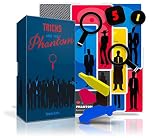
- Tricks and the Phantom: Unravel the Mystery! Investigate, deduce, and outsmart your opponents to find the criminal among politicians, yakuza, or detectives. Watch for tricky conditions that may change the game!
- Mastermind or Mockery? In Tricks and the Phantom, every card tells a tale. Can you navigate through players' strategies to unveil the culprit, avoiding the elusive phantom who aims to trick you and steal your victory points?
- Decipher, Deduce, Dominate! Use your detective skills to decode the hidden roles. Analyze card colors, anticipate cunning moves, and reveal the criminal. But beware, the phantom lurks, ready to throw you off the scent!
- Subvert the Obvious! The highest number isn't always guilty. Conditions like "If someone played a 10" add twists to the investigation. Stay sharp, adapt your strategy, and prove you're the ultimate sleuth in Tricks and the Phantom.
- Outsmart the Phantom, Solve the Crime! Uncover the truth behind professions hidden in cards. Keep an eye out for the mischievous phantom aiming to sabotage your investigation. Can you triumph in this game of wit and deception?
In short, expect shared vocabulary rather than a reskinned version of either series.
Independent reader supportYour contribution helps us test, update, and keep practical guides available for everyone.What the previews can—and cannot—tell you
GamesRadar+ and Creative Bloq both reported on limited hands-on sessions before launch. Their observations are useful for describing how the demonstrated slice felt: fluid, cinematic, equipped with readable dodge/parry cues, bosses, traversal and bell-like rest points. They are not full-game reviews, laboratory tests or controlled comparisons against specific FromSoftware games.
There are also no independent quantitative studies establishing combat speed, completion rates, average boss attempts or comparative difficulty. The weapon and Phantom Edge counts are developer-reported content figures, not measured gameplay outcomes. Treat any stronger claim about the final balance, progression economy or endgame structure as unconfirmed until the released game supports it.
Quick wins for a faster PC:
Fix the driver behind crashes, sound loss and screen glitchesFind Drivers →Repair Windows errors before they cause bigger problemsFix Now →Scan for outdated or missing drivers - takes under a minuteDriver Scan →Release date and platforms
Phantom Blade Zero was still upcoming at the time of the latest cited information. S-Game’s June 2, 2026 creative-director letter changed the announced date from September 9 to October 29, 2026. The official PlayStation deep dive lists October 29 in general, with October 28 in the United States and select regions. Steam’s PC listing also showed October 28, 2026.
Official materials identify PlayStation 5, while the Steam page lists a PC version. These are announced dates and platforms as of October 13, 2026, not evidence that the game had already launched. Regional storefront timing can make the calendar date differ by one day.
Verdict: a wuxia action game with Soulslike DNA
Calling Phantom Blade Zero a pure Soulslike misses the design priority S-Game has stated: fast, cinematic kung-fu built from handcrafted animation and simplified inputs that enable elaborate chains. Calling it unrelated to the genre also ignores the evidence from its demos and store classification: dodge/parry reads, boss encounters, bell-based rest and fast travel, exploration and meaningful difficulty choices all overlap with Soulslike expectations.
The most precise description is therefore a Soulslike-adjacent wuxia action RPG. Players who want slower, universally punishing combat should wait for final-game evidence rather than assume the label guarantees it. Players who enjoy learning parry windows, fighting demanding bosses and tuning a large martial-arts arsenal may find the familiar structure they want, delivered with a faster and more theatrical rhythm.
Sources: S-Game’s 2023 PlayStation Blog article; S-Game creative-director letter, June 2, 2026; official combat and Wulin deep dive, August 17, 2026; Steam listing; GamesRadar+ hands-on preview; Creative Bloq hands-on feature.
Quick Recap
Product prices and availability are accurate as of the date/time indicated and are subject to change. Any price and availability information displayed on Amazon at the time of purchase will apply.

