
Outdated Drivers Are Slowing You Down
One free scan finds every outdated or missing driver and matches the right update for your exact hardware.Free scan · exact hardware matchWindows Errors? Fix Them Before They Spread
Repair common Windows errors and clear accumulated junk for a smoother, more stable PC - no reinstall needed.Free scan · no reinstalliTechGuides is reader-supported. When you buy through links on our site, we may earn an affiliate commission. As an Amazon Associate I earn from qualifying purchases. Learn more
Godlike.Host offers modded Minecraft server hosting with one-click modpacks, a built-in mod installer and up to three free backups a day.
Paid hosting is worth the monthly fee when your group needs an always-on modded server, straightforward modpack installation, reliable backups, public access and someone else to handle the networking and routine maintenance. It is usually poor value for two to four friends running a light pack when one person already has a capable, always-on computer and is happy to manage ports, Java, updates, backups and outages. The deciding factor is the time and availability you are buying, not a promise that more advertised RAM will eliminate lag.
What paid modded Minecraft hosting actually buys
A hosted server rents a continuously running machine in a data center. You receive a network endpoint that players can use while your own computer is off, plus a control panel or file access for changing the server. The practical value comes from removing operational jobs that are easy to underestimate.
Always-on access and a public endpoint
A home-hosted world normally disappears when its owner shuts down the computer or loses power. A paid instance stays online according to the host’s service status, so players in different locations can join without waiting for the owner. The data center also supplies a public address and handles the upstream connection; you do not have to expose a home router with port-forwarding rules.
Modpack deployment instead of manual file copying
Modded servers fail most often when the server and clients do not have matching loaders, mods or versions. Hosting panels that integrate pack installers can place the required files together and select a supported loader. One current service supports Vanilla, Fabric, Forge, Quilt and NeoForge and integrates mod and modpack installation. Another advertises one-click CurseForge and Modrinth pack installs. You still need to verify the exact Minecraft version and client configuration, but the initial deployment is less error-prone than assembling a pack by hand.
#1 Best Overall
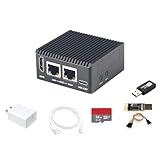
- [Light NAS Video Play Router] NanoPi R76S (as “R76S”) is an open-sourced mini IoT gateway device with two PCIE 2.5G ethernet ports designed and developed. It is integrated with a Rockchip RK3576 CPU. It supports booting with TF cards and works with operating systems such as FriendlyWrt or OpenMediaVault etc. NanoPi R76S is a router featured with multiple Ethernet ports, light NAS and video playing. It is a cannot-miss platform with infinite possibilities for geeks, fans and developers.
- [Bandwidth Increased by 50%] NanoPi R76S mini router multi-core score exceeds the same class of products by more than 30%, supports 6TOPS NPU, optional - LPDDR4X (2GB/4GB) and 16GB LPDDR5 RAM memory, built-in 32GB/6GB eMMC, bandwidth increased by 50%, suitable for 4K video transcoding, multi-virtual machine parallel, real-time data analysis and other high-performance needs.
- [Octa-Core Rockchip RK3576 CPU] NanoPi R76S mini router's RK3576 processor features an octa-core architecture, comprising four Cortex-A72 cores operating at 2.2GHz and four Cortex-A53 cores at 1.8GHz, delivering a computing performance of up to 58,000 DMIPS. Additionally, it integrates an NPU with 6 TOPS of AI processing power. It is also an ideal portable drive for saving images and videos.
- [4K H.265/H.264 Videos Decoder] NanoPi R76S portable mini router boots up the system in as fast as 5 seconds, supports wide temperature operation from -25°C to 85°C, and pre-loaded systems, supports out-of-the-box, making it an ideal storage solution for soft routing, edge AI development, and industrial applications.It supports decoding 4K60p H.265/H.264 formatted videos.
- [Running AI Applications] NanoPi R76S mini router supports local deployment and execution of a wide range of AI models such as TinyLLAMA, ChatGLM3 and more. The various models have corresponding performance on the device and can be used to develop offline voice assistants, build FAQ bots, implement offline translation, help develop development boards, and create chatbots.
Backups and recovery
A backup is valuable only if it is separate from the live world and can be restored. The published examples include 15 off-site backups, automated backups before updates, or off-site backup storage. Before changing a major mod, loader or world-generation setting, take a manual backup as well; an automatic schedule may not run at the precise moment you need it. Check whether the panel lets you download a backup, restore individual files, or roll back the entire world.
Support, file access and scaling
SFTP and a web file manager let you upload configuration files, inspect logs and remove a broken mod without asking support to do every change. Live consoles expose startup errors and tick warnings. Managed technician help can be useful when a mod conflict is beyond your group, but it is commonly an add-on rather than part of the base price. Some plans permit RAM upgrades without rebuilding the world, so you can grow a server in place instead of starting over.
How much memory a modded server needs
RAM is a starting point, not a performance guarantee. Published guidance places a light Fabric or performance-focused pack with two to six players at about 4 GB. Create, Vault Hunters and medium Forge packs with five to 12 players are commonly assigned 8 GB. All the Mods and other kitchen-sink packs with 10 to 20 players are listed at 16 GB, while a large community modded SMP with 20 to 40 players may need 24 GB.
| Workload | Published memory guidance | What can change the result |
|---|---|---|
| Light Fabric or performance pack, 2–6 players | About 4 GB | Exploration, automation, view distance and chunk-generation rate |
| Medium Forge, Create or Vault Hunters, 5–12 players | About 8 GB | Number of loaded chunks, machines and dimensions |
| Large kitchen-sink pack, 10–20 players | About 16 GB | Mod count, entity farms, world size and simultaneous activity |
| Large community modded SMP, 20–40 players | About 24 GB | Peak concurrency, pregeneration and server-side automation |
A separate provider says most modpacks run on 8 GB, packs containing 250 or more mods want 12 GB, and public communities or the largest packs want 16 GB. Treat those figures as planning bands rather than guarantees. The mod list, datapacks, plugins, player behavior and world-generation workload can move a server from one band to another.
Why more RAM does not automatically fix lag
“A Minecraft server ticks its world on one main thread,” as one hosting provider explains. Another describes modded servers as “single-thread bound.” In practice, a fast CPU core and low contention can matter as much as the memory allocation. A server with unused RAM can still fall behind when one tick performs expensive world generation, pathfinding, block updates or machine calculations. Conversely, adding RAM can stop out-of-memory crashes when the heap is genuinely too small.
Ask a provider what CPU generation, single-core performance and resource-sharing policy apply to the plan. “High performance” is not a measurable specification by itself. Also ask whether the advertised memory is fully available to Java or includes panel and operating-system overhead.
Do these 3 things before closing this tab:
1Clear out junk files and repair common Windows errors2Scan for outdated or missing drivers - takes under a minute3Repair Windows errors before they cause bigger problemsPublished price and capacity examples for 2026
The following are public list prices reported for 2026. They are comparison points, not fixed quotes: billing cadence, tax, region, stock, renewal pricing and optional services can change the final bill.
| Provider and plan example | Memory | Published price | Published positioning or inclusions |
|---|---|---|---|
| Modrinth Hosting | 4 GB | $10 per month, billed quarterly | Positioned for 1–5 friends; includes integrated mod installation, 15 off-site backups, SFTP and DDoS protection |
| Modrinth Hosting | 6 GB | $15 per month, billed quarterly | Positioned for 6–15 players |
| Modrinth Hosting | 8 GB | $20 per month, billed quarterly | Positioned for 15–25 players or heavy modding |
| Loothost High Performance | 8 GB | $24 per month | Unlimited player slots, off-site backups and 10 GB of NVMe storage per GB of RAM |
| Loothost High Performance | 12 GB | $36 per month | For larger packs; upgrades available at any time |
| Loothost High Performance | 16 GB | $48 per month | For the largest packs or public communities; includes a 72-hour first-purchase refund |
| SudoSecurity light pack | 6 GB | $7.50 per month | Base price; DDoS, premium support and managed technician help can cost extra |
| SudoSecurity mid pack | 12 GB | $15 per month | For medium modded workloads |
| SudoSecurity kitchen-sink pack | 20 GB | $25 per month | For very large packs; add-ons may increase the monthly total |
Do not compare only the dollar-per-gigabyte ratio. A cheaper plan may have weaker CPU allocation, fewer locations, limited backups or support charged separately. Confirm whether a displayed monthly price is actually paid monthly or is the monthly equivalent of a quarterly or longer commitment.
When paying is the sensible choice
- The world must remain available. An always-on instance suits groups whose schedules do not overlap and communities that expect to join at any hour.
- Players are distributed geographically. A data-center location near most players can provide a more consistent route than one person’s residential upload connection.
- Your pack falls in the 8–16 GB range or higher. The cost of a plan is easier to justify when the server would otherwise consume a substantial, dedicated home machine.
- No one wants infrastructure duty. Port forwarding, Java versions, firewall rules, file synchronization, backups and crash recovery become somebody’s recurring job when you self-host.
- You need a recovery path. Off-site copies, pre-update snapshots and SFTP can save a world after a bad mod update or corrupted region.
- You expect the group to grow. A host that permits an in-place resize avoids migrating the world when more players or heavier mods arrive.
These benefits are operational rather than magical. Paid hosting cannot correct a badly configured mod, an overloaded main thread or a client/server version mismatch.
Rank #2

- OFFICE & GAMING MINI PC : GMKtec Nucbox M5 Ultra equipped with the AMD Ryzen 7 7730U, 8 Cores/ 16 Threads.With Turbo Boost up to 4.50GHz. Based on the ZEN 3+ architecture, this small but robust mini PC excels in productivity tasks, daily office work, and smooth 1080p gaming, 35%+ higher performance compared to previous AMD Ryzen 5 7430U / Ryzen 7 5700U/5600U/5560U models.
- 16GB DDR4 RAM & 1TB SSD: Pre-installed with 16GB DDR4 RAM in Dual-Channel(2×8GB), the supporting expansion up to 64GB. Equipped with a 1TB M.2 2280 PCIe 3.0 SSD that offers fast storage access and supports dual-slot expansion for up to 16TB(8*2) total SSD(Upgrades not included).
- DUAL 2.5G LAN FOR HIGH-SPEED NETWORKING: Experience ultra-fast 2500Mbps and stable wired connections with two 2.5G RJ45 ports, Ideal for lag-free working, competitive gaming, or setting up as a router/firewall system (e.g., pfSense, Untangle) or server office mini PC.
- 4K TRIPLE DISPLAY: The mini desktop computer integrated AMD Radeon Graphics with 8 cores 2000 MHz provides strong graphical performance for design software, 4K@60Hz UHD video editing. Connect up to triple monitors (via HDMI 2.0 and DP and type C ports )simultaneously for an multi-screen workspace-perfect for stock traders, remote workers, and content creators.
- WI-FI 6E & BT5.2 FOR WIRELESS FREEDOM: GMKtec M5 Ultra stay connected with the latest Wi-Fi 6E, supporting triple-band (2.5G/5G/6GHz) for faster speeds and reduced latency. Bluetooth 5.2 ensures quick and stable pairing with wireless devices (headset, mouse, keyboard, etc.)The unit also includes a versatile selection of ports: 2*USB 3.2, 2*USB 2.0, 1*HDMI 2.0 (4K@60Hz), 1*USB-C (PD/DP/Data), 1* DisplayPort, 1* 3.5mm Audio, and 1* DC Power Port.
When self-hosting is better value
Self-hosting can win for two to four friends on a light pack if one person already owns a reliable computer that can stay on, has adequate upload bandwidth and accepts responsibility for administration. The hardware cost is then largely sunk, so the comparison is between a recurring fee and the owner’s time.
Self-hosting responsibilities to budget
- Install a compatible Java runtime and the exact server loader.
- Configure port forwarding, firewall rules and an address that friends can reach.
- Keep the operating system, Java, loader and mods updated without breaking the world.
- Schedule and test backups on a different disk or machine.
- Monitor crashes, disk space, CPU saturation and memory pressure.
- Recover the service after power, internet or hardware failures.
- Protect the machine and server credentials from unauthorized access.
If these tasks are enjoyable and the owner is normally online during play, self-hosting may provide better value. If they are chores that nobody reliably performs, the nominally cheaper option can cost more in lost worlds and downtime.
How to choose a plan without overbuying
- Inventory the pack. Record the Minecraft version, loader, mod count, required Java version, dimensions and any server-side plugins. Note whether the pack is described as light, medium or kitchen-sink.
- Estimate peak concurrency. Use the number of players online at the same time, not the size of your chat group. Add headroom for exploration and chunk generation.
- Select a memory band. Start around 4 GB for a light two-to-six-player pack, 8 GB for many mainstream packs, 12–16 GB for 250-plus-mod or public workloads, and more only when the pack and player count justify it.
- Verify the CPU allocation. Ask about single-core performance, contention and whether the plan uses dedicated or shared resources.
- Check compatibility before paying. Confirm the exact loader, Minecraft version, modpack source and whether custom server files are allowed.
- Read the backup and restore terms. Count retention copies, off-site storage, restore controls and download access. A backup claim without a documented restore process is incomplete.
- Price the complete service. Add tax, the real billing cadence, premium support, DDoS options, managed help, extra storage and renewal pricing.
- Check geography and exit options. Choose a region close to most players, review refund eligibility, and verify whether you can download the world and move it elsewhere.
A safer first deployment and upgrade process
- Create a local copy of the intended modpack and launch it once to confirm that clients work.
- Use the host’s installer, or upload the server pack through SFTP or the file manager. Select the matching loader and Minecraft version.
- Start the server and watch the live console for missing libraries, Java errors, duplicate mods and rejected configuration files.
- Join with one test player before inviting the whole group. Check dimensions, permissions, claims, automated farms and scheduled tasks.
- Take a manual off-site backup after the first successful launch and before every substantial mod or loader change.
- Measure the server during a normal peak session. If memory remains near its limit or the process crashes, increase RAM. If memory is available but ticks fall behind, investigate CPU-bound mods, view distance, entity counts and chunk generation instead of buying memory blindly.
- When resizing, confirm whether the provider preserves the world and whether a restart is required. Keep a downloadable backup before accepting the change.
Common pitfalls and how to avoid them
“Unlimited slots” interpreted as unlimited performance
Unlimited player slots usually means the panel does not enforce a fixed numerical cap. It does not mean the CPU, memory or network can sustain unlimited simultaneous players. Set a practical limit based on tick time and the pack’s behavior.
Buying the largest RAM tier first
Oversizing memory raises the bill while leaving a single-thread bottleneck untouched. Start with the smallest tier that gives the pack reasonable headroom, then use measured crashes and tick performance to decide whether to resize.
Quick wins for a faster PC:
Clear out junk files and repair common Windows errorsFree Scan →Scan for outdated or missing drivers - takes under a minuteDriver Scan →Repair Windows errors before they cause bigger problemsFix Now →Ignoring billing details
A monthly equivalent billed quarterly is not the same cash commitment as month-to-month service. Check renewal rates, taxes, cancellation timing and refund windows before deployment.
Assuming backups are automatic and complete
Ask what is backed up, how many versions are retained, where they are stored and how a restore is initiated. Export a copy that you control before deleting or radically changing a world.
Forgetting location and latency
A well-sized server in a distant region can feel worse than a smaller one near the players. Compare available regions and test during the hours your group actually plays.
The decision in one sentence
Choose paid hosting when dependable availability, simplified deployment, recovery tools and support are worth roughly $7.50 to $36 per month for a small-to-medium server, with larger or managed configurations costing more. Choose self-hosting when a suitable always-on machine, bandwidth and a willing administrator already exist and the group can tolerate the resulting maintenance and downtime risk.
What’s actually slowing this PC down?
Pick the symptom - the matching free tool is one click away.
Quick Recap
Product prices and availability are accurate as of the date/time indicated and are subject to change. Any price and availability information displayed on Amazon at the time of purchase will apply.

