
Outdated Drivers Are Slowing You Down
One free scan finds every outdated or missing driver and matches the right update for your exact hardware.Free scan · exact hardware matchPC Slower Than It Used to Be?
A free scan shows the junk files, broken settings and background clutter dragging Windows down - then fixes them in one click.Free scan · Windows 10 & 11iTechGuides is reader-supported. When you buy through links on our site, we may earn an affiliate commission. As an Amazon Associate I earn from qualifying purchases. Learn more
For most people, yes: 16GB of RAM is a sensible target for a laptop used for ordinary work and school. It gives Windows, a browser, documents, email, cloud storage and a video meeting more headroom than the published 4GB minimums. It is not a universal guarantee of speed, however. Large photo or video projects, specialized engineering or data software, virtual machines, and unusually heavy multitasking can need 16GB or more, while a weak processor, slow storage, poor cooling or incompatible software can still make a 16GB laptop feel slow.
Choose 16GB when you expect to keep a laptop for several years and regularly combine several applications. Consider more than 16GB only when your applications justify it, and check your school or employer requirements before buying. RAM is one part of the configuration, not a substitute for an appropriate processor, storage, battery and operating system.
What 16GB means in practical use
RAM is the laptop’s short-term working memory. Windows and active applications use it while you work; when the available memory is exhausted, the system must move some data to storage, which is much slower. More RAM therefore helps most when several programs or large files are active at once. It does not directly make a processor faster, increase storage capacity or guarantee better graphics performance.
Quick wins for a faster PC:
Fix the driver behind crashes, sound loss and screen glitchesFind Drivers →Clear out junk files and repair common Windows errorsFree Scan →Microsoft lists 4GB as the minimum RAM for Windows 11. That figure answers whether a qualifying computer can install and run the operating system; it is not a promise of comfortable multitasking. Microsoft also lists 4GB for Windows client applications in Microsoft 365 and recommends 4GB or higher for a better video-call and online-meeting experience. Those requirements leave room for the browser, meeting software, security tools and school or work applications you may run simultaneously.
#1 Best Overall

- 256 GB SSD of storage.
- Multitasking is easy with 16GB of RAM
- Equipped with a blazing fast Core i5 2.00 GHz processor.
Microsoft’s general memory guidance says at least 4GB can suit primarily browsing, documents or streaming, recommends 8GB for keeping a device running longer term, and says 16GB or more may fit photo and video editing or other high-performance projects. The company does not publish a single RAM number that guarantees a particular number of browser tabs or a specific combination of apps.
For a typical student or office worker, 16GB is therefore a practical middle ground: comfortably above minimum requirements, suitable for routine multitasking, and less likely than 8GB to become the limiting factor during a normal laptop’s useful life.
How much RAM different workloads usually call for
| Workload | How 16GB fits | What else to verify |
|---|---|---|
| Documents, web research and streaming | Usually more than enough; Microsoft’s broad guidance starts at 4GB and recommends 8GB for longer-term use. | Browser extensions, many open sites, storage speed and battery life affect responsiveness. |
| Email, office apps and regular video meetings | A sensible target for using a browser, documents, mail and a meeting together. | Microsoft recommends 4GB or higher for a better online-meeting experience; check the meeting app’s current requirements. |
| School portals, coding tools and light data work | Often appropriate, provided the required development or data software supports the operating system. | Check the school’s software list, processor requirements and whether local databases or virtual machines are needed. |
| Photo or video editing and other high-performance projects | 16GB is a starting point, not a ceiling. Microsoft says 16GB or more might fit these uses. | Check each application’s current RAM, processor, graphics and storage requirements; large projects may benefit from more than 16GB. |
| On-device AI features on a Copilot+ PC | 16GB is required for that device class, but RAM alone does not qualify a laptop. | The device also needs compatible hardware, including an NPU rated at least 40 TOPS and supported DDR5 or LPDDR5 memory. |
Why published minimums are not buying recommendations
Minimum specifications are pass/fail thresholds. A computer can meet Windows 11’s 4GB requirement and still have little spare memory after startup, leaving less capacity for a browser, a meeting, accessibility tools and course software. The same distinction applies to Microsoft 365: its 4GB client requirement does not describe every workload or guarantee that a large spreadsheet and a video call will remain responsive together.
Do these 3 things before closing this tab:
1Fix the driver behind crashes, sound loss and screen glitches2Repair Windows errors before they cause bigger problems3Scan for outdated or missing drivers - takes under a minuteMicrosoft’s recommendation of 8GB for longer-term use and its statement that 16GB or more may suit high-performance projects provide useful context, but they are not laboratory benchmarks. Performance depends on the exact applications, file sizes, background services and hardware design. Treat 16GB as a practical recommendation for ordinary work and study, not as a promise that every 16GB configuration performs identically.
When 8GB can still be reasonable
An 8GB laptop can make sense when the budget is tight and the workload is deliberately light: a few documents, web research, streaming and occasional email. It also meets the minimum listed by some schools. For example, Georgetown Preparatory School’s 2026 student laptop requirements set 8GB as the minimum and 16GB or higher as the recommendation. That is a school-specific policy, not a universal standard.
Rank #2

- Powerful Performance for Everyday Tasks: Featuring a Dual-Core 6500Y Processor with Turbo Boost up to 3.4GHz, this laptop handles daily essentials seamlessly. Browse the web, stream videos, manage documents, and multitask between applications like email, spreadsheets, and presentations without slowdowns
- 16GB RAM and 256GB SSD: This VIGSENUP laptop combines 16GB of RAM for seamless switching between programs and browser tabs with a 256GB M.2 2280 SSD. This combination delivers blazing-fast boot times, near-instant application loading, and quick file transfers, letting you say goodbye to long waits and enjoy a consistently responsive experience for keeping numerous study resources open or running essential business software efficiently
- Immersive Display with Ultimate Privacy Protection: This W11 home laptop features a 15.6-inch 1080p IPS display for vibrant clarity, suitable for movies, presentations, document editing, and web browsing with sharp detail and reduced eye strain. The centrally located front camera includes a physical privacy shutter, so you have full control over your privacy during photos and video calls
- Seamless Connection: Stay connected with this laptop's support for WiFi 5 and Bluetooth 5.0. It provides a versatile port selection including: 2x USB 3.2, 1x HDMI 1.4, 1x USB 2.0, 1x Headphone/Microphone Combo Jack, 1x TF (MicroSD) Card Reader, and 1x Kensington Lock Slot for added physical security. This W 11home laptop lets you connect monitors, external drives, peripherals, and secure the device in shared spaces
- Ultra-portable Design: This portable laptop blends style and practicality. At just 21mm thin and 1.7kg light, it's easy to move between workspaces. With a 38Wh battery, you can take this laptop to cafes, classrooms, or business meetings without sacrificing performance
Choose 8GB only after checking how the exact laptop handles memory. If the RAM is soldered and cannot be expanded, an initially acceptable configuration may be harder to live with as applications and coursework become more demanding. If the model has upgradeable memory, confirm the manufacturer’s supported capacity and module type rather than assuming an upgrade will be possible.
When you should choose more than 16GB
Large creative projects
Microsoft specifically identifies photo and video editing and other high-performance projects as cases where 16GB or more might be a good fit. The right amount depends on the application, project resolution, effects, media size and whether other programs remain open. Read the current requirements for the editor you intend to use and assess the laptop’s processor and graphics hardware at the same time.
What’s actually slowing this PC down?
Pick the symptom - the matching free tool is one click away.
Specialized technical software
Engineering, scientific, virtual-machine, local database and other specialist tools can have requirements well above general office software. A course or employer may mandate a particular operating system, processor family, graphics capability or memory amount. Those documented requirements take precedence over a general 16GB recommendation.
Heavy simultaneous workloads
If your routine combines a meeting, many large files, development tools, data processing and several background services, more than 16GB may reduce memory pressure. There is no reliable universal “browser-tab count” for a given capacity: pages, extensions and media vary widely. Base the decision on the applications you actually use and their published requirements.
Copilot+ PCs are a separate hardware category
Microsoft’s Copilot+ PC specification calls for 16GB of DDR5 or LPDDR5 memory, a compatible processor and a neural processing unit (NPU) rated at least 40 tera operations per second (TOPS). This is a requirement for that device class and its on-device AI features. It does not change Windows 11’s ordinary 4GB minimum, and a conventional Windows 11 laptop does not become a Copilot+ PC merely by having 16GB of RAM.
Rank #3

- BUILT FOR COLLEGE. AND BEYOND — MacBook Air with the M5 chip packs blazing speed and powerful AI capabilities into an incredibly portable design. And with up to 18 hours of battery life,* this thin and light powerhouse is ready to take on almost any major, just about anywhere.
- TEAR THROUGH TOUGH ASSIGNMENTS — With its faster CPU and unified memory, the M5 chip delivers even more performance and fluidity across apps, making multitasking and creative workflows smooth and responsive. A powerful Neural Engine and next-generation GPU with Neural Accelerators give you a powerful platform for AI.
- MAKE QUICK WORK OF YOUR TO-DO LIST — Apple Intelligence helps you write, express yourself, and get things done effortlessly — whether it’s for school or everyday life. With groundbreaking privacy protections, it gives you peace of mind that no one else can access your data — not even Apple.*
- UP TO 18 HOURS OF BATTERY LIFE — MacBook Air delivers incredible battery life with amazing performance, so you can power through a full day of classes without worrying about plugging in.
- A BRILLIANT 13.6-INCH DISPLAY* — The gorgeous Liquid Retina display on MacBook Air supports 1 billion colors, making photos and videos pop with rich contrast and sharp detail, and text appears supercrisp. So everything — from class presentations to movies to games — looks truly stunning.
Distinguish on-device AI features from cloud-based AI services. If a school or employer requires a particular AI feature, verify that the exact model is certified for it rather than relying on the memory number alone. Microsoft’s current specification is available in its Windows 11 specifications.
Check school and employer requirements before purchase
A school’s published specification can include rules that general Windows guidance does not address: required applications, prohibited device types, operating-system compatibility, storage, processor performance, battery life and support expectations. Georgetown Preparatory School’s 2026 student laptop requirements illustrate this broader approach by listing 8GB as a minimum and 16GB or higher as recommended alongside other hardware and compatibility factors.
- Find the current requirements page for your school, department or employer, and note the publication year.
- List every required application, including exam software, accessibility tools, programming environments and meeting platforms.
- Check each application’s supported operating systems and minimum or recommended memory.
- Confirm whether the organization excludes tablets, Chromebooks, ARM-based systems or other device types.
- Compare the requirements with the exact laptop configuration, not just the product family name.
Use these specifications when comparing 8GB and 16GB laptops
Expected simultaneous workload
Write down what you normally run together: browser windows, word processing, spreadsheets, messaging, cloud-sync clients, meetings and specialist tools. If that list regularly grows, 16GB gives more working room than 8GB.
Upgradeability of the exact model
Some laptops use removable memory modules; others solder RAM to the motherboard. The cited Windows and Microsoft 365 requirements do not establish upgradeability for any particular model. Verify the manufacturer’s service manual or configuration page for the exact size, processor and regional model before assuming you can add memory later. A retailer’s statement that a product line is upgradeable may not apply to every configuration.
Processor and graphics hardware
RAM cannot compensate for a processor or graphics system that is unsuitable for your software. Compare the application’s processor and graphics requirements with the laptop’s exact components. For editing or technical work, these specifications can matter as much as the memory capacity.
Free tools Windows power users keep installed
One-click scans. No signup required.
Rank #4
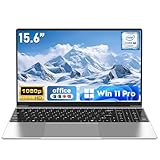
- 【Reliable Processing Performance】Powered by the M3-6Y30 processor with a maximum frequency of 2.2GHz. Its 7W low-power design ensures quiet operation and efficient heat dissipation. Featuring a dual-core, quad-thread architecture, it handles everyday tasks—from web browsing to document editing—smoothly and without lag.
- 【Long-Lasting Battery Life】 Powered by a 7.7V 5000mAh/38.5Wh rechargeable lithium-polymer battery, it delivers up to 4 hours of runtime at maximum brightness. Effortlessly handle work or study sessions without frequent recharging.
- 【Crystal-Clear Full HD Display】Features a 15.6-inch FHD 1920×1080 display delivering sharp details and balanced colors. Whether streaming shows, video calling, or working on spreadsheets, it provides a clear viewing experience at home, in the office, or on the go.
- 【Slim and Portable Design】 Crafted from durable plastic with a silver metallic finish, it measures 14.09 × 8.98 × 0.78 inches and weighs just 3.53 pounds. Easily fits into backpacks or laptop bags, making it ideal for commuters, students, or those requiring mobile productivity.
- 【Practical Connectivity & Security】Equipped with WiFi 5 and Bluetooth 4.2 for seamless network connectivity. Features dual USB 3.0 ports and a Mini HDMI port for flexible peripheral connections. Running low on storage? Expand capacity up to 1TB via TF card to handle massive data demands without compromising performance.
Storage capacity and type
Storage holds the operating system, applications and files; RAM holds active work. A laptop can have 16GB of RAM and still become inconvenient if its storage is too small for coursework, media or local project files. Check capacity, expansion options and the manufacturer’s stated storage configuration.
Battery, display and operating system
Students and mobile workers may value battery life, weight, screen size and keyboard quality more than a small difference in memory. Confirm that the operating system supports every required application and that the display and ports suit your work.
Total configuration and price
Compare complete configurations rather than paying for RAM in isolation. Include the processor, graphics, storage, display, warranty and any required accessories. The research cited here does not establish universal prices, so treat current retailer or manufacturer pricing as changeable and region-specific.
How to tell whether your current laptop is running out of RAM
Look for a pattern rather than a single slow moment. If applications become sluggish only when several are open, windows reload when you switch back, or the system spends noticeable time using storage while memory is heavily occupied, RAM may be a constraint. A slow network, full storage, overheating, background updates or an underpowered processor can produce similar symptoms.
The Tool Desk
Outbyte Driver Updater FREEScan for outdated or missing drivers - takes under a minuteDriver Scan →Outbyte PC Repair FREEClear out junk files and repair common Windows errorsFree Scan →- Reproduce your normal workload: open the browser, documents, meeting software and course or work application you use together.
- Open the operating system’s built-in performance monitor and observe memory use while the slowdown occurs.
- Close one large application at a time. If responsiveness returns immediately, that application or its workload may be consuming most of the available memory.
- Check free storage, pending updates, temperature and background processes before concluding that a memory upgrade is required.
- Compare the result with the manufacturer’s upgrade options. Do not open a sealed or soldered system expecting a simple module replacement.
These observations can identify a bottleneck, but they do not create a universal performance benchmark. Two laptops with 16GB can behave differently because their processors, storage, cooling and software differ.
A practical decision rule
- Choose 16GB if you want one laptop for documents, research, email, meetings and ordinary school or office multitasking, or if you expect to keep it for several years.
- Choose 8GB only for clearly light use or when a documented requirement permits it, and verify whether the memory can be expanded.
- Choose 16GB or more when your course or job involves photo/video editing, other high-performance projects, virtual machines, specialized technical software or unusually heavy multitasking.
- For a Copilot+ PC, verify the complete specification: 16GB DDR5/LPDDR5, a compatible processor and an NPU of at least 40 TOPS.
Before ordering, compare the exact model against your school or employer’s current software list and the manufacturer’s memory configuration. Microsoft’s primary references are the Windows 11 system requirements, Microsoft 365 system requirements and All about computer memory. Requirements and product configurations can change, so check them again when you buy or when a course introduces new software.
Quick Recap
Product prices and availability are accurate as of the date/time indicated and are subject to change. Any price and availability information displayed on Amazon at the time of purchase will apply.

