
Free tools Windows power users keep installed
One-click scans. No signup required.
iTechGuides is reader-supported. When you buy through links on our site, we may earn an affiliate commission. As an Amazon Associate I earn from qualifying purchases. Learn more
Intel slashes Xeon 6 CPU prices by up to 30% in an EPYC data-center fight with AMD: a January 28, 2025 report shows the 1,000-unit Recommended Customer Pricing for three Granite Rapids 6900P processors falling by 20% to 30%, including a $5,340 reduction for the 128-core Xeon 6980P.
The reductions came roughly four months after the first Xeon 6 6900P launch and as AMD’s fifth-generation EPYC processors, code-named Turin, entered the market. The timing suggests competitive pressure, but the cited report does not establish that Intel publicly attributed the pricing changes to AMD.

The figures are important but easy to misread: Intel’s Recommended Customer Pricing (RCP) is a 1,000-unit list-price reference, not a guaranteed retail price, OEM invoice price, cloud-provider cost, or final enterprise transaction price. The story is therefore best understood as a historical January 2025 change in Intel’s price positioning—not proof that every Xeon 6 server became 30% cheaper or automatically better value than an AMD EPYC system.
The Tool Desk
Outbyte PC Repair FREERepair Windows errors before they cause bigger problemsFix Now →Outbyte Driver Updater FREEFix the driver behind crashes, sound loss and screen glitchesFind Drivers →Key takeaways
- Intel’s reported January 2025 price reductions affected selected Granite Rapids Xeon 6 6900P processors, not every Xeon 6 model.
- The 128-core Xeon 6980P fell from $17,800 to $12,460 in 1,000-unit RCP, a $5,340 or exactly 30% reduction.
- The Xeon 6952P received a 20% RCP reduction, while the Xeon 6960P received a 30% reduction.
- The reported prices are 1,000-unit Recommended Customer Pricing figures, so they do not predict the final price paid by a hyperscaler, OEM, or enterprise buyer.
- AMD’s fifth-generation EPYC Turin processors provide the competitive context, but the cited report does not prove that AMD directly caused Intel’s cuts.
- A credible Xeon-versus-EPYC decision still requires workload benchmarks, complete server quotes, memory and I/O analysis, power estimates, and software-licensing calculations.
What changed in Intel’s Xeon 6 pricing?
Intel reportedly reduced the published 1,000-unit RCP for three high-end Granite Rapids Xeon 6 processors in January 2025. According to HotHardware’s January 28, 2025 report, the reductions ranged from 20% to 30% and were uneven across the models.
#1 Best Overall

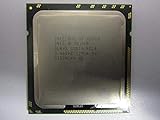
- Intel Xeon E5-2699 V4 Docosa-core (22 Core) 2.20 Ghz Processor - Socket Lga 2011-v3 - 5.50 Mb - 55 Mb Cache - 64-bit Processing - 14 Nm - 145 W
| Processor | Earlier reported RCP | New reported RCP | Dollar reduction | Percentage reduction |
|---|---|---|---|---|
| Intel Xeon 6980P, 128 cores | $17,800 | $12,460 | $5,340 | 30.0% |
| Intel Xeon 6952P, 96 cores | $11,400 | $9,115 | $2,285 | 20.0% |
| Intel Xeon 6960P, 72 cores | $13,750 | $9,625 | $4,125 | 30.0% |
The headline should therefore say “up to 30%,” not “30% across the Xeon 6 range.” The Xeon 6980P and Xeon 6960P received the largest reported percentage reductions, while the Xeon 6952P received a smaller 20% reduction.
On a simple processor-only basis, the new reference prices also lower the approximate price per core from about $139 to $97 for the Xeon 6980P, from about $119 to $95 for the Xeon 6952P, and from about $191 to $134 for the Xeon 6960P. Those calculations describe list-price positioning only; they are not performance-per-dollar measurements and do not include the rest of the server.
Which Xeon 6 processors were affected?
The processors in the reported change belong to Intel’s Granite Rapids family, a performance-core-oriented part of the Xeon 6 generation. The three models discussed were the 128-core Xeon 6980P, the 96-core Xeon 6952P, and the 72-core Xeon 6960P.
Recommended Free Tools
Xeon 6 is broader than the Granite Rapids 6900P products covered by this price report. Intel’s Xeon 6 generation also includes different designs, including efficiency-core variants such as Sierra Forest. Readers should not extend the three reported RCP changes to every Xeon 6 SKU without model-specific confirmation. Intel’s Xeon product-family page is the appropriate starting point for separating the overall generation from the Granite Rapids models discussed here.
The Xeon 6980P was the flagship model discussed in the report. Calling the 6980P a flagship in this context does not mean that the 6980P represents the performance, pricing, availability, or value of every Xeon 6 processor.
Rank #2
Why did Intel cut Xeon 6 prices?
The strongest available explanation is competitive positioning: AMD’s fifth-generation EPYC processors, code-named Turin, had recently entered the market when the Xeon 6 RCP changes were reported. HotHardware interpreted the timing as part of Intel’s fight to improve Xeon’s position against EPYC, but the available material does not include a direct Intel statement saying that AMD caused the price reductions.
The timing is meaningful because server buyers evaluate processors on more than technical specifications. A lower CPU reference price can improve an OEM’s starting quote, give a cloud provider more room in capacity economics, and strengthen a sales team’s position during large-volume negotiations. The effect can be especially important when software licensing is assessed per core, although the licensing benefit depends on the software vendor’s rules and the workload’s actual performance.
The cuts do not, by themselves, establish that Xeon 6 sales were weak, that Intel was losing the entire server market, or that AMD won every performance comparison. The cited report also mentions Intel objecting to some comparisons with AMD and characterizing certain comparisons as spurious. That is a statement about Intel’s position, not a neutral, independently tested performance verdict.
Are the new Xeon 6 prices the prices customers actually pay?
No. The reported figures are Intel’s 1,000-unit Recommended Customer Pricing, which is a published reference point rather than a universal transaction price.
| Pricing figure | What it means | What it does not establish |
|---|---|---|
| 1,000-unit RCP | A published reference price associated with a 1,000-unit quantity | The price for a one-off retail purchase or a named customer’s invoice |
| OEM quote | The price a server manufacturer uses in a complete system configuration | That the full server falls by the same percentage as the CPU |
| Cloud instance price | A provider’s charge for compute capacity, usually bundled with memory and other resources | A direct equivalent of the processor’s RCP |
| Enterprise transaction price | A negotiated amount that can reflect volume, rebates, bundles, and supply agreements | That every buyer receives the published RCP or the same discount |
Large buyers may negotiate pricing that differs substantially from RCP. Server OEMs can combine the processor with memory, storage, networking, support, warranty, and financing. Cloud providers may use long-term supply agreements and then set instance prices around utilization and service economics. A lower RCP may improve the negotiation starting point without producing a matching reduction in the final system or service price.
Rank #3
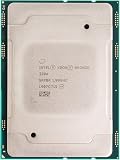
- For Intel Xeon Bronze 3204 6 Core 6 Thread 1.9 GHz (1.9 GHz Turbo) Cascade Lake Socket LGA 3647 85W (SRFBP) CD8069503956700 Tray Pack Server Processor
Consequently, “customers save 30%” is not a supported conclusion. The defensible statement is that the Xeon 6980P and Xeon 6960P had reported RCP reductions of 30% in January 2025.
How should buyers compare Xeon 6 with AMD EPYC?
Buyers should compare complete platforms and measured workload results, not just the reported price of one Xeon 6 processor with the list price of an unrelated EPYC model. AMD’s EPYC server product information provides the competing product-family context, but a valid procurement comparison requires equivalent SKUs and system configurations.
| Decision factor | What to compare | Why the factor can change the result |
|---|---|---|
| Socket count | One-socket versus two-socket system designs | A lower-priced CPU can lose its advantage if the platform requires an additional socket or changes memory and I/O topology. |
| Core count | Equivalent total cores and the software’s usable parallelism | More cores can improve throughput, but unused cores may increase licensing cost without increasing useful output. |
| Per-core performance | Measured latency, single-thread, and lightly threaded results | Latency-sensitive applications may value faster individual cores more than maximum core density. |
| Throughput | Virtualization, databases, compilation, analytics, batch, and other production workloads | A processor with a lower list price may require more nodes to complete the same work. |
| Memory | Capacity, bandwidth, channels, and cost of the required DIMMs | Memory-bound workloads can see little benefit from a cheaper CPU if memory capacity or bandwidth is the bottleneck. |
| I/O and expansion | PCIe connectivity, accelerator support, storage, and networking | Accelerated and storage-heavy deployments can be constrained by platform I/O rather than CPU price. |
| Power and cooling | Measured system power at the target utilization level | Electricity, cooling, and rack capacity can outweigh an upfront processor discount over the service life. |
| Software licensing | Per-core, per-socket, per-VM, or other licensing rules | License economics can dominate hardware economics and may favor fewer cores, more performance per core, or a different architecture. |
| Operational fit | Firmware, management tools, support, validation, and existing fleet standards | Migration, testing, and support costs can erase a hardware-price advantage. |
The new RCP improves Intel’s headline price position, especially for high-core-count configurations. The improved price position does not prove that Xeon 6 delivers superior total cost of ownership or performance per dollar against EPYC for a particular workload.
When could the Xeon 6 price cut materially help?
The reduction could matter most when a buyer needs very high core density, already operates Intel infrastructure, or has software costs that make processor pricing and core count significant. The lower RCP can also give a large buyer or server OEM a better starting point for negotiation, provided the reduction is reflected in the final quote.
- High-core-count deployments: The largest absolute reduction in the report was $5,340 on the 128-core Xeon 6980P.
- Existing Intel fleets: Compatibility, operational familiarity, and validated software can reduce the non-hardware cost of staying with Intel.
- Per-core licensing: A lower processor price may improve the hardware portion of the equation, but buyers must model the software license separately.
- OEM negotiations: A lower reference price may improve a complete server quote, although the pass-through is not guaranteed.
- Intel-optimized deployments: Workloads that depend on existing Intel-specific software tuning or instruction support may place a higher value on platform continuity.
When might the price cut not change the buying decision?
The price cut may have limited practical effect when the processor is a small part of the total system cost or when memory, accelerators, networking, storage, power, or software licenses dominate the budget.
Do these 3 things before closing this tab:
1Fix the driver behind crashes, sound loss and screen glitches2Clear out junk files and repair common Windows errors3Scan for outdated or missing drivers - takes under a minuteRank #4
- A buyer standardized on EPYC may face validation, migration, and support costs that exceed the CPU discount.
- A memory-bound workload may gain little from a cheaper CPU if the required memory configuration determines performance and cost.
- A workload with socket-based or virtual-machine licensing may not benefit from a lower per-core price.
- An OEM’s previous negotiated price may already have been below Intel’s old RCP, reducing the impact of the published change.
- A processor may be unattractive if it is not available in the buyer’s preferred server platform or validated configuration.
- Higher operating power or cooling requirements may outweigh a lower acquisition price over the deployment’s lifetime.
What does the reported price cut not prove?
The January 2025 report does not prove that Intel’s processors were sold to every customer at the new RCP, that every complete server became 30% cheaper, or that Xeon 6 overtook AMD EPYC on performance per dollar.
The report also does not independently verify a current August 2026 market-share figure. HotHardware cited a claim that AMD had reached nearly 25% of the data-center CPU market, but that is a secondary-source market statistic and should not be reused as a current figure without a primary market-research source and a defined geography, segment, and measurement period.
Similarly, the price change does not establish Intel’s processor margins, sales volumes, profitability, or the final price paid by Dell, HPE, Lenovo, a cloud provider, or any other named customer. Those claims require separate evidence.
Independent reader supportYour contribution helps us test, update, and keep practical guides available for everyone.How should an enterprise evaluate the change?
An enterprise should treat the new RCP as a reason to request a fresh, configuration-level comparison—not as a reason to switch platforms automatically.
- Define the workload: Record throughput, latency, concurrency, memory use, accelerator use, and the service-level target.
- Select comparable systems: Compare equivalent Xeon 6 and EPYC configurations by socket count, usable cores, memory, storage, networking, and accelerator connectivity.
- Request complete quotes: Ask OEMs or cloud providers for current prices that include support, warranty, memory, and required platform components.
- Benchmark production-like jobs: Measure performance, power, and utilization with the buyer’s software rather than relying on a universal benchmark claim.
- Model licensing: Calculate whether the software is licensed by cores, sockets, virtual machines, hosts, or another metric.
- Calculate total cost: Include acquisition, electricity, cooling, rack capacity, administration, migration, validation, and support.
- Check availability and lifecycle: Confirm that the exact processor and server configuration can be supplied and supported for the required deployment period.
Buyers evaluating physical systems can compare validated configurations from Dell PowerEdge, HPE ProLiant, and Lenovo ThinkSystem. These are platform starting points, not evidence that any vendor currently offers one of the reported RCPs.
Best Value

- 3.07 Ghz
- 6.4 GT/s QPI
- 6 Cores, 12 Cores in Hyperthreading mode
- Package Weight, 2.0 pounds
Organizations that prefer capacity without owning hardware can also compare provider offerings from Microsoft Azure Virtual Machines, Google Cloud Compute Engine, AWS EC2, or Oracle Cloud Compute. Cloud prices include more than CPU silicon and must be normalized for memory, storage, networking, region, support, utilization, and any reserved-use terms.
What is the current status of this Xeon 6 price story?
This is a January 2025 pricing story, not a newly announced August 2026 price cut. The report was published on January 28, 2025, and described changes made roughly four months after the Granite Rapids Xeon 6 6900P launch in September 2024.
Current Xeon and EPYC pricing, availability, market share, cloud instance rates, and product positioning require a fresh verification pass. The historical RCP figures remain useful for understanding Intel’s pricing move, but they should not be presented as current transaction prices in August 2026.
Frequently Asked Questions
Did Intel cut all Xeon 6 CPU prices by 30%?
No. The January 2025 report covered selected Granite Rapids 6900P processors, and the reported reductions ranged from 20% to 30%. The Xeon 6952P fell 20%, while the Xeon 6980P and Xeon 6960P fell 30% in the cited 1,000-unit RCP figures.
What was the biggest reported Xeon 6 price reduction?
The biggest reported dollar reduction was $5,340 for the 128-core Xeon 6980P, whose 1,000-unit Recommended Customer Pricing fell from $17,800 to $12,460. The reduction was exactly 30%.
Are the reported Xeon 6 prices retail or invoice prices?
No. The reported figures are Intel’s 1,000-unit Recommended Customer Pricing, not guaranteed retail, OEM, cloud-provider, or enterprise invoice prices. Large customers typically negotiate pricing, rebates, bundles, and supply terms.
Did Intel confirm that AMD EPYC caused the Xeon 6 price cuts?
The cited report connects the timing with AMD’s fifth-generation EPYC Turin processors, but the available material does not provide a direct Intel statement confirming that AMD caused the reductions. Competitive pressure is a plausible interpretation, not a documented Intel explanation.
Windows Errors? Fix Them Before They Spread
Repair common Windows errors and clear accumulated junk for a smoother, more stable PC - no reinstall needed.Free scan · no reinstallOutdated Drivers Are Slowing You Down
One free scan finds every outdated or missing driver and matches the right update for your exact hardware.Free scan · exact hardware matchThe Bottom Line
Intel’s January 2025 Xeon 6 reductions improved the headline price position of selected Granite Rapids processors, with reported RCP cuts of up to 30%. The change makes Xeon 6 worth reevaluating against AMD EPYC, particularly for high-core-count or existing Intel deployments, but it does not settle the buying decision. Request complete current quotes, benchmark the actual workload, and include memory, licensing, power, platform, and support costs before choosing a server architecture.
Quick Recap
Product prices and availability are accurate as of the date/time indicated and are subject to change. Any price and availability information displayed on Amazon at the time of purchase will apply.

