
What’s actually slowing this PC down?
Pick the symptom - the matching free tool is one click away.
iTechGuides is reader-supported. When you buy through links on our site, we may earn an affiliate commission. As an Amazon Associate I earn from qualifying purchases. Learn more
For a desktop where operating-system updates arrive as a coherent deployment and can be rolled back, an immutable Linux distribution can be a better first choice than a conventional Ubuntu installation. That is a workflow preference, not proof that Ubuntu is unreliable or that immutable desktops are best for everyone. The practical trade-off is straightforward: fewer routine changes to the base system, in exchange for learning where apps and development tools belong.
What “immutable” changes about updates
On a conventional mutable desktop, system packages are installed into the running operating system. An immutable or atomic desktop instead treats the base system as a deployment that is updated together. The new deployment is generally activated at reboot, and a prior deployment or system snapshot can provide a recovery route if the update causes trouble.
On Fedora Silverblue, the Fedora Project describes updates as taking effect after reboot, retaining a previous version, and applying the system update in one go. Its page says an update will not apply if anything goes wrong; that is the project’s description of the design, not an independent guarantee that updates cannot introduce bugs or hardware problems. Each Silverblue version receives updates for approximately 13 months, according to the Fedora Project’s current product page. Fedora Silverblue
“Immutable” does not mean nothing can ever change. It means the base system is managed differently from an ordinary package-by-package installation. Silverblue uses rpm-ostree, which combines libostree with libdnf and supports local RPM layering when a package needs to be part of the system deployment. Fedora Silverblue documentation
#1 Best Overall

- 12th Intel Alder Lake N95 Processor – The GMKtec G3 S Mini PC is powered by the 12th Gen Intel N95 processor with 4 cores, 4 threads, 6MB cache and a burst frequency up to 3.4GHz. Compared with N100/N5105/N5100/N5095, the N95 delivers up to 36% overall performance improvement. Perfect for routine tasks, office work, and home entertainment, this compact mini desktop is more convenient than traditional bulky PCs.
- 8GB RAM & 256GB SSD Storage – Pre-installed with 8GB DDR4 memory and a fast 256GB M.2 2242 SSD, the G3 S mini desktop offers quicker startup, smoother multitasking, and faster file transfers. Enjoy seamless performance whether you’re working on multiple applications, browsing, or streaming content.
- Rich Interfaces & Connectivity – The G3 S mini computer comes equipped with USB 3.2 (up to 10Gbps), dual HDMI 2.0 (4K@60Hz), and a 3.5mm audio jack. With support for WiFi 5, Bluetooth 5.0, and Gigabit Ethernet (RJ45 1000MbE), it connects easily with monitors, projectors, printers, office equipment, and other peripherals, making it versatile for both home and business use.
- Dual 4K Display Support – Featuring upgraded Intel UHD Graphics (up to 1000MHz), the G3 S supports 4K video playback and AV1 decoding for a smooth viewing experience. With dual HDMI outputs, you can connect two 4K@60Hz displays simultaneously, enabling efficient multitasking for work and entertainment.
- GMKTEC WARRANTY - GMKtec offers a 3-year limited warranty (1 year replacement + 2 years parts replacement) for each mini PC, starting from the date of the purchase effective on all sales starting Oct. 2026. All defects due to design and workmanship are covered. With a professional after sales team always ready to attend to your needs, you can simply relax and enjoy your mini PC
How everyday apps and development tools fit
Graphical applications: Flatpak
Silverblue’s intended workflow is to install graphical applications as Flatpaks rather than making every application a change to the base operating system. This separates desktop apps from the core deployment and can make the system easier to manage as a consistent unit. Check that the apps you rely on are available in a suitable Flatpak version and that their permissions and device access meet your needs.
Development environments: Toolbx
For command-line tools and development work, Silverblue provides Toolbx containers. A container gives you a mutable environment for development without turning every tool installation into a modification of the host system. This suits workflows where project dependencies can live in a development environment, but it may require adjustment if you expect every compiler or utility to be installed system-wide.
Rank #2

- Model: Dell OptiPlex 7050 Small Form Factor (SFF)
- Processor: Intel Core i7-7700 3.60 GHz
- Memory: 32GB DDR4 Ram
- Storage: 1TB Solid State Drive (SSD) Fast Boot + Storage
- Operating System: Windows 11 Pro (64-bit)
When a system package is still necessary
RPM layering remains available for software that needs to be installed into the host deployment. A layered package changes the deployment, so the new system takes effect after reboot. Before relying on this route, check whether the software can instead run as a Flatpak, in Toolbx, or by another supported method; frequent host-level layering makes the workflow feel more like conventional package management.
Silverblue and Aeon are not the same kind of choice
| Desktop | System update approach | Apps and development | What to weigh |
|---|---|---|---|
| Fedora Silverblue | rpm-ostree deployments; updates take effect on reboot, with a previous version retained, according to the Fedora Project. | Flatpak for graphical apps; Toolbx for development; RPM layering for system-level needs. | Fedora workflow familiarity, app availability, need for RPM layering, and the approximately 13-month update window per version stated on the current Fedora page. |
| openSUSE Aeon | Transactional updates; automated daily system updates do not affect the running system until reboot, according to the project. | Flatpak and Distrobox configured to launch Tumbleweed containers. | Rolling-update expectations, app availability, whether Distrobox fits your work, and project maturity. The Aeon project page identifies it as a release candidate. |
Aeon’s approach is distinct from Silverblue’s OSTree/rpm-ostree model. The Aeon project describes automatic daily updates and a Distrobox setup based on Tumbleweed. Its project page also labels Aeon a release candidate, so treat that status as time-sensitive and verify it on the Aeon project page before choosing it.
Rank #3
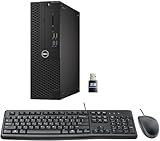
- This Certified Refurbished product is tested and certified to look and work like new. The refurbishing process includes functionality testing, basic cleaning, inspection, and repackaging. The product ships with all relevant accessories, a minimum 90-day warranty, and may arrive in a generic box. Only select sellers who maintain a high-performance bar may offer Certified Refurbished products on Amazon.com.
- Dell Optiplex 3050 SFF Desktop computer PC, Intel Quad Core i5-6500 up to 3.6GHz, 16GB DDR4, 256GB SSD
- Includes: USB Keyboard & Mouse, USB WiFi adapter, Microsoft office 30 days free trail.
- Port: Front: USB 3.0(2), USB 2.0(2); Rear: DP, HDMI, USB 3.0(2), USB 2.0(2), RJ-45.
- Support 4K (3840x2160) Dual display, makes it easy to connect two monitors at the same time, and you can expand working Windows, mirror content, or expand a single window across multiple monitors.
Ubuntu Core is another example of an image-based update design, using A/B image updates, but Ubuntu’s overview describes it primarily in the context of IoT and single-purpose devices—not as a direct substitute for a mainstream Ubuntu desktop. The same overview distinguishes this from openSUSE MicroOS/Aeon’s Btrfs snapshot approach. These are useful conceptual distinctions, but the Ubuntu page is older background rather than a current desktop release-status source. Ubuntu: Ubuntu Core as an immutable Linux Desktop base
Independent reader supportYour contribution helps us test, update, and keep practical guides available for everyone.Who should choose an immutable desktop first?
- You value coherent updates and a recovery path. A deployment-based update model may suit you better than changing the base system package by package.
- Your essential apps work with the available app model. Check Flatpak availability and any required hardware, permissions, or integration before switching.
- You can keep development tools in containers. Toolbx on Silverblue and Distrobox on Aeon are central to their intended workflows.
- You can tolerate reboot-based system changes. Updates and layered host packages may require a reboot before the new deployment is active.
- You have checked your special drivers and system-level software. If your setup depends on packages that must integrate directly with the host, verify the supported installation path first.
- You are comfortable with the project’s update cadence and maturity. Silverblue follows Fedora’s version support window; Aeon’s release-candidate label is a meaningful maturity consideration.
- You prefer the desktop environment and workflow offered. Silverblue is a GNOME Atomic Desktop; select based on the actual desktop and tooling you want, not the “immutable” label alone.
When Ubuntu may still be the better fit
If you routinely install system packages and expect them to alter the host immediately, rely on software that does not fit Flatpak or container workflows, or want to avoid reboot-dependent deployment changes, a conventional Ubuntu desktop may be more comfortable. The available evidence does not establish that immutable desktops outperform Ubuntu in reliability, satisfaction, or any measured outcome. The case for switching is about choosing an update and software-management model that better matches your preferences.
Quick Recap
Product prices and availability are accurate as of the date/time indicated and are subject to change. Any price and availability information displayed on Amazon at the time of purchase will apply.

