
Do these 3 things before closing this tab:
1Fix the driver behind crashes, sound loss and screen glitches2Repair Windows errors before they cause bigger problems3Scan for outdated or missing drivers - takes under a minuteiTechGuides is reader-supported. When you buy through links on our site, we may earn an affiliate commission. As an Amazon Associate I earn from qualifying purchases. Learn more
A good human-in-the-loop process gives people defined authority to review, approve, stop, and learn from AI-assisted database work. It does not treat a human glance at generated SQL as meaningful oversight. Establish clear roles, restrict what the AI can access and execute, scale review to the operation’s risk, test changes before production, and keep records that support investigation and recovery.
What human oversight means for database operations
Human oversight is an operational arrangement: people have the information, competence, time, and authority to assess an AI-proposed action and intervene when needed. NIST’s AI Risk Management Framework (AI RMF) is voluntary; NIST’s current landing page says the framework is being revised. The framework’s Govern Playbook recommends defining and differentiating human responsibilities, setting proficiency and training expectations, and documenting human-AI arrangements.

The UK Government’s Data and AI Ethics Framework recommends a human-in-the-loop process for risky or high-impact situations, with an oversight person or team able to identify risks and intervene where appropriate. This is UK government guidance, not a statement of universal legal requirements. Responsibilities across the people and organizations involved should be clarified for the applicable jurisdiction and system.
For database work, the distinction matters because an operation can be easy to describe but difficult to reverse. A read-only query and a command that changes or destroys data should not pass through the same review and execution path simply because both were generated by an AI system.
Assign separate responsibilities
Make the person or system responsible for each decision explicit. One person may hold more than one role in a small team, but the workflow should still distinguish the decisions and authority involved. The following division is a practical design pattern, not a NIST-prescribed staffing model.
| Responsibility | What it covers |
|---|---|
| Propose | Prepare a query, diagnosis, or change plan based on the request and available context. |
| Validate | Check the intent, target database and environment, assumptions, scope, expected effects, and relevant operational constraints. |
| Approve | Authorize consequential work, especially production changes, under the organization’s change process. |
| Execute | Run the approved operation through a controlled, appropriately permissioned path. |
| Monitor | Observe the operation’s technical outcome and any effects on service, data, or users. |
| Stop or recover | Pause execution, reject a proposal, or initiate the documented recovery path when conditions warrant it. |
Do not make the model accountable for a production decision. Assign a named human owner for the workflow and an escalation route for situations the reviewer cannot resolve. Reviewers need enough proficiency to assess the operation and enough authority to delay or stop it; a nominal approval that cannot change the outcome is not an effective control.
Rank #2

- HPE SMART CHOICE PROLIANT MODEL P83316-005: Factory-tested and preconfigured for reliability, this HPE ProLiant ML30 Gen11 Smart Choice model includes Intel Xeon 6333P (6 cores, 3.10 GHz), 32GB DDR5 ECC memory, 2 x 480GB SATA SSDs, dual 500W Flex Slot power supplies, Intel VROC SATA storage controller, and an embedded 1GbE 4-Port Ethernet adapter—ready for immediate deployment
- HIGH-PERFORMANCE FOR BUSINESS WORKLOADS: Designed for small offices, branch environments, and hybrid cloud, this tower server delivers enterprise-class performance for virtualization, file sharing, database hosting, ERP systems, and collaboration tools, ensuring smooth operations for growing businesses.
- SCALABLE STORAGE AND EXPANSION: Supports up to 8 SFF hot-plug drives and onboard M.2 NVMe SSD for fast boot options. With four PCIe slots including PCIe Gen5 x16, this server is ideal for data-intensive applications, backup solutions, and future expansion
- BUILT-IN SECURITY AND RELIABILITY: Protect your critical data with HPE iLO Silicon Root of Trust, TPM 2.0 encryption, and firmware malware detection and recovery. Dual redundant 500W power supplies ensure uptime for mission-critical workloads and secure file storage
- INTELLIGENT MANAGEMENT AND AUTOMATION: Integrated HPE iLO 6 enables remote monitoring, reporting, and automation for quick issue resolution. Compatible with HPE OneView and Compute Ops Management, making it perfect for businesses adopting hybrid cloud strategies and centralized IT management
Classify operations by consequence
Use risk tiers to decide how much review and control an operation needs. The tiers below are an implementation synthesis based on the UK guidance for risky or high-impact situations and the privileges described in PostgreSQL documentation. They are not an official NIST scale or a universal standard. Adapt them to the engine, business impact, and regulatory context.
Recommended Free Tools
| Example tier | Typical operation | Practical control |
|---|---|---|
| Lower consequence | Read-only analysis against approved data, with limited scope and no sensitive output exposure. | Restrict access to the necessary data and environment; apply query limits or review rules appropriate to the use case; monitor for unexpected access or output. |
| Elevated consequence | A query or change that affects sensitive data, many records, shared resources, or service availability. | Require qualified human validation, confirm scope and expected effects, test where practical, and define a stop or recovery path before execution. |
| Highest consequence | Production work that can alter or destroy important data, change access controls, or cause a broad outage. | Require designated approval, tightly bounded credentials, a validated recovery path, a controlled execution window where appropriate, and active observation. |
Place each operation by considering its consequence and reversibility, data sensitivity, scope and blast radius, availability impact, and the privilege required. A command’s apparent simplicity is not a reliable risk measure. In PostgreSQL, for example, object owners have inherent rights to modify or destroy their objects; the PostgreSQL 17 documentation lists object privileges such as SELECT, INSERT, UPDATE, and DELETE. Check the engine and version before applying those details elsewhere.
Rank #3
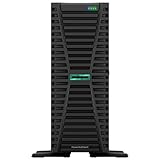
- HPE ProLiant G11, tailored for hybrid environments, delivers an intuitive operating experience, robust security, and optimized performance for diverse virtualized workloads. Whether for large enterprises or small businesses, it ensures seamless control and accelerates innovation across your data ecosystem.
- Dual (2) Xeon Silver 4410y 12-Core 2.00 GHz, 30MB Cache, Up To 3.90 GHz Turbo
- Memory: 256GB (8 x 32GB) DDR5-4800MHz PC5-38400 ECC Buffered Memory
- Storage: 15.36TB (4 x 3.84TB) Enterprise 2.5” SATA III 6Gbs SSDs for Ultra Fast Storage
- Hard drives and memory upgrades included separately not installed, installation required.
Build a bounded workflow from request to recovery
- Inventory the use case. Record which databases and environments are in scope, what the AI may read or propose, the model and version, its access mode, data provenance and sensitivity, known limitations, the accountable owner, and the escalation route. Update the inventory when versions, permissions, or workflow scope change. NIST’s Generative AI Profile recommends inventory information including provenance, known issues, oversight roles, underlying model versions, and access modes.
- Classify the proposed operation. Apply the organization’s risk tiers using data sensitivity, scope, reversibility, blast radius, availability impact, and required privilege. Route the proposal to the review and approval level set for its consequences.
- Separate proposal, validation, approval, and execution. Treat AI output as a proposal, not authorization. A qualified reviewer should verify the request’s intent, target environment, affected objects and records, assumptions, and likely consequences. Require an assigned approver for consequential production work, and preserve a human path to stop execution or initiate rollback.
- Limit identities, permissions, and tools. Use distinct identities and minimum required grants, with environment-specific permissions. Avoid giving routine AI-mediated tasks broad administrator or object-owner credentials. AWS recommends individual administrator identities and minimum required permissions in its RDS security guidance; use equivalent controls suited to the actual platform rather than assuming AWS-specific instructions apply everywhere.
- Validate and stage changes. Check that SQL matches the intended change and the target schema, constraints, and expected row counts. Test schema changes and other consequential operations in a representative non-production environment when possible. For AWS RDS, AWS recommends validating upgrades in staging, planning major upgrades, and testing parameter changes on a test instance. These are platform-specific recommendations; verify current documentation and map the control to the database service in use.
- Confirm recovery and execute through a controlled path. Before a consequential change, confirm that the backup and recovery approach is usable for the target and the change. Define who can pause the operation and what conditions trigger a stop or recovery action. AWS RDS guidance recommends automated backups; backup configuration alone does not demonstrate that a particular recovery path will meet operational needs.
- Observe the outcome. Monitor execution results and database health, including relevant resource capacity and service behavior. AWS RDS guidance identifies memory, CPU, replica lag, and storage among metrics to monitor. Choose signals and alert thresholds for the actual workload; the sources do not establish universal thresholds or a single monitoring cadence.
- Record the decision and result. Retain the model and version, relevant request or prompt context, proposed action, human edits, reviewer and approver identities, approval or denial rationale, executed command or change reference, outcome, and any incident or recovery. Limit retained context appropriately when it contains sensitive data.
Monitor both the database and the human-AI arrangement
Monitoring should cover more than whether a query ran successfully. NIST’s 2026 report on monitoring deployed AI organizes monitoring into functionality, operations, human factors, security, compliance, and large-scale impacts. Its announcement describes practical challenges including drift or performance degradation, fragmented logs, monitoring burden, and qualified-staffing and training needs.
- Functionality: Is the AI still producing outputs that meet the workflow’s intended use?
- Operations: Are latency, resource use, failures, and downstream service effects within the conditions the workflow is designed to handle?
- Human factors: Can reviewers understand the proposal, manage the review burden, and intervene in time?
- Security and compliance: Are access boundaries, data handling, and applicable obligations being maintained?
- Wider effects: Are there impacts outside the immediate database task that the organization has chosen to monitor?
These categories help structure a monitoring plan; they do not prescribe a database-specific checklist, universal thresholds, or a fixed review frequency. Set the signals, owners, escalation conditions, and review schedule to match the system’s impact and operating environment.
Rank #4

- HPE ProLiant DL380 Gen10 2U Rack Server with Rail kit for Enterprise
- Dual (2) Xeon Gold 6130 16-Core 2.10 GHz, 22MB, Up To 3.70 GHz Turbo
- Memory: 256GB (8 x 32GB) DDR4 PC4-25600 3200MHz Unbuffered Memory
- Storage: 7.68TB (4 x 1.92TB) Enterprise 2.5” SATA III 6Gb/s SSDs for Ultra Fast Storage
- Hard drives and memory upgrades included separately, not installed, installation required.
Make records useful for audit and learning
A log should let an investigator reconstruct what was proposed, who assessed it, what was run, and what happened. NIST’s Manage Playbook recommends recording reported errors, incidents, repairs, system changes, testing and deployment details, and version history. Use a controlled record that can connect the AI output to the approval and execution event without relying on an informal chat history alone.
- Record human edits, approvals, denials, overrides, and the reason for each decision.
- Link the executed change to its validation evidence, deployment details, and observed outcome.
- Capture incidents, repairs, recovery actions, and relevant model or workflow version changes.
- Track override frequency and rationale as signals for investigation, not as a standalone score of reviewer performance or AI quality.
An August 2022 NIST AI RMF draft discusses oversight ambiguity, human cognitive biases, opacity, and collecting override frequency and rationale. Treat that document as historical draft material; use the final framework and current Playbook for primary guidance.
Best Value
- HPE ProLiant DL380 Gen10 2U Rack Server with Rail kit for Enterprise
- Dual (2) Xeon Gold 6148 20-Core 2.40 GHz, 27.5MB, Up To 3.70 GHz Turbo
- Memory: 256GB (8 x 32GB) DDR4 PC4-25600 3200MHz Unbuffered Memory
- Storage: 15.36TB (4 x 3.84TB) Enterprise 2.5” SATA III 6Gb/s SSDs for Ultra Fast Storage
- Hard drives and memory upgrades included separately, not installed, installation required.
Reassess the controls as the workflow changes
Set a periodic review and trigger additional reviews after material changes, such as a model or version update, expanded database access, a changed use case, a significant incident, or a change to the recovery path. Revisit role definitions, reviewer competence and authority, permissions, staging fidelity, monitoring coverage, and incident patterns. NIST’s Govern 3.2 guidance supports differentiated responsibilities, proficiency expectations, training, oversight policies, and documentation; the 2026 monitoring report also highlights staffing and training as practical challenges.
For AWS RDS, re-check current AWS operational and security guidance before applying its platform-specific practices. For PostgreSQL, confirm the relevant engine version and privilege model. For other managed services or self-managed databases, implement the equivalent safeguards using that platform’s own controls rather than treating these examples as universal instructions.
Quick Recap
Product prices and availability are accurate as of the date/time indicated and are subject to change. Any price and availability information displayed on Amazon at the time of purchase will apply.
Quick wins for a faster PC:
Fix the driver behind crashes, sound loss and screen glitchesFind Drivers →Clear out junk files and repair common Windows errorsFree Scan →
