
Free tools Windows power users keep installed
One-click scans. No signup required.
iTechGuides is reader-supported. When you buy through links on our site, we may earn an affiliate commission. As an Amazon Associate I earn from qualifying purchases. Learn more
Some tardigrades survive near-total dehydration by entering anhydrobiosis, a reversible, ametabolic state. Their protection comes from a coordinated set of safeguards rather than one “magic” molecule: tardigrade-specific intrinsically disordered proteins (TDPs), especially cytoplasmic abundant heat-soluble (CAHS) proteins, reorganize as water leaves; small amounts of trehalose can strengthen that protection; and CAHS proteins appear to manage the residual water that remains. These mechanisms differ by species and experimental context, and they do not make water bears indestructible.
What happens when a water bear dries out?
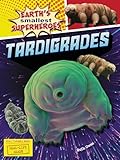
Tardigrades are microscopic animals that live in environments such as moss, lichen, soil and freshwater films. When their surroundings dry, some species can lose nearly all body water and enter anhydrobiosis. Metabolism falls to an effectively halted state, body activity stops, and the animal can remain dormant until water becomes available again. Rehydration can restore activity if the animal, its tissues and the drying conditions were compatible with recovery.



This is not a universal talent shared equally by every tardigrade. Tolerance varies with species, life stage, previous acclimation, the speed and humidity of drying, temperature and the length of the dry interval. A statement that “tardigrades survive complete dehydration” therefore needs the qualifier “some species under suitable conditions.” The cited studies do not establish one percentage of water loss or one maximum dry-storage time that applies to all tardigrades.
The central protection: tardigrade-specific disordered proteins
Why intrinsically disordered proteins are unusual
The 2017 Cell study led by Thomas Boothby identified tardigrade-specific intrinsically disordered proteins (TDPs) as major contributors to desiccation tolerance. Unlike enzymes and many structural proteins that fold into a stable three-dimensional shape, intrinsically disordered proteins remain flexible and dynamic. Their behavior changes as the cell loses water.
#1 Best Overall
Among the TDPs, cytoplasmic abundant heat-soluble proteins, usually shortened to CAHS proteins, are especially important. As drying progresses, these proteins can assemble into a glass-like, or vitrified, matrix. Vitrification replaces some of the molecular mobility that liquid water normally permits with a highly viscous state. That can slow damaging reactions, limit unwanted contact between sensitive molecules and help stabilize cellular structures.
Evidence from engineered systems
The foundational work did not rely only on observing naturally tolerant animals. It also expressed tardigrade proteins in other biological systems and found increased tolerance to drying. That result supports a protective role for the proteins, while not proving that a single CAHS protein is sufficient in every organism. A foreign cell has different membranes, metabolites and stress responses, so results in a heterologous system cannot be read as a complete copy of a tardigrade’s biology.
How CAHS proteins behave during drying
- Water begins to leave the cell. Solutes become more concentrated and membranes, proteins and nucleic acids face increasing physical and chemical stress.
- TDP concentrations rise relative to the shrinking water volume. Flexible CAHS molecules occupy more of the remaining cytoplasm and interact with nearby cellular components.
- The proteins reorganize. CAHS proteins can form a gel-like or glass-like network as hydration falls, reducing molecular motion without requiring a conventional folded scaffold.
- The dry state is stabilized. The resulting matrix helps limit damage during the ametabolic interval. It is a protective physical environment, not an active repair process.
- Rehydration reverses the state. When water returns, the protein network can dissolve or rearrange and normal biochemical activity may resume, provided irreversible damage has not accumulated.
This sequence is a useful model of the mechanism described in the studies, not a claim that every tardigrade dries in exactly the same way. Different species express different sets and amounts of TDPs, and environmental history can change the outcome.
What’s actually slowing this PC down?
Pick the symptom - the matching free tool is one click away.
Trehalose adds a second layer of protection
Many organisms that survive drying accumulate the sugar trehalose. Tardigrades often contain little or undetectable trehalose compared with classic anhydrobiotic organisms, which initially made it tempting to treat the sugar as unimportant in water bears. A 2022 Nature Communications study showed why that conclusion would be too simple.
The investigators found that naturally occurring trehalose and CAHS protein proportions can produce synergistic protection in vitro. In other words, the combined effect is greater than treating the two components as unrelated additives. The same work found that this synergy is required for robust CAHS-mediated protection in vivo. Low trehalose levels can therefore matter when they are paired with the right protein environment.
What synergy means in practice
- CAHS proteins provide a flexible macromolecular scaffold. They can organize into protective assemblies as water activity falls.
- Trehalose helps stabilize biomolecules. Sugars can replace some water-mediated interactions and support a glassy state, but the exact contribution depends on concentration and surroundings.
- The mixture is context-dependent. The effective ratio in a laboratory preparation is not a universal recipe for every tardigrade species or every engineered cell.
Thomas Boothby, quoted by the National Science Foundation, summarized the implication this way: “This study and its findings provide a compelling argument that to do so may require the combination of different synergistic protectants.” In context, “to do so” means enabling organisms to survive drying; it does not mean that one combination has been validated as a general preservation product.
Rank #3
CAHS D does not simply keep more water in a dry cell
A common explanation for protective gels is that they retain a large reservoir of water. A 2023 Scientific Reports study directly tested that idea for the tardigrade protein CAHS D. In hydrated and desiccated systems, CAHS D did not retain more total dry-state water than common proteins or control cells.
Instead, the study found evidence that CAHS D interacts with the small amount of residual water that remains after drying. That distinction matters. The protein may influence how residual water is organized, how mobile it is and how it interacts with cellular molecules without increasing the total quantity of water. A dry tardigrade is therefore not best pictured as a sealed container preserving a wet interior; it is better understood as a chemically controlled, glassy system in which limited residual water is managed.
How the leading mechanisms fit together
| Mechanism | Evidence setting | Stress examined | Proposed protective action | Important limit |
|---|---|---|---|---|
| TDP and CAHS vitrification | Whole tardigrades and engineered biological systems; 2017 Cell study | Desiccation | Flexible proteins reorganize into a glass-like matrix that limits damaging molecular motion | Expression in another organism does not reproduce every feature of a tardigrade cell |
| Trehalose–CAHS synergy | In-vitro mixtures and living systems; 2022 Nature Communications study | Desiccation | Trehalose and CAHS proteins cooperate to stabilize the dry state | Synergy depends on proportions and biological context; tardigrades may contain little trehalose |
| Interaction with residual water | Hydrated and desiccated protein systems and control cells; 2023 Scientific Reports study | Drying and the physical state of remaining water | CAHS D changes interactions involving residual water rather than retaining more total water | It does not by itself explain the complete organism-level response |
| Dsup-associated DNA protection | Human cultured cells expressing Dsup; 2016 Nature Communications study | X-ray-induced DNA damage | A tardigrade-unique DNA-associating protein suppresses part of the measured damage | This is a radiation result, not evidence for drought tolerance or human protection |
These mechanisms are complementary hypotheses and findings, not mutually exclusive alternatives. The organism-level dry state probably depends on protein composition, sugars, membranes, antioxidants, repair systems and the timing of rehydration.
Why Dsup should not be presented as the drought protein
Dsup, short for “damage suppressor,” is often mentioned in popular explanations of tardigrade toughness. The 2016 study by Hashimoto and colleagues examined a tardigrade-unique DNA-associating protein in human cultured cells. The cells showed approximately 40% suppression of X-ray-induced DNA damage under the study’s experimental conditions.
That number has a narrow meaning: it describes a measurement in cultured human cells exposed to X-rays while expressing Dsup. It is not a percentage of drought tolerance, a measure of how much radiation a tardigrade can survive, or evidence that Dsup protects people. CAHS and other TDP findings concern desiccation; Dsup’s cited result concerns radiation-associated DNA damage. Combining them into one claim that tardigrades “survive anything” is scientifically incorrect.
What determines whether a dried tardigrade revives?
The presence of protective proteins is necessary to explain anhydrobiosis, but it is not the only variable. Outcomes can change with:
Best Value
- Species and strain: Tardigrade lineages differ in genes, protein abundance and environmental adaptation.
- Drying rate: Gradual drying can allow protective systems to activate, while abrupt water loss may cause damage before the protective matrix forms.
- Temperature and humidity: These alter reaction rates, membrane behavior and the physical state of the drying cytoplasm.
- Developmental state: Eggs, juveniles and adults may not express identical stress programs.
- Dry duration and rehydration: Damage can accumulate during storage, and rehydration itself can create oxidative or mechanical stress.
- Cellular components beyond CAHS: Sugars, membranes, antioxidants, chaperones and DNA-repair pathways can influence recovery.
Because these variables interact, a successful laboratory result with one species or engineered cell should not be converted into a universal survival time or water-loss percentage.
What the evidence establishes—and what it does not
Strongly supported conclusions
- Some tardigrades can enter a reversible, ametabolic anhydrobiotic state after losing nearly all body water.
- Tardigrade-specific intrinsically disordered proteins, including CAHS proteins, contribute to desiccation tolerance.
- CAHS proteins can vitrify or form gel-like assemblies as drying proceeds.
- Trehalose can work synergistically with CAHS proteins even when tardigrades contain little of the sugar.
- CAHS D affects the behavior of residual water rather than simply increasing total dry-state water retention.
Claims the cited studies do not justify
- That every tardigrade species tolerates identical dehydration.
- That one protein alone explains all forms of tardigrade extremotolerance.
- That tardigrades are indestructible or can survive any environment.
- That Dsup’s cell-culture radiation result demonstrates protection in humans.
- That a commercial dry-storage technology or spaceflight system based on tardigrade proteins is already deployed.
Could tardigrade proteins be used in medicine, agriculture or spaceflight?
Scientists have discussed using TDPs or related protective systems to stabilize pharmaceuticals during dry storage, engineer crops that better tolerate water stress, and preserve biological materials without continuous refrigeration. These are applications suggested by the mechanism, not established consumer products. A successful formulation would need to work at a defined concentration, protect the intended molecule or cell, remain safe and manufacturable, and release or rehydrate predictably.
NASA’s technical-record entry titled Use of Tardigrade Proteins for Enhancing Cellular Stress Tolerance on the Moon describes work involving yeast and prospective lunar payloads. The record documents research and testing plans; it is not evidence of an operational lunar biotechnology system or a deployed spaceflight application.
The Tool Desk
Outbyte PC Repair FREERepair Windows errors before they cause bigger problemsFix Now →Outbyte Driver Updater FREEScan for outdated or missing drivers - takes under a minuteDriver Scan →Engineering a plant or microbe to express a CAHS protein also presents practical questions: where the protein accumulates, whether growth is impaired, how the organism recovers after rehydration, and whether protection works outside controlled laboratory conditions. Trehalose synergy suggests that adding a protein gene alone may not reproduce the full protective state.
How to think about the “water bear” explanation
The most accurate mental model is a layered, conditional defense. Drying removes the solvent that makes ordinary biochemistry possible. TDPs change the physical environment as that solvent disappears; CAHS proteins help create a glass-like state and interact with residual water; small amounts of trehalose can reinforce the matrix; and other cellular systems handle damage and recovery. The result is an organism that can pause metabolism under particular conditions, not an animal that ignores the laws of chemistry.
That layered view also explains why scientists continue to test individual components. An in-vitro gel, an engineered cell and a living tardigrade answer different questions. The strongest explanation must connect those levels without treating one experiment as proof of the entire survival process.
Quick Recap
Product prices and availability are accurate as of the date/time indicated and are subject to change. Any price and availability information displayed on Amazon at the time of purchase will apply.
Recommended Free Tools

