
iTechGuides is reader-supported. When you buy through links on our site, we may earn an affiliate commission. As an Amazon Associate I earn from qualifying purchases. Learn more
Voice AI turns a player’s microphone audio into a response by capturing and preparing the speech, recognizing or directly processing it, and connecting the result to the game’s dialogue or command logic. The game can then trigger an action, show text, or speak an NPC response. Speech recognition is only one part of the process: it does not decide by itself what the game should do.
From microphone to game response: the stages
A typical voice interaction crosses several boundaries: audio must be captured, interpreted, and handed to the game in a form the game can use. If the response is spoken, audio must then be generated and played. Some systems use a distinct component for each stage; a realtime speech-to-speech model can combine parts of the audio processing. Either way, game-side logic must still connect the result to the right character, action, and game state.
1. Capture the player’s audio
The process begins with a microphone, often one built into or connected to a gaming headset. The game or its voice service receives an audio stream. For realtime interactions, audio can be transported to a speech service or model using a connection such as WebRTC or WebSockets; the appropriate choice depends on the implementation and supported service. OpenAI’s Realtime documentation describes these transport options and client audio-device capture.
Windows Errors? Fix Them Before They Spread
Repair common Windows errors and clear accumulated junk for a smoother, more stable PC - no reinstall needed.Free scan · no reinstallCrashes, No Sound, or Screen Glitches?
Random freezes, missing sound and display glitches usually trace back to one bad driver. Find and replace yours safely.Free scan · under a minuteCapturing audio does not necessarily mean that the game should continuously send every sound the microphone hears. The application needs a policy for when listening starts and stops. Push-to-talk gives the player an explicit capture control. Voice activity detection (VAD) can instead detect when speech begins and ends, which is useful for hands-free conversation but requires the system to decide when a pause means the player has finished.
#1 Best Overall

- [Natural Audio Clarity] Operated with frequency response of 50Hz-16KHz, the podcasting XLR mic delivers balanced audio range, likely to resonate with your audience. Directional cardioid dynamic microphone corded will not exaggerate your voice, while rejects unwanted off-axis noise for vocal originality and intelligibility during your PS5 gaming streaming video recording. (Tips: Keep the top of end-addressing XLR dynamic microphone AM8 facing audio source, and suggested recording range is 2 to 6 in.)
- [XLR Connection Upgrade-Ability] To use XLR connection, connect the podcast microphone to an audio interface (or mixer) using a separate XLR cable (NOT Included) . Well-connected and smooth operation improves audio flexibility to make you explore various types of music recording singing. The streaming mic isolates the pristine and accurate sound from ambient noise with greater no interference and fidelity. (RGB and function key on mic are INACTIVE when using XLR connection.)
- [USB Connection with Handy Mute] Skip the hassle of setting something up and plug the cable to play the dynamic USB microphone directly, which suits for beginner creators or daily podcast. You can quickly control the gamer mic with tap-to-mute that is independent of computer/Macbook programs to keep privacy when live streaming. LED mute reminder helps you get rid of forgetting to cancel the mute. (RGB and function key are only available for USB connection, but NOT for XLR connection)
- [Soothing Controllable RGB] RGB ring on the desktop gaming microphone for PC, with 3 modes and more than 10 light colors collection, matches your PC gears accessories for gaming synergy even in dim room. You can control the RGB key button of the dynamic microphone USB directly for game color scheme gaming or live streaming. Configured memory function, the streaming microphone RGB no need to repeated selections after turnning off and brings itself alive when power on. (Only available for USB connection)
- [More Function Keys] Computer microphone with headphones jack upgrades your rhythm game experience and gets feedback whether the real-time voice your audience hear as expected. Get the desired level via monitoring volume control when gaming recording. Smooth mic gain knob on the PC microphone gaming has some resistance to the point, easily for audio attenuation or boost presence to less post-production audio. (Only available for USB connection)
2. Prepare the audio and find speech
Before recognition, a system may reduce background noise, detect voice activity, and divide the stream into segments that can be processed. This matters in games because the microphone may pick up sound effects, music, ambient voices, and other players as well as the intended speaker. Level Infinite’s ASR Service documentation specifically describes handling game sounds such as gunshots and explosions, along with voice activity detection and segmentation.
Audio preparation helps produce a more useful speech input, but it cannot guarantee that every utterance will be clear. A player may speak over an explosion, be too far from the microphone, or be interrupted. A robust game should therefore treat uncertain or incomplete recognition as a normal condition rather than assume every captured segment is a valid command.
3. Recognize the words—or process audio directly
In a cascaded system, automatic speech recognition (ASR), also called speech-to-text (STT), converts the spoken audio into a text transcript. That text can then be passed to another component. Game-aware vocabulary tuning can help recognition with terminology, names, and common gaming phrases; language identification can help route the input to an appropriate recognition path. The exact vocabulary and language coverage depend on the service and its configuration.
The Tool Desk
Outbyte Driver Updater FREEFix the driver behind crashes, sound loss and screen glitchesFind Drivers →Outbyte PC Repair FREERepair Windows errors before they cause bigger problemsFix Now →Recognition answers a limited question: what words did the system hear? It does not, by itself, establish whether the player is talking to an NPC, issuing a command to a teammate, joking, or asking for something the current game state cannot do. The game needs a further interpretation step before it can safely turn a transcript into behavior.
Rank #2

- USB/XLR Connectivity-AM8T comes with a dynamic microphone and a boom arm stand. Versatile PC gaming microphone kit with USB compatibility plug and play for PC in streaming or recording, without additional drivers. And also, while in XLR compatibility for mixer or sound card connection, the XLR studio vocal microphone is good at vocal, podcast, or musical instruments creation.
- Vibrant RGB Light-The streaming microphone RGB illuminates your gaming setup with customizable RGB lighting for a visually stunning game experience. You can easily control the RGB mode/colors or turn off by simply tapping the RGB button without making any complicated settings on specific software.
- Enhanced Features-Featured -50dB sensitivity and cardioid polar pattern, the USB recording mic kit not easily pick up background noise for delivering clear audio. The PC gaming microphone USB kit includes a boom arm for easy positioning, mute button and gain knob for precise control, headphones jack for real-time monitoring, and headphone volume control while streaming or recording.
- Decent for Gamers and Streamers-The XLR microphone designed specifically to meet the needs of gaming enthusiasts and streamers. Ideal for various applications, including gaming, streaming, podcasting, voiceovers, and more, which also works with popular streaming software like OBS and Streamlabs.
- Recording Microphone Kit-The dynamic microphone is more convenient for working from home or going out for podcasts, and the complete accessories allow for faster recording work due to its simple straightforward assembly. External windscreen of the XLR dynamic microphone filter out plosive voice.
A direct speech-to-speech design takes audio input and returns audio without requiring separate STT and text-to-speech (TTS) stages. OpenAI describes this approach as capable of reducing latency and preserving more information about tone and inflection. It changes the path through the system, but does not remove the game’s need to decide how a response relates to characters, actions, and state. If a game needs an explicit transcript or structured command, it must also account for how that information will be represented and obtained.
4. Interpret speech in the context of the game
The transcript or model result must reach application logic that determines what it means in the current interaction. A recognized phrase might be intended as natural dialogue with an NPC, a voice command for an AI teammate, or an instruction that advances a game action. Those are different outcomes: a conversation response may require dialogue selection or generation, while a gameplay command may need to map to an action the game permits.
The game-side layer is where context matters. It can consider the active character or interaction, available actions, and current game state before deciding whether to respond, perform an action, or ask the player to clarify. The documented use cases establish that speech can support NPC dialogue, teammate commands, and progression-related commands; they do not prescribe one universal command architecture. Developers must choose how intents are represented, which actions are allowed, and what happens when the speech result is ambiguous or unsupported.
Recommended Free Tools
5. Decide whether the response is an action, text, or speech
Once the game interprets the input, it can trigger an in-game action, display a text response, or generate dialogue. These are not interchangeable. A command may need to change game behavior, while an NPC conversation may need a line of dialogue. The game should connect the output to the correct character and interaction rather than treat every recognized sentence as a command.
Rank #3

- Clear Sound: Equipped premium chips and core, coupled with expert tuning, resulting in a pure, clean sound, providing high-fidelity reproduction that ensures a smooth and precise communication for your team.
- Vibrant RGB lighting: 4 RGB modes to choose from: 6 static color, single-color gradient, breathing, and mix-color gradient. Quickly transform your gaming vibe by one tap on the lighting control button.
- Brightness Control: Adjust the brightness of the RGB lights by long tapping the RGB icon. Choose your lighting preference without worrying about eye strain.
- Easy Sound Control: Easily mute it by tapping the top of the mic, makes you respond flexibly to unexpected situations during live streaming and gaming. Recommended using a USB 2.0/3.0 port and ensure the Type-C connector is fully and completely connected. Rotating the top of the microphone to adjust the gain, ensuring that you maintain an appropriate volume at all times.
- All-in-One Equipment Kit: TC310+ is a completed mic & arm kit, equipped with a metal-made boom arm and the sturdy clamp that fits most desks with a thickness not exceeding 2.36''. Multiple adjustable joints let you easily find the perfect angle for you and your desk & monitor.
If the response needs to be heard, TTS converts response text into synthesized audio. Microsoft’s game-development documentation describes speech features for NPC voices and game dialogue, including standard and custom voices, emotional styles, and SSML controls. A speech-synthesis system can also provide viseme data—mouth-shape cues that developers can use to synchronize a 2D or 3D avatar’s mouth movement with synthesized speech. The animation and audio still need to be integrated into the game’s character and playback behavior.
6. Play the response and manage turn-taking
Realtime interaction needs a clear handoff between player and game. The system must decide when the player’s turn ends, when the game may respond, and what to do if the player starts speaking while an NPC is still talking. OpenAI’s Realtime documentation covers VAD and push-to-talk as turn-taking approaches, along with handling interruptions by stopping or truncating audio that has not yet played.
Without interruption handling, a response that was appropriate a moment ago can continue playing after the player has changed direction. A game can choose a policy appropriate to its interaction—for example, whether an NPC finishes a line, yields immediately, or stops only unplayed audio. The technical requirement is to keep the model’s audio output, what has actually played, and the game’s conversation state aligned.
Three architecture patterns and their trade-offs
There is no universal best design. The choice depends on how much control the game needs, whether it requires transcripts or structured commands, which devices it must support, and what the player experiences when speaking and waiting for a reply.
Rank #4
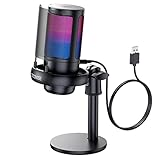
- Gradient RGB Symphony Lights: Cyclic and gradient RGB lights, in line with your live broadcast aesthetics. Bring you an immersive gaming experience and awaken all your senses. There's also a palpable sense of security, and when the COCONISE microphone is muted, the RGB lights go off to let you know you're working. Prevent accidents when you forget to mute your PC microphone for gaming.
- Practical and convenient function: It is equipped with a one-button mute touch sensor. When you want to close the microphone, you only need to touch it lightly to mute the sound, and the RGB light will go out to inform you that the microphone has been successfully closed. Equipped with a rotary control volume button at the bottom. There is a 3.5MM headphone jack in the middle, you can plug in the headphones to monitor your own voice in real-time and make adjustments in time when recording.
- Cardioid Polar Pattern: This microphone features a cardioid polar pattern that captures crisp, smooth, and clear sound in front of the microphone, reducing side pickup so it can focus on your voice. At the same time, it is equipped with a 25mm ultra-large capacitor diaphragm capsule, which can capture a wider range of audio with a sampling rate of up to 192kHz, and the pickup is delicate and noise-free.
- SOLID FIT: With a weighted carbon steel base, your big movements won't knock the mic down, even during intense gaming sessions. The detachable metal anti-splash screen is adopted. Compared with the sponge, the metal anti-splash screen can filter the plosive sound more effectively. And the rubber elastic band is firmly clamped on the shock mount, which can reduce the vibration noise caused by violent keyboard tapping and mouse clicking.
- Plug and Play:PC gaming microphone for streaming, compatible with PS4/PS4pro/PS5 desktop and laptop. You can quickly enter the game chat. The 180CM long detachable USB data cable can be extended from the back of the computer host to the main body of your gaming USB microphone without limitation.
| Pattern | How it works | Useful when | Questions to resolve |
|---|---|---|---|
| Cascaded ASR, dialogue or command logic, and optional TTS | Separate components recognize speech, interpret it or generate a response, and optionally synthesize spoken output. NVIDIA documents a pattern with separate ASR, large language model (LLM), and TTS workers. | The game needs distinct stages and wants visibility into intermediate results such as recognized text. | How much time does each stage add? How will components pass context and handle failures? Which languages and deployment locations are supported? |
| Direct speech-to-speech | A realtime model accepts audio and returns audio without separate STT and TTS stages. NVIDIA also documents audio-in/audio-out model serving. | The interaction prioritizes natural audio conversation and the system can work with the model’s response format. | How does the game control responses and session state? How are interruptions handled? Does gameplay still require an explicit transcript or command representation? |
| On-device voice stack | Recognition, language processing, and synthesis run locally on supported hardware. Qualcomm describes this approach for its Snapdragon Game AI SDK. | Local processing or operation without cloud connectivity is a requirement on supported devices. | Which devices and engines are supported? What compute is available alongside rendering and physics? What are the actual limits under the target workload? |
These patterns are alternatives, not a ranking. A hybrid implementation may also divide work differently, but it should be evaluated against the same practical needs: player-perceived response time, noisy input, game vocabulary, language support, turn-taking, device constraints, and character presentation.
Independent reader supportYour contribution helps us test, update, and keep practical guides available for everyone.How to evaluate response time without misreading the numbers
Latency is the time a player experiences from speaking to receiving a useful response, not just the time needed to transcribe audio. A complete interaction can include capture and audio preparation, recognition or direct model processing, interpretation, game logic, network transport, optional response generation, and TTS. The actual path depends on the architecture and on which parts are local or service-based.
Level Infinite’s ASR Service documentation reports end-to-end real-time recognition output latency of 160–350 ms. The documentation page was last updated July 20, 2026. This is the vendor’s stated latency for that ASR service, not an independent measurement, a universal recognition figure, or a promise that an NPC will answer within that time. Dialogue generation, game logic, transport, and optional speech synthesis can add time to the full loop.
The cited documentation does not provide an independent cross-vendor accuracy comparison or a benchmark for a complete speech-to-game-response interaction. For a game team, the relevant measure is therefore the response time for its own end-to-end flow under the intended languages, devices, connection conditions, and in-game audio—not a recognition-stage number treated as the whole experience.
Best Value

- Custom three-capsule array: This professional USB mic produces clear, powerful, broadcast-quality sound for YouTube videos, Twitch game streaming, podcasting, Zoom meetings, music recording and more
- Blue VO!CE software: Elevate your streamings and recordings with clear broadcast vocal sound and entertain your audience with enhanced effects, advanced modulation and HD audio samples
- Four pickup patterns: Flexible cardioid, omni, bidirectional, and stereo pickup patterns allow you to record in ways that would normally require multiple mics, for vocals, instruments and podcasts
- Onboard audio controls: Headphone volume, pattern selection, instant mute, and mic gain put you in charge of every level of the audio recording and streaming process
- Positionable design: Pivot the mic in relation to the sound source to optimize your sound quality thanks to the adjustable desktop stand and track your voice in real time with no-latency monitoring
Implementation decisions that shape the player experience
Make the listening model clear
Choose between explicit capture, such as push-to-talk, and automatic turn detection based on the interaction. Push-to-talk gives the player direct control and can avoid waiting for a VAD timeout in some applications. VAD supports hands-free speech, but the game must handle pauses and determine when an utterance is complete. The choice affects both the interaction design and when downstream processing can begin.
Plan for game noise and game-specific words
Input quality is part of the feature, not a detail to address after recognition. Effects, ambient audio, and other voices can compete with the player’s speech. Game-focused ASR documentation describes noise handling and vocabulary optimization for gaming phrases and terminology. Test the actual vocabulary players will use, including names and commands, and decide how the game behaves when recognition is unclear instead of assuming that a transcript is always correct.
Check language and region coverage
Language availability and regional service support are product-specific. Level Infinite lists supported languages and regional service nodes for its service, while Microsoft advises checking locale and region support for its speech features. Verify current documentation for the intended player languages and regions before choosing a recognition or synthesis route; do not assume that a feature available for one locale is available for every locale.
Choose where processing happens
A service-based design sends audio to a speech service or model and may depend on network connectivity. An on-device stack can operate without cloud connectivity on supported Snapdragon hardware, according to Qualcomm’s description of its SDK. That does not establish support for every device or engine: confirm the precise hardware and SDK support, and consider how local AI workloads share resources with rendering and physics.
Connect voice to character presentation
Spoken NPC output has both an audio and a visual side. A selected voice, emotional style, or SSML control affects synthesized delivery; viseme data can support synchronized mouth movement. These capabilities do not automatically animate a character. The game needs to receive and use the synthesis output and timing information in its own presentation system.
A practical way to plan the voice-response flow
- Define the interaction. Specify whether the player is speaking to an NPC, commanding a teammate, or requesting an in-game action. Decide what the game should do when speech is unclear, out of context, or not supported.
- Choose the audio path. Decide whether to use a cascaded ASR-to-logic-to-optional-TTS flow or direct speech-to-speech. If local operation is required, verify supported hardware and SDK or engine requirements before building around an on-device approach.
- Set capture and turn rules. Select push-to-talk, VAD, or an appropriate combination. Define how the system handles pauses, the end of a player turn, and speech that interrupts NPC audio.
- Connect the result to game state. Decide how recognized text or model output becomes dialogue or an allowed command. Keep the game’s action rules and current context in this layer; a transcript alone is not an executed game instruction.
- Build the spoken response only where needed. Choose whether the response should be text, an action, or synthesized audio. If using TTS, integrate voice selection and any desired character animation, including viseme-driven mouth movement where supported.
- Evaluate the full interaction. Check response time across the complete path, not ASR alone, and verify behavior with the target vocabulary, languages, noisy game audio, intended regions, devices, and interruption rules.
This sequence is a planning framework, not a prescribed architecture from any single provider. The system components and game integration differ by implementation, so the important result is a working handoff from player audio to a context-appropriate game response.
Quick Recap
Product prices and availability are accurate as of the date/time indicated and are subject to change. Any price and availability information displayed on Amazon at the time of purchase will apply.

