
PC Slower Than It Used to Be?
A free scan shows the junk files, broken settings and background clutter dragging Windows down - then fixes them in one click.Free scan · Windows 10 & 11Outdated Drivers Are Slowing You Down
One free scan finds every outdated or missing driver and matches the right update for your exact hardware.Free scan · exact hardware matchiTechGuides is reader-supported. When you buy through links on our site, we may earn an affiliate commission. As an Amazon Associate I earn from qualifying purchases. Learn more
Universities need clear, course-level AI rules now—not because a single global survey proves every student treats AI as a default companion, but because student use is already shaping institutional planning. UNESCO’s 2025 survey found that 19% of participating institutions had a formal AI policy and 42% were developing a guiding framework. EDUCAUSE’s 2024 AI Landscape Study reported that 73% of respondents saw rising student use in courses as a primary reason to plan for AI. The practical response is to teach responsible use, state permissions plainly, protect privacy and equity, and redesign assessment so students’ reasoning remains visible.
Students can use generative AI to practise, get explanations, test their understanding and receive feedback. They can also be misled by inaccurate output, surrender authorship, expose personal data or become dependent on a tool. Universities should move from blanket reaction or tool detection toward transparent rules and AI literacy, while being honest about what current evidence does—and does not—show.


What the evidence actually shows about student AI use
The phrase “default study companion” captures a visible shift in student behavior, but it should not be presented as a measured global majority. The publicly accessible 2025 EDUCAUSE Students and Technology Survey is a questionnaire, not a published set of response distributions. It asks undergraduates how often they use generative AI for tasks such as proofreading, explaining solutions, creating self-quizzes or flash cards, brainstorming, drafting, summarizing, personalized feedback, translation and workforce preparation. It also asks about risks, benefits and instructor guidance. Those questions establish what institutions need to manage; they do not establish a worldwide usage rate.
A separate figure comes from the United Kingdom. UNESCO’s 2025 Societal implications of AI: Insight from Signals report relays a HEPI/Kortext result that 92% of UK undergraduates used AI tools for their studies. The same report says use for assessment rose from 53% in the previous survey year to 88% in 2025. These are UK-specific, secondary-reported figures, not a global estimate; the original HEPI/Kortext publication should be checked when making a formal institutional claim.
#1 Best Overall
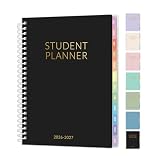
- 2026-2027 Student Planner: From July 2026 to June 2027 with 12 months of monthly and weekly pages for easy academic school year planning and scheduling. Student planner with subjects, double-sided back pockets, printed colorful monthly tabs, bookmark. SUNEE spiral bound 6.5"×8.3" middle student planner 2026-2027 planner is easy to use and carry away. Perfect Organizer for students.
- Weekly Overview: Two Page spread for 7 Subjects each week, from Monday to Sunday offers ample ruled writing space for detailed daily and class schedule to clearly track your to-dos, reminders or appointments; 2026-2027 daily weekly planner includes weekly goals, home/school communication, and monthly reference; allowing you to keep track of your appointments, reminders, ideas and to-do lists every day of the week. A good lesson planner scheduling can make things easier with less effort.
- Monthly Overview: 2026-2027 school planner includes previous and next month reference calendars for a simple past reviewing and future planning; Goals section is helpful for school students to set weekly plans to accommodate their busy lifestyle; Notes section for important projects; Major holidays listed, elapsed and remaining days; Durable coated colorful tabs dividers that are tough and durable, making it easy to find information. Gentle color title makes more clearer
- Durable and Practical: Student planner 2026-2027 ensures smooth writing without ink feathering or seepage, keeping your lesson planner schedule neat. 6.5"×8.3" high school student planner includes practical double-sided back pockets and a sturdy design to withstand frequent use, ensuring reliability throughout the academic year.
- More Features: SUNEE Student Planner 2026-2027 weekly and monthly student planner includes 2026-2027 School Yearly Overview | 18 Resource Pages (for Study&Test Skills, English, Math, Social Studies, and Geography)| Class Schedule | Monthly Section | Weekly Section | Note Pages | Holidays | Double-sided Pockets. Keep you organize throughout the year and easy to use
| Finding | What it means | Limitation |
|---|---|---|
| 73% of respondents in the 2024 EDUCAUSE AI Landscape Study identified rising student AI use in courses as a primary planning motivator. | Student use is a material driver of institutional strategy. | It measures institutional respondents’ motivations, not student prevalence. |
| 19% of respondents to UNESCO’s 2025 network survey reported a formal AI policy; 42% reported a framework in development. | Policy activity is advancing but incomplete. | The 400 responses came from UNESCO Chairs and UNITWIN Networks in 90 countries, with a 38% response rate; this is not a census of universities. |
| About 70% of institutions represented in Europe and North America had or were developing guidance, compared with 45% in Latin America and the Caribbean. | Institutional readiness varies by region. | Regional percentages describe the survey’s participating institutions. |
| In UNESCO’s 2023 snapshot, approximately 13% of participating universities reported some guidance. | Provides historical context for the policy discussion. | The 2023 and 2025 samples and methods differ, so they are not a like-for-like adoption trend. |
UNESCO also reported that nine in ten respondents to its 2025 network survey used AI in professional work, while more than half described uncertainty or limited understanding in relevant areas. One in four said their university had encountered ethical issues linked to AI, including overreliance, authorship disputes and bias in research. These results characterize participating professionals and institutions, not all students or universities.
For context, UNESCO’s 2023 survey said only two participating institutions described their policy as a ban. That historical observation should not be converted into a direct percentage-point trend against the 2025 results.
Why the course level matters more than a single university rule
A student needs to know what is allowed in the assignment due tomorrow, not merely that a committee is drafting a campus policy. The EDUCAUSE 2025 questionnaire asks students whether instructors have made the “do’s and don’ts” clear and whether instructors prohibit or allow AI. Because the instrument does not publish answer distributions on the accessed page, universities should not claim that most instructors provide—or fail to provide—guidance. They can, however, treat the questions as a minimum communication standard.
The Tool Desk
Outbyte Driver Updater FREEFix the driver behind crashes, sound loss and screen glitchesFind Drivers →Outbyte PC Repair FREEClear out junk files and repair common Windows errorsFree Scan →Every course outline or assignment brief should answer four practical questions:
Rank #2

- AN ADHD STUDY SYSTEM, NOT JUST A PLANNER — Built for neurospicy brains that need more than a blank calendar. This is a complete ADHD-specific study system with 20+ tools designed to reduce overwhelm, support focus, and actually make studying feel doable — from age 14 to adulthood and every school year in between.
- 20+ ADHD-SPECIFIC STUDY TOOLS IN A PREMIUM A5 FORMAT — From a Pomodoro tracker and exam prep guide ("Tame the Exam Dragon") to a Brain Dump page, 4D Task List, and "Study Like a Neurospicy Genius" learning style guide — 360 pages of tools built for how ADHD brains actually work. A5 size (5.8" x 8.3") fits in any bag.
- UNDATED & FLEXIBLE — START ANYTIME, RESTART ANYTIME — No guilt, no wasted pages. This undated student planner lets you begin mid-semester, skip a rough week, and pick back up whenever you're ready. Built for real life, not an ideal version of it.
- SELF-CARE, LIFE ADMIN, AND MORE — ALL BUILT IN — Weekly affirmations, a mood tracker, a Self Care Checklist, and a Hyper-Focus Self Care tracker keep you grounded in school. And when the day goes beyond studying, there's a medication routine tracker, routine builders, monthly reflection and goal-setting pages, a budget tracker, a savings challenge, a side hustle log, and life admin pages — because student life is bigger than schoolwork.
- PREMIUM QUALITY — AND IT COMES WITH EXTRAS — A luxurious linen-look cover, gold spiral binding, and 360 high-quality pages, plus 4 sheets of custom-designed stickers (month stickers in 4 colors, capybara holiday stickers, week number stickers, customizable + pre-filled tab stickers, and "Proudly ADHD" fun stickers), an elastic band to bookmark your page, and a back pocket for loose notes you can't afford to lose. Designed by an ADHD entrepreneur — nothing here is accidental.
- Permission: Is AI prohibited, allowed for limited support, or allowed throughout specified stages?
- Boundary: Which work must be the student’s own—such as analysis, calculations, code, citations or a final reflection?
- Disclosure: Must students name the tool, describe prompts, attach output or explain how they checked it?
- Verification: What evidence shows that the student understands and can defend the submitted work?
A university-wide statement can set principles, but the instructor must translate them into examples for a particular discipline. “Use AI responsibly” is not an actionable instruction for a nursing case study, a history essay and a programming lab.
Constructive ways to use AI as a study companion
UNESCO’s higher-education primer describes several possible roles, developed by Mike Sharples, Professor Emeritus of Educational Technology at the Open University. The examples were based on ChatGPT-3.5 and are use patterns—not guarantees of learning gains or descriptions of every current model.
Reflection and explanation
A student can first write what they think they understand, then ask an AI system to identify gaps or propose questions. This keeps the learner’s initial reasoning visible instead of replacing it. The student should compare the response with lecture notes, assigned readings and authoritative sources.
Do these 3 things before closing this tab:
1Fix the driver behind crashes, sound loss and screen glitches2Clear out junk files and repair common Windows errors3Scan for outdated or missing drivers - takes under a minuteSocratic debate practice
As a “Socratic opponent,” the system can challenge a thesis, supply counterarguments or ask for evidence. The student still decides which objections are valid and should verify every factual assertion.
Personal tutoring
A learner can request a plain-language explanation, a worked example on a new problem or a sequence of hints rather than the final answer. Asking the system to reveal assumptions and show intermediate steps makes errors easier to spot.
Quizzes and retrieval practice
As a motivator or study buddy, AI can generate practice questions, flash cards or a short quiz at a chosen difficulty. Students should answer before seeing explanations and check whether the questions cover the actual syllabus.
Feedback and revision
AI can suggest where a draft is unclear, identify repeated terms or role-play a reader. It should not silently rewrite a submission in a way that changes the student’s voice or introduces uncited claims. Course rules should distinguish proofreading from substantive generation.
Quick wins for a faster PC:
Repair Windows errors before they cause bigger problemsFix Now →Scan for outdated or missing drivers - takes under a minuteDriver Scan →Collaboration and planning
A collaboration coach can help break a project into milestones, assign questions for a group meeting or propose alternative formulations. Students remain responsible for project decisions, source selection and the accuracy of the final work.
The risks universities must teach, not merely warn about
Inaccuracy and fabricated support
Generative systems can produce confident but false explanations, citations or calculations. A useful rule is “verify before you rely”: check claims against course materials, library databases, official statistics or a qualified instructor. Students should retain the source trail for any factual statement that matters to assessment.
Overreliance and lost learning
If a system supplies every hint or paragraph, the student may complete a task without practising the underlying skill. Instructors can require an outline, problem-solving record, oral explanation or reflection that reveals how the answer was developed.
Authorship and academic integrity
Submitting generated text as personal work can violate an assignment’s rules even when the text is factually correct. Policies should define unacceptable substitution, not rely on an automated detector as the sole evidence. Detection systems can misclassify work and do not demonstrate what a student knows.
Free tools Windows power users keep installed
One-click scans. No signup required.
Privacy and data protection
Students should not paste identifiable client records, unpublished research, exam questions, disability documentation or other restricted information into a public service. Institutions need approved tools, retention rules and clear explanations of how prompts and files are handled.
Best Value
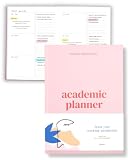
- Boost Productivity & Stay on Track – This homeschool planner and 2026 academic planner for college students is designed to help students organize deadlines and assignments, an essential assignment planner school and college school supplies for busy schedules.
- Plan Smarter, Not Harder – A student planner 2026-2027 or college student planner 2026-2027 with structured pages for goal setting, class schedules, and project planning. This back to school planner 2026 doubles as a student planner with subjects for effortless organization.
- Designed for Academic Success – More than just a calendar, this college planner 2026 includes habit trackers, grade logs, and progress check-ins, making it one of the most effective assignment tracker and homework planners for college students.
- Built to Last Through the School Year – Featuring a durable hardcover, premium thick paper, and practical extras like two bookmarks and an elastic band, this 2026 college planner, middle school planner or nursing school planner students love is made for daily use, whether in class or on the go.
- Start Anytime Without Wasting Pages – Unlike traditional dated options, this school supplies college student essentials features an undated format, a academic planner undated making it the perfect study planner for school no matter when you begins.
Bias, accessibility and unequal access
Outputs may reflect cultural or linguistic bias, and students do not have equal access to paid features, reliable connectivity or assistive technology. A policy that assumes universal access can widen inequity. Provide a non-AI route to the same learning objective and make accommodations explicit.
Independent reader supportYour contribution helps us test, update, and keep practical guides available for everyone.Two institutional approaches—and a better way to compare them
UNESCO’s 2025 report describes a regulatory approach and an iterative approach. Regulation emphasizes detecting AI use and managing consequences for uses judged unethical. An iterative model consults students and faculty, builds AI literacy and redesigns assessment. The report documents these as approaches in use; it does not establish that one produces better learning outcomes.
| Decision axis | Questions to ask |
|---|---|
| Permission clarity | Can a student tell, from each assignment, what is allowed and what must be independent? |
| Shared governance | Did students, instructors, librarians, disability specialists and privacy officers help shape the rule? |
| AI literacy | Does teaching cover prompting, verification, citation, privacy, bias and limits—not just tool operation? |
| Visible reasoning | Do assessments capture drafts, process notes, demonstrations or oral defenses where appropriate? |
| Equity and accessibility | Is there an equivalent non-AI pathway and support for students with different access needs? |
| Outcome evaluation | Does the institution measure learning, confidence and fairness rather than only incidents or detection rates? |
A practical university implementation plan
- Map current practice. Collect existing departmental and course rules, identify contradictions and review where students are already using AI. Do not infer prevalence from anecdote; use transparent surveys and publish the limits of the data.
- Set a short institutional baseline. Define principles for human oversight, privacy, accessibility, authorship and academic integrity. Keep the baseline stable while allowing disciplines to add requirements.
- Write an assignment-language library. Give instructors ready-to-adapt examples: prohibited use, brainstorming-only use, editing-only use, and permitted use with disclosure. Include a sample disclosure statement and a verification checklist.
- Teach the workflow. In first-year and discipline-specific sessions, have students compare an AI answer with a textbook or primary source, identify errors and improve the prompt. Demonstrate why fluent wording is not proof.
- Redesign selected assessments. Add staged submissions, annotated bibliographies, process logs, viva-style explanations, in-class work or authentic projects where those methods fit the learning goal. Do not add burdens that measure access to technology rather than competence.
- Provide approved tools and alternatives. Publish which services meet institutional privacy requirements, what data may be entered and what free or non-AI option is available.
- Review with evidence. Examine student and faculty feedback, appeals, accessibility impacts, achievement and integrity cases each term. Revise rules when a prohibition creates confusion or when a permitted use undermines the stated outcome.
What students can do now
- Read the assignment wording and ask the instructor before using AI when permission is unclear.
- Use the tool to generate questions, hints or feedback before requesting a finished answer.
- Keep your own notes, drafts and prompt history when disclosure is required.
- Check every important claim, citation, quotation, equation and code suggestion against authoritative material.
- Remove confidential or identifying information from prompts.
- Be able to explain the submitted work without the tool. If you cannot, the tool has done the learning for you.
How universities can tell whether “catching up” is working
Success is not the disappearance of AI use. A mature policy should make expectations easier to understand, reduce avoidable misconduct claims, preserve access for students who need support and improve the visibility of learning. Institutions can track whether assignment instructions are explicit, whether students can identify reliable sources, whether staff receive training, whether students have an equitable alternative and whether assessment results reflect the intended skills. They should publish methods and limitations, because a change in reported incidents may reflect clearer rules rather than a change in behavior.
The central distinction is between assistance and substitution. Assistance can prompt reflection, practice and feedback while leaving judgment with the learner. Substitution hides the learner’s reasoning and transfers authorship to a system. Course design, not a universal ban or a detector score, is where that distinction becomes enforceable.
Quick Recap
Sources and further reading
- EDUCAUSE, 2025 Students and Technology Survey (questionnaire instrument).
- EDUCAUSE, 2025 EDUCAUSE AI Landscape Study: Introduction and Key Findings.
- EDUCAUSE Review, “A Growing Need for Generative AI Strategy”.
- UNESCO, 2025 survey on higher-education AI guidance.
- UNESCO IESALC, Harnessing the Era of Artificial Intelligence in Higher Education.
- UNESCO, 2023 historical snapshot of formal guidance.
- UNESCO, Societal implications of AI: Insight from Signals.
Product prices and availability are accurate as of the date/time indicated and are subject to change. Any price and availability information displayed on Amazon at the time of purchase will apply.

