
iTechGuides is reader-supported. When you buy through links on our site, we may earn an affiliate commission. As an Amazon Associate I earn from qualifying purchases. Learn more
Read the garment’s inside care label before doing anything else. Stretch workwear is not one uniform fabric: the correct water temperature, cycle, bleach policy and drying method can differ between garments, even within one brand. Use the label as the controlling instruction, then protect the stretch fibers by closing zippers, using a mild detergent when permitted, avoiding softener and dryer-sheet residue, and choosing only the drying method and heat the label allows.
The safest general sequence is simple: identify the label instructions, prepare every closure, wash with compatible mild detergent, skip conditioners, and line-dry when the label permits. The steps below explain where that general approach must give way to garment-specific directions, including flame-resistant workwear.
The care label is the final authority
Manufacturers do not treat all stretch workwear alike. A pair of stretch trousers, a shirt made with a nylon-and-spandex blend, and a flame-resistant garment may have different limits for water temperature, wash cycle, bleach and drying heat. The same manufacturer can publish different settings for different categories.
What’s actually slowing this PC down?
Pick the symptom - the matching free tool is one click away.
Carhartt’s Garment & Product Care Guide states, “Please refer to your care label on the inside of the garment.” Carhartt WIP makes the same point in its washing FAQ: “Every item of clothing includes a label detailing the particular instructions for care.” Treat those instructions as more specific than any general advice in this article.
#1 Best Overall
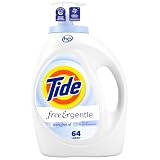
- DEEP CLEAN: Designed to provide a deep clean that is gentle on skin and removes more stains than the leading Free detergent
- FREE OF DYES AND PERFUMES: Laundry detergent made without dyes and perfumes for sensitive skin
- GENTLE ON SENSITIVE SKIN: Formulated to help minimize the risk of skin irritation
- WORKS IN ANY MACHINE: Suitable for use in high efficiency and standard washing machines
- EFFECTIVE IN COLD WATER: Provides cleaning performance even in cold wash cycles
Before starting a load, read and note four things on the label:
- Water temperature and cycle: record the permitted temperature and whether the garment calls for a normal, gentle or other named cycle.
- Bleach restrictions: check whether chlorine bleach, non-chlorine bleach or all bleach is prohibited.
- Drying method: identify whether line drying, tumble drying or another method is allowed, and note any heat limit.
- Special warnings: look for instructions tied to protective, coated or flame-resistant fabric.
If the label is missing or unreadable, do not substitute a favorite setting from another garment. Find the maker’s care information for that exact product or choose the least aggressive method that does not conflict with any remaining instruction; for protective clothing, obtain the manufacturer’s directions before laundering.
Prepare stretch workwear before it enters the washer
Close every zipper
Fully close zippers before machine washing or drying. Carhartt warns that an incompletely closed zipper can catch on other items, damaging the zipper or the fabric. This is especially relevant to workwear, where long front zippers, ankle zippers and pocket zippers can have exposed pull-tabs.
Free tools Windows power users keep installed
One-click scans. No signup required.
Use a mesh laundry net for vulnerable pull-tabs
For long or slim zipper pull-tabs, Carhartt suggests a laundry net. Put the garment inside the net with the zipper closed, leaving enough room for water to circulate. A net is a protection measure, not a replacement for the care label: it does not make an otherwise prohibited temperature or dryer setting safe.
Check pockets and removable parts
Empty pockets and remove detachable items only when the label or garment design permits. Hard objects left in a pocket can strike the fabric and other garments during agitation or tumbling. Do not detach a protective component if the manufacturer says it must remain in place for laundering.
Separate garments by their instructions
Do not group every stretch item simply because the fabrics feel similar. Build a load from garments with compatible label directions. If one item requires cold water and line drying while another permits warm water and medium tumble drying, follow separate loads or use the more restrictive method only when it is permitted for every item.
Choose water temperature and wash cycle from the label
There is no universal “stretch workwear” temperature. Carhartt’s published examples include cold washing for some categories and warm washing for others. Those examples demonstrate why a single default setting is unsafe: they are category-specific instructions, not a blanket rule for every pair of stretch pants or shirt.
Recommended Free Tools
When the label permits cold washing
Select the machine’s cold setting named or represented on the garment label. Cold washing is also within Patagonia’s general guidance for its products, but that general recommendation still does not override a different instruction printed on your workwear.
When the label permits warm washing
Use warm water only where the label allows it. Patagonia’s general product-care guidance permits cold or warm water with mild laundry soap, while Carhartt lists warm washing for some categories. Do not infer that a warm setting is acceptable merely because another garment from the same brand uses it.
Rank #2

- 105 fl oz bottle of ARM & HAMMER Sensitive Skin Free & Clear Liquid Laundry Detergent, free and clear detergent that cleans 105 medium loads when used as directed
- SkinSAFE Certified: Dye-free, certified 100% by SkinSAFE; certified by SkinSAFE to exclude 100% of their topmost considered skin allergens
- Gentle on Skin, Tough on Stains: This hypoallergenic laundry detergent is dermatologist-tested and free from dyes, perfumes, and preservatives, making it ideal for sensitive skin and fragrance sensitivities
- 2X Stain-Fighting Power: Concentrated with 2X powerful stain fighters in every load versus the leading value detergent, removes grass stains, food, and set-in stains in all wash temperatures, even cold water
- Trusted Clean: ARM & HAMMER is the #1 liquid laundry detergent brand (based on total wash loads sold, L52W ending 1/08/26)
When the label specifies a cycle
Match the named cycle rather than choosing by habit. A gentle or otherwise restricted cycle may be part of the garment’s protection against unnecessary agitation. If the label gives both a temperature and a cycle, both conditions apply.
Bleach is a separate decision
Read the bleach symbol or written restriction independently of the water setting. A garment that allows a particular temperature may still prohibit bleach. If the label does not permit bleach, leave it out; do not treat a mild detergent as permission to add another product.
Quick wins for a faster PC:
Clear out junk files and repair common Windows errorsFree Scan →Scan for outdated or missing drivers - takes under a minuteDriver Scan →Repair Windows errors before they cause bigger problemsFix Now →Use detergent and additives that protect stretch performance
Mild detergent when the label allows it
For nylon/spandex and similar blends, Patagonia’s Product Care guidance recommends mild detergent. It describes washing in cold or warm water with mild laundry soap, preferring non-toxic, biodegradable types. Apply this as general stretch-fiber guidance only after confirming that your garment label does not require a different product or process.
Use the detergent amount appropriate to the load and the product directions. More detergent does not compensate for the wrong temperature or cycle, and excess residue can remain in fabric.
Skip fabric softener
Patagonia generally discourages fabric conditioners for nylon/spandex and fiber blends. Deposited residue can reduce spandex longevity and interfere with moisture-wicking or quick-dry performance. Because stretch workwear may rely on those properties, leave softener out unless the garment maker explicitly directs otherwise.
Skip dryer sheets for performance stretch fabrics
Dryer sheets can leave the same type of residue that Patagonia cautions against. If the label permits tumble drying, use the approved heat and omit the sheet. A fragrance or softer hand is not worth risking the garment’s stretch recovery or moisture management.
The Tool Desk
Outbyte PC Repair FREERepair Windows errors before they cause bigger problemsFix Now →Outbyte Driver Updater FREEFix the driver behind crashes, sound loss and screen glitchesFind Drivers →Do not use a product to override a warning
Stain removers, bleach alternatives and specialty additives are not automatically compatible with stretch workwear. The label’s bleach and chemical restrictions remain in force. Test-free improvisation is particularly inappropriate for protective garments.
Drying: line drying is cautious, but the label still wins
Patagonia says that, in general, line drying is the best way to clean its products and recommends line drying or low-heat tumble drying for nylon/spandex and fiber blends. Line drying is therefore a cautious general option when your workwear label permits it.
When line drying is allowed
Choose a clean, well-ventilated place and follow any label instruction about how the garment should be positioned. The important decision is avoiding an unapproved dryer cycle; line drying is not a license to ignore a prohibition on a particular washing process.
Rank #3

- DEEP CLEAN FOR SENSITIVE SKIN: Removes more stains than the leading Free detergent while remaining gentle on skin
- FREE OF DYES AND PERFUMES: Formulated without dyes and perfumes to help reduce the risk of irritation
- CERTIFIED BY EXPERTS: Recognized by the NEA, EPA Safer Choice, and NPF for its sensitive skin formula
- WORKS IN ANY MACHINE: Effective in both high efficiency and standard washing machines
- CLEANS IN COLD WATER: Designed to deliver cleaning performance even in cold wash cycles
When tumble drying is allowed
Use only the heat level and cycle stated on the label. Carhartt’s examples include medium tumble drying for some pants and for other categories, but those are examples tied to its listed garment groups. They are not a universal medium-heat recommendation for all stretch workwear.
If the label permits low-heat tumble drying, select low heat rather than substituting medium or high heat. If it specifically permits medium heat, use that setting and no hotter one. Do not assume that a dryer’s “normal” program matches the label’s permitted heat.
When drying instructions conflict between garments
Separate the load. A garment that may be line dried but not tumble dried should not share a dryer cycle with an item whose label permits medium heat. A mesh net protects zippers from catching; it does not change the drying restriction.
Manufacturer guidance compared
The following comparison shows why the garment label must control. These are published examples and principles, not a ranking of one maker’s advice over another’s.
| Source | Wash guidance | Detergent and additives | Drying guidance | Closure or special instruction |
|---|---|---|---|---|
| Carhartt Garment & Product Care Guide | Refer to the inside label; examples include cold washing for some categories and warm washing for others. | Follow the individual garment label, including its bleach restrictions. | Examples include medium tumble drying for some pants and other categories; use the label for the specific item. | Close zippers for machine washing and drying; use a laundry net for long or slim pull-tabs when needed. Flame-resistant products have separate laundering directions. |
| Patagonia Product Care | Generally cold or warm water with mild laundry soap. | Mild detergent for nylon/spandex and blends; generally avoid fabric conditioners and dryer sheets because residue can affect spandex longevity and moisture-wicking or quick-dry performance. | Generally line dry; line drying or low-heat tumble drying for nylon/spandex and blends. | These are general product-care recommendations; the garment’s own label remains controlling. |
| Carhartt WIP washing FAQ | Each garment has particular care instructions on its label. | Use the products and restrictions specified for that item. | Use the drying method stated on the item’s label. | The label-specific principle applies to every garment. |
Step-by-step machine-washing procedure
- Read the label completely. Write down the temperature, cycle, bleach restriction and drying method before selecting a machine program.
- Identify special categories. Set aside flame-resistant or otherwise protective workwear until you have its dedicated manufacturer instructions.
- Prepare closures. Empty pockets, fully close every zipper and place garments with long or slim pull-tabs in a laundry net if appropriate.
- Build a compatible load. Combine only items whose labels allow the same water temperature and cycle. Keep garments with conflicting drying instructions separate for the next stage.
- Add compatible detergent. Use mild detergent when the label permits it. Do not add fabric softener or dryer sheets to stretch-performance fabrics.
- Select the exact label settings. Choose the permitted temperature and cycle; do not substitute a favorite warm, hot or “normal” program.
- Start the wash and avoid chemical improvisation. Do not add bleach or specialty products unless the label allows them.
- Recheck each item before drying. Confirm which pieces may be line dried, low-heat tumble dried or dried at another specified setting.
- Dry according to each label. Line dry where permitted; otherwise use only the approved tumble-dry method and heat.
Flame-resistant workwear requires its own procedure
Do not generalize ordinary stretch-blend advice to flame-resistant workwear. Carhartt’s care guide provides separate laundering instructions for flame-resistant products, distinct from its examples for ordinary categories. The protective function makes the exact manufacturer directions part of the garment’s care requirement.
For a flame-resistant item, identify the product’s own instructions before choosing detergent, bleach policy, temperature, cycle or drying method. If the label is damaged or missing, contact the manufacturer or obtain the product documentation rather than treating it like ordinary stretch pants. A mild detergent and line drying may be useful general practices for some stretch fabrics, but they are not a substitute for the protective garment’s dedicated directions.
Independent reader supportYour contribution helps us test, update, and keep practical guides available for everyone.Common mistakes and how to correct them
Using one temperature for every stretch item
Why it fails: Published care examples vary between cold and warm washing, and the difference is category-specific.
Correction: Sort garments by label and select the temperature printed for each item.
Leaving a zipper partly open
Why it fails: An open zipper can catch another garment and damage the zipper or fabric.
Rank #4

- SHIPMENT CONTAINS: One 82.5 fl oz bottle of concentrated liquid laundry detergent, enough for 110 loads of clean, fresh laundry
- HYPOALLERGENIC CLEAN: Amazon Basics laundry detergent is hypoallergenic and free of perfumes and dyes for sensitive skin
- LARGE CAPACITY: Super concentrated formula allows 2x more loads per bottle compared to standard laundry detergents SAFE FOR ALL
- MACHINES: Suitable for both standard and high efficiency (HE) washing machines
- PHOSPHATE-FREE FORMULA: Environmentally conscious formula is phosphate-free while effectively cleaning your clothes
Correction: Close it fully before washing or drying; use a laundry net for vulnerable long or slim pull-tabs.
Adding softener to make workwear feel softer
Why it fails: Residue may reduce spandex longevity and interfere with moisture-wicking or quick-dry performance.
Correction: Omit fabric conditioner and dryer sheets for stretch-performance fabrics unless the label explicitly directs otherwise.
Choosing a dryer setting by habit
Why it fails: Carhartt’s medium-tumble examples apply to listed categories, not every stretch garment.
Correction: Match the label’s drying method and heat. Use line drying when it is permitted and use low heat only when the label allows it.
Applying ordinary-care rules to flame-resistant garments
Why it fails: Protective clothing has separate laundering directions.
Correction: Follow the dedicated flame-resistant instructions for that product and do not infer settings from ordinary workwear.
A quick decision check before every load
- Label: Do I know this garment’s temperature, cycle, bleach restriction and drying method?
- Closures: Are all zippers fully closed, and do any long or slim pull-tabs need a laundry net?
- Detergent: Is mild detergent allowed, and have I left out softener and dryer sheets?
- Load: Do every item in this load share compatible wash instructions?
- Drying: Am I using line drying, low heat or another method specifically permitted for each item?
- Protection: Is any garment flame-resistant or otherwise protective and therefore subject to dedicated instructions?
If any answer is no, stop and resolve that point before starting the machine. Stretch workwear lasts best when the garment-specific label, rather than a universal temperature or dryer habit, determines each laundering decision.
Do these 3 things before closing this tab:
1Clear out junk files and repair common Windows errors2Scan for outdated or missing drivers - takes under a minute3Repair Windows errors before they cause bigger problemsQuick Recap
Product prices and availability are accurate as of the date/time indicated and are subject to change. Any price and availability information displayed on Amazon at the time of purchase will apply.

