
iTechGuides is reader-supported. When you buy through links on our site, we may earn an affiliate commission. As an Amazon Associate I earn from qualifying purchases. Learn more
Usually, you can’t turn system RAM into a direct substitute for dedicated video memory. Windows may let a GPU share some system memory, and certain programming workloads can use supported unified-memory features, but that does not make extra RAM available to every game or application as ordinary VRAM. Whether shared memory helps depends on the GPU, operating system, driver, and software—and it is typically slower to access than memory physically attached to the GPU.
Can system RAM fix a low VRAM error?
Not as a general fix. A low-VRAM error usually means the application cannot allocate or use enough memory in the way it expects. There is no universal Windows setting that converts spare system RAM into dedicated VRAM or forces every application to use it.
Windows reports some system memory as shared GPU memory, but that accounting does not mean the full reported amount is extra dedicated VRAM that any application can freely allocate. The operating system and graphics driver control how memory is reported and made available. Microsoft’s GPU memory reporting documentation explains the distinction.
What’s actually slowing this PC down?
Pick the symptom - the matching free tool is one click away.
What is the difference between VRAM and system RAM?
- Dedicated VRAM is physical memory attached to a discrete graphics card. It is designed for the GPU’s local access.
- System RAM is physical memory attached to the computer’s CPU. A GPU may access some of it in supported configurations, but it remains system memory rather than becoming local VRAM.
- Shared GPU memory is system memory made available to graphics workloads under platform and driver rules. It is not a guaranteed pool that all applications can treat as dedicated video memory.
NVIDIA’s CUDA programming guide distinguishes the separate physical memories while describing unified virtual addressing and supported unified-memory behaviors. Those programming features do not mean that every game or graphics application can transparently replace VRAM with system RAM. See NVIDIA’s CUDA C++ Programming Guide.
#1 Best Overall

- Boosts System Performance: 16GB DDR4 Pro Series desktop memory RAM kit (2x8GB) that operates at 3200MHz, 3000MHz, or 2666MHz to improve multitasking and system responsiveness for smoother performance
- Easy Installation: Upgrade your desktop RAM with ease—no computer skills required Follow step-by-step how-to guides available at Crucial for a smooth, worry-free installation
- Compatibility Guaranteed: Ensure seamless compatibility with your desktop by using the Crucial System Scanner or Crucial Upgrade Selector—get accurate recommendations for your specific device
- Trusted Micron Quality: Backed by 42 years of memory expertise, this DDR4 RAM is rigorously tested at both component and module levels, ensuring top performance and reliability
- ECC Type = Non-ECC, Form Factor = UDIMM, Pin Count = 288-pin, PC Speed = PC4-25600, Voltage = 1.2V, Rank and Configuration = 1Rx16, 1Rx8 or 2Rx8
When can a GPU use system memory?
Integrated graphics
An integrated GPU uses system memory rather than having its own dedicated VRAM chips. Adding RAM can sometimes help if the computer has too little total memory or the integrated graphics configuration is constrained, but the effect depends on the computer and workload. It does not apply as a way to increase the dedicated VRAM of a discrete graphics card.
Windows shared GPU memory
Windows graphics-memory reporting can show memory shared from system RAM. Treat that as a platform-managed resource, not as a setting that guarantees extra usable video memory for a particular game. An application may still report insufficient VRAM if it requires a certain amount of dedicated or locally available GPU memory.
Rank #2

- Boosts System Performance: 32GB DDR5 RAM laptop memory kit (2x16GB) that operates at 5600MHz, 5200MHz, or 4800MHz to improve multitasking and system responsiveness for smoother performance
- Accelerated gaming performance: Every millisecond gained in fast-paced gameplay counts—power through heavy workloads and benefit from versatile downclocking and higher frame rates
- Optimized DDR5 compatibility: Best for 12th Gen Intel Core and AMD Ryzen 7000 Series processors — Intel XMP 3.0 and AMD EXPO also supported on the same RAM module
- Trusted Micron Quality: Backed by 42 years of memory expertise, this DDR5 RAM is rigorously tested at both component and module levels, ensuring top performance and reliability
- ECC Type = Non-ECC, Form Factor = SODIMM, Pin Count = 262-Pin, PC Speed = PC5-44800, Voltage = 1.1V, Rank And Configuration = 1Rx8
CUDA unified memory
CUDA offers managed unified-memory features for supported programming workloads. Availability and behavior depend on the operating system, kernel, GPU, and CPU–GPU interconnect. NVIDIA states: “On Windows, including Windows Subsystem for Linux (WSL), and on some Tegra systems, a limited subset of unified memory functionality is available.” In that limited-support mode, NVIDIA documents explicitly allocated managed memory and does not allow GPU-memory oversubscription. This CUDA-specific restriction should not be generalized to all Windows graphics applications or GPU vendors.
Why shared system memory is not equivalent to VRAM
Memory locality affects performance. NVIDIA says performance is generally best when data is in memory attached to the processor using it. When a GPU accesses mapped host memory, transactions cross the CPU–GPU interconnect; NVIDIA notes that this has higher latency and lower bandwidth than device memory. Shared memory may therefore prevent some allocation failures in supported cases, but it can also cause substantial performance costs. The exact difference depends on the hardware and workload; the documentation does not establish a universal speed ratio.
Rank #3
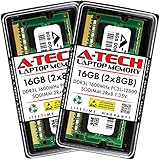
- A-Tech 16GB RAM Kit (2 x 8GB Modules), DDR3/DDR3L SO-DIMM 204-Pin, 1600MHz PC3L-12800 (PC3L-12800S)
- Non-ECC Unbuffered, 2Rx8 (Dual Rank x8), JEDEC DDR3 Low Voltage 1.35V
- Compatible with select DDR3 SODIMM capable Laptop, Notebook, Mini PC, and All-in-One (AIO) computer systems. Please verify your system's memory type, form factor, and maximum supported capacity before purchasing
- Not compatible with desktop (DIMM), DDR2, DDR4, DDR5, ECC Registered (RDIMM), ECC Load Reduced (LRDIMM), or ECC Unbuffered (ECC UDIMM) memory types
- Increases available memory capacity to enhance system responsiveness, application performance, and multitasking capabilities.
What to try when an application reports low VRAM
- Identify the graphics hardware. Check whether the computer uses integrated graphics, a discrete GPU, or both. For a discrete GPU, find its dedicated memory capacity rather than relying only on a combined graphics-memory figure.
- Check the application’s actual requirements and settings. Reduce graphics settings that increase memory use, such as texture quality or resolution, if the application offers them. Close other GPU-intensive workloads and restart the application to release resources it may no longer need.
- Confirm the application is using the intended GPU. On systems with integrated and discrete graphics, verify the app’s graphics preference in the operating system or the relevant GPU control panel. The exact path and label vary by Windows version and driver.
- Update or repair the graphics driver and application. Use the GPU vendor’s supported driver channel and the application’s own update or repair option. If the error began after an update, check the vendor’s supported rollback or troubleshooting guidance.
- Consider a hardware change only after identifying the bottleneck. More system RAM may help if system memory is itself exhausted or if integrated graphics uses it. It does not increase a discrete GPU’s dedicated VRAM. A RAM upgrade also requires checking the computer’s supported memory type, slots, and maximum capacity.
When more system RAM helps—and when it does not
| Situation | Could a system RAM upgrade help? | Why |
|---|---|---|
| Integrated graphics uses system memory, and total RAM is limiting | Possibly | The GPU draws on system memory, so additional supported RAM may ease a system-memory constraint. The result depends on the hardware and workload. |
| System RAM is running short while other applications are open | Possibly | More RAM can address a system-memory bottleneck, but it does not change a discrete GPU’s dedicated VRAM capacity. |
| A discrete GPU lacks enough dedicated VRAM for an application | Generally no | Adding system RAM does not add memory physically attached to the GPU, and the application may not support using shared memory as a substitute. |
What details are needed for exact troubleshooting?
There is no reliable universal setting to recommend without the specific configuration. For targeted advice, identify the GPU model, operating system and version, graphics-driver version, application and version, and the exact error message. Also note whether the machine has integrated graphics, a discrete GPU, or both, and whether the failure occurs at launch or during a particular task.
Quick Recap
Best Value

- Capacity – 32GB RAM KIT (2 x 16GB Modules) Speed up to 2666MHz Non-ECC Unbuffered 288-Pin 1.2V UDIMM.
- Specs – Black PCB Color and Dual Rank (2Rx8).
- Compatibility – Designed for selected DDR4 Desktop PCs and workstations that support 288-Pin UDIMM memory. NOT compatible with Laptop SODIMM slots.
- Installation – Plug-and-Play Upgrade, Quick and Easy to Install, no expertise required (please refer to your system's manual for guidelines).
- Warranty – All Timetec products are high-quality and rigorously tested to meet stringent standards. Backed by Timetec Limited Lifetime Warranty and professional technical support based in the United States.
Rank #4

- Capacity – 32GB RAM KIT (2 x 16GB Modules) Speed up to 2666MHz Non-ECC Unbuffered 260-Pin 1.2V SODIMM.
- Specs – PCB Color (Green or Black) and Rank (1Rx8 or 2Rx8) may vary depending on production batch. Performance and quality remain consistent across all Timetec products.
- Compatibility – Designed for selected DDR4 Laptop, Notebook, Mini PCs, and All-In-One systems(AIO) that support 260-Pin SODIMM memory. NOT compatible with Desktop DIMM slots.
- Installation – Plug-and-Play Upgrade, Quick and Easy to Install, no expertise required (please refer to your system's manual for guidelines).
- Warranty – All Timetec products are high-quality and rigorously tested to meet stringent standards. Backed by Timetec Limited Lifetime Warranty and professional technical support based in the United States.
Product prices and availability are accurate as of the date/time indicated and are subject to change. Any price and availability information displayed on Amazon at the time of purchase will apply.

