
The Tool Desk
Outbyte PC Repair FREEClear out junk files and repair common Windows errorsFree Scan →Outbyte Driver Updater FREEScan for outdated or missing drivers - takes under a minuteDriver Scan →iTechGuides is reader-supported. When you buy through links on our site, we may earn an affiliate commission. As an Amazon Associate I earn from qualifying purchases. Learn more
Network segmentation limits which devices and services can communicate with industrial control systems (ICS). By dividing a plant network into zones and controlling the connections between them, an operator can make unauthorized access and lateral movement harder to spread across the environment. The design must preserve the communications needed for safe, reliable operations: a firewall or DMZ alone does not make an ICS secure.
What segmentation does in an industrial network
Network segmentation is a physical or virtual architecture that divides a network into subnetworks and constrains access to devices, data, and applications. In an industrial environment, the goal is not simply to create more subnets. It is to decide which systems may communicate, for what operational purpose, and through which controlled paths.
A boundary between segments gives the organization a place to enforce and observe those decisions. If a device or account is compromised, well-designed boundaries can limit the systems it can reach and make unexpected communications easier to detect. This is a containment measure, not a guarantee that intrusions will be prevented or that damage will be reduced by a specific amount. CISA’s January 2022 Layering Network Security Through Segmentation infographic describes segmentation as one part of a broader security approach.
Recommended Free Tools
Industrial control environments make the design consequential. Controllers, operator interfaces, engineering workstations, and supporting servers may depend on communications that are necessary for the process to run. An overly broad path can expose more systems than intended; an overly restrictive or poorly tested change can interrupt operations. Segmentation therefore begins with the process and its dependencies, not with a firewall rule template.
#1 Best Overall
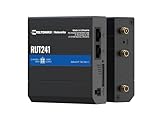
- Reliable 4G LTE Connectivity – Stay connected with high-speed LTE Cat 4 for fast and stable internet access, ensuring seamless communication for industrial, IoT, and remote applications.
- Dual Ethernet & Wireless Support – Features one LAN and one WAN Ethernet port along with a 2.4GHz WiFi hotspot, making it perfect for flexible networking solutions.
- Remote Management System (RMS) Compatible – Easily monitor, configure, and update devices remotely using Teltonika's RMS platform for hassle-free network management.
- Advanced Security & VPN Features – Secure your network with built-in firewall, OpenVPN, IPsec, PPTP, and WireGuard VPN support, ensuring encrypted and protected communication.
- Compact & Rugged Design – Industrial-grade durability with a compact form factor, designed to withstand harsh environments in manufacturing, transportation, and automation sectors.
Start with an architecture of zones and conduits
A zone is a group of assets with a meaningful shared function, trust level, or operational consequence. A conduit is a controlled communication path between zones. This approach gives teams a way to describe both the systems that should be grouped together and the exchanges that must cross a boundary.
At a minimum, establish a clear boundary between enterprise IT and OT (operational technology). CISA, the FBI, and the NSA recommended defining an IT/OT DMZ that eliminates unregulated communication between those networks in their January 11, 2022 advisory, Understanding and Mitigating Russian State-Sponsored Cyber Threats to U.S. Critical Infrastructure. Their guidance also says to prohibit ICS protocols from traversing the IT network. Necessary exchange should use an explicitly controlled intermediary rather than an unrestricted direct path.
A DMZ is an architectural intermediary, not a security property by itself. Its value depends on what is connected to it, which connections are allowed, and whether those connections are monitored. A DMZ with broad rules can still provide excessive access.
| Zone or layer | Typical role | Segmentation question |
|---|---|---|
| Enterprise IT | Business systems and services outside the control environment | What business data or services genuinely need to cross toward OT, and how can the exchange avoid a direct, unregulated path? |
| IT/OT DMZ or other controlled intermediary | Controlled point for necessary exchanges between enterprise and OT environments | Which approved endpoints and specific connections are needed, and how will crossings be logged and reviewed? |
| Manufacturing or site operations | Systems supporting production or plant-level operations | Which assets have shared operational dependencies, and which connections to other zones are essential? |
| Cell or area | Systems associated with a particular production area or function | Can communication between areas be limited without disrupting required coordination? |
| Control environment | Control-related systems such as controllers, operator interfaces, and engineering workstations | Which devices and services need to communicate with each control asset, and which paths should be denied? |
| Field devices | Devices participating directly in sensing or control functions | Which connections are required for the process, and what would be the consequence of interruption or unauthorized access? |
The layers in the table are a planning aid, not a universal plant blueprint. CISA’s 2016 ICS-CERT practice on defense-in-depth describes layered ICS zones and conduits; CISA and partner agencies also recommend organizing zones by role, criticality, consequence, and operational necessity. A Purdue-style diagram can help teams discuss layers, but a reference model does not capture every site’s dependencies or dictate a ready-made production design.
Build the plan from an accurate current-state inventory
Before deciding where to draw boundaries, identify the assets, links, and users that make the current process work. An incomplete inventory can lead to rules that allow unnecessary access or block a dependency that was never documented. CISA’s segmentation guide ties asset inventory to decisions about criticality, data sensitivity, and internet access.
Include more than controllers. Record the systems that support configuration, monitoring, administration, remote access, and communications between operational and business environments. For each asset or connection, capture enough context to assess its role and the consequences of changing it.
Rank #2

- High-performance wired and wireless networking – Industrial Ethernet router featuring dual-band Wi-Fi 5 (802.11ac) and 4 Gigabit Ethernet ports for fast, reliable connectivity across business, industrial, and IoT applications.
- Advanced routing capabilities – Supports static and dynamic routing protocols, VLANs, load balancing, and network segmentation, making it ideal for complex enterprise and industrial network deployments.
- Enterprise-grade security and VPN support – Includes firewall protection, access control, and multiple VPN services including OpenVPN, IPsec, WireGuard, L2TP, and ZeroTier for secure remote access and data transmission.
- Built for industrial environments – Rugged aluminum housing and industrial-grade design provide dependable operation in manufacturing, transportation, energy, and other demanding deployment scenarios.
- Remote management and monitoring – Fully compatible with Teltonika RMS (Remote Management System) for centralized device monitoring, configuration, firmware updates, troubleshooting, and fleet-wide management.
- Assets: controllers, HMIs (human-machine interfaces), engineering workstations, servers, network devices, and relevant enterprise systems.
- Connections: physical links, network paths, remote-access routes, third-party connections, and devices that connect to more than one segment.
- Communications: the endpoints, protocol or service, direction, purpose, and operational dependency for each observed or required exchange.
- Ownership: the operations, engineering, IT, security, or supplier contact who can explain and approve a connection.
- Consequence: the function affected if an asset is compromised, unavailable, or unable to communicate.
Use existing network diagrams and configuration information as starting points, then check them against how the site actually operates. A diagram that omits a vendor connection, a maintenance route, or a dual-connected device can create false confidence about where a boundary exists. Record uncertainty rather than treating an unverified path as unnecessary.
Do these 3 things before closing this tab:
1Scan for outdated or missing drivers - takes under a minute2Clear out junk files and repair common Windows errors3Fix the driver behind crashes, sound loss and screen glitchesDefine zones around operational function and consequence
Group assets according to their function, interdependence, criticality, and the consequences of compromise or interruption. A production cell whose systems must coordinate may belong together, while a sensitive engineering asset or high-consequence control function may merit a more restricted zone. The right grouping reflects the process, not just the organizational chart or the way the network happens to be wired today.
For every proposed zone, describe its purpose, the assets it contains, the people or roles that administer it, and the consequence of losing or exposing it. Then ask whether every asset in the group has a sufficiently similar trust and communication profile. If one system needs broad access while the others do not, it may need a separate zone or a more specific conduit.
Do not divide a plant into zones solely to make a diagram look more secure. Each additional boundary has to be understandable, supportable, and compatible with real dependencies. Conversely, a single large OT segment may allow an incident to reach systems that have no operational reason to communicate. CISA’s guidance supports risk- and function-based segmentation rather than a universal number of zones.
Specify conduits as documented, necessary flows
For each cross-zone connection, define the initiating device, destination, protocol or service, direction, purpose, owner, and operational dependency. Be precise about which endpoints are approved: a rule that permits an entire subnet or a broad class of services can create a path far wider than the use case requires.
PC Slower Than It Used to Be?
A free scan shows the junk files, broken settings and background clutter dragging Windows down - then fixes them in one click.Free scan · Windows 10 & 11Outdated Drivers Are Slowing You Down
One free scan finds every outdated or missing driver and matches the right update for your exact hardware.Free scan · exact hardware matchRank #3

- 【Excellent performance】The Mini computer Onboard Inter Celeron N2940 processor, FCBGA1170 quad-core and four-thread, 1.83 GHz master Frequency, 2 MB cache, TDP 7.5W processor.
- 【4*LAN I210 Network】 On-board INTER I210 Gigabit Ethernet card with 4-port design ,and can be used for Industrial automation, medical care, logistics and transportation, warehousing, electronic education and other fields.
- 【Storage+Memory】1*MSATA slot, 1*MSATA slot,Support 1*DDR3 204 pin SO-DIMM slot (memory support voltage 1.35V),DDR3 1333 SODIMM memory slot, up to 8GB,with HDMI + VGA outputs support dual displays for office or home.
- 【Efficient Memory, Ready to Use】Supports DDR3L low-power memory, ensuring smooth and stable operation of systems without the need for additional upgrade troubles.
- 【Packaging content+warranty 】 1x mini computer, 1x power adapter, 1x power cable. We provide lifelong technical support and 12 months of satisfactory service. If there are any problems, please feel free to contact us at any time.
- List the proposed exchange. State what system initiates communication, what system receives it, and which service or protocol is involved.
- Explain the operational purpose. Identify the process, support task, or information exchange that depends on the path and who confirms that it is required.
- Constrain the path. Specify direction and approved endpoints. Remove access that has no documented purpose rather than carrying it forward by default.
- Choose the controlled crossing. Route necessary IT/OT exchanges through a DMZ or another controlled intermediary, and define how the exchange is filtered and observed.
- Assign ownership and review. Record who can approve a change and when the connection should be re-evaluated as equipment, suppliers, or processes change.
Some exchanges may involve business-facing information, maintenance, or vendor support. The exact design depends on what the process requires; the important principle is to avoid unrestricted direct IT/OT access and permit only the approved communication through the chosen boundary. Do not assume that a path is safe simply because it has existed for a long time.
Choose boundary controls that fit the site
Use appropriately configured firewalls and filtering controls on network devices to restrict communication between zones. A physical industrial Ethernet firewall is one possible implementation category, but product choice depends on the site’s protocols, traffic, reliability requirements, and architecture. Buying a device does not establish a sound segmentation policy: the boundary still needs narrow, documented rules and an operationally valid design.
| Approach | What it can contribute | What to evaluate |
|---|---|---|
| Physical separation | Separates networks through distinct physical infrastructure. | Whether actual operational requirements permit separation, how exceptions are handled, and whether shared or dual-connected devices undermine it. |
| Logical segmentation, such as VLANs | Creates virtual divisions over network infrastructure. | Whether the boundaries are enforced rather than merely labeled, how misconfiguration is detected, and where traffic between segments is controlled. |
| Firewall and filtering boundaries | Enforce rules for permitted communication between zones and provide potential observation points. | Whether rules are limited to approved endpoints and services, reviewed, logged, and safe for required operations. |
| DMZ or controlled intermediary | Provides an architectural crossing point for necessary IT/OT exchange. | Whether the design eliminates unregulated communication and avoids broad access through the intermediary. |
| One-way communication device | Can support use cases where information needs to flow in one direction. | Whether the operational use case truly permits one-way communication. CISA and partner guidance says to consider such devices “whenever possible,” not to treat them as universal substitutes for flow analysis. |
No single option is universally best. Compare candidate designs by how many boundaries an attacker would have to cross, the consequence if a boundary is misconfigured, whether required operations can continue, whether teams can observe crossings, and whether staff can safely maintain the rules. CISA guidance supports these decision factors but does not rank physical and logical controls for every plant.
Deploy changes without losing sight of process safety
Network changes in production OT need input from control-system engineers and operations personnel, who can identify dependencies and failure behavior that may not be visible in a network diagram. A design that looks correct from a security perspective can still be unsuitable if it interrupts a necessary control or support function.
- Review the proposed boundary with operations and control-system staff. Confirm the asset groups, necessary conduits, and expected behavior if a permitted path becomes unavailable.
- Check dependencies against actual operation. Verify which systems initiate and receive communications, including maintenance and support paths. Resolve undocumented connections before relying on a deny rule to remove them.
- Plan a staged change. Make changes in a way that lets the responsible staff verify the affected functions and identify an unexpected effect. The appropriate sequencing is site-specific; CISA’s guidance establishes the need to account for operational necessity, not a universal commissioning procedure.
- Observe the result. Check boundary logs and operational status for unexpected denials, new paths, or changes in expected traffic.
- Update the record. Keep the diagram, flow documentation, rule ownership, and change record aligned with the implemented design.
Where a change could affect safe or reliable operation, the relevant engineering and operational authorities should determine the site’s approval and recovery arrangements. Do not treat a general security checklist as a substitute for plant-specific change control.
Rank #4

- Processor Performance: Powered by an AMD A4 Micro-6400T processor with 4 cores, 4 threads and speeds up to 1.6GHz, this mini PC is designed for light computing tasks such as digital display and compatible terminal applications
- Comprehensive Connectivity: Features 4x RS232 COMs, 7x USB ports (1x USB-C + 2x USB3.0 + 4x USB2.0), 1x HDMI, 1x VGA, 1x Gigabit LAN, 1x SPK-out and 1x MIC-in ports for everyday tasks and business applications
- Memory and Storage Configuration: Includes 4GB RAM and 64GB mSATA SSD with 1x SO-DIMM DDR3 slot and 1x mSATA slot, supports up to 512GB expansion. Note: 2.5-inch disk expansions are not supported
- Fanless Low-Power Design: Features a finned aluminum alloy metal case that dissipates heat through passive cooling, eliminating cooling-fan noise for quiet operation in counters, desks and workspaces. Compact size: 106.4 159.8 32.5 mm (approx. 4.19 6.29 1.28 inches)
- Dual Display Support: HDMI and VGA outputs enable dual monitor setup in extended or duplicate mode, with resolutions up to 1920 1080 at 60Hz per output for enhanced productivity and multitasking capabilities
Monitor boundaries and establish a normal-traffic baseline
Segmentation creates useful observation points only if someone can see and investigate activity there. Capture logs at boundary controls, monitor between segments and at remote-access services, and establish a baseline of expected ICS communications. Use that baseline to identify traffic outside normal operations and to check whether the rules still allow only approved exchanges.
CISA, the FBI, and the Department of Energy’s March 2022 guidance on state-sponsored Russian cyber actors targeting the energy sector recommends layered architecture, functional segmentation, perimeter controls, monitoring, and baselining. Monitoring should focus on the crossings that matter to the site’s zones and operational dependencies; an alert is useful only if staff can determine what system communicated, across which boundary, and whether the activity matches an approved purpose.
- Review unexpected communication between zones, especially where no documented conduit exists.
- Investigate changes in traffic patterns rather than assuming that a permitted connection remains necessary forever.
- Check for rules that are broader than their stated purpose or that no longer have a clear owner.
- Keep network diagrams current as equipment, suppliers, connections, or processes change.
Current diagrams are also important during incident response: teams need to understand which systems connect to an affected asset and where boundaries can contain movement. CISA’s #StopRansomware Guide notes both the value of segmentation and ways it can be undermined.
Recognize how segmentation can fail
A segmented design can still leave an attacker with broad reach if its rules, devices, or operating practices do not match the intended boundaries. Treat segmentation as one layer in a defense strategy that also includes monitoring, access controls, patching, backups, and incident response; it does not replace them.
- Overly broad DMZ rules: An intermediary with excessive permitted access can become a route into OT. Restrict which devices connect and through which specific connections.
- Unregulated IT/OT paths: A direct or undocumented exchange weakens the boundary the architecture was meant to create. Find and document the dependency, then determine whether it can be removed or routed through a controlled intermediary.
- Misconfiguration or user error: A rule or network change can create unintended access or disrupt a necessary path. Use clear ownership, review, and observation of the implemented configuration.
- Multi-connected devices: A device attached to multiple segments can bridge them and bypass the intended separation. Include those devices in the inventory and assess their role explicitly.
- Removable media and other non-network paths: Segmentation does not control every way information or malware may reach a system. Address those routes through the site’s broader security practices.
- Stale diagrams and rules: Equipment and processes change. If the documented architecture no longer reflects reality, staff may make unsafe changes or overlook an available path.
CISA’s cited guidance describes segmentation as a way to constrain access and limit lateral movement, but it does not establish a universal measured reduction in incident damage. The defensible objective is to make paths explicit, reduce unnecessary reach, and improve the ability to detect and respond to activity at boundaries.
Quick Recap
A practical first-pass segmentation checklist
- Inventory control, support, network, remote-access, and relevant enterprise assets.
- Document actual links, dependencies, protocols or services, purposes, owners, and directions of communication.
- Mark a clear enterprise IT/OT boundary and route necessary exchanges through a controlled intermediary.
- Group OT assets by function, interdependence, criticality, and consequence rather than applying a generic diagram unchanged.
- Define each conduit narrowly, with approved initiating and receiving devices and a documented operational reason.
- Choose physical, logical, firewall-enforced, DMZ, or one-way controls according to site requirements and maintainability.
- Review the design with operations and control-system personnel before production changes.
- Log and monitor boundary traffic, establish expected-traffic baselines, and investigate deviations.
- Keep diagrams and rule ownership current as the plant changes.
Product prices and availability are accurate as of the date/time indicated and are subject to change. Any price and availability information displayed on Amazon at the time of purchase will apply.

