
The Tool Desk
Outbyte PC Repair FREERepair Windows errors before they cause bigger problemsFix Now →Outbyte Driver Updater FREEScan for outdated or missing drivers - takes under a minuteDriver Scan →iTechGuides is reader-supported. When you buy through links on our site, we may earn an affiliate commission. As an Amazon Associate I earn from qualifying purchases. Learn more
For most Windows devices, start with Windows Update; use Device Manager or the device maker’s official support page when you need a specific driver. Firmware updates are different: follow the instructions for your exact computer or device, because prerequisites and update order vary. On a Mac, Apple says firmware updates are included with macOS updates.
Drivers and firmware are different updates
A device driver is software Windows uses to communicate with a hardware device. A firmware update changes software that runs on the device itself. Both can affect how hardware works, but they are not interchangeable, and the safest source and procedure may differ.
That distinction matters when troubleshooting. A Windows driver can often be updated or rolled back through Windows tools. Firmware updates may have model-specific prerequisites and recovery procedures. Do not assume that a driver-update workflow applies to firmware, or that firmware should be updated simply because a driver is available.
For example, the ordinary route for most Windows drivers is Windows Update, while Apple bundles Mac firmware updates with macOS updates. A separately supplied firmware update, such as a particular TPM security remediation, can have its own required order and additional steps. Those routes solve different problems; one is not a substitute for another.
#1 Best Overall

- 【32G FAT32 format with sufficient capacity】32G USB2.0 flash driver with 29.2-30GB of storage space,The Thumb Drives can be extensively used for Digital Data Storing, Transferring and Sharing. Save Data in Form of Music, Photos, Movies, Designs, Manuals, Programs, Handouts; MP3, MP4, RMVB, EXCEL, WORD, PDF and all other possible formats. a perfect memory choice
- 【Easy to Use, Plug and Play】 No need to install any software, just plug the USB flash drive into your computer USB port or other device with USB port to get it work
- 【Full Compatiblility】Strong compatibility, compatible with your video capture card, cassette player,computer, etc. support windows 7 / 8 / 10 / Vista / XP / 2000 / ME / NT Linux and Mac OS, compatible with USB2.0 and below
- 【Simple and Portable Design】New Sleek and easy-to-carry design with a string attachment slot available.The top cap design can protect the usb interface and greatly reduce the oxidation,Made of plastic ABC with clean and neat appearance, portable and lightweight, sleek and slim make them a great choice for your friends. Ends with hang rope design for key chains or lanyards, You can take your digital world anywhere without worrying about losing the pen drive
- 【Led Indicator】The red light flash when have data transfer. You can easily know whether the drive is working. When you connect your capture card or cassette player to record, the indicator light will be on to better remind the work status
Choose the right update route
| Situation | Best starting point | What to keep in mind |
|---|---|---|
| Routine Windows driver maintenance | Windows Update | Microsoft says most device drivers are delivered and installed through Windows Update. |
| A specific Windows device still has a problem, or a known compatibility issue needs addressing | Device Manager; if needed, the device maker’s official support page | For manual installation, match the package to the device and the Windows release and architecture. |
| A driver update caused a new problem | Device Manager’s Roll Back Driver option | If rollback is unavailable or does not help, Microsoft documents uninstalling and reinstalling a driver as another option. |
| Mac firmware | macOS Software Update in System Settings | Apple says Mac firmware updates are included in macOS updates. This is not a procedure for other computers or peripherals. |
| Separately supplied firmware, such as a specified TPM or Secure Boot remediation | The official instructions for the exact model and issue | Follow that procedure’s prerequisites and order; there is no universal firmware-update sequence. |
The practical tradeoff for Windows drivers is convenience versus targeting. Windows Update is the recommended routine channel and handles most devices without requiring you to choose a package. A manual manufacturer download can be appropriate when a known device problem remains or a specific compatibility issue calls for it, but you must verify the exact model, Windows release, and system architecture. If the update creates a problem, Device Manager provides recovery options.
Update a Windows driver through Windows Update
For ordinary maintenance, Windows Update is the recommended starting point. It is Microsoft’s normal delivery route for most hardware drivers, so a separate driver-download utility or a manual search is usually unnecessary.
- Open Windows Update in Windows Settings and check for available updates.
- Review any driver updates shown. Windows Update titles may identify the publisher and version; provider naming conventions differ.
- Install the relevant update and follow any restart request. Schedule a restart for a time when you can tolerate an interruption, and save open work before restarting.
- After installation, check whether the device problem you were addressing has changed. Avoid installing unrelated manual packages simply because their dates look newer.
Windows Update may request a restart to apply updates. That is an expected part of some updates, not a reason to interrupt the process. If Windows tells you a restart is needed, complete it when practical rather than repeatedly postponing it.
If Windows Update offers several items, read their titles and publisher or version details rather than assuming every optional driver applies to a current problem. The purpose is to address the device or compatibility issue you have, not to collect the newest-looking entries. Microsoft’s guidance says most device drivers are obtained this way; it does not mean every peripheral or every separately distributed firmware package appears there.
Use Device Manager when a particular device needs attention
If Windows Update does not resolve a known device issue, identify the exact device in Device Manager. Its automatic search can look for a driver, including through Windows Update. If you already have a suitable package from the device maker, Device Manager also provides a manual installation route.
Search automatically
- Open Device Manager and locate the device you need to troubleshoot.
- Use the device’s driver-update action and select the option to search automatically for drivers.
- Follow the result. If Windows directs you to Windows Update, use that route and review any available update there.
Install a driver package you obtained from the maker
- Go to the official support page for the exact device or computer model.
- Confirm that the package is intended for your Windows release and system architecture. Do not assume that a package for a similarly named model, a different Windows version, or a different architecture is compatible.
- Download the package from the manufacturer’s official site, then use Device Manager’s Browse my computer for drivers workflow to select it.
- Follow any instructions included with that package. If Windows requests a restart, save your work and restart when interruption is acceptable.
Microsoft’s Device Manager guidance says, “Avoid downloading drivers from any websites other than the manufacturer’s official site.” Avoid generic driver-download sites: a package that appears to match by name may still be wrong for your hardware or Windows installation.
Do not treat a third-party driver utility as a necessary shortcut. Windows Update and the device maker’s official support page are the supported starting points described here. If you cannot confirm that a package belongs to your exact model and operating-system setup, stop and verify it before installing rather than relying on a download page’s description.
Recommended Free Tools
Rank #2

- STRICT QUALITY CONTROL: Our FAT32 USB 3.0 flash drives 32GB are made of original and stable A+chip, and have been double-tested by our H5 quality-checking device before shipping, with a lifetime of up to 100,000 cycles
- USB 3.0 ULTRA TRANSFER SPEED: The read transfer speeds up to 90-105MB/s, and write speeds up to 30-40MB/s. 10X faster over a USB 2.0 flash drive. The extra USB C adapter also has a USB 3.0 port
- METAL DESIGN & ADDITIONAL ACCESSORIES: Highly textured metal material is utilized for faster heat dissipation, featuring a twill design with an anti-slip feature. The USB C adapter is tiny and easy to carry. Best choice for commercial, school, wedding, exhibition, photography
- WIDE COMPATIBILITY: Backward-compatible with USB 3.0/2.0/1.1 (Default format: fat32). Support Windows, Mac OS, and Linux systems, suitable for any device with a USB port, including PCs, Macs, laptops, TVs, cars, and cassette players. To avoid errors, please format the USB drive on your device before using it
- WHAT WILL YOU GET: 1PCS 32GB FAT32 USB 3.0 drive, 1PCS USB C 3.0 adapter,1PCS key chain.
Do not judge a driver by its displayed date alone
A date shown for a driver is not a reliable ranking of whether it is current or superior. Microsoft explains that driver providers choose the descriptive date, and Windows uses targeting information in the driver files when determining which driver to install. A driver with an older-looking date is not automatically a reason to replace the version Windows selected.
This context is covered in Microsoft’s driver guidance for Windows 11 versions 24H2 and 25H2 and Windows Server 2025; the article was originally published October 20, 2025. Provider labels and conventions can also differ, so use the device problem, Windows Update’s offered update, and the package’s stated compatibility—not the date by itself—to decide whether to act.
In other words, a date alone does not tell you whether a driver was targeted for your hardware or whether it is the best match for your installation. If a device works normally and Windows Update has not offered a relevant update, a newer date found elsewhere is not enough reason to replace its driver. For a persistent problem, first identify the device, then use Windows Update or a confirmed package from its manufacturer.
Recover if a driver update causes problems
If a device begins malfunctioning after a driver update, first consider whether the timing matches the change. Device Manager has a Roll Back Driver action that can restore the previous driver. Microsoft notes that reinstalling the previous driver often resolves problems that began after a Windows Update.
Quick wins for a faster PC:
Scan for outdated or missing drivers - takes under a minuteDriver Scan →Repair Windows errors before they cause bigger problemsFix Now →Fix the driver behind crashes, sound loss and screen glitchesFind Drivers →Try rolling back the driver
- Open Device Manager and find the affected device.
- Open its driver properties and choose Roll Back Driver, if that option is available.
- Follow the prompts, then restart if Windows requests it and check whether the original problem is resolved.
The rollback control may not be available in every situation. If it is unavailable or does not fix the issue, use the manufacturer’s instructions for the exact device or consider Microsoft’s documented uninstall-and-reinstall route.
Uninstall and let Windows try to reinstall
- Save your work and close open apps before removing the driver.
- In Device Manager, uninstall the affected device’s driver using the available device action.
- Restart the computer. Windows can then attempt to reinstall the driver.
- If Windows does not restore a working driver, some devices require manual reinstallation. Get the correct package from the device maker’s official site and match it to your Windows release and architecture.
Uninstalling is a recovery step, not a general way to refresh every driver. For a device that is working normally, there is no need to remove its driver just to force a reinstall.
Rollback and reinstall are recovery paths, not guarantees that every device issue will disappear. If the same problem remains, check the exact device maker’s support instructions and confirm that any manual package matches your model and Windows setup. Avoid repeatedly removing and reinstalling drivers without a specific reason; the documented steps are intended to address a problem that began after an update.
Rank #3

- 【16GB Flash Drive】USB flash drives with 16GB capacity, meet your needs of daily use on work, school, home and travelling for photos, music, videos, files storage and transfer. IMEASON thumb drives can be used to store different files, easy to data backup.
- 【Metal Swivel Cap Design】USB thumb drive is metal swivel cover provides extra protection for the usb thumbdrive connector, no usb drive cap to lose; keychain design makes it easier to carry without worrying lose it.
- 【Wide Compatibility】USB drive supports Windows 7/8/10/11 / Vista / XP / Unix / 2000 / ME / NT Linux and Mac OS, also Supports USB 2.0 and 1.1 ports. USB Stick support TV, desktop, notebook computer, car, audio and other device. The USB Memory Stick is your great data storage and transfer companion with traveling and working.
- 【Easy to use】usb memory stick is plug and play without any software installation. Just simply plug the Flashdrive into the port of your USB-compatible devices such as computer, laptop to start data storage or transmission.
- 【What You Get】16 GB USB Flash Drive Thumb Drive, The default format of the usb storage flash drive is FAT32.
Update Mac firmware through macOS
Apple’s guidance is specific to Mac computers: firmware updates are included in macOS updates. To check, choose Apple menu > System Settings > General > Software Update and follow the available macOS update instructions.
This is not a universal firmware procedure. It does not describe how to update a Windows PC’s firmware or the firmware of a separate accessory. For those devices, use the official instructions for the exact model.
Apple’s firmware guidance is versioned for macOS 27. The important practical point is the platform-specific route: check Software Update in System Settings for a Mac rather than searching for a generic firmware installer. A separate accessory may use a different process, so confirm its own official instructions instead of assuming a Mac’s update mechanism covers it.
Follow the exact procedure for separate firmware updates
Firmware procedures are update-specific. The correct prerequisites, power conditions, supported hardware revisions, and recovery choices depend on the device maker’s instructions. Begin at the official support page for your exact computer or device, confirm that the update applies to your model, and follow the stated sequence rather than borrowing steps from another product or issue.
Example: a TPM firmware security update
Microsoft’s instructions for a particular TPM security issue require applying the relevant Windows operating-system updates before the TPM firmware update. That order applies to the specified issue; it is not a rule that every firmware update must follow.
The procedure may also involve clearing the TPM. Microsoft advises backing up data first and says not to clear the TPM on a work or school device without direction from IT. Clearing it means Windows Hello sign-in must be set up again. Do not treat a TPM clear as an ordinary troubleshooting step or do it unless the applicable official instructions call for it.
This example shows why firmware instructions should be followed as a complete sequence. Do not skip ahead to a firmware step because it sounds like the main update, and do not infer that every computer needs a TPM clear. Check that the instructions address the specific security issue and device, back up data if the procedure calls for it, and ask an organization’s IT staff before changing a work or school device’s TPM.
Rank #4
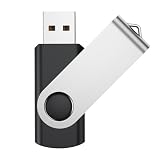
- Universal Drives: USB storage memory can be used in computers, TV, speaker, computer, notebook, car audio, and other USB devices. Support Windows 7/8/10, Windows Vista, Windows 2000, Mac OS X, Linux, etc
- Great for All Ages and Purposes: This USB flash drive is suitable for storing digital data for school, business, or daily usage. Apply to data storage of music, photos, movies, and other files. Apply to data storage of music, photos, movies, and other files
- Fashion and Convenience: Thumb drive with 360° swivel protect USB connector. Portable and lightweight. Easily to attach in your key chain, backpack, lanyard. Safety and easy carrying
- LED Indicator Design: The bottom of the usb drive has one red LED light; Let you know the flash drive is working
- All of jump drives have been rigorously tested and formatted before leaving the factory; The default format of the usb stick is exFAT
Example: Secure Boot servicing and recovery
Secure Boot certificate servicing involves both Windows and UEFI firmware. Microsoft describes Windows as scheduling, ordering, logging, and retrying certificate-update actions, while firmware must support preserving and validating the relevant databases. A firmware limitation can stall servicing; in documented failure scenarios, it can also contribute to boot problems. If troubleshooting identifies such a limitation, an OEM firmware update may be needed.
Microsoft’s detailed Secure Boot troubleshooting guidance is aimed at administrators and support professionals. For a consumer, the practical implication is to seek model-specific OEM or IT help when Secure Boot servicing or boot recovery is involved, rather than attempting administrative remediation steps without context. In one documented recovery case, Microsoft’s utility is placed on a FAT32-formatted USB drive. That is a conditional recovery-media requirement for that case—not a requirement for routine driver or firmware updates.
Free tools Windows power users keep installed
One-click scans. No signup required.
Do not interpret that recovery example as a reason to prepare USB media for every update. The USB drive is relevant to the specified Secure Boot recovery procedure; normal driver updates do not require recovery media on the basis of that instruction. If a boot problem or certificate-servicing failure is involved, use the OEM or administrator guidance for the affected system.
Independent reader supportYour contribution helps us test, update, and keep practical guides available for everyone.Windows 10 support status affects update expectations
Microsoft says Windows 10 support ended on October 14, 2025. After that date, Microsoft no longer provides the ordinary free Windows Update software updates, technical assistance, or security fixes for Windows 10. A Windows 10 computer should therefore not be described as continuing to receive that standard free support stream. This lifecycle fact is separate from whether a particular device maker still offers a driver package for a particular model.
That distinction matters when checking an old computer: a manufacturer may have a device-specific package, but that does not restore Microsoft’s ended Windows 10 support stream. Verify both the operating system’s support status and the device package’s stated compatibility. The ordinary Windows Update recommendation for supported Windows hardware should not be read as a promise that Windows 10 continues to receive free security fixes after the end date.
Safety checks before you install
Use these checks to avoid the most common mistakes without adding precautions that may not apply to your device:
- Confirm the target. Check the exact device or computer model and the update’s stated compatibility.
- Choose an authoritative source. Use Windows Update for most Windows drivers, Apple’s Software Update for Mac firmware, or the exact device maker’s official instructions when a manual package or separate firmware update is required.
- Match the software environment. For a manual Windows driver package, verify the Windows release and architecture.
- Read the update’s own prerequisites. Firmware instructions may specify a required order, as Microsoft does for the cited TPM issue. Do not assume that another update’s sequence applies.
- Allow for interruption. Save work and arrange a suitable time if Windows requests a restart or the official procedure requires downtime.
- Keep recovery instructions in scope. Use recovery media only when the device-specific procedure calls for it; the documented FAT32 USB example concerns a particular Secure Boot recovery case.
If you cannot establish that a package applies to your exact device, do not install it on the strength of a similar model name, a newer displayed date, or a download-site description. Return to Windows Update or the manufacturer’s official support page and verify the model and operating-system match.
Best Value

- [Package Offer]: 2 Pack USB 2.0 Flash Drive 32GB Available in 2 different colors - Black and Blue. The different colors can help you to store different content.
- [Plug and Play]: No need to install any software, Just plug in and use it. The metal clip rotates 360° round the ABS plastic body which. The capless design can avoid lossing of cap, and providing efficient protection to the USB port.
- [Compatibilty and Interface]: Supports Windows 7 / 8 / 10 / Vista / XP / 2000 / ME / NT Linux and Mac OS. Compatible with USB 2.0 and below. High speed USB 2.0, LED Indicator - Transfer status at a glance.
- [Suitable for All Uses and Data]: Suitable for storing digital data for school, business or daily usage. Apply to data storage of music, photos, movies, software, and other files.
- [Warranty Policy]: 12-month warranty, our products are of good quality and we promise that any problem about the product within one year since you buy, it will be guaranteed for free.
Frequently Asked Questions
Should I update every device driver manually?
No. Microsoft says Windows Update is the recommended route for most Windows device drivers. Use Device Manager or a package from the device maker’s official site when you have a specific device problem or compatibility need. A manual package must match the exact device, Windows release, and architecture.
Does a newer driver date mean I should install it?
Not by itself. Microsoft says providers choose the descriptive date and Windows uses targeting information in the driver files when selecting what to install. Check compatibility and whether the update addresses your device issue; do not replace a working driver just because another date looks newer.
What should I do if a driver update breaks a device?
Try Device Manager’s Roll Back Driver option if it is available. Microsoft says reinstalling the previous driver often resolves problems that began after a Windows Update. If rollback is unavailable or does not help, save your work, close apps, and consider the documented uninstall-and-reinstall route; some devices may require a manual package from the manufacturer.
What’s actually slowing this PC down?
Pick the symptom - the matching free tool is one click away.
How do I update firmware on a Mac?
Apple says Mac firmware updates are included in macOS updates. Open Apple menu > System Settings > General > Software Update and follow the available update instructions. This guidance applies to Macs, not automatically to Windows computers or separate accessories.
Do firmware updates always require a USB drive or a TPM reset?
No. Firmware steps depend on the exact update and device. Microsoft documents a FAT32 USB drive for one Secure Boot recovery case, not routine updates. A particular TPM security procedure may call for clearing the TPM after other steps; back up data first, do not clear a work or school device without IT direction, and expect to set up Windows Hello again afterward.
Can I still expect free Windows 10 security updates?
Microsoft says Windows 10 support ended October 14, 2025. After that date, Microsoft no longer provides the ordinary free Windows Update software updates, technical assistance, or security fixes. A device maker’s availability of a particular driver package is a separate matter.
The Bottom Line
Use Windows Update for most Windows drivers, turn to Device Manager for a targeted search or rollback, and download manual drivers only from the exact device maker’s official site. For firmware, follow the instructions for the precise model and issue: Apple routes Mac firmware through macOS updates, while TPM and Secure Boot procedures can have specific prerequisites. Do not use a newer-looking date, a generic download site, or a recovery example as a reason to install the wrong package or perform an unnecessary reset.
Do these 3 things before closing this tab:
1Fix the driver behind crashes, sound loss and screen glitches2Repair Windows errors before they cause bigger problems3Scan for outdated or missing drivers - takes under a minute
