
Free tools Windows power users keep installed
One-click scans. No signup required.
iTechGuides is reader-supported. When you buy through links on our site, we may earn an affiliate commission. As an Amazon Associate I earn from qualifying purchases. Learn more
Yes—some laptops can disable their built-in touchpad in BIOS or UEFI, but there is no universal switch or menu path. The option depends on the exact laptop model and firmware. Lenovo documents BIOS touchpad controls on some models, while ASUS documents an Internal Point Device or Internal Pointing Device setting on selected systems.
Use the laptop’s own user guide to identify the correct firmware entry key, menu, and setting name. If your firmware has no touchpad control, Windows settings, a model-specific hotkey, or a mouse/driver control may still let you turn the pad off.
What disabling a touchpad in BIOS actually does
BIOS, or its newer replacement UEFI, initializes hardware before Windows or another operating system loads. A firmware-level touchpad setting tells the laptop not to expose or activate the built-in pointing device during startup. The result is different from merely changing a Windows preference: the touchpad can remain disabled even at the sign-in screen or when another operating system is booted.
That distinction matters in a few situations:
- Shared or managed computers: a firmware setting can prevent the built-in pad from being used regardless of a user’s Windows profile.
- Multiple operating systems: a BIOS setting can apply before Windows, Linux, or recovery media loads, whereas a Windows toggle affects Windows only.
- Troubleshooting: firmware-level disablement can help determine whether an unwanted cursor movement is caused by the touchpad itself or by an operating-system driver.
It does not mean every laptop exposes the same control. Firmware menus are designed by the computer manufacturer and can change between product families, processor platforms, and firmware versions. A control documented for one generation is not proof that a newer or differently configured model has it.
#1 Best Overall

- Compact Mouse: With a comfortable and contoured shape, this Logitech ambidextrous wireless mouse feels great in either right or left hand and is far superior to a touchpad
- Durable and Reliable: This USB wireless mouse features a line-by-line scroll wheel, up to 1 year of battery life (2) thanks to a smart sleep mode function, and comes with the included AA battery
- Universal Compatibility: Your Logitech mouse works with your Windows PC, Mac, or laptop, so no matter what type of computer you own today or buy tomorrow your mouse will be compatible
- Plug and Play Simplicity: Just plug in the tiny nano USB receiver and start working in seconds with a strong, reliable connection to your wireless computer mouse up to 33 feet / 10 m (5)
- Better than touchpad: Get more done by adding M185 to your laptop; according to a recent study, laptop users who chose this mouse over a touchpad were 50% more productive (3) and worked 30% faster (4)
Is a BIOS touchpad switch available on every laptop?
No. The manufacturer documentation establishes that the capability is model-dependent, not industry-wide. Two laptops carrying the same brand can have different firmware menus, and an option can disappear or be renamed between generations.
What Lenovo documents
Lenovo says that some models can disable the touchpad in BIOS and directs owners to the model’s user guide for BIOS access and the relevant option in the Config menu. Lenovo also documents other methods, including Windows settings, hotkeys on certain models, and driver or mouse-property controls.
Lenovo’s ThinkPad BIOS reference illustrates why a generic menu recipe is unreliable: trackpad controls can differ between AMD- and Intel-based machines covered by that reference. A menu shown for one ThinkPad generation should not be treated as a map for every Lenovo laptop. Processor platform, machine type, and firmware revision can all affect what appears.
What ASUS documents
ASUS support states that feature availability varies by model. On systems that provide the control, disabling Internal Point Device in BIOS also hides the related touchpad item in MyASUS. That behavior is evidence of a firmware-controlled setting, but it does not establish one universal ASUS menu path.
A model-specific ASUS W1N manual places the control under the Advanced tab and calls it Internal Pointing Device, with Enabled and Disabled values. The manual says the setting turns that notebook’s built-in touchpad on or off. Because the manual is for a particular, older model, use it as an example of the naming and placement you may encounter—not as instructions for a newer ASUS computer.
Prepare before changing firmware settings
Do not disable the touchpad until you have another way to control the pointer. Dell recommends having an external USB mouse, wireless USB mouse, Bluetooth mouse, or touchscreen available first. A USB mouse is the simplest fallback during setup, but a touchscreen is equally useful on a supported laptop. Keep the backup connected or charged while you test the change.
- Record the exact model: copy the full model number, not just the product family name. A label on the base, the original packaging, the manufacturer’s support application, or Windows Settings > System > About may show it.
- Save open work: changing firmware settings normally requires a restart.
- Connect power: avoid interrupting a firmware restart because of a low battery.
- Keep the manufacturer guide available: you need it for the model-specific entry key, menu sequence, and save procedure.
- Know how to reverse the change: write down the original value, usually Enabled, before selecting a different one.
- Check the machine type and platform: if the support site lists AMD and Intel variants separately, select the one that matches your laptop before following a BIOS example.
If you need pointer control after the change, an optional USB mouse is a practical, inexpensive fallback; it is not a prerequisite for laptops with a working touchscreen or another supported pointer.
Do these 3 things before closing this tab:
1Fix the driver behind crashes, sound loss and screen glitches2Repair Windows errors before they cause bigger problems3Scan for outdated or missing drivers - takes under a minuteFind the correct BIOS or UEFI instructions for your model
The dependable source for the entry key and menu sequence is the user guide or support page for the exact laptop. Manufacturer guidance reviewed for this subject does not establish a single key or path that works on every computer, so do not assume that a key shown for one brand or model applies to yours.
Rank #2

- A comfortable, ambidextrous shape feels good in either hand, so you feel more comfortable as you work-even at the end of the day
- With 800 dpi sensitivity, you'll get precise cursor control so you can edit documents and navigate the Web more efficiently
- Side-to-side scrolling plus zoom lets you instantly zoom in or out and scroll horizontally and vertically; perfect for working with spreadsheets and presentations.
- Zero setup with flexible connectivity means you just plug it into your USB or PS/2 port-it works right out of the box
- This mouse is built by Logitech-the mouse experts; it comes with the quality and design we've built into more than a billion mice, more than any other manufacturer
- Identify the complete model and, where shown, its generation or machine type.
- Open the manufacturer’s support site or the electronic user guide supplied with the computer.
- Search the guide for BIOS, UEFI, touchpad, trackpad, Internal Pointing Device, or Internal Point Device.
- Read the section that explains entering firmware setup and changing configuration values. Note the exact key, tab, submenu, and save/exit command documented for that model.
- Check whether the guide says the feature is limited to a particular operating system, processor version, or firmware release.
- Compare the guide’s illustrations with your firmware screen. A similar-looking option that is actually for an external mouse, USB controller, or pointing-stick device is not a substitute for the internal touchpad setting.
If the guide contains no matching term, that is meaningful: the laptop may not expose a firmware touchpad switch. Continue with the operating-system alternatives rather than changing unrelated firmware settings. Do not infer support merely because a forum post or video shows the option on another laptop.
How to disable the touchpad in BIOS or UEFI
The labels below are examples drawn from manufacturer documentation. Follow the sequence in your own manual instead of treating these examples as a universal procedure.
1. Enter firmware setup using the documented method
Restart the laptop and use the model-specific key or procedure described in its guide. Some computers display a brief setup prompt during startup; others require a Windows restart option or a manufacturer-specific button. Because entry methods vary, this article does not prescribe a single function key. If fast startup makes the prompt hard to see, use the firmware-entry method documented for your model rather than repeatedly pressing random keys.
Quick wins for a faster PC:
Repair Windows errors before they cause bigger problemsFix Now →Fix the driver behind crashes, sound loss and screen glitchesFind Drivers →Clear out junk files and repair common Windows errorsFree Scan →2. Locate the touchpad-related control
Look for one of the following terms:
- Touchpad
- Trackpad
- Internal Pointing Device
- Internal Point Device
On some Lenovo systems, the relevant setting is in Config. The Lenovo ThinkPad reference also uses trackpad-related controls, with differences between covered AMD and Intel configurations. On the documented ASUS W1N, the setting is under Advanced and is named Internal Pointing Device.
Some firmware screens show a short description when an item is highlighted. Read that description to confirm that it refers to the notebook’s built-in touchpad, not a USB mouse, a pointing stick, or all pointing devices. If the setting is nested in a submenu, record the path so you can find it again.
3. Change the value
Select the touchpad-related item and choose the disabled value provided by the firmware. Wording can be Disabled, Off, or another model-specific label. Do not change a similarly named mouse, keyboard, or USB setting unless the manual identifies it as the touchpad control.
Change only the required value. Avoid experimenting with boot order, security, virtualization, storage, or other firmware settings while you are there. Unrelated changes can create new startup or device problems and make it harder to identify what caused them.
4. Save and exit as documented
Use the save-and-exit command shown in the model’s firmware instructions. Firmware interfaces do not all use the same key, confirmation screen, or navigation method. Confirm the change if the computer asks, then allow it to restart. Simply leaving the menu or powering off may discard the new value.
Rank #3

- 【Plug & Play】Simply plug in the USB receiver for instant connectivity—no drivers needed. The stable 2.4GHz wireless technology ensures reliable performance within 33ft (10m), free from interference. (Note: USB receiver is stored at the bottom of the mouse)
- 【Precision Adjustable DPI】 Switch between 5 DPI levels (800/1200/1600/2400/4000) to adapt cursor speed for tasks like design or everyday browsing. This pc mouse wireless is optimized for accuracy on most surfaces
- 【Enhanced Productivity with 6 Buttons】 Our computer mouse wireless includes forward/backward side buttons to streamline your workflow when navigating documents and web pages. (Note: Forward/backward buttons are not recognized on Mac)
- 【Long-Lasting Battery Life】Runs for up to 24 months on a single AA battery (not included). The wireless mouse battery powered conserves energy by entering sleep mode after 8 minutes of inactivity and reactivates with any button click. and a red LED alerts you when battery is low
- 【Ergonomic Comfort & Durability】 Designed for all-day comfort, this contoured wireless mouse for mac reduces hand strain during extended use. Built to last with 5,000,000 click durability testing
5. Test the result
Move the pointer with the external mouse, touchscreen, or other available method. Test at the sign-in screen and after Windows loads. If the touchpad still responds, the setting may have been saved in the wrong menu, may control a different pointing device, or may not be supported by that firmware version. Confirm the displayed value after restarting before trying another method.
How to turn the touchpad back on
Re-enter firmware setup using the same model-specific procedure, return to the touchpad setting, select its enabled value, and save the change. If you cannot navigate the firmware menus because the touchpad is off, use the keyboard instructions in the user guide or connect a USB keyboard and mouse. Some firmware interfaces accept keyboard navigation even when no pointing device is active.
If the firmware setting is no longer visible after a firmware update or a reset to defaults, consult the current guide for the exact model. A reset can restore the touchpad, but it can also alter unrelated boot, security, or virtualization settings, so avoid resetting everything unless the manufacturer’s instructions call for it. If you do reset settings, document the original configuration first and verify that the laptop still starts from the intended drive.
What to do when BIOS has no touchpad option
A missing firmware control does not mean the touchpad cannot be disabled in Windows. It means the available control is at a different layer. Choose the least disruptive method that meets your goal.
Windows touchpad settings
ASUS documents an on/off touchpad toggle in Windows 10 and Windows 11 settings, while noting that support varies by model. On a system that exposes the standard control, open Settings and search for Touchpad, then use the displayed toggle. The exact page wording can vary by Windows release and manufacturer software.
These settings affect Windows rather than the pre-boot environment. The touchpad may still work in firmware setup, another operating system, or a recovery environment. This is usually the easiest choice when you want a temporary Windows-only change and already have keyboard or mouse access.
Model-specific keyboard shortcut
Some laptops provide a dedicated touchpad key or a function-key combination. Lenovo lists hotkeys as an option on certain models. The symbol, key combination, and requirement to hold a function modifier differ, so use the keyboard diagram or model guide rather than trying combinations at random. A shortcut may toggle the device without changing firmware, which makes it convenient but also easier to trigger accidentally.
Mouse Properties or driver controls
Some manufacturers expose a disable checkbox in a mouse-properties panel or through the touchpad driver. Lenovo identifies driver and mouse-property controls as model-dependent alternatives. A driver control can disappear after a Windows update, driver replacement, or a switch to a generic driver; if that happens, install the driver supplied for the exact model or use the Windows touchpad page instead.
Rank #4
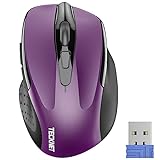
- Compact Design, Travel Friendly - With the dimension of 4.09*2.68*1.49 in, this compact mouse provides more portability and a better travel experience. Only compatible with USB-A Port Devices.
- Ergonomic Design, Comfort Grip - The contoured shape of this mouse is ergonomically designed to fit the natural curve of your hand, ensuring lasting comfort and productivity. Featuring rubber side-grips, it offers added thumb support for a superior working experience.
- Advanced Optical Tracking - Featuring 5-level adjustable DPI (800/1200/1600/2000/2600), this mouse provides high-performance precision and smart cursor control on most surfaces. ( 𝐆𝐥𝐚𝐬𝐬 𝐬𝐮𝐫𝐟𝐚𝐜𝐞 𝐢𝐬 𝐍𝐨𝐭 𝐢𝐧𝐜𝐥𝐮𝐝𝐞𝐝 )
- 24 Months Battery Life - Combined with a power-saving mode and on/off switch, this efficiently engineered mouse grants you up to 24 months of battery life.
- Plug and Play - Simply plug the USB-A mini-receiver into your Windows, Mac, Chrome OS, or Linux computer and enjoy seamless connectivity up to 49 feet.
Do not install a driver intended for a different product family merely to obtain a disable checkbox. The manufacturer’s support page is the safer place to verify the correct package and Windows version.
BIOS versus Windows and hotkey methods
| Method | Where it operates | Model support | How easily it can be reversed | Pointer backup recommended |
|---|---|---|---|---|
| BIOS/UEFI setting | Firmware, before the operating system loads | Only on models whose firmware provides the control | Change the same firmware value back to its enabled state | Yes; use a USB, wireless, or Bluetooth mouse or a touchscreen |
| Windows touchpad settings | Windows | Depends on laptop and Windows support | Use the displayed Windows toggle | Useful if the touchpad is disabled for the current Windows session |
| Keyboard hotkey | Usually the laptop’s operating-system or firmware control layer | Available only on certain models | Press the same documented shortcut again | Helpful if the shortcut is unavailable or misunderstood |
| Mouse Properties or driver control | Windows driver or pointing-device configuration | Depends on the installed manufacturer driver | Clear the driver checkbox or restore the prior driver setting | Recommended during driver changes |
A BIOS switch is not automatically the best choice. It provides the broadest pre-boot effect when available, but it is less convenient to change and can be harder to recover from without another pointing device. A Windows toggle is usually easier for a temporary change but does not affect other operating systems or firmware screens. A hotkey is fast when documented, while a driver control may offer finer Windows behavior but depends on the correct software remaining installed.
Troubleshooting common problems
“I cannot find Touchpad or Trackpad in BIOS”
Confirm the exact model and search its current guide for all four labels: Touchpad, Trackpad, Internal Pointing Device, and Internal Point Device. Check both Config and Advanced only when the guide names those tabs. If the guide does not document the setting, assume the firmware does not provide it and use Windows, a hotkey, or a driver control.
Recommended Free Tools
“The menu in an online video does not match my laptop”
Videos often combine different generations or processor variants. Lenovo’s own ThinkPad reference shows that AMD and Intel configurations can expose different controls. Treat a video or forum post as an illustration, not as authority for your model; the model-specific guide is the safer reference. Firmware updates can also alter labels or placement, so check the current support documentation.
“The setting is present, but the touchpad still works”
- Verify that you changed the internal pointing-device item rather than an external mouse or USB setting.
- Save the firmware change using the documented command before exiting.
- Restart fully rather than returning to the firmware menu.
- Check whether the laptop has a separate touchpad hotkey that can re-enable it after startup.
- Look for a manufacturer utility or Windows driver that is overriding the expected behavior.
- Re-enter firmware setup and confirm that the disabled value persisted; if it reverted, the change may not have been saved or the firmware may reject it.
“I disabled it and now I have no pointer”
Connect the external mouse or touchscreen you prepared before starting. If you have no pointer device, use keyboard navigation to re-enter firmware setup and restore the enabled value, following the model guide. On Windows, keyboard navigation can also reach Settings and the touchpad page, although the exact shortcuts depend on the Windows release. A USB keyboard can be useful if the built-in keyboard is unavailable at the firmware screen.
“The Windows touchpad toggle is missing”
That can indicate model-dependent support, a missing or incorrect touchpad driver, or a manufacturer utility that manages the device instead. Check the laptop’s support page for its touchpad driver and Windows instructions. If the manufacturer documents only a hotkey or mouse-properties control, use that method rather than forcing an unrelated driver.
“A firmware reset brought the touchpad back, but other settings changed”
Restoring defaults can affect boot, security, and virtualization values in addition to the touchpad. Reapply only the settings documented for your computer, and avoid a full reset when the guide provides a direct way to re-enable the internal pointing device.
What’s actually slowing this PC down?
Pick the symptom - the matching free tool is one click away.
Choosing the right method
- Choose BIOS/UEFI when your exact model documents the control and you need the touchpad disabled before Windows starts or across operating systems.
- Choose Windows settings when you need a quick, reversible change that applies only to Windows.
- Choose a hotkey when the laptop provides a clearly documented touchpad shortcut and you want fast toggling.
- Choose a driver or mouse-properties control when the manufacturer supplies that option and the Windows touchpad page does not.
In every case, keep a second pointer method available until you have confirmed how to restore the touchpad. The correct procedure is determined by the laptop’s exact model, not by the brand name alone.
Best Value

- 【Special Mint Green Mouse】This is an ideal choice if you need a colorful and cute mouse. Special mint green color and compact size makes it the best mouse for kids and people with small hands.
- 【Portable Small Mouse】 Only 3.94*2.28*1.52 inches, the usb mouse is designed for small to medium sized hands to achieve optimal fit and comfort. Portable design makes it easy to store in a bag for traveling.
- 【Soft Click Quiet Mouse】 Responsive buttons and scroll wheel provide very soft click with less noise, no more disturbing others and bring you comfortable using experience.
- 【Easy to Use Laptop Mouse】 2.4GHz wireless technology ensures reliable connectivity up to 49ft. 3 adjustable DPI levels (1600/1200/800) to meet your different needs. Only need 1xAA battery (NOT included) to support up to 15 months battery life.Note:USB connector is stored inside the back compartment (open the cover to access).
- 【Universal Compatibility】The wireless mouse is well compatible with Windows11/10/8.1/7,Mac OS . Fits for desktop, laptop, PC, and other devices.
Frequently Asked Questions
Can every laptop disable its touchpad in BIOS?
No. Lenovo and ASUS both describe the feature as model-dependent. Some firmware provides a touchpad, trackpad, Internal Pointing Device, or Internal Point Device setting; other laptops provide no firmware switch at all.
What should I search for in the firmware menu?
Search the exact model guide for Touchpad, Trackpad, Internal Pointing Device, or Internal Point Device. Lenovo documents the option in Config on some systems, while the ASUS W1N example places Internal Pointing Device under Advanced.
Is there one BIOS key that works for all laptops?
No. The manufacturer documentation does not establish a universal entry key or menu path. Use the exact model’s user guide or support page for the firmware-entry and save procedures.
Crashes, No Sound, or Screen Glitches?
Random freezes, missing sound and display glitches usually trace back to one bad driver. Find and replace yours safely.Free scan · under a minuteWindows Errors? Fix Them Before They Spread
Repair common Windows errors and clear accumulated junk for a smoother, more stable PC - no reinstall needed.Free scan · no reinstallWill a BIOS setting disable the touchpad in Linux or at the sign-in screen?
A firmware-level setting acts before the operating system loads, so it can affect pre-boot use and other operating systems. A Windows touchpad toggle applies only within Windows.
What if I cannot find a touchpad option in BIOS?
If the exact model guide does not document one, use Windows touchpad settings, a documented model-specific keyboard shortcut, or a mouse-properties or driver control instead. Do not change unrelated firmware settings.
What should I have ready before disabling the touchpad?
Have an external USB, wireless USB, or Bluetooth mouse, a touchscreen, or another reliable pointer method available. Also record the exact model, save your work, connect power, and note the original enabled value.
How do I restore the touchpad after disabling it?
Re-enter firmware setup using the same model-specific procedure, return to the documented touchpad setting, select Enabled or its equivalent, and save. Use keyboard navigation or a USB keyboard and mouse if the touchpad is inactive.
The Tool Desk
Outbyte Driver Updater FREEFix the driver behind crashes, sound loss and screen glitchesFind Drivers →Outbyte PC Repair FREEClear out junk files and repair common Windows errorsFree Scan →Why does an online tutorial show a menu my laptop does not have?
Firmware menus vary by product family, generation, processor platform, and firmware version. Lenovo’s ThinkPad reference shows differences between covered AMD and Intel configurations, so rely on your model’s current guide rather than a generic video.
The Bottom Line
Some laptops can disable the built-in touchpad in BIOS or UEFI, but the option is never guaranteed. Identify the exact model, follow its own guide for the entry key and menu, and keep an external mouse or touchscreen available before changing the setting. If no firmware control is documented, use the model’s Windows, hotkey, or driver alternative instead.
Quick Recap
Product prices and availability are accurate as of the date/time indicated and are subject to change. Any price and availability information displayed on Amazon at the time of purchase will apply.

