
Quick wins for a faster PC:
Repair Windows errors before they cause bigger problemsFix Now →Scan for outdated or missing drivers - takes under a minuteDriver Scan →Clear out junk files and repair common Windows errorsFree Scan →iTechGuides is reader-supported. When you buy through links on our site, we may earn an affiliate commission. As an Amazon Associate I earn from qualifying purchases. Learn more
A seminar becomes a viable startup only when a specific customer repeatedly confirms a painful problem, commits money or meaningful effort to a defined outcome, and can be reached and served at a sustainable cost. Validate those assumptions with interviews and a small behavioral experiment first; then write the business plan around what customers actually did.
What validation means—and what a business plan cannot prove
Validation is a decision process, not a polished document. Your plan should show which assumptions you tested, how you tested them, what customers did, the threshold you set in advance, and whether the result is to proceed, change direction, or stop.



A business plan organizes evidence and choices. It does not create demand. A convincing market-size paragraph, optimistic attendance forecast, or detailed slide deck cannot substitute for a customer who books, pays, refers a colleague, or gives another observable commitment. The U.S. Small Business Administration (SBA) puts the principle plainly: “Let your customer decide whether your idea is valuable or not.”
For a seminar, validate more than interest in the topic. You need evidence for the problem, audience, promised outcome, format, price, acquisition channel, delivery capacity, and economics. A free registration or a compliment is useful learning, but it is weaker evidence than a paid booking or a customer who changes an existing behavior to attend.
#1 Best Overall
Step 1: Define the problem and the customer before naming the seminar
Describe the job, pain, and desired outcome
Write the situation in which the customer struggles, the job they are trying to complete, and the measurable or observable outcome they want. “A seminar about productivity” is a topic. “Team leads at growing agencies need a repeatable way to reduce missed client deadlines” is a problem statement that can be tested.
Keep the first version narrow. A single role, industry, trigger event, and outcome make interviews and experiments interpretable. You can broaden the audience after one segment shows evidence.
Choose a reachable initial segment
List the people who experience the problem, the person who approves spending, and any person who influences the purchase. They may be different. An employee may attend while a department head pays; a professional association may sponsor a public session. Record each role instead of treating “the market” as one customer.
Free tools Windows power users keep installed
One-click scans. No signup required.
Check whether the segment is large enough to support your intended model and concentrated enough to reach efficiently. SBA guidance recommends researching who may benefit, whether a profitable need exists, the target market and value proposition, and competing offers.
Map current alternatives and urgency
Ask what people do now: another course, an internal meeting, a consultant, software, a free resource, or simply tolerating the problem. An alternative that already consumes budget or management attention is evidence of a real job. “Do nothing” is also an alternative; learn what keeps the customer from changing.
Identify the trigger that makes the problem urgent—a deadline, regulation, new manager, failed project, or recurring cost. A seminar that is merely interesting may not generate a purchase. A seminar tied to a costly, time-sensitive outcome has a clearer path to payment.
State a falsifiable problem hypothesis
Use a sentence that could be proven wrong: We believe [specific customer] experiences [specific problem] when [situation], and will commit [money, time, access, or another behavior] to achieve [outcome] because current alternatives are inadequate. Do not treat this sentence as fact until the tests below support it.
Step 2: Turn the idea into a testable offer
Specify the promise
Define who the seminar is for, what they will be able to do afterward, how long it takes, and what evidence of completion they receive. “Learn negotiation” is vague; “leave with a three-part negotiation script and practice it in a role-play” is a deliverable.
Choose the delivery mode you can test cheaply: a live online session, an in-person workshop, a private team session, or a short cohort. Decide whether the first version includes exercises, templates, follow-up coaching, recording access, assessment, or a certificate. Each addition changes cost and perceived value.
Write the one-page hypothesis table
Use one row per critical assumption. The following format keeps an idea from hiding behind general enthusiasm.
| Assumption | What to write | Evidence that would change the plan |
|---|---|---|
| Customer segment | Role, organization type, trigger, and buyer | Interviews show another role has the urgent problem or controls the budget |
| Painful problem | Recent event, consequence, and frequency | People cannot recall a recent instance or rank it below other priorities |
| Current alternative | What they use now and its cost or limitation | Existing solution already meets the need at an acceptable cost |
| Seminar outcome | Specific behavior, artifact, or result participants will achieve | Customers value a different outcome or cannot achieve it in the proposed format |
| Price or commitment | Amount, payment timing, deposit, or buyer approval required | Interest remains verbal when a real commitment is requested |
| Acquisition channel | Community, partner, outbound contact, search, event, or referral | Qualified prospects do not respond or acquisition effort is uneconomic |
| Delivery cost | Instructor time, venue or platform, materials, support, refunds, and payment fees | Capacity or variable cost makes the expected margin unacceptable |
| Pivot or stop rule | The result that triggers a change, another test, or a stop | Predetermined threshold is missed after a fair test |
Write the expected result and the decision before collecting responses. Otherwise, you can reinterpret every outcome as encouragement.
Do these 3 things before closing this tab:
1Clear out junk files and repair common Windows errors2Scan for outdated or missing drivers - takes under a minute3Repair Windows errors before they cause bigger problemsMap the business model
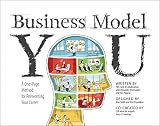
Use a lean business-model structure to connect the offer to an operating business. Capture partnerships, key activities, resources, value proposition, customer relationships, channels, customer segments, cost structure, and revenue streams. For a seminar, partners might include an employer, association, venue, or subject-matter collaborator; resources include curriculum, facilitation skill, registration, and a delivery platform.
Rank #2
Keep each box evidence-linked. If a partner is essential, record who has agreed to introduce you or host a pilot. If revenue depends on follow-up coaching, test whether buyers want that service rather than assuming the add-on will sell.
Step 3: Conduct discovery interviews that reveal behavior
Recruit the right people
Interview people who recently faced the problem, not only friends who like your idea. Include users, economic buyers, and gatekeepers when those roles differ. Recruit across the segment’s meaningful variations—such as company size or experience level—so you can see whether the pain is concentrated.
There is no universal interview count that validates a business. Strategyzer’s Lightning Sprint materials describe gathering evidence from five to ten customer interviews as a program practice, not a rule for every venture. Stop a round when you have tested the assumption across relevant variations and new interviews stop changing the decision, or continue when answers conflict.
Ask about the past, not hypothetical approval
Begin with the last specific occurrence: When did this happen? What did you do next? What did it cost in time, money, risk, or missed opportunity? Who approved the response? What have you already tried? What would make you change it?
Only after understanding the current behavior should you show a short description of the seminar. Ask which part is useful, confusing, or missing, then test commitment: Would they introduce you to the buyer, schedule a pilot, share internal data, place a deposit, or buy a seat? Do not lead with “Would you attend?” A polite yes has little predictive value without a next action.
Record evidence consistently
Use the same note structure for every conversation:
- Customer role and situation, without unnecessary personal data.
- Exact problem and recent example.
- Current workaround and its cost.
- Urgency and purchase authority.
- Reaction to the proposed outcome and format.
- Commitment offered and the next step agreed.
- Confidence level and unresolved questions.
Separate what someone said from what they did. “I would pay” is a statement; paying a deposit, forwarding the offer to a manager, or scheduling a team session is behavior. Code notes by assumption so a frequently mentioned theme does not automatically become proof of willingness to pay.
Recommended Free Tools
Step 4: Design a small experiment with a pass/fail threshold
Strategyzer describes its Test Card as a way to design customer experiments before scaling. Use the same discipline: write the hypothesis, the test, the observable metric, the threshold, the time window, and the decision that follows.
Landing-page smoke test
Publish a concise page naming the audience, painful situation, outcome, format, date or availability, and a clear call to action. Send qualified prospects through one defined channel. Measure completed actions—such as an application, call booking, or deposit—not page views alone. Treat a result as directional when the audience or traffic source is unrepresentative.
Paid pilot or presale
Offer a limited session to a small group with a real price, payment deadline, refund policy, and stated deliverable. A deposit can test budget authority while reducing risk for the buyer. Set a minimum number of paid seats or a minimum revenue amount that makes delivery viable; cancel or redesign if the threshold is missed.
Workshop prototype
Deliver the shortest version that can produce the promised outcome. Observe where participants get stuck, whether exercises are completed, and what they do afterward. Collect artifacts—completed plans, scripts, or implemented changes—rather than relying only on satisfaction scores.
PC Slower Than It Used to Be?
A free scan shows the junk files, broken settings and background clutter dragging Windows down - then fixes them in one click.Free scan · Windows 10 & 11Outdated Drivers Are Slowing You Down
One free scan finds every outdated or missing driver and matches the right update for your exact hardware.Free scan · exact hardware matchPartner or team test
Ask an employer, association, or community to sponsor a private session. This tests a different buying process from individual tickets: procurement, scheduling, customization, and repeat potential. Document who made the decision and how long approval took.
Choose one primary experiment at a time. Running several uncontrolled promotions makes it difficult to know which audience, message, or channel caused the result.
Step 5: Run the pilot and measure the whole funnel
Before the event, define the funnel you need to observe:
- Reach: qualified people who saw the offer through the selected channel.
- Response: inquiries, applications, or calls that match the target segment.
- Commitment: payment, deposit, signed purchase order, or confirmed sponsor approval.
- Attendance: participants who actually show up.
- Completion: participants who finish the exercises or deliverables.
- Outcome: evidence that the promised behavior or result occurred.
- Referral or repeat: an introduction, renewal, or request for another session.
Track the effort and cost required at each stage. A full room acquired through unsustainable personal outreach may not support a business. Likewise, a high satisfaction score does not compensate for low attendance, poor completion, or no buyer with authority.
The Tool Desk
Outbyte PC Repair FREERepair Windows errors before they cause bigger problemsFix Now →Outbyte Driver Updater FREEScan for outdated or missing drivers - takes under a minuteDriver Scan →Use a short follow-up at a defined interval appropriate to the outcome. Ask what participants implemented, what blocked them, and whether the problem remains urgent. If the seminar promises a workplace change, request evidence of that change with permission rather than asking whether they “liked” the session.
Step 6: Update the model from evidence
After each test, mark every assumption as supported, unresolved, or contradicted. Change one major variable at a time when possible so you can learn from the next experiment.
Change the audience
If the original segment finds the problem minor but another role repeatedly describes a costly, urgent version, narrow the offer to the latter. Record why the new segment is more reachable or valuable rather than switching based on one enthusiastic comment.
Change the promise or format
Participants may want implementation help, a team workshop, or a template instead of a lecture. Preserve the underlying job while changing the format or outcome. Test the revised promise with a new commitment request.
Change price or buyer
If individuals value the result but lack budget, test a team or organizational buyer. If buyers reject the price, determine whether the issue is value, trust, timing, or delivery cost before simply discounting. A lower price that leaves no margin is not validation.
Pivot or stop deliberately
Use the threshold written on the Test Card. A pivot changes a key assumption and starts another test; a stop decision prevents further spending when the problem is weak, the buyer is inaccessible, or the economics cannot work. A stop is useful evidence, not a personal failure.
Strategyzer’s Lightning Sprint combines interviews, value-proposition work, rapid testing, and an evidence-based action plan. That sequence is valuable because each activity updates the next decision instead of producing a static plan.
Build the lean business model after the first evidence
A lean plan is appropriate when the venture is simple, early, or changing quickly. Keep it short enough to revise after every experiment, but specific enough to expose dependencies.
| Element | Questions for a seminar startup |
|---|---|
| Value proposition | What urgent job does the session help a defined customer complete, and what changes afterward? |
| Customer segments | Who attends, who pays, and which segment has the strongest evidence? |
| Channels | Where can qualified buyers be reached repeatedly at an acceptable acquisition effort? |
| Customer relationships | What support, follow-up, community, or account management is required? |
| Revenue streams | Are you selling seats, private sessions, sponsorships, cohorts, follow-up services, or a combination supported by evidence? |
| Key activities | What must happen to market, sell, prepare, deliver, and measure the seminar? |
| Key resources | Which curriculum, instructor capability, platform, venue, data, or intellectual property is essential? |
| Key partnerships | Which hosts, associations, employers, or specialists improve reach or delivery? |
| Cost structure | What is fixed per session, variable per participant, and required before the first sale? |
Put an evidence note beside each box: interview observation, paid commitment, pilot behavior, or unresolved assumption. This prevents a plausible story from being mistaken for a tested model.
Choose a lean or traditional business plan
Both formats can describe the same validated business. The choice depends on the reader and the decision the plan must support.
| Use a lean plan when… | Use a traditional plan when… |
|---|---|
| The offer, segment, or channel is still changing. | A lender or investor requests detailed documentation. |
| You need a working document for weekly experiments. | You need to explain organization, market, marketing, funding, and financial projections in depth. |
| The startup can launch with limited capital and a simple operating model. | You are requesting substantial funding or committing to significant fixed costs. |
| Decisions depend on rapid customer learning. | External reviewers need a consistent, formal plan for risk assessment. |
SBA identifies the traditional format as detailed and commonly used for lender or investor review. Its typical sections include an executive summary, company description, market analysis, organization and management, product or service line, marketing and sales, funding request, and financial projections. SBA’s lean format centers on partnerships, activities, resources, value proposition, customer experience and segments, channels, cost structure, and revenue streams.
Do not inflate a lean plan into a traditional one before the assumptions are credible. A detailed forecast built on untested attendance, price, or acquisition assumptions only gives uncertainty a professional appearance.
What’s actually slowing this PC down?
Pick the symptom - the matching free tool is one click away.
Write the validated traditional plan section by section
Executive summary
State the customer, problem, seminar outcome, business model, current traction, funding need, and the decision you want from the reader. Write it last, after the evidence and numbers are stable.
Company and offer description
Explain the legal or operating structure you intend to use, the seminar format, delivery geography, schedule, and what is included. Distinguish what is already available from what requires investment.
Market and competitive analysis
Describe the segment using your interviews and external market research. Name direct seminars, indirect services, internal alternatives, and doing nothing. SBA summarizes the purpose clearly: “Market research helps you find customers for your business. Competitive analysis helps you make your business unique.” Your differentiation should be an evidenced advantage—such as a specific outcome, delivery context, or access—not a generic claim of quality.
Organization and management
Assign responsibility for curriculum, facilitation, sales, scheduling, customer support, finance, and quality control. If one person performs every role, state the capacity limit and the trigger for adding help.
What’s actually slowing this PC down?
Pick the symptom - the matching free tool is one click away.
Marketing and sales
Show the tested channel, message, funnel assumptions, sales cycle, buyer, and follow-up process. Separate a channel that produced paid commitments from one that produced only attention.
Funding request and use of funds
Specify how much capital is required, when it is needed, and what it buys: curriculum development, equipment, venue deposits, staff, promotion, insurance, or working capital. Tie each expense to a milestone or experiment.
Financial projections
Build a bottom-up model. For each session, calculate expected seats or contract value, price collected, payment fees, instructor time, materials, venue or platform cost, support, refunds, and partner share. Then model the number of sessions required to cover fixed overhead and owner compensation. Label projections as assumptions and show conservative, expected, and upside cases rather than presenting one forecast as fact.
Check economics, capacity, and constraints before scaling
Unit economics
Estimate contribution per participant or contract after costs that rise with delivery. A seminar can appear profitable at full capacity but lose money at the attendance level your channel can reliably produce. Include preparation and follow-up time; unpaid labor is still a cost to the business.
Capacity and quality
Set a maximum group size based on exercises, feedback, accessibility, and facilitator workload. If demand exceeds that limit, test another facilitator or a different format before accepting more bookings than you can serve well.
Best Value
Operational and regulatory checks
Verify venue requirements, insurance, accessibility, privacy handling for registration data, payment and refund terms, employment or contractor arrangements, and any professional-licensing or continuing-education claims relevant to your subject and location. Do not promise a credential or regulated result unless you can meet the applicable requirements.
Risk controls
Prepare a cancellation policy, backup delivery method, facilitator substitute, data-retention practice, and incident plan. A buyer evaluating a private session will care about continuity and confidentiality as much as the curriculum.
A practical decision scorecard
At the end of a test cycle, score each dimension using your own thresholds rather than a universal benchmark:
Quick wins for a faster PC:
Repair Windows errors before they cause bigger problemsFix Now →Fix the driver behind crashes, sound loss and screen glitchesFind Drivers →Clear out junk files and repair common Windows errorsFree Scan →- Customer urgency: How recent and costly is the problem?
- Willingness to pay or commit: Did the right buyer take a meaningful action?
- Acquisition: Can you reach qualified prospects through a repeatable channel?
- Delivery: Can the promised outcome be produced consistently within available capacity?
- Startup cost: What must be spent before the next evidence milestone?
- Gross-margin potential: Does each additional session or participant improve the economics after variable costs?
- Constraints: Are there legal, scheduling, venue, accessibility, or operational barriers?
- Evidence strength: Is the conclusion based on observed behavior, paid commitments, or opinions?
Use the scorecard to choose one of three actions: proceed to a larger test, revise a specific assumption and retest, or stop. Keep the underlying observations so a future version does not repeat the same experiment.
Common mistakes and how to correct them
Starting with a title instead of a problem
A clever seminar name attracts attention but does not establish value. Rewrite the offer around a customer situation and outcome, then test whether that language produces commitment.
Interviewing only friendly people
Friends often protect the relationship by being positive. Recruit people who can buy or influence a purchase and ask about recent behavior and spending.
Counting registrations as sales
Registrations can be accidental, free, or easy to abandon. Track payment, attendance, completion, and post-session behavior separately.
Changing several variables at once
If you alter audience, price, format, and channel simultaneously, a better result does not tell you why it improved. Change the highest-risk assumption first and keep the rest stable where practical.
Using a universal interview quota
No fixed number guarantees validation. The relevant question is whether interviews cover the segment and resolve the decision. The five-to-ten figure associated with Strategyzer’s Lightning Sprint is a program practice, not a universal rule.
Writing forecasts before testing demand
Replace unsupported attendance percentages with a funnel based on observed responses, paid commitments, capacity, and a clearly labeled assumption for anything not yet tested.
Scaling before the promise works
More promotion cannot repair a seminar that fails to produce its outcome. Improve the curriculum and delivery evidence in a small group before committing to a large venue, staff, or advertising budget.
Free tools Windows power users keep installed
One-click scans. No signup required.
Use the plan as a living decision record
Review the plan after every interview round and experiment. Date each assumption, record the evidence and threshold, and mark the resulting decision. Keep a short list of unresolved risks for the next test. When the evidence becomes stable enough for a lender or investor, expand the lean document into the traditional sections they require.
SBA provides market-research guidance, business-plan templates, startup-cost resources, funding information, and counseling referrals such as SCORE and other resource partners. Strategyzer provides customer-discovery training, the Test Card, Business Model Canvas and Value Proposition Canvas methods, and its Lightning Sprint approach. These resources can structure your work, but the decisive evidence must come from the customers and buyers for your particular seminar.
Quick Recap
Product prices and availability are accurate as of the date/time indicated and are subject to change. Any price and availability information displayed on Amazon at the time of purchase will apply.

