
iTechGuides is reader-supported. When you buy through links on our site, we may earn an affiliate commission. As an Amazon Associate I earn from qualifying purchases. Learn more
Start with the airline, not the tracker. Go to the carrier’s baggage-service desk (or its online baggage channel if you have already left), file a delayed or missing-bag report, and save the reference number and baggage-tag receipt. Use that reference on the carrier’s status page, keep your contact and delivery details current, and add a precise description of the bag and its contents. A compatible tracker can provide an extra location clue that you share through the airline’s process, but it does not replace the official report or guarantee recovery.
The exact screens, update cadence, and escalation rules differ by airline and itinerary. The sequence below works across most systems while making clear which information is confirmed by the carrier and which is only a supplemental device signal.
What to do in the first 30 minutes
- Check the carousel and nearby oversize area once. Confirm that the bag was not placed on a different belt or held for an oversize-item pickup. Do not leave the terminal until you have checked the airport’s baggage-service location unless staff direct you to another reporting channel.
- Report the missing bag to the airline handling your arrival. At the airport, use the carrier’s baggage desk. If you are already away from the airport, open the carrier’s official missing-baggage or delayed-baggage page and submit the report promptly. A partner airline may have operated one flight, but the carrier that handles the arrival normally tells you where to open the case.
- Save the case reference and baggage-tag receipt. Photograph or download the confirmation page, email, and any paper receipt. The reference is the key used by the airline’s status portal and by staff who update the file.
- Confirm delivery information before leaving. Check the email address, mobile number, hotel or temporary address, and preferred delivery instructions shown in the report. Ask how to change them if your lodging changes.
A tracker reading, a social-media message, or a gate-agent conversation is not an official baggage claim. The report creates the record against which a found or forwarded bag can be matched.
Do these 3 things before closing this tab:
1Scan for outdated or missing drivers - takes under a minute2Repair Windows errors before they cause bigger problems3Fix the driver behind crashes, sound loss and screen glitchesHow to file a complete missing-bag report
Describe the bag so staff can identify it
Use the external description printed on the report: color, hard- or soft-sided construction, brand or manufacturer, size, distinctive tape or straps, stickers, scratches, and other marks. State whether it is a suitcase, duffel, sports case, instrument case, or another form of checked luggage. If the bag has an internal tag, card, or name label, include that information too.
#1 Best Overall

- FIND YOUR ITEMS ON FIND MY — AirTag (2nd generation) helps you keep track of what matters. Attach one to an item you want to keep track of using the Find My app.*
- EXPANDED PRECISION FINDING ON IPHONE AND APPLE WATCH — Get step-by-step directions to your lost item on iPhone and, now, Apple Watch.*
- ENHANCED SPEAKER — With a 50% louder speaker and a new, distinctive chime, it’s easier than ever to hear and find AirTag.*
- PING FROM FAR AND WIDE — Upgraded Ultra Wideband and Bluetooth chips allow you to find your items from even farther away than ever before.*
- SHARE ITEM LOCATION — Share AirTag location access temporarily and securely with trusted contacts, third parties, or over 50 airline partners if you lose something important.
List contents that distinguish it
Give a practical inventory rather than a vague phrase such as “clothes.” Mention unusual garments, equipment, colors, and quantities that would help an agent recognize an opened bag. Keep purchase records, photographs, packing lists, and serial numbers for valuable items. U.S. Department of Transportation (DOT) guidance says an airline may require receipts or other proof for valuable contents when assessing a claim.
Provide contact and delivery details you can actually answer
Use a phone number that works while traveling and an email account you check. Add the address where the airline can deliver the bag, including the hotel name, room or reservation details when appropriate, and the dates you will be there. Update the case if you move to another hotel, return home, or change your phone number. An accurate temporary address is often more useful than your permanent address when the bag is found.
Keep the bag tag attached to your travel records
The small tag or receipt issued at check-in links the physical bag to your itinerary. Store it with your boarding pass, report reference, and travel dates. Do not discard it after the online case appears; the airline may ask for the tag number when reconciling a found bag.
Free tools Windows power users keep installed
One-click scans. No signup required.
How to check the airline’s baggage status
- Open the airline’s baggage-status or delayed-bag page, not a general flight-status page.
- Enter the report reference exactly as shown, along with any surname, phone number, or other field the carrier requests.
- Save a screenshot or PDF of the current status and the date you checked it.
- Read any request for more information and respond through the same case, rather than creating a second report.
- Recheck after the carrier says the file has been updated or after a flight carrying your bag is identified. Airlines do not publish one universal update interval, so the portal is the authoritative place for your case.
A portal may show that a report was received, that tracing is in progress, that a bag was matched to a forwarding record, or that delivery arrangements are being made. The labels and available actions are carrier-specific. “Tracing” does not necessarily mean a live map, and an unchanged screen does not by itself prove that the bag is permanently lost.
Rank #2
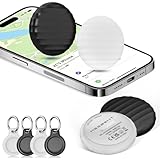
- 【AIR TAGS-4 PACK FOR APPLE FIND MY】 Includes two black and two white tracker tags. Works with the Apple Find My app and Find My network to help locate everyday belongings such as keys, luggage, backpacks, purses, and travel bags. Apple MFi certified and compatible with iOS devices only; not compatible with Android.
- 【SHARE WITH UP TO 6 PEOPLE】 Each Bluetooth tracker can be shared with up to 5 additional people in the Find My app, allowing the owner and up to 5 trusted users to view the item’s location. Requires an Apple ID, iCloud sign-in, and an iPhone or iPad running iOS 14.5/iPadOS 14.5 or later.
- 【COMPACT DESIGN & REPLACEABLE CR2032 BATTERY】 Measuring approximately 1.22 × 1.22 × 0.38 inches, these lightweight item finder tags are easy to attach to keys, luggage, backpacks, and bags. Each tag uses a replaceable CR2032 battery that typically lasts about 5–8 months, depending on use; frequent use may require replacement after approximately 3 months. No monthly fee or additional app is required.
- 【IP67 PROTECTION WITH SILICONE CASE】 The tracker tag itself is not water-resistant. IP67-rated water and dust protection applies only when the included silicone holder is correctly and fully installed. Insert the tag with the printed side facing outward and the striped side facing inward for a secure fit. Suitable for protection against everyday rain, splashes, and moisture; do not submerge or expose it to water for extended periods.
- 【UP TO 70dB SOUND, NOTIFICATIONS & EASY BATTERY REPLACEMENT】 When the item is nearby, use the Find My app to play a sound up to approximately 70dB in an open environment. Separation notifications may be available depending on Find My settings, distance, and network conditions. To replace the battery, insert a coin or similar flat tool into the slot, turn 45° clockwise toward “Open,” install a CR2032 battery, then turn 45° counterclockwise toward “Close” until securely locked. Coin or tool not included.
WorldTracer and airline tracing systems explained
Many airlines use the WorldTracer system or a connected workflow. Its documentation describes matching a delayed-bag file with found- or forwarded-bag files using 23 information elements, including passenger and bag details. The system’s default option is called Full Tracing. Online Tracing matches only against files created by the airline. The documented default tracing period is 45 days, and a WorldTracer coordinator can configure it from 5 to 100 days.
Those are system-side settings, not a promise that every passenger portal displays all 23 data elements, uses the same period, or shows a physical location. Your airline may expose only a reference, a broad status, and a message form. Treat the customer-facing portal and the instructions from the carrier handling your case as the controlling information.
Can a tracker help find a missing bag?
Yes, but only as an additional clue. Several carriers describe processes for sharing the location of a compatible item after a delayed-bag report has been filed. Delta describes sharing a location after the report is submitted. Qantas names Apple AirTag, Google Find Hub-compatible devices, and other Bluetooth trackers. Aer Lingus says baggage details and AirTag information can be added to a WorldTracer file. Virgin Atlantic describes a supported Apple Find My workflow and asks passengers to share an AirTag location when a bag is delayed.
Use the tracker after filing the report
- Open the tracker’s app and confirm that the item is associated with the bag you reported.
- Follow the airline’s case page or message instructions for sharing the location. If the carrier provides a secure form, use that rather than posting the location publicly.
- Send the case reference with the tracker details if requested, so staff can connect the signal to the right bag.
- Record the time and approximate location shown. A later signal may be more useful than an old one, so share material changes through the case.
Understand network and update limits
Bluetooth trackers generally depend on nearby compatible phones or devices to relay a location. Virgin Atlantic cautions that an AirTag location may not update when the tag has not been in range of another Apple device. A displayed point can therefore be old, approximate, or absent even when the tag remains inside the bag. A tracker is not airline-controlled telemetry, a guaranteed exact position, or proof that you can safely retrieve the bag yourself.
Rank #3

- ELEGANT LEATHER LUGGAGE TAG FOR TRACKING: Designed as a classic luggage tag, this premium leather travel accessory helps identify your luggage while discreetly keeping track of its location. A refined solution for travelers who value both function and style.
- LUGGAGE LOCATOR FOR IOS & ANDROID: This Bluetooth luggage finder works with iOS Find My and Google Find Hub (cannot connect to both systems at the same time). Monitor your luggage nearby through Bluetooth or rely on the global iOS/Android Find My network during long-distance travel.
- SOUND ALERTS & GLOBAL TRACKING: Use “Play Sound” in the Find My or Find Hub app to locate your suitcase within Bluetooth range. If your luggage is out of range, the worldwide Find My network continues updating its location to help you stay informed throughout your journey.
- DURABLE & SECURE FOR FREQUENT USE: Crafted from high-quality leather, this luggage tag is designed to withstand frequent handling, baggage checks, and long trips. The secure strap keeps it firmly attached while maintaining a polished travel look.
- IDEAL FOR BUSINESS & LEISURE TRAVEL: Perfect for suitcases, carry-ons, backpacks, and travel bags. Designed for business travelers, frequent flyers, and vacationers who want an elegant way to identify and track their luggage with confidence.
Virgin Atlantic’s guidance says that sharing an AirTag location can help staff reach a delayed bag faster, but the same guidance notes the update limitation above. Use that advice as a reason to share a useful signal, not as a recovery guarantee.
Choose the right method for the information you need
| Method | What it can tell you | What you need | Main limitation |
|---|---|---|---|
| Airline baggage report and portal | Whether the case was received, tracing messages, requests for details, and delivery instructions provided by the carrier | Report reference, surname or other identity fields, and current contact details | Labels, features, and update timing vary by airline; it is not necessarily a live map |
| WorldTracer-linked tracing | System matching between delayed, found, and forwarded-bag records | A carrier-created file with accurate bag and passenger data | The passenger may not see all matching data; tracing periods are configurable |
| Personal Bluetooth tracker | An independent, sometimes approximate location signal for the item | A compatible tracker, phone ecosystem, nearby relay devices, and the airline’s sharing process | No guaranteed signal, exact position, airline control, or recovery |
| Phone call or airport desk | Clarification of a portal message, delivery address, or document request | Case reference and identity details | Verbal information should be recorded in the case; a call does not replace the report |
What to do when the tracker shows a location
At an airport, warehouse, or airline facility
Send the location and timestamp through the airline’s case channel and ask whether staff can verify the bag. Do not enter a restricted area or approach a baggage facility without authorization. The signal may represent a nearby bag, a container holding several bags, or an outdated position.
At a hotel, residence, or other public place
Tell the airline exactly what the map shows and whether you recognize the address. Ask the carrier to coordinate recovery. Do not confront a person, attempt a private retrieval, or publish someone’s address. A map point is evidence for staff to investigate, not permission for self-help.
When the signal stops updating
Keep the report open and tell the airline the last time and place shown. A missing update can result from shielding, a depleted battery, distance from relay devices, or a tracker that is no longer with the bag. Continue using the official case reference.
Rank #4

- 【AIR TAGS-2 PACK FOR APPLE FIND MY】 Includes one black and one white tracker tag. Works with the Apple Find My app and Find My network to help locate everyday belongings such as keys, luggage, backpacks, purses, and travel bags. Apple MFi certified and compatible with iOS devices only; not compatible with Android.
- 【SHARE WITH UP TO 6 PEOPLE】 Each Bluetooth tracker can be shared with up to 5 additional people in the Find My app, allowing the owner and up to 5 trusted users to view the item’s location. Requires an Apple ID, iCloud sign-in, and an iPhone or iPad running iOS 14.5/iPadOS 14.5 or later.
- 【COMPACT DESIGN & REPLACEABLE CR2032 BATTERY】 Measuring approximately 1.22 × 1.22 × 0.38 inches, these lightweight item finder tags are easy to attach to keys, luggage, backpacks, and bags. Each tag uses a replaceable CR2032 battery that typically lasts about 5–8 months, depending on use; frequent use may require replacement after approximately 3 months. No monthly fee or additional app is required.
- 【IP67 PROTECTION WITH SILICONE CASE】 The tracker tag itself is not water-resistant. IP67-rated water and dust protection applies only when the included silicone holder is correctly and fully installed. Insert the tag with the printed side facing outward and the striped side facing inward for a secure fit. Suitable for protection against everyday rain, splashes, and moisture; do not submerge or expose it to water for extended periods.
- 【UP TO 70dB SOUND, NOTIFICATIONS & EASY BATTERY REPLACEMENT】 When the item is nearby, use the Find My app to play a sound up to approximately 70dB in an open environment. Separation notifications may be available depending on Find My settings, distance, and network conditions. To replace the battery, insert a coin or similar flat tool into the slot, turn 45° clockwise toward “Open,” install a CR2032 battery, then turn 45° counterclockwise toward “Close” until securely locked. Coin or tool not included.
Expenses, receipts, and possible compensation
Save itemized receipts for reasonable replacement necessities purchased because the bag was delayed, along with proof of the delay and the report reference. Keep photographs or other evidence of the bag’s contents and value. Do not assume reimbursement is automatic: the airline’s conditions, the itinerary, and applicable domestic or international rules determine what can be claimed.
U.S. domestic flights
The current DOT guidance page states that regulations allow airlines to limit liability for checked baggage on a domestic flight to $4,700 per passenger. The amount is a ceiling on liability, not an automatic payment and not a valuation of every bag. The carrier may require documentation and may apply its own claim procedures within the legal framework.
International flights covered by the Montreal Convention
For most international itineraries covered by the Montreal Convention, the same DOT page states a maximum of 1,519 Special Drawing Rights (SDR) per passenger, shown there as approximately $2,175 using the page’s conversion. SDR values and their dollar equivalent can change, and not every itinerary has identical treaty coverage. Confirm the applicable rule with the airline and the relevant passenger-rights authority for your route.
Recommended Free Tools
Keep one evidence folder
- Baggage-tag receipt and boarding pass
- Report reference and all portal confirmations
- Photos of the bag and distinctive contents
- Receipts for replacement necessities
- Messages, delivery promises, and tracker screenshots with timestamps
- Any valuation, purchase, or ownership records for expensive items
Troubleshooting common problems
The online form rejects the reference
Check for spaces, hyphens, and letter-versus-number errors. Use the surname and other identity fields exactly as shown on the report. If the case was opened by a partner carrier or at a different airport, contact the baggage desk handling the arrival and ask which portal owns the file. Do not submit duplicate reports unless the airline instructs you to do so.
Best Value
![UGREEN FineTrack Air Tracker Tags (iOS Only) 4 Pack Key Finder | Bluetooth Tracker 2-Year Replaceable Battery Compatible with Apple Find My for Keys, Luggage [Apple Find My Certified]](https://m.media-amazon.com/images/I/31Dooku8kuL._SL160_.jpg)
- Easy Find & Family Sharing with Apple Find My: Quickly pair the FineTrack tag with your iPhone or iPad in just one tap. Using the pre-installed Find My app, add the Air Tracker tag to the Items tab to instantly locate and track your keys, wallet, and other valuables. With iOS 17 or later, you can also share your tracker’s location with family members, so everyone can help keep items safe. (Note: Compatible with iOS devices only, not for Android.)
- Smart Tracking Made Easy: Whether Bluetooth Air Tracker Tag is nearby or far away, locate it easily with the Find My app. When within Bluetooth range, play a sound to quickly find the item tracker tag; when out of range, the Apple Find My network uses its vast ecosystem of Apple devices to provide the item finder’s latest location. Enjoy global tracking with Apple’s Find My network without any subscription fees.
- Lost Item Alerts & Lost Mode: When your Air Tracker Tag moves out of range, the Apple Find My app sends an instant lost alert with the last known location. If your item is confirmed lost, you can activate Lost Mode and leave your contact information so nearby Apple devices can remotely access it and help locate your tracker, making recovery quick and easy.
- 2-Year Battery Life & Child-Safe Certified: The UGREEN 4-pack Bluetooth tracker tags feature a replaceable battery that lasts up to 2 years, outperforming standard 1-year trackers. You can check the tracker’s battery anytime in the app and replace it when needed, keeping your valuables always protected. Item finder tags are also UL4200A certified, preventing children from accidentally swallowing the battery.
- Your Privacy, Fully Protected: Certified by Apple MFi, this Bluetooth Air Tracker Tag uses end-to-end encryption to keep your location data private and secure. All communications are anonymous and encrypted, and no location data is stored on the device. Even if your item is lost, your information remains protected and cannot be accessed without your permission — not by Apple, the manufacturer, or any third party.
You left the airport without a report
Use the airline’s online baggage channel immediately and retain the submission confirmation. If no online channel is available, call the carrier’s baggage service and document the time, representative, and instructions. Provide the bag-tag number and itinerary so staff can locate or create the file.
Your hotel address has changed
Open the existing case and replace the delivery address and dates. If the portal does not allow edits, use its message function or the airline’s baggage contact channel. Repeat the updated address to the representative and save the confirmation.
The airline asks for more identifying information
Answer through the existing case with a concise description, photographs if accepted, and the bag-tag number. Avoid sending unnecessary passport, payment-card, or other sensitive information through an unverified link. Use the contact method shown on the airline’s official page.
The bag arrives damaged or items are missing
Photograph the exterior, wheels, locks, and interior before discarding packaging. Report the condition through the airline’s instructions and keep receipts or other proof of value. A delayed-bag case and a damage or contents claim may use different forms; follow the carrier’s directions rather than assuming the original report covers every issue.
When does a delayed bag become “lost”?
There is no single universal point established for every airline and itinerary in the information available here. Airlines and applicable domestic or treaty rules use their own definitions and claim procedures. Continue to use the reference number, answer requests, and retain evidence until the carrier explains the next claim step. A tracker’s last location does not determine the legal status of the bag.
Quick Recap
Prepare before your next trip
- Photograph the outside and inside of each checked bag before departure.
- Record the bag’s make, color, size, distinctive marks, and tag number.
- Put your name and a reachable phone number inside and outside the bag, while avoiding unnecessary personal details visible to passersby.
- Keep medicines, travel documents, keys, electronics, and irreplaceable items in carry-on baggage where airline rules permit.
- If you use a tracker, test its battery and phone connection before leaving and learn the carrier’s location-sharing process.
- Save the airline’s baggage-status page and your itinerary offline in case airport connectivity is poor.
The practical sequence to remember
- Report the missing checked bag to the airline handling the arrival.
- Save the reference number and baggage-tag receipt.
- Confirm your phone, email, and delivery address.
- Check the carrier’s status portal with the reference.
- Add a detailed description and contents, and update changes promptly.
- Share a compatible tracker’s location only through the airline’s process.
- Keep receipts and evidence for any claim; apply the rule that fits your itinerary.
Product prices and availability are accurate as of the date/time indicated and are subject to change. Any price and availability information displayed on Amazon at the time of purchase will apply.

