
Free tools Windows power users keep installed
One-click scans. No signup required.
iTechGuides is reader-supported. When you buy through links on our site, we may earn an affiliate commission. As an Amazon Associate I earn from qualifying purchases. Learn more
Yes—particle pollution can still be harmful when the sky looks clear. Fine particles such as PM2.5 are small enough to remain invisible, so blue sky, no odor, and no visible smoke cannot establish that outdoor air is safe. The practical decision rule is to check the current particle-related Air Quality Index (AQI) for your location and follow its health guidance.
The U.S. Environmental Protection Agency (EPA) puts it plainly: “Particle pollution is found everywhere – not just in haze, smoke, and dust, but also in air that looks clean.”
Why clear-looking air can still contain dangerous particles
Visibility is a poor proxy for particle concentration. Large dust, ash, and smoke particles can scatter enough light to create a visible haze, but many health-relevant particles are far smaller than the eye can resolve. PM2.5 means particulate matter with an aerodynamic diameter of 2.5 micrometers or less. Individual particles in this size range are invisible in ordinary outdoor conditions, even when their combined concentration is high enough to affect health.
Crashes, No Sound, or Screen Glitches?
Random freezes, missing sound and display glitches usually trace back to one bad driver. Find and replace yours safely.Free scan · under a minutePC Slower Than It Used to Be?
A free scan shows the junk files, broken settings and background clutter dragging Windows down - then fixes them in one click.Free scan · Windows 10 & 11Particle pollution can therefore be present in apparently clean air. Sources include combustion, traffic, industrial activity, wood smoke, wildfires, and chemical reactions in the atmosphere. The absence of a smell is not reassuring either: odor depends on the chemicals present and your ability to detect them, not on whether fine particles are present. People can also become accustomed to a smell, while particles remain in the air.
#1 Best Overall

- WHY CHOOSE AHAM VERIFIDE AIR PURIFIERS: AHAM (Association of Home Appliance Manufacturers) is an ANSI-accredited organization that sets strict standards for appliance performance. Air purifiers with the AHAM VERIFIDE seal have been independently tested for air cleaning performance and energy efficiency. When you choose an AHAM certified air purifier, you're choosing a product trusted for reliable and effective indoor air quality improvement
- HIGH-PERFORMANCE AIR PURIFICATION: A powerful 56W high-torque motor and 143 CFM CADR delivers fast, effective cleaning. The Levoit Original Filter is HEPA-grade while operating in Sleep Mode (Based on IEST RP C001.7). Ideal for home, bedroom, or office
- AHAM VERIFIDE, PROVEN PERFORMANCE: AHAM VERIFIDE with a CADR (Clean Air Delivery Rate) rating of 143 CFM for smoke, 153 CFM for dust, and 167 CFM for pollen—refreshing air in a 222 ft² room 4.8 times per hour and a 1,073 ft² room once per hour
- GENUINE REPLACEMENT FILTERS: For the best performance and longest lifespan, use official Levoit filters designed specifically for Levoit air purifiers. Levoit replacement filters ensure the best fit and high-efficiency filtration, while off-brand filters may be unreliable and may damage your Levoit air purifier
- FIND COMFORT: Our filter has strong filtration performance of fine particles. 99.97% filtration efficiency for 0.1 to 0.3μm airborne particulates, including pollen, dust, and animal dander allergens. Tested by an independent lab
EPA describes PM2.5 as the fine-particle category with the greatest health concern among the particle sizes discussed on its basics page. These particles can travel deep into the lungs. Some particles smaller than 10 micrometers may also pass into the bloodstream. That does not mean every exposure causes a measurable illness, but it explains why visual inspection cannot be used as a health test.
See the EPA explanation of particle pollution and invisible exposure: What is Particle Pollution?
What to check instead of the sky
1. Look up the current local AQI
Use AirNow or your state, regional, or local air-quality agency for the location where you will spend time. Check the current reading and the forecast, not a general citywide statement from an earlier day. Location and reporting time matter: a monitor near a busy road, fire, or industrial area may not represent conditions several miles away, and conditions can change during the day.
Do these 3 things before closing this tab:
1Fix the driver behind crashes, sound loss and screen glitches2Clear out junk files and repair common Windows errors3Scan for outdated or missing drivers - takes under a minuteAQI is a public communication system, not a particle counter by itself. It converts pollutant measurements into a 0–500 scale, identifies the pollutant driving concern, describes health implications, and gives activity or exposure advice. Because AQI can reflect more than one pollutant, open the detail for particulate matter when your concern is invisible particle pollution. The number should always be read with its category, pollutant, place, and timestamp.
2. Read the health category and pollutant detail
Follow the category guidance shown for your location. Pay special attention to instructions for sensitive groups and to any recommendation to shorten, reduce, or reschedule strenuous outdoor activity. Do not substitute the appearance of the sky for the category shown by the agency. A clear afternoon can still have an elevated PM2.5 value, while a visibly hazy day may involve a different pollutant or particle mixture.
If the AQI page lists several pollutants, identify which one is controlling the overall advice. An AQI number without that context can be misleading: the same number does not mean the same pollutant, exposure pattern, or health concern everywhere.
3. Check the forecast before planned exertion
Particle exposure rises with the amount of air you breathe. Running, cycling, outdoor work, and sports can increase inhalation compared with quiet activity. Looking at the AQI forecast before a long outing lets you move the activity indoors or choose a lower-pollution time when the public guidance indicates that is appropriate.
Recommended Free Tools
Forecast information is also useful when the air looks unchanged. Smoke transport, traffic peaks, wind shifts, and atmospheric reactions can raise or lower particle levels without producing an obvious visual signal. Recheck the forecast and current reading if plans extend for several hours.
Rank #2

- Effortless Operation: Simplified control panel with intuitive design makes it easy to operate. No complicated setup—just one tap, and you're on your way to cleaner air, saving time and letting you relax with ease
- Compact Yet Powerful: Covers up to 1,076 ft² while maintaining a compact size of just 6.69 x 6.69 x 9.84 inches. Its small frame makes placement a breeze—whether on your desk or in a corner, it's ready to work hard wherever you need it (Laboratory Tested: Our air purifier efficiently cleans 250 ft² every 15 minutes, covering up to 1,076 ft² per hour)
- 360° Airflow & High Efficiency Filtration: The elegantly engineered 360° surround air intake, coupled with the sophisticated a triple-layer filtration system, meticulously captures an astounding 99.97% of airborne pollutants, transforming your living space into a sanctuary of purity and vitality
- Quiet with Essential Oil Option: Operates as quietly as 22dB, perfect for undisturbed sleep. The built-in essential oil tray lets you add 3–5 drops to infuse your space with soothing scents while enjoying purified air
- Fully Certified: Backed by DOE, ETL, FCC, CARB, CE, and ROHS certifications, our air purifier meets the highest standards for performance, giving you peace of mind with every use
EPA’s AQI communication guidance explains how current and forecast information is intended to support decisions about outdoor activity: Communicating Air Quality Conditions: The Air Quality Index.
How PM2.5 relates to particle size and health
| Term or figure | What it means | What it does not mean |
|---|---|---|
| PM2.5 | Particles 2.5 micrometers or smaller, the fine-particle category emphasized by EPA for health risk. | It is a size definition, not a concentration, an AQI value, or a personal danger cutoff. |
| Particles below 10 micrometers | Some may enter the bloodstream after inhalation. | This does not predict an outcome for every individual exposure. |
| AQI 0–500 | A pollutant-specific communication scale that expresses increasing health concern. | An AQI number is not the same thing as a PM2.5 concentration. |
| 9.0 µg/m³ | EPA’s revised 2024 primary annual PM2.5 National Ambient Air Quality Standard. | It is not an hourly or daily reading and not a real-time personal safety threshold. |
The EPA’s PM basics page, last updated September 18, 2026, explains the size categories and directs readers to AirNow for daily outdoor air-quality information: Particulate Matter (PM) Basics.
Who should take elevated particle pollution especially seriously?
Risk depends on concentration, duration, activity, and personal health. EPA identifies people with heart or lung disease, children, and older adults as more likely to be affected. Some communities also face higher exposure because of where they live or work and because of socioeconomic conditions. These are risk groups, not diagnoses: an AQI category cannot tell an individual exactly what will happen after one exposure.
Health effects associated with particle pollution include aggravated asthma, airway irritation, coughing, difficulty breathing, decreased lung function, irregular heartbeat, and nonfatal heart attacks. EPA also links particle pollution with premature death in people who already have heart or lung disease. Experiencing a symptom does not prove its cause, but new or severe breathing difficulty, chest pain, fainting, or other urgent symptoms warrant prompt medical care.
Children may receive a relatively large dose during play or sports because they breathe rapidly and spend time outdoors. Older adults and people with existing cardiopulmonary disease may have less reserve when pollution rises. These observations support following the sensitive-group advice on the AQI page; they do not create a separate universal threshold.
Read the agency’s full discussion of effects and populations at Health and Environmental Effects of Particulate Matter (PM).
A practical decision path for a clear day
- Identify the exact location. Use the AQI station or forecast that best matches where you will be, rather than relying on a national map or a reading from another neighborhood.
- Check the current AQI and forecast. Record the time shown, because an older value may not describe the air during your planned activity.
- Open the pollutant detail. Confirm whether particulate matter, rather than ozone or another pollutant, is driving the reported concern.
- Read the category advice. Apply the instructions for the general public and any separate advice for sensitive groups.
- Match the plan to the exposure. Consider duration, intensity, and whether the activity can be postponed, shortened, or moved indoors.
- Pay attention to symptoms. If you develop coughing, airway irritation, or difficulty breathing, stop the exertion and follow your clinician’s plan; seek urgent help for severe symptoms.
- Recheck when conditions change. Smoke transport, traffic peaks, weather, or a changing wind can alter particle levels even while the sky still looks blue.
This sequence is more reliable than trying to judge the air by looking through a window. It also works when you are deciding about a commute, school pickup, outdoor job, exercise session, or a child’s game. The goal is not to predict an individual medical outcome; it is to reduce avoidable exposure when public information indicates greater concern.
Can a personal PM2.5 sensor tell you whether the air is safe?
A consumer particle sensor can add local context, especially when the nearest official monitor is far away or conditions vary around your home. It may show changes caused by cooking, candles, a wood stove, a garage, or outdoor smoke entering through a window. However, it should not replace the official AQI or serve as a stand-alone health verdict.
Rank #3

- 𝐇𝐢𝐠𝐡𝐞𝐫 𝐀𝐢𝐫 𝐈𝐧𝐭𝐚𝐤𝐞 & 𝐋𝐚𝐫𝐠𝐞𝐫 𝐂𝐨𝐯𝐞𝐫𝐚𝐠𝐞 𝐟𝐨𝐫 𝐏𝐞𝐭 𝐋𝐨𝐯𝐞𝐫𝐬: This air purifier for home pets is designed with a larger front air inlet and wider dual-side air inlet, which can pull air from multiple sides and trap airborne pet hairs and odors more easily. Engineered to tackle the wildfire smoke, floating ash, and heavy smog, this high-performance air purifier creates a safe haven indoors, keeping your indoor air fresh during severe air quality alerts
- 𝐒𝐦𝐚𝐫𝐭 𝐏𝐌𝟐.𝟓 𝐀𝐐𝐈 𝐃𝐢𝐬𝐩𝐥𝐚𝐲 & 𝐀𝐮𝐭𝐨 𝐌𝐨𝐝𝐞: Built-in high-precision PM2.5 air quality sensor, real-time monitoring and digital display of indoor air quality. In Auto Mode, the purifier automatically ramps up to higher speed the moment it detects incoming wildfire smoke or household odors, ensuring no-hassle, round-the-clock purification.
- 𝐖𝐚𝐬𝐡𝐚𝐛𝐥𝐞 𝐏𝐫𝐞-𝐅𝐢𝐥𝐭𝐞𝐫 & 𝟑-𝐒𝐭𝐚𝐠𝐞 𝐃𝐞𝐬𝐢𝐠𝐧: Equipped with a high-efficiency 3-stage filtration system, the air cleaner can capture micro-sized airborne particles, including harmful PM2.5 particulates, dusty combustion ash, seasonal pollen, and pet dander. Cleaning the pre-filter helps save your daily replacement cost and extend the life of the HEPA filter. More activated carbon pellets help absorb unpleasant odors
- 𝟒 𝐒𝐩𝐞𝐞𝐝𝐬 𝐚𝐧𝐝 𝐓𝐢𝐦𝐞𝐫𝐬 & 𝐄𝐧𝐞𝐫𝐠𝐲-𝐒𝐚𝐯𝐢𝐧𝐠: The room air purifier has 4 adjustable fan speeds. You can choose the fan speed according to the air quality. The higher the wind speed, the faster the purification speed. When you are out or resting, you can set the air purifier to automatically shut off after 2/4/6/8 hours to reduce energy costs. Running at maximum wind speed for 24 hours only consumes 0.63 kW·h of electricity
- 𝐐𝐮𝐢𝐞𝐭 𝟐𝟎𝐝𝐁 𝐒𝐥𝐞𝐞𝐩 𝐌𝐨𝐝𝐞 𝐟𝐨𝐫 𝐋𝐢𝐠𝐡𝐭 𝐒𝐥𝐞𝐞𝐩𝐞𝐫𝐬: Choose our quiet air purifier for bedroom. Noise is as low as 20dB in sleep mode. Low noise, low speed and no lights make it perfect for a good night's sleep. Even light-sleeping babies or pets can enjoy fresh and clean air on quiet nights
EPA cautions that many air-quality monitors provide only a short observation: “Air quality monitors provide a snapshot of air quality – in many cases, a 1-minute snapshot.” The agency also states, “But scientific studies don’t tell us what a single minute of exposure means for health.” A one-minute spike or low value therefore cannot establish that a day outdoors is safe or unsafe.
Consumer instruments can differ in calibration, particle-size response, humidity sensitivity, placement, and data processing. The evidence cited here does not validate any particular model. If you use one, treat trends and repeated readings as supplemental information, keep the monitor away from direct cooking plumes unless that is what you are investigating, and compare its pattern with the official AQI when possible. Note whether the sensor is indoors or outdoors; those are different exposure questions.
Do not convert a display number into a personal “safe” line unless a qualified public-health source has defined that metric and averaging period. A sensor can help you discover that frying food produces a short indoor spike or that opening a window changes readings, but it cannot certify outdoor air for everyone.
Quick wins for a faster PC:
Fix the driver behind crashes, sound loss and screen glitchesFind Drivers →Repair Windows errors before they cause bigger problemsFix Now →EPA’s explanation of short snapshots and interpretation limits is available at What Do My Sensor Readings Mean? Sensor Scale Pilot Project.
What to do indoors when outdoor particle pollution is high
Close the main entry routes
When outdoor particle levels are elevated, keep windows and exterior doors closed as practical. This reduces the direct exchange of polluted outdoor air with indoor air. Avoid propping doors open and limit activities that draw large volumes of outdoor air inside. Closing openings is exposure reduction, not proof that indoor air is perfectly clean.
Use air conditioning appropriately
EPA patient guidance describes keeping doors and windows shut while using air conditioning as a way to reduce indoor exposure. Follow the equipment manufacturer’s instructions for filtration and ventilation settings. Do not assume that every air-conditioning system removes fine particles; performance depends on the system and filter. A system that merely recirculates or cools air should not be described as a complete particle-removal device.
Consider HEPA filtration
EPA says HEPA air filters have been shown effective at lowering indoor particle concentrations. A properly sized HEPA air purifier can therefore be an indoor exposure-reduction measure during elevated outdoor particle events. It does not measure outdoor safety, eliminate every source, or make unlimited outdoor exposure harmless. Place and operate it according to the manufacturer’s instructions, and keep up with filter replacement.
When comparing a purifier, the relevant question is whether it is suitable for the room and used as directed, not whether it changes the outdoor AQI. No particular model, price, performance claim, or listing is established here. HEPA filtration is an adjunct to reducing exposure, not a substitute for checking public air-quality guidance.
Rank #4

- Air Quality Monitoring: This air purifier is designed with a built-in PM2.5 sensor and real-time display, eliminating the need for guesswork about air quality. In auto mode, when it detects a decline in air quality, the purifier with the indicator changing to green, blue, yellow or red, and the fan accelerating to purify the air more efficiently.
- Remarkable Filtration: Featuring an advanced filtration system, the air purifier effectively removes airborne particles (such as dust, pollen, pet dander, and smoke ). When activated, this air cleaner can refresh the atmosphere in a space up to 2400 sq ft / 223 m² every 30 minutes, ensuring you enjoy a fresh and comfortable air quality throughout the day in your home or office. (Note: For significant amounts of pet hair on floors or fabric surfaces, we recommend use other cleaning products.)
- 3-Stage Advanced Filtration: Our air filter combines a high-efficiency purification filter with 3 layers to can effectively filter out the impurities in the air. This high-performance system delivers thorough air purification, creating a healthier living environment for you and your loved one. (Note: The filter needs to be replaced every 3 to 6 months, and must not be cleaned with water or other liquids.)
Reduce indoor particle generation
Indoor sources can overwhelm the benefit of closed windows. Avoid smoking indoors, and use kitchen exhaust that vents outdoors when cooking. Keep doors closed between a room where particles are generated and the room you are trying to keep cleaner. These steps address indoor concentration; they do not change the outdoor AQI.
EPA’s patient-focused guidance on reducing exposure is at Frequent Questions about Particle Pollution.
Why the annual PM2.5 standard should not be used as today’s safety test
EPA’s 2024 fact sheet reports a revised primary annual PM2.5 National Ambient Air Quality Standard of 9.0 micrograms per cubic meter (µg/m³). “Annual” is essential: the standard is designed for long-term regulatory protection and compliance, not for interpreting one hour in your neighborhood.
A real-time monitor reading cannot be compared directly with that annual value to declare personal safety. The annual standard also is not the AQI scale. For an immediate decision about a run, commute, or outdoor work, use the current local AQI and its pollutant-specific advice. Keep the averaging period attached to every number you read; otherwise a long-term regulatory measure can be mistaken for a short-term exposure limit.
Technical background is provided in EPA’s Final Updates to the Air Quality Index (AQI) for Particulate Matter – Fact Sheet and Common Questions.
Common mistakes that lead to false reassurance
- “The sky is blue, so the air is clean.” Invisible PM2.5 can be present without haze.
- “There is no smoke smell.” Odor is not a measurement of particle concentration.
- “My sensor showed a low value once.” A short snapshot does not establish health significance for the rest of the day.
- “The annual standard is below my reading, so I am safe.” An annual regulatory average is not a real-time cutoff.
- “The AQI number alone tells me everything.” You must identify the pollutant, location, time, and category advice.
- “A purifier makes outdoor air safe.” Filtration can lower indoor particles; it cannot certify outdoor conditions.
- “Everyone faces the same risk.” Health history, age, activity, and exposure duration change vulnerability.
- “One monitor represents every room and street.” Indoor sources, nearby traffic, distance, and weather can create different conditions.
How to interpret a mismatch between appearance and AQI
Clear sky, elevated particle AQI
Trust the AQI for exposure planning. Fine particles may be invisible, and the lack of haze does not override an official elevated category. Apply the displayed precautions, especially if you are in a sensitive group or planning strenuous activity.
Visible haze, lower particle AQI
Haze can result from particles that are not the pollutant currently driving the AQI, from a different averaging period, or from conditions near you that differ from the reporting station. Check the pollutant detail, timestamp, and local forecast rather than making a visual diagnosis.
The Tool Desk
Outbyte Driver Updater FREEScan for outdated or missing drivers - takes under a minuteDriver Scan →Outbyte PC Repair FREEClear out junk files and repair common Windows errorsFree Scan →Official AQI and personal sensor disagree
First check whether they cover the same place and time. Then consider indoor versus outdoor placement, a nearby source, humidity, and the sensor’s short sampling interval. Use the official AQI as the primary public guide and the sensor as additional context; do not convert either value into a universal personal threshold.
Best Value
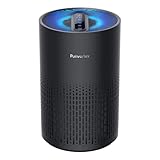
- Cleaner Air In Minutes: Purivortex is proven to filter common pollutants from your home’s air. This air purifier purifies rooms up to 880 ft² in one hour. It can purify a 215 ft² room in about 15 minutes, giving you noticeably fresher air in a short time. Breathe clean, crisp air and feel the difference in your space. (*Tested in an ISO 17025 certified laboratory under typical residential room ventilation conditions.)
- Breathe Easier with 99.97% Filtration: Purivortex HEPA air purifiers for home feature a powerful 3-layer filtration system — a pre-filter, HEPA filter, and activated carbon—that filter up to 99.97% of pollutants, including dust, smoke, pollen, pet dander, and VOCs. Purivortex air filters filter out particles as small as 0.1 microns, while the carbon filter helps reduce light household odors from smoke, pets, and cooking.**(**Independently tested in an ISO 17025 laboratory.)
- Bigger Filter, Better Purification: Purivortex goes beyond the standard—while most purifiers of this size use a 4 inch filter, Purivortex air filters stand tall at 6 inches. That’s nearly 1.5× larger, pulling in more air and delivering cleaner results, faster. Filter made of FSC-Certified paper, sourced from responsibly managed forests, ensuring both high performance and care for the environment.
- Backed by Science, Trusted by Standards: Purivortex air purifiers are rigorously tested to deliver powerful purification performance. Certified by ETL, FCC, and CARB for safety and energy efficiency, and verified through independent SGS laboratory testing to prove their effectiveness. With Purivortex, you get science-backed confidence in every breath.
- 2 Years of Guaranteed Confidence: Purivortex stands behind the quality and performance of every purifier, which is why Purivortex air purifiers come with a full 2-year warranty. More than 500,000 families have already chosen Purivortex for cleaner, fresher air. With added convenience features such as 3 timer settings (4H/8H/12H), 4 fan modes (Sleep/Low/Med/High), and 4 night light modes (Multicolor, Blue, Green, Purple), Purivortex delivers comfort tailored to your lifestyle.
What “harmful” means in practical terms
“Harmful” does not mean that one brief exposure guarantees illness. It means that particle levels and exposure conditions are associated with increased risk of adverse effects, with greater concern at higher pollution levels and for people who are more susceptible. Public-health advice is designed to reduce avoidable exposure while recognizing that no simple visual or personal test can predict an individual outcome.
For a clear-looking day, the most defensible sequence is therefore: check the local, current particle AQI; follow the category guidance; adjust strenuous or prolonged outdoor activity when advised; and reduce indoor infiltration if outdoor particles are elevated. A consumer sensor can help you notice local changes, but it cannot replace that process.
Frequently Asked Questions
Can I tell whether PM2.5 is present by looking outside?
No. PM2.5 particles are 2.5 micrometers or smaller and are generally invisible individually. Blue sky, no haze, and no odor do not prove that particle levels are low. Use the current local AQI and pollutant detail instead of visual inspection.
What’s actually slowing this PC down?
Pick the symptom - the matching free tool is one click away.
Is an AQI number the same as a PM2.5 concentration?
No. AQI is a 0–500 communication scale that translates pollutant measurements into health-concern categories. Open the pollutant detail and note the location and time. Do not treat an AQI value as a concentration or as a universal personal cutoff.
Who is most vulnerable to particle pollution?
EPA identifies people with heart or lung disease, children, and older adults as more likely to be affected. Exposure duration, exertion, and community conditions also matter. These groups should follow the sensitive-group advice displayed with the local AQI.
Should I trust a consumer PM2.5 monitor over AirNow?
Use a consumer monitor as supplemental local context, not as a replacement for official AQI guidance. EPA notes that many monitors provide only a one-minute snapshot, and studies do not establish what one minute means for health. Models and placement also vary.
Does a HEPA purifier make it safe to go outside?
No. EPA supports HEPA filtration as a way to lower indoor particle concentrations when outdoor levels are high. A purifier does not measure or remove outdoor pollution and cannot make unlimited outdoor exposure harmless. Continue to follow the local AQI.
What does 9.0 µg/m³ mean?
The 9.0 micrograms-per-cubic-meter figure is EPA’s revised 2024 primary annual PM2.5 National Ambient Air Quality Standard. It is a long-term regulatory standard, not an hourly or daily reading and not a real-time personal safety threshold.
What should I do if my symptoms worsen outdoors on a clear day?
Stop or reduce exertion, move to cleaner indoor air when practical, and follow your clinician’s action plan. Coughing, airway irritation, and difficulty breathing can be associated with particle exposure, but symptoms have many causes. Seek prompt medical care for severe breathing difficulty, chest pain, or fainting.
Why can the sky look hazy while the particle AQI is lower?
Haze may involve a different pollutant or particle mixture, a different averaging period, or conditions that differ from the reporting station. Check the AQI pollutant detail, timestamp, and forecast rather than diagnosing air quality by appearance.
The Bottom Line
Clear air is not necessarily clean air. PM2.5 can be invisible, so check the current local particle AQI and forecast, follow the category advice, and adjust strenuous or prolonged outdoor activity when recommended. Treat personal sensors as short-term context, not a health verdict. When outdoor particle levels rise, closed windows, appropriate air conditioning, and HEPA filtration can reduce indoor exposure—but no purifier or visual check replaces current public air-quality guidance.
Quick Recap
Product prices and availability are accurate as of the date/time indicated and are subject to change. Any price and availability information displayed on Amazon at the time of purchase will apply.

