
Quick wins for a faster PC:
Clear out junk files and repair common Windows errorsFree Scan →Fix the driver behind crashes, sound loss and screen glitchesFind Drivers →iTechGuides is reader-supported. When you buy through links on our site, we may earn an affiliate commission. As an Amazon Associate I earn from qualifying purchases. Learn more
Blackheads or whiteheads make acne more likely, while lasting facial redness, flushing, visible small vessels, burning, or warmth point toward rosacea. A sudden crop of nearly identical, itchy or painful bumps around hair follicles suggests folliculitis, and small bumps around the mouth or nose with a clear lip border can indicate periorificial dermatitis. These clues overlap and cannot confirm a diagnosis from a mirror or photograph. A dermatologist can identify the eruption and choose treatment that will not worsen it.
Why acne-like bumps need a careful diagnosis
“Acne” describes a specific process involving blocked and inflamed hair follicles. Several other conditions can create red papules, pustules, or rough patches that look similar but require different care. The American Academy of Dermatology (AAD) specifically addresses questions such as “Is that acne or rosacea on your skin?” and “Could acne-like breakouts be folliculitis?” because appearance alone is unreliable.
Mislabeling the problem can prolong it. Some products used for acne can irritate rosacea-prone skin, and a follicle infection that resembles acne may need clinician-directed treatment. Repeatedly adding stronger acne products is therefore a poor diagnostic test. Use the patterns below to decide what information to record and when to seek an examination, not to assign yourself a diagnosis.
The clues clinicians use
Five observations are especially useful when separating adult acne from its look-alikes:
#1 Best Overall

- CETAPHIL GENTLE SKIN CLEANSER: Clinically proven to cleanse while hydrating, providing 48 hours of hydration when wiped off versus rinsing
- IDEAL FOR DRY TO NORMAL, SENSITIVE SKIN: Hydrates and soothes as it cleanses, preserving skin's moisture barrier, even after repeat washes
- NEW AND IMPROVED INGREDIENT BLEND: Now with hydrating glycerin and skin essential vitamins B5 (panthenol) and B3 (niacinamide)
- DEVELOPED FOR EVEN THE MOST SENSITIVE SKIN: The hypoallergenic, non-comedogenic formula is free of fragrances, parabens and sulfates
- DERMATOLOGIST RECOMMENDED for Sensitive Skin: Enriched with glycerin, panthenol (B5), niacinamide (B3) to hydrate, protect, and support a healthy skin barrier
- Lesion type: Are there open or closed comedones (blackheads or whiteheads), or are the bumps all very similar and centered on follicles?
- Background skin: Is there redness that persists between breakouts, flushing, or visible small blood vessels?
- Distribution: Where did the eruption begin, and does it spare the skin immediately next to the lip border?
- Timing and exposures: Did it appear suddenly after shaving, waxing, friction, tight equipment, a hot tub, a new product, or a medicine, or does it recur over time?
- Sensation: Is it mainly itchy, painful, hot, stinging, or burning?
Several patterns can occur together. None of these observations, including the presence or absence of comedones, is a stand-alone home test.
Putting several clues together
A single bump is rarely informative. The pattern across the whole affected area is more useful. For example, a mixture of blackheads, whiteheads, and inflammatory pimples that returns in familiar areas over time supports acne more than a sudden field of identical bumps. Persistent color change with flushing, warmth, visible vessels, or product-related burning shifts attention toward rosacea, even when a few pustules are present.
Likewise, a uniform eruption that appeared soon after shaving, waxing, hot-tub exposure, friction, or tight equipment raises folliculitis, particularly when itch or tenderness is prominent. Small papules or pustules clustered around the mouth or nose, with a narrow clear strip beside the colored lip edge, fit the pattern of periorificial dermatitis. These are probability clues, not rules: people may have more than one condition, and different disorders can look similar at different stages.
Free tools Windows power users keep installed
One-click scans. No signup required.
Adult acne (acne vulgaris): what supports it
Comedones are the most useful visual clue
Blackheads and whiteheads are plugs within follicles. When they occur with inflamed pimples, they support acne more strongly than redness or pimples alone. Adult acne may persist from adolescence or begin for the first time in adulthood, so age does not rule it in or out.
Typical behavior
Acne commonly produces a mixture of lesions rather than one uniform crop: some blocked pores, some red papules or pustules, and occasionally deeper tender nodules or cysts. The face, chest, shoulders, and back can all be involved. Distribution and severity vary, and a clinician considers the entire pattern rather than one spot.
What does not prove acne
Red bumps without visible comedones do not establish acne. Rosacea, folliculitis, periorificial dermatitis, contact or seborrheic dermatitis, and medication-related eruptions can all look “pimply.” If an eruption is unusually sudden, intensely itchy or burning, limited to a new exposure area, or unchanged after reasonable acne care, reassessment is more useful than escalating products.
Rosacea: redness and sensitivity alongside bumps
Look for a persistent background change
Rosacea often includes facial redness that lasts longer than a brief flush. The color may be red, violet, or brown depending on skin tone. Flushing can be triggered by heat, exertion, emotional stress, spicy foods, alcohol, or other individual exposures, but a trigger is not required for diagnosis. Over time, small visible blood vessels (telangiectasia) may appear.
PC Slower Than It Used to Be?
A free scan shows the junk files, broken settings and background clutter dragging Windows down - then fixes them in one click.Free scan · Windows 10 & 11Crashes, No Sound, or Screen Glitches?
Random freezes, missing sound and display glitches usually trace back to one bad driver. Find and replace yours safely.Free scan · under a minuteSensations can be as important as appearance
Warmth, stinging, tingling, or burning—especially after applying products—can accompany rosacea. Acne-like papules and pustules may sit on this red or flushed background. Those bumps alone cannot distinguish rosacea from acne; the persistent color change, vessels, and sensitivity provide the additional context.
Rank #2

- Toleriane Hydrating Gentle Cleanser is a clinically proven daily face wash for normal to dry, sensitive skin that hydrates and restores the skin barrier while gently cleansing
- Formulated with La Roche-Posay prebiotic thermal spring water, niacinamide, and ceramide-3, this face wash gently cleanses skin of dirt, makeup, and impurities while maintaining skin's natural moisture barrier and pH
- Its gentle cream formula helps restore skin comfort and while protecting the skin barrier by retaining essential moisture, leaving the skin feeling comfortable and hydrated
- Soap Free; Oil Free; Fragrance Free; Non comedogenic; Allergy tested; Paraben Free; Dermatologist Tested; Clinically Proven
- Formulated with ceramides to restore moisture and a healthy skin barrier and niacinamide to soothe and visibly fade skin discolorations
Why acne routines may backfire
The AAD notes that some acne treatments irritate rosacea-sensitive skin and that rosacea has condition-specific treatment options. Scrubs, strong exfoliants, or multiple new active ingredients can make the barrier feel hotter and more uncomfortable, obscuring the original pattern. A dermatologist can separate rosacea from acne, sunburn, eczema, or seborrheic dermatitis, which may resemble it.
Folliculitis: a sudden, follicle-centered eruption
Uniform bumps and abrupt onset
Folliculitis is inflammation or infection around hair follicles. It often appears as a sudden eruption of bumps that look much alike and are centered on individual hairs. Clinical descriptions commonly call this pattern monomorphic—many similar lesions—rather than the mixture of comedones and different inflammatory lesions often seen in acne.
Itch or pain may dominate
Some folliculitis is itchy; some is painful or tender. The sensation can be more prominent than in ordinary comedonal acne. Lack of comedones is a useful clue, but not a guarantee: only an examination can determine whether a follicle process is present and what treatment it needs.
Do these 3 things before closing this tab:
1Scan for outdated or missing drivers - takes under a minute2Repair Windows errors before they cause bigger problems3Fix the driver behind crashes, sound loss and screen glitchesAsk what happened just before it began
Relevant contexts include hot-tub or pool exposure, shaving, plucking, waxing, tight clothing or sports equipment, repeated friction, and certain medicines. The eruption can occur on areas other than the face. Record the exposure and the delay before bumps appeared; that timeline helps a clinician even when the skin has started to change.
Periorificial (perioral) dermatitis: bumps around facial openings
The lip-border detail
Periorificial dermatitis causes small papules or pustules with redness around the mouth, nose, or other facial openings. A characteristic description is sparing of the skin immediately next to the vermilion border—the colored edge of the lip—so a narrow strip right beside the lip may look relatively clear.
What is usually absent
Comedones, deep nodules, and cysts are not typical of periorificial dermatitis. Their presence makes another diagnosis more plausible, although conditions can overlap or coexist. Rosacea, contact dermatitis, and seborrheic dermatitis can create similar facial redness, so the location is a clue rather than proof.
Other conditions that can mimic acne
Contact and seborrheic dermatitis
Contact dermatitis may follow a new cosmetic, cleanser, hair product, mask, adhesive, or other exposure and can be itchy, scaly, or burning. Seborrheic dermatitis often affects oily or flaky areas such as the sides of the nose, eyebrows, scalp, or hairline. Both can produce red bumps or roughness that are mistaken for acne.
Hormonal and medication-related eruptions
Hormonal shifts and some medicines can produce acne-like breakouts. The timing of a new prescription, dose change, supplement, or other exposure matters. Do not stop a prescribed medicine on your own; tell the prescriber and dermatologist what you take, including nonprescription products.
Rank #3
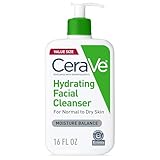
- [ HYDRATING FACE WASH ] Daily face wash with hyaluronic acid, ceramides, and glycerin to help hydrate skin without stripping moisture. Removes face makeup, dirt, and excess oil, provides 24-hour hydration and leaves a moisturized, non-greasy feel.
- [ ECZEMA FACE WASH ] Non-foaming cleanser for dry skin with a lotion-like consistency feels smooth as it cleanses, even on sensitive, dry skin. Fragrance-free, paraben-free, non-comedogenic and non-drying. Certified by the National Eczema Association
- [ MULTI-USE GENTLE CLEANSER ] Cream cleanser for face and/or body and can be used as a hand wash. Suitable for daily cleansing morning (AM) and night (PM) for normal to dry skin. Skin care for dry skin.
- [ 3 ESSENTIAL CERAMIDES ] Ceramides are found naturally in the skin and make up 50% of the lipids in the skin barrier. All CeraVe products, formulated with three essential ceramides (1, 3, 6-II)to help maintain the skin’s natural barrier.
- [ DEVELOPED WITH DERMATOLOGISTS & #1 DERMATOLOGIST RECOMMENDED SKINCARE BRAND ] CeraVe Skincare is developed with dermatologists and has products suitable for dry skin, sensitive skin, oily skin, acne-prone, and more.
When the distribution is unusual
A pattern confined to a contact area, appearing abruptly across the trunk, or involving intense itch, scale, or burning deserves a broader differential than routine adult acne. Persistence despite appropriate care is another reason to have the diagnosis checked.
A side-by-side comparison
| Condition | Clues that support it | Important limits |
|---|---|---|
| Adult acne | Blackheads or whiteheads plus inflamed pimples; may persist or begin in adulthood; can involve face, chest, shoulders, or back. | Redness or pimples alone do not prove acne. Other disorders can produce acne-like lesions. |
| Rosacea | Red, violet, or brown facial color that lasts; flushing; visible small vessels; warmth, stinging, or burning; acne-like bumps on the same background. | Bumps can look identical to acne. Rosacea may be mistaken for sunburn, eczema, or seborrheic dermatitis. |
| Folliculitis | Sudden crop of similar, hair-centered bumps; itch or pain; recent shaving, waxing, friction, tight equipment, hot-tub exposure, or relevant medicine. | It can resemble acne, and some cases require medication. Trigger history and appearance are not a reliable home diagnosis. |
| Periorificial dermatitis | Small papules or pustules with redness around the mouth, nose, or other openings; relative clearing immediately beside the lip border. | Comedones, nodules, and cysts are not typical. Several facial rashes overlap in appearance. |
A clinical differential published by American Family Physician in 2019 similarly describes folliculitis as often abrupt, monomorphic, and without comedones; rosacea as erythema with visible vessels and no comedones; and perioral dermatitis as papules, pustules, and erythema around the chin and nasolabial folds with vermilion-border sparing. These are pattern descriptions, not diagnostic rules.
A practical five-question check
Before an appointment, answer these questions in writing and take dated, well-lit photographs. This record is more useful than trying a series of products to see what happens.
What’s actually slowing this PC down?
Pick the symptom - the matching free tool is one click away.
- Are there true comedones? Note blackheads or whiteheads separately from red bumps. Do not count a dark crust or enlarged pore as a confirmed comedone.
- Does redness remain between flares? Record flushing, visible vessels, warmth, stinging, or burning, and how long color changes last.
- Are the lesions uniform and follicle-centered? Look for a sudden, similar-looking crop and note itch or tenderness.
- Where exactly are they? Mark the mouth, nose, chin, cheeks, hairline, trunk, and areas covered by clothing or equipment. Note whether the immediate lip border is spared.
- What changed beforehand? List shaving, waxing, plucking, hot tubs, exercise gear, friction, cosmetics, cleansers, sunscreen, medicines, and supplements, with dates.
Bring the list and product names to the visit. A clinician may ask about prior episodes, family history, menstrual or other hormonal changes, and treatments that caused irritation.
Build a timeline that helps the examination
Write down when the first spot appeared, whether new lesions arrived all at once or in waves, and whether the eruption has happened before. Note what changed in the preceding days: hair removal, a hot tub, exercise equipment, a new cleanser or cosmetic, sunscreen, a prescription, a dose change, or a supplement. Include whether itch, pain, warmth, stinging, scale, or drainage came first.
Photographs taken in the same lighting can show progression that is hard to recall. Include one close view and one wider view showing the distribution, and keep the product labels or ingredient lists. Do not apply concealer immediately before an appointment if you can avoid it; the clinician needs to see color, scale, vessels, and follicle detail.
Questions to ask at the visit
You can ask, “Which lesion types do you see—comedones, follicle-centered bumps, papules, or pustules?” Ask whether persistent redness or visible vessels changes the assessment, whether the eruption could involve more than one condition, and what findings would prompt follow-up. Clarify which products to stop, which gentle cleanser and sunscreen are appropriate, how long to use the prescribed plan, and what worsening should be reported. A clear diagnosis should come with a reasoned plan rather than a recommendation to keep experimenting.
Recommended Free Tools
Safe steps while you arrange an evaluation
Keep care simple
Use a gentle facial cleanser recommended by a dermatologist and avoid scrubbing, picking, or layering several new actives. If a product clearly causes burning or a rash, stop using it and record the reaction. Simplifying care helps preserve the clues a clinician needs.
Rank #4

- Fragrance-free gentle face cleanser: Ultra gentle foaming formula cleanses sensitive skin without fragrance, soaps, or dyes; dermatologist developed and hypoallergenic for daily use with no irritation or residue. Non-comedogenic and rinses clean.
- Hydrating face wash for sensitive skin: Hydrates as it cleanses, maintaining the skin’s natural moisture barrier; non-stripping, soap free, and dye free formula leaves skin soft and comfortable after every wash. Suitable for daily skincare routines.
- Makeup remover and foaming face wash: Effectively removes makeup, excess oil, and impurities with a rich foaming lather; gentle enough for sensitive skin and safe for use around the eyes. Rinses clean without over-drying or clogging pores.
- Facial cleanser with dermatologist care: Developed by dermatologists for sensitive skin, this hypoallergenic cleanser is non-comedogenic and free of harsh ingredients; ideal for those seeking a gentle face cleanser for daily use.
- Non-comedogenic daily face wash: Hypoallergenic, fragrance free, and soap free formula is safe for sensitive skin; rinses clean without residue and supports a healthy skin barrier. Perfect addition to any skincare for sensitive skin routine.
Protect sensitive facial skin
For people with rosacea-like sensitivity, the AAD recommends broad-spectrum, water-resistant sunscreen with SPF 30 or higher as supportive care. Sunscreen protects against ultraviolet exposure but does not identify or cure the cause of bumps. Choose a formulation your skin tolerates rather than repeatedly switching products.
Do not use treatment as a diagnostic experiment
Applying an acne medicine to “see if it works” cannot reliably distinguish acne from rosacea or folliculitis. Irritation may worsen a different condition, and temporary improvement does not prove the original diagnosis. A clinician can decide whether acne-directed, rosacea-directed, antimicrobial, anti-inflammatory, or other treatment is appropriate.
When to see a dermatologist
Arrange a professional assessment when the eruption is persistent, worsening, painful, scarring, unusually sudden, resistant to reasonable care, or simply unclear. The AAD advises dermatology evaluation when a follicle infection resembles acne because treatment depends on the cause. Seek care sooner if bumps are spreading rapidly, accompanied by fever or significant swelling, involve severe pain, or occur near the eye with eye pain or vision changes. Breathing difficulty or swelling of the lips or tongue requires emergency care.
Teledermatology can be useful when an in-person visit is difficult, but a clinician may still need to examine the skin directly or arrange follow-up if photographs cannot show follicle detail, vessel changes, or scale.
Independent reader supportYour contribution helps us test, update, and keep practical guides available for everyone.What diagnosis and treatment involve
The history is part of the examination
A clinician reviews onset, recurrence, triggers, sensations, products, medicines, and prior treatments, then examines lesion types, distribution, background redness, scale, and follicle involvement. The goal is to distinguish acne from rosacea, folliculitis, periorificial dermatitis, and other eruptions that may coexist.
Treatment follows the diagnosis
Acne, rosacea, folliculitis, and periorificial dermatitis do not share one universal regimen. A treatment that is reasonable for one can irritate another or fail to address an infection or exposure. Follow the plan for the named condition, use the schedule provided, and report worsening rather than adding extra products independently.
Expect refinement when conditions overlap
People can have more than one process—for example, acne in one area and rosacea-related redness elsewhere. If one component improves while another persists, that is a reason for review, not evidence that you should keep intensifying the same treatment.
Common mistakes to avoid
- Equating every red bump with acne: Comedones and the overall lesion mix matter.
- Assuming every facial flush is rosacea: A short-lived flush has many causes; persistent color change and accompanying symptoms deserve assessment.
- Calling every uniform bump folliculitis: Similar lesions can arise from several conditions, and a trigger history is not conclusive.
- Ignoring the lip border: The spared strip next to the vermilion border is useful context for periorificial dermatitis.
- Changing several products at once: It becomes impossible to identify an irritant and may worsen sensitive skin.
- Stopping prescribed medicines without advice: Report a suspected medication-related eruption to the prescriber instead.
- Waiting through scarring or severe symptoms: Early professional assessment can prevent avoidable worsening.
Bottom line
Comedones favor adult acne; lasting redness, flushing, visible vessels, warmth, or burning favor rosacea; an abrupt, itchy or painful crop of similar follicle-centered bumps raises folliculitis; and papules or pustules around the mouth or nose with lip-border sparing raises periorificial dermatitis. Because these signs overlap and treatments differ, use them to prepare for a clinical evaluation—not to diagnose yourself.
Best Value

- 5.8-fluid ounce bottle of Neutrogena Fragrance Free Ultra Gentle Foaming Facial Cleanser for sensitive skin that gently and effectively cleanses skin without disrupting skin's dynamic barrier
- This dermatologist-tested facial cleanser formulated with CICA and BarrierCare Technology is proven gentle on clinically sensitive skin. The non-stripping formula washes away excess oil, dirt & removes makeup without over-drying or irritating skin
- From a dermatologist recommended skincare brand, this foaming fragrance free facial cleanser was developed with dermatologists specifically to cleanse sensitive skin. The refreshing cleanser rinses clean, leaving no pore-clogging residue behind
- The hypoallergenic facial cleanser is free of fragrance, soaps, parabens, sulfates, alcohols, and dyes and is gentle enough for sensitive skin. The daily foaming cleanser is non-comedogenic, so it rinses clean and won't clog your pores
- This daily cleanser is gentle on sensitive skin and makes a great addition to a daily skincare routine. To use, wet face, pump cleanser into hand and work into a foamy lather. Massage gently onto your face and rinse clean
Frequently Asked Questions
Can adult acne begin for the first time in adulthood?
Yes. Acne can persist from adolescence or start in adulthood. Age alone does not establish or exclude acne; the presence of comedones and the overall lesion pattern are more informative.
Does not having blackheads or whiteheads rule out acne?
No. Comedones support acne, but their absence is not a definitive home rule-out. Rosacea, folliculitis, periorificial dermatitis, dermatitis, and medication-related eruptions can all produce bumps without obvious comedones.
Are itchy, identical bumps always folliculitis?
Not always. A sudden, monomorphic, follicle-centered eruption with itch or pain and a recent shaving, waxing, friction, equipment, hot-tub, or medicine exposure raises folliculitis, but an examination is needed to confirm the cause.
How can I tell rosacea from acne?
Look at the background as well as the bumps. Persistent facial color change, flushing, visible small vessels, warmth, stinging, or burning favors rosacea. Acne-like bumps alone cannot distinguish rosacea from acne.
What does sparing next to the lip mean?
Periorificial dermatitis can cause small papules or pustules around the mouth or nose while leaving a narrow strip immediately beside the colored lip border relatively clear. This location is a clue, not a diagnosis.
Should I stop a prescription if I develop an acne-like rash?
Do not stop a prescribed medicine on your own. Record when the eruption began, contact the prescriber, and arrange dermatology advice. Some medicines can cause acne-like eruptions, but the treatment decision depends on the medication and the diagnosis.
Is sunscreen useful when rosacea is suspected?
The AAD recommends broad-spectrum, water-resistant sunscreen with SPF 30 or higher as supportive care for rosacea-prone skin. It protects against ultraviolet exposure but does not identify or cure the cause of bumps.
The Tool Desk
Outbyte Driver Updater FREEFix the driver behind crashes, sound loss and screen glitchesFind Drivers →Outbyte PC Repair FREEClear out junk files and repair common Windows errorsFree Scan →When should an acne-like eruption be assessed promptly?
Arrange professional care for a persistent, worsening, painful, scarring, unusually sudden, treatment-resistant, or unclear eruption. Seek urgent help for rapid spread with fever or major swelling, severe pain, eye pain or vision changes, or breathing difficulty and swelling of the lips or tongue.
The Bottom Line
Comedones point more toward adult acne; persistent redness and sensitivity toward rosacea; sudden uniform follicle bumps toward folliculitis; and lip-border-sparing bumps around facial openings toward periorificial dermatitis. Because these clues overlap, a dermatologist should make the diagnosis and direct treatment.
Quick Recap
Product prices and availability are accurate as of the date/time indicated and are subject to change. Any price and availability information displayed on Amazon at the time of purchase will apply.

