
iTechGuides is reader-supported. When you buy through links on our site, we may earn an affiliate commission. As an Amazon Associate I earn from qualifying purchases. Learn more
Vitamin D supplements are safest when you first establish how much vitamin D you already get from food and every product you use, then compare the combined amount with the age-based guidance from the U.S. National Institutes of Health (NIH) Office of Dietary Supplements (ODS). The ODS reference intake is not a personal prescription, and the tolerable upper limit (UL) is a ceiling for routine intake—not a dose to aim for.
For adults ages 19 through 70, the reference intake is 600 IU (15 mcg) per day; it is 800 IU (20 mcg) after age 70. The routine UL is 4,000 IU (100 mcg) per day from age 9 onward, counting food, beverages and supplements together. A clinician may deliberately prescribe more for a limited period to treat a diagnosed problem, but continuing a high-dose course without follow-up can cause vitamin D toxicity.
What “safe” vitamin D use means
Vitamin D guidance has two different numbers that are often confused. The recommended dietary allowance (RDA) is the daily amount intended to meet the needs of nearly all healthy people in a particular age group. The UL is the highest average daily intake unlikely to pose a risk for most people. It is not a target and is not a treatment dose.
Recommended Free Tools
The ODS values below are population reference points for people in the United States. They do not diagnose deficiency or account for kidney disease, malabsorption, a prescribed replacement regimen, or other clinical circumstances. Amounts from meals, fortified drinks, multivitamins, combination products and stand-alone vitamin D all count toward the total.
#1 Best Overall

- Immune Health and Bone Support Supplement: One 300 count bottle of Nature Made Vitamin D3 1000 IU (25 mcg) Softgels—a 300-day supply of immune support supplements
- Daily Immune Support: These Vitamin D wellness vitamins for adult men and women support bone health, teeth health, immune health, and muscle health
- Vitamin D Softgels: Nature Made Vitamin D 1000 IU softgels help improve Calcium absorption and contain 25mcg of Vitamin D3, the body's preferred form of Vitamin D
- How to Take: Adults, take one Vitamin D3 softgel daily with water and a meal for immune system support; ideally with a meal that contains dietary fats
- Gluten Free Vitamins: Sourced from high-quality ingredients, this gluten free Nature Made Vitamin D3 supplement has no color added and no artificial flavors
| Age or life stage | ODS reference intake | Daily UL | How to interpret it |
|---|---|---|---|
| Birth–6 months | Age-specific infant amount; use the pediatric label or clinician’s instruction | 1,000 IU (25 mcg) | The UL includes all sources, not just drops. |
| 7–12 months | Age-specific infant amount; use the pediatric label or clinician’s instruction | 1,500 IU (38 mcg) | Infant products can be highly concentrated, so measure the stated serving. |
| 1–3 years | 600 IU (15 mcg) | 2,500 IU (63 mcg) | Do not treat the UL as a routine toddler dose. |
| 4–8 years | 600 IU (15 mcg) | 3,000 IU (75 mcg) | Count fortified foods and children’s combination products. |
| 9–70 years | 600 IU (15 mcg) | 4,000 IU (100 mcg) | The 600 IU reference also applies during pregnancy and lactation. |
| Over 70 years | 800 IU (20 mcg) | 4,000 IU (100 mcg) | The higher reference intake does not raise the UL. |
| Pregnancy or lactation | 600 IU (15 mcg) | 4,000 IU (100 mcg) | These are general reference values; an obstetric or primary-care clinician may individualize care. |
One microgram (mcg) of vitamin D equals 40 international units (IU). Thus, 600 IU is 15 mcg, 800 IU is 20 mcg, and 4,000 IU is 100 mcg. Read both units on a label so a product listed in mcg is not mistaken for a smaller dose.
How much vitamin D should you take each day?
There is no single supplement dose that is right for every adult. Start with age and life stage, then consider vitamin D from ordinary foods and fortified products. The 600 IU or 800 IU reference is a total daily intake for a healthy population, not an instruction to swallow that amount as a capsule. Someone whose diet already supplies vitamin D may not need a supplement at all.
Infant and child dosing deserves extra care. The UL is lower for babies and young children, while liquid products can contain a large amount in a very small measured volume. Use only the dropper or measuring device supplied with the product, check whether the listed serving is one drop or a larger volume, and ask the child’s clinician or pharmacist to confirm the plan. Never convert an adult product into a child’s dose by estimating a fraction of a drop.
What’s actually slowing this PC down?
Pick the symptom - the matching free tool is one click away.
Adults over 70 have an 800 IU reference intake, but their UL remains 4,000 IU (100 mcg). A higher reference need therefore does not mean that a high-potency product is automatically appropriate. Pregnancy and lactation use the 600 IU reference and the 4,000 IU UL, unless an obstetric or other clinician gives individualized instructions.
If a blood test confirms deficiency, a clinician may prescribe more than the routine UL for a defined period. That exception is treatment under supervision, not evidence that everyone should take a high dose. Ask for the exact daily amount, how long to use it, whether it should be taken with other products, and when follow-up testing is expected.
Audit every source before adding a supplement
Most accidental overdosing happens when people add a new product without noticing that vitamin D is already present elsewhere. A label’s amount is normally given per serving, not necessarily per capsule, drop or gummy.
- List everything taken in a typical day. Include a stand-alone vitamin D product, multivitamin, prenatal vitamin, calcium supplement with vitamin D, cod-liver or other fortified oil, fortified drinks and any prescribed preparation.
- Record the serving size. A serving might be two capsules, one gummy, or a measured volume of liquid. If you take more or less than the stated serving, calculate the actual amount.
- Write down the vitamin D amount in IU and mcg. If only one unit is shown, convert using 1 mcg = 40 IU. Keep the conversion next to your worksheet rather than relying on memory.
- Multiply by the number of servings you actually use. For example, taking two servings of a product labeled 1,000 IU per serving provides 2,000 IU, not 1,000 IU.
- Add the products together. Combine the daily totals before comparing them with the reference intake or UL. Include vitamin D supplied by fortified foods when the amount is stated.
- Check the plan with a pharmacist or clinician when the total is high or unclear. Bring the containers or clear label photographs. Ask specifically whether a prescribed course is temporary and when it should stop.
For example, suppose a multivitamin label lists 600 IU per serving, a calcium product lists 400 IU, and a separate vitamin D capsule lists 2,000 IU. Taking one serving of each produces 3,000 IU before any vitamin D from food or fortified drinks is counted. If the separate capsule’s serving is two capsules, taking only one capsule would provide half the stated amount; if you take two servings, it would provide twice the stated amount. The arithmetic is simple, but writing it down prevents assumptions about what “one pill” means.
The Tool Desk
Outbyte Driver Updater FREEScan for outdated or missing drivers - takes under a minuteDriver Scan →Outbyte PC Repair FREERepair Windows errors before they cause bigger problemsFix Now →Rank #2

- IMMUNE, MOOD, BONE & MUSCLE SUPPORT*: Vitamin D supports healthy bones, muscle function, and a strong immune system.*
- NATURALLY-SOURCED: These Vitamin D3 immune support and bone health supplements* are formulated with a naturally-sourced vitamin D3 ingredient, and are gluten-free. Packaging may vary due to high demand, same great product and ingredients.
- IN ORGANIC COLD-PRESSED OLIVE OIL: NatureWise Vitamin D3 is formulated with organic, cold-pressed olive oil that doesn't use heat or hexanes, to enhance the absorption of vitamin D3.*
- CONTENTS CERTIFIED NSF: This supplement is NSF-contents certified, which means its contents are thoroughly tested for accuracy and purity. Ingredients are also analyzed for this certification to confirm they match label contents.
- USA MANUFACTURED & 3RD PARTY TESTED: This NatureWise supplement is manufactured in the USA in a facility that follows cGMP and undergoes independent 3rd party audits.
A written total is especially useful when products change. Keep the date, product name, serving size and daily amount; update it whenever you start, stop or switch a supplement. This simple record exposes duplicate dosing that can be missed when labels use different units or serving sizes. Save a photograph of each label if you use several products or care for another person.
Choosing between vitamin D2 and D3
Oral supplements generally contain vitamin D2 (ergocalciferol) or vitamin D3 (cholecalciferol). Both forms raise vitamin D status. The ODS summary of available evidence says D3 usually raises serum 25-hydroxyvitamin D, written as 25(OH)D, more and keeps levels higher for longer than D2. That observation does not make D3 the right choice for every person, and it does not remove the need to check the dose.
| Comparison point | What to check |
|---|---|
| Form | Whether the label says D2 or D3. |
| Amount | IU and mcg per serving, plus the number of capsules, drops or gummies in that serving. |
| Container math | Servings per container and how long the container will last at your actual schedule. |
| Dietary fit | Inactive ingredients and the source of the vitamin if your dietary, allergy or religious requirements matter. |
| Duplication | Vitamin D already supplied by a multivitamin, calcium product, prenatal product or another combination supplement. |
Use the table to compare labels, not to infer that everyone needs a supplement. A pharmacist can help interpret a product when the label is difficult to read or when several products overlap. The form of vitamin D does not change the need to count total IU or mcg, and switching from D2 to D3 without checking the strength can unintentionally change the dose.
Why too much vitamin D becomes dangerous
Vitamin D increases calcium absorption. Excessive supplemental vitamin D can push blood calcium too high, a condition called hypercalcemia. The ODS states that vitamin D toxicity is almost always caused by excessive intake from supplements, rather than ordinary food or sunlight exposure.
In the ODS health-professional guidance, toxicity is typically associated with serum 25(OH)D levels above 375 nmol/L (150 ng/mL). That is a level observed in toxicity reports, not a home diagnostic cutoff. A blood result must be interpreted with the clinical situation, calcium measurements, kidney function and the person’s medication history.
Possible early or moderate symptoms
- Nausea or vomiting
- Poor appetite
- Muscle weakness
- Confusion or unusual difficulty thinking clearly
- Dehydration
- Excessive thirst
- Passing urine more often than usual
- Pain or kidney stones
These symptoms are not specific to vitamin D toxicity. They can occur with infections, medication effects, kidney problems, dehydration and many other conditions, so symptoms alone cannot establish the cause. A person can also take too much without immediately noticing symptoms, particularly when several products are involved.
Serious complications
Severe, sustained hypercalcemia can injure the kidneys and may lead to renal failure. It can also disturb the heart’s rhythm. Severe weakness, confusion, persistent vomiting, inability to keep fluids down, signs of major dehydration, fainting, palpitations or severe flank pain warrant urgent medical assessment rather than an attempt to adjust supplements at home.
Rank #3
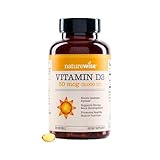
- IMMUNE, MOOD, BONE & MUSCLE SUPPORT*: Vitamin D supports healthy bones, muscle function, and a strong immune system.*
- NATURALLY-SOURCED, NON-GMO: These Vitamin D3 immune support and bone health supplements* are formulated with a naturally-sourced vitamin D3 ingredient, and are gluten-free and non-GMO. Packaging may vary due to high demand, same great product and ingredients.
- IN ORGANIC COLD-PRESSED OLIVE OIL: NatureWise Vitamin D3 is formulated with organic, cold-pressed olive oil that doesn't use heat or hexanes, to enhance the absorption of vitamin D3.*
- CONTENTS CERTIFIED NSF: This supplement is NSF-contents certified, which means its contents are thoroughly tested for accuracy and purity. Ingredients are also analyzed for this certification to confirm they match label contents.
- USA MANUFACTURED & 3RD PARTY TESTED: This NatureWise supplement is manufactured in the USA in a facility that follows cGMP and undergoes independent 3rd party audits.
What to do after a dosing mistake or concerning symptoms
- Stop improvising the schedule. Do not take extra doses to “catch up,” and do not continue a high-dose course simply because it was once recommended.
- Gather the facts. Note the product, strength, serving size, number of doses, time taken and all other vitamin D sources. Keep the packaging available.
- Call a pharmacist, prescriber or poison-information service promptly if repeated doses exceeded the age-appropriate UL, if a child may have swallowed a concentrated product, or if the intended schedule is unclear.
- Seek urgent care for severe symptoms. Do not wait for a routine appointment when serious symptoms such as persistent vomiting, marked confusion, severe dehydration, fainting, an irregular heartbeat or severe pain are present.
- Follow testing and follow-up instructions. A clinician may review calcium, kidney function and 25(OH)D rather than relying on symptoms alone.
Do not try to offset a supplement overdose with unprotected sun exposure. The ODS notes that excessive sun exposure is not believed to cause vitamin D toxicity, but MedlinePlus warns that excess ultraviolet exposure increases skin-aging and skin-cancer risk. Sun exposure is therefore not a safe substitute for a carefully reviewed supplement plan.
Medicines and conditions that change the safety calculation
Interactions can alter absorption, vitamin D levels or the risk that calcium will rise. The examples below come from ODS guidance and are not a complete interaction list.
| Medicine or situation | Why a review matters | Practical action |
|---|---|---|
| Orlistat | Can reduce absorption of vitamin D. | Ask whether timing, monitoring or a different plan is needed. |
| Steroids | Can lower vitamin D levels. | Do not compensate by raising the dose on your own; have the regimen reviewed. |
| Thiazide diuretics | Can increase the risk of hypercalcemia when combined with vitamin D. | Discuss the combination and any monitoring with the prescriber or pharmacist. |
| Some statins with high-dose vitamin D | High-dose supplements might affect certain statins. | Provide the exact statin and vitamin D dose during a medication review. |
People being treated for a diagnosed deficiency, those with kidney disease or malabsorption, and caregivers selecting an infant or child’s product should obtain individualized instructions. The ULs are intended for routine intake and do not govern a physician-supervised treatment course, but a prescribed amount should have a clear dose, duration and follow-up plan.
Give the reviewer a complete list, including nonprescription medicines, vitamins, minerals and combination products. Do not assume that a low-dose multivitamin is irrelevant or that changing brands leaves the total unchanged. If a prescriber recommends a high-dose course, ask whether to pause another product containing vitamin D and whether calcium intake also needs review.
Reference intake is not proof that you need a supplement
The 600-IU and 800-IU figures describe average daily requirements for healthy groups. They do not mean every person should buy a vitamin D product, and they do not establish deficiency from fatigue, aches or other nonspecific symptoms. Sun exposure, diet, skin characteristics, age, medical conditions and medicines all affect vitamin D status.
Free tools Windows power users keep installed
One-click scans. No signup required.
If deficiency is suspected, a clinician can decide whether a serum 25(OH)D test is appropriate and whether treatment is needed. Treatment may involve a dose above the routine UL for a defined period. The safe way to use such a regimen is to follow the written amount and stop date, attend requested testing, and ask before extending it or adding another vitamin D product.
Common mistakes to prevent
- Confusing IU and mcg: convert every label using 1 mcg = 40 IU.
- Reading “per serving” as “per pill”: verify how many pills, drops or gummies make one serving.
- Counting only the stand-alone product: include multivitamins, prenatal products, calcium combinations and fortified foods or drinks.
- Treating the UL as a goal: staying below 4,000 IU does not create a reason to take that amount.
- Continuing a treatment dose indefinitely: confirm the duration and follow-up with the prescriber.
- Using symptoms as a diagnosis: nausea, thirst, frequent urination and weakness have many possible causes.
- Assuming “natural” means risk-free: concentrated drops and high-potency capsules can deliver large amounts in a small volume.
- Ignoring a child’s access to the bottle: store supplements securely and contact poison-information services after a possible ingestion.
- Forgetting a serving change: a new brand may use two gummies or several drops as one serving, changing the daily total even when the front-label number looks familiar.
- Using a leftover prescription: a dose prescribed for one person, diagnosis or time period should not be reused indefinitely by someone else.
A practical decision path
- Identify the person’s age and life stage. Use the appropriate ODS reference intake and UL; infants and young children require particular care with concentrated liquids.
- Calculate the current daily total. Record IU and mcg from every product and relevant fortified food or beverage.
- Ask why supplementation is being considered. A general intake gap and a laboratory-confirmed deficiency are different situations.
- Check medicines and medical conditions. Include orlistat, steroids, thiazide diuretics, statins and any kidney or absorption disorder in the discussion.
- Select a product only if a clinician or pharmacist agrees it is appropriate. Compare serving size, dose, form and duplicate ingredients.
- Set a review date. Recheck a temporary high-dose plan, laboratory monitoring and the date the regimen should end.
Frequently asked questions
Can you take too much vitamin D?
Yes. Excess is usually caused by supplements, especially when a stand-alone product is combined with a multivitamin, prenatal, calcium product or another combination supplement. Add all sources and compare the total with the age-based UL.
Rank #4

- Immune Health and Bone Support Supplement: One 250 count bottle of Nature Made Vitamin D3 2000 IU (50 mcg) Softgels—a 250-day supply of immune support supplements
- Multiple Benefits: These Vitamin D wellness vitamins for adult men and women support bone health, teeth health, and muscle health, and provide immune system support
- Vitamin D3 Softgels: These Vitamin D 2000 IU softgels help improve Calcium absorption and contain 50mcg of Vitamin D3, the body's preferred form of Vitamin D
- Helps slow biological aging of cells; In a clinical study, taking 2000 IU vitamin D3 supplements for 4 years helped prevent leukocyte telomere shortening, preventing the equivalent of approx 3 years of cellular aging compared with placebo in older adults
- How to Take: Adults, take one Vitamin D3 softgel daily with water and a meal for immune system support; ideally with a meal that contains dietary fats
What is the safe upper limit for an adult?
For adults age 19 and older, the ODS UL is 4,000 IU (100 mcg) per day from all food, beverage and supplement sources. This is a ceiling for routine intake, not a recommended target. A clinician may temporarily prescribe more to treat a diagnosed deficiency.
What are symptoms of vitamin D toxicity?
High calcium related to excess vitamin D can cause nausea, vomiting, poor appetite, weakness, confusion, dehydration, excessive thirst, frequent urination, pain or kidney stones. Severe cases can involve kidney failure or an irregular heartbeat. These signs are not specific, so professional assessment is needed.
Crashes, No Sound, or Screen Glitches?
Random freezes, missing sound and display glitches usually trace back to one bad driver. Find and replace yours safely.Free scan · under a minuteWindows Errors? Fix Them Before They Spread
Repair common Windows errors and clear accumulated junk for a smoother, more stable PC - no reinstall needed.Free scan · no reinstallIs vitamin D3 safer than vitamin D2?
Both are supplement forms that raise vitamin D status. ODS summarizes evidence that D3 often raises and maintains serum 25(OH)D more than D2, but that does not establish an individualized choice or make dose checking unnecessary.
Do vitamin D supplements count toward the UL if I also get vitamin D from food?
Yes. The UL includes vitamin D from foods, fortified drinks and all supplements. Include every listed source when totaling your intake.
Should I take vitamin D because I feel tired or achy?
Nonspecific symptoms do not prove deficiency or toxicity. A clinician can decide whether testing is appropriate and whether supplementation is needed instead of relying on symptoms alone.
What should I do if I accidentally take extra doses?
Do not take another dose to compensate or continue an unclear high-dose schedule. Record the product, strength, amount and timing, then contact a pharmacist, prescriber or poison-information service. Seek urgent care for persistent vomiting, severe confusion, fainting, severe dehydration, palpitations or severe pain.
Do these 3 things before closing this tab:
1Repair Windows errors before they cause bigger problems2Fix the driver behind crashes, sound loss and screen glitches3Clear out junk files and repair common Windows errorsCan extra sunlight correct a supplement overdose?
No. Excessive sunlight is not believed to cause vitamin D toxicity, but ultraviolet exposure still raises skin-aging and skin-cancer risk. Do not use unprotected sun exposure as an overdose remedy.
Best Value
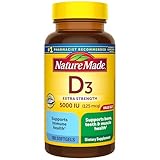
- Immune Health and Bone Support Supplement: One 180 count bottle of Nature Made Extra Strength Vitamin D3 5000 IU (125 mcg) Softgels—a 180-day supply
- Multiple Benefits: These adult Vitamin D softgels help improve Calcium absorption, support bone health, teeth health, muscle health, and provide immune system support
- Vitamin D Softgels: This Vitamin D 5000 IU softgel is for those with higher Vitamin D needs and/or vitamin D deficiency, as determined by a healthcare professional(1)
- How to Take: Adults, take one Vitamin D3 softgel daily with water and a meal for immune system support; ideally with a meal that contains dietary fats
- Gluten Free Vitamins: Sourced from high-quality ingredients, this adult Vitamin D supplement is gluten free and has no color added and no artificial flavors
Bottom line
Use age-based reference intakes as context, not as a personal prescription. Keep routine intake below the ODS UL unless a clinician has deliberately prescribed a higher, time-limited treatment; add vitamin D from every source; and get professional advice promptly after repeated high doses or symptoms such as vomiting, confusion, severe thirst, frequent urination, dehydration, kidney-stone pain or an irregular heartbeat.
Frequently Asked Questions
How much vitamin D should I take a day?
The ODS reference intake is 600 IU (15 mcg) daily for ages 1–70, including pregnancy and lactation, and 800 IU (20 mcg) after age 70. That is a population reference, not a personal prescription; total food and supplement intake and your clinical situation matter.
Can you take too much vitamin D?
Yes. Excess is usually supplement-related, particularly when several products overlap. For adults, the routine UL is 4,000 IU (100 mcg) daily from all sources.
Quick wins for a faster PC:
Fix the driver behind crashes, sound loss and screen glitchesFind Drivers →Repair Windows errors before they cause bigger problemsFix Now →Scan for outdated or missing drivers - takes under a minuteDriver Scan →What are the symptoms of vitamin D toxicity?
Possible signs include nausea, vomiting, poor appetite, weakness, confusion, dehydration, excessive thirst or urination, pain and kidney stones. Severe toxicity can cause kidney failure or an irregular heartbeat.
Does vitamin D3 work better than D2?
Both raise vitamin D status. ODS reports that D3 generally raises serum 25(OH)D more and maintains higher levels longer, but an individualized choice still depends on the person and product.
What if I take a prescribed high dose?
Follow the written amount and duration, attend requested testing, and ask before extending the course or adding another vitamin D product. Treatment under medical supervision is different from routine self-dosing.
Should I use vitamin D supplements for fatigue or aches?
Those symptoms are nonspecific and do not establish deficiency. Ask a clinician whether testing or treatment is appropriate.
The Bottom Line
Count vitamin D from every source, use the age-based ODS figures as context rather than a target, and stay below the routine UL unless a clinician has prescribed a time-limited treatment. Seek prompt professional advice after repeated high doses or concerning symptoms.
Quick Recap
Product prices and availability are accurate as of the date/time indicated and are subject to change. Any price and availability information displayed on Amazon at the time of purchase will apply.

