
Recommended Free Tools
iTechGuides is reader-supported. When you buy through links on our site, we may earn an affiliate commission. As an Amazon Associate I earn from qualifying purchases. Learn more
The most reliable system is to keep two linked records: a rough map for location and a clue log for information. Mark every junction, landmark, visited room, blocked route and unresolved branch on the map. In the clue log, copy what you actually saw, where you saw it, what it might mean and which attempts have already failed. Check the game’s own map and journal first, because controls and features vary by title.
Use two records instead of one crowded page
A maze-like horror game asks you to remember two different kinds of information. You need to know where you are, which paths you have checked and which doors remain unresolved. You also need to remember what you found: a symbol, a line of text, an item, a sound cue, a character’s remark or a combination that may matter much later. A single page quickly becomes confusing when room connections and puzzle theories are mixed together.
Keep a map and a clue log side by side. The map answers, “Where can I go from here?” The clue log answers, “What does this evidence mean, and what have I tried?” Give rooms short labels so you can cross-reference them. For example, write “J2” beside a junction on the map and use “J2” in the clue log for anything discovered there.
This is not about drawing a perfect floor plan. Your map only needs to preserve topology: which spaces connect, which routes are blocked, and which branches still need checking. Your clue log should preserve evidence and decisions so that you do not repeat guesses or lose the context of an apparently insignificant detail.
#1 Best Overall
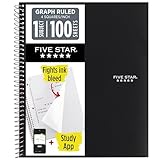
- Ideal for graphing, charts and engineering projects.
- 1-subject notebook. 100 double-sided, graph ruled sheets. 4 squares per inch.
- Sheets measure 8-1/2 in. x 11 in. when torn out. Overall notebook size is 11 in. x 9-3/4 in. Tough pockets help prevent tears and hold 8-1/2 in. x 11 in. loose sheets.
- High-grade paper fights ink bleed. Perforated pages for easy tear out. Front cover is water-resistant to help protect your notes all year.
- Spiral Lock wire helps prevent snags on clothes and backpacks. Made with SFI approved paper. Recyclable - remove reinforcement tape on pocket and recycle the rest.
Check the game’s own tools before making assumptions
Open the game’s map, journal, notebook or pause menu before starting a separate system. Some titles reveal rooms automatically, place a location marker, store puzzle text or record combinations. Others provide only a partial map, or use a map for a specific mini-game rather than the whole environment.
The official Nancy Drew: Message in a Haunted Mansion guide, for example, describes a maze map opened with the M key and states, “Your present location is the blue dot on the map.” That instruction applies to that game’s interface; it is not a universal control for horror games. A walkthrough for Urban Legends: The Maze says its journal stores notes and clues, including combinations, and that rooms are added to the map after they are visited. The Maze: Subject 360 uses yet another map-and-investigation workflow. Treat these as examples of why you should read the instructions for the specific title you are playing.
- Look for the map or journal button in the pause screen and control settings.
- Find out whether rooms appear automatically, only after discovery or not at all.
- Check whether the player marker shows your exact position, your facing direction or merely the current area.
- See whether the journal preserves puzzle text, images, combinations and character notes.
- Confirm whether map progress persists after loading a save or changing floors.
If the game’s tools are complete, use them as your primary record and add a small external log only for details they do not preserve. If the built-in map is limited, your paper or digital map becomes the authoritative route record.
What’s actually slowing this PC down?
Pick the symptom - the matching free tool is one click away.
Build a useful map while you explore
1. Establish an orientation point
Start at the entrance, safe room or first unmistakable location. Label it with a short name such as “Start,” “Lobby” or “S1.” Add a landmark that remains recognizable: a statue, painting, unusual light, distinctive sound, color pattern or large piece of furniture. A label without a landmark becomes hard to identify when several corridors look alike.
Write the floor or level beside the label if the game has vertical transitions. Use separate areas for different floors, or draw a clear connector such as “stairs to B1.” Do not assume that a staircase or elevator leads to the same relative position on every level; record the connection when you verify it.
2. Draw junctions before rooms in detail
When you reach a decision point, add a node immediately. A node can be a room, corridor intersection, stair landing, elevator, crawlspace entrance or door that leads to a distinct area. Connect nodes with simple lines. The shape on the page does not need to match the building’s scale or compass direction.
Give each node a short identifier and, if helpful, a descriptive name:
- J1 — three-way hall: painting of a ship beside the west branch.
- R2 — storage room: flickering red lamp and locked cabinet.
- D3 — iron door: requires an unknown key or code.
Use a consistent notation for connections. A solid line can mean open and traversable. A dashed line can mean discovered but not yet checked. Add a cross or lock symbol for a blocked route, and a one-way arrow for a passage that cannot be reversed or that drops you into another area. If a door opens only from one side, annotate that fact rather than treating it as an ordinary connection.
Rank #2

- 1 subject notebook comes with 100 graph ruled, double-sided sheets with 5 squares per inch
- Sheets measure 7-1/2" x 10-1/2" when torn out with an overall size of 8" x 10-1/2". Perforation easily tears out with clean edges.
- Graph ruling is ideal for plotting graphs, drawing curves and more. Notebook is 3-hole punched to store in your favorite binder.
- Covers are coated for durability and have writable label on front cover. Available in Black.
- Assembled in U.S.A. with U.S. and foreign parts
3. Mark landmarks, not just labels
Maze environments often reuse textures and corridor shapes. A memorable landmark prevents you from confusing two similar-looking junctions. Record what you can actually observe, not an interpretation. “Three candles on a shelf” is useful; “the clue room” is less useful unless you already know that it contains a clue.
Use compact notes next to a node:
- Visual: cracked mirror, green carpet, numbered lockers.
- Audio: dripping water, radio static, low alarm tone.
- Interaction: portrait turns, drawer opens, keypad accepts input.
- State: light on, enemy encounter, item collected, puzzle solved.
4. Update the map at the moment of discovery
Do not wait until you return to a safe room. At every new junction, pause long enough to add the node and its branches. Mark the branch you are entering and leave the others visibly unresolved. A small checkbox beside a branch is enough:
- ☐ north corridor — not checked
- ☑ east door — searched; leads to R4
- ▣ west door — locked; requires a key or code
If the game is actively threatening you, make a shorthand mark first and expand it later. A two-second note such as “J4, left locked, right stairs” is better than relying on memory after a chase.
Do these 3 things before closing this tab:
1Fix the driver behind crashes, sound loss and screen glitches2Clear out junk files and repair common Windows errors3Scan for outdated or missing drivers - takes under a minute5. Record state changes
A route can change after a switch is pulled, an item is taken or an event occurs. Add a small condition to the map, such as “opens after generator” or “closed after chase.” If a room contains a one-time event, mark it as completed. This prevents you from treating a deliberately changed route as a navigation mistake.
Use a clue log that separates evidence from guesses
Every clue entry should preserve five pieces of information: the exact evidence, its source location, related people or items, your current interpretation and the puzzle or door it might affect. Copy wording, numbers, symbols and order accurately. If the clue is visual, describe the arrangement or make a quick sketch. If the game allows screenshots, a screenshot can supplement the written description, but keep the location and label in the log.
Observation versus hypothesis
Keep what you know separate from what you suspect. A practical format is:
- Observation: “Three scratches surround the dial; the marks are at the top, lower right and lower left.”
- Hypothesis: “The dial may need three turns, or the marks may indicate a sequence.”
- Test: “Tried top, lower right, lower left; no response.”
This separation stops a plausible theory from turning into a false memory. When a later clue disproves your interpretation, you can discard the hypothesis without losing the original evidence.
Suggested clue-log fields
| Field | What to record | Example |
|---|---|---|
| ID | A short number used in cross-references | C07 |
| Source | Room, object, character or event | R2, locked cabinet |
| Exact evidence | Wording, number, symbol or visual arrangement | Four symbols: moon, eye, key, tree |
| Related item or person | Anything encountered with the clue | Note found beside brass key |
| Hypothesis | Your current interpretation, clearly labeled | May be the order for the hallway panel |
| Target | Door, puzzle, item or location it may affect | D3, iron door |
| Status | Untested, failed, partial or solved | Untested |
Use one entry per clue even when several clues appear in the same room. Separate entries make it easier to test relationships later and reduce the chance that an unrelated detail gets bundled into one theory.
Rank #3
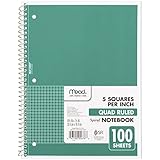
- 1 subject notebook comes with 100 graph ruled, double-sided sheets with 5 squares per inch
- Sheets measure 7-1/2" x 10-1/2" when torn out with an overall size of 8" x 10-1/2". Perforation easily tears out with clean edges.
- Graph ruling is ideal for plotting graphs, drawing curves and more. Notebook is 3-hole punched to store in your favorite binder.
- Covers are coated for durability and have writable label on front cover. Available in Green.
- Assembled in U.S.A. with U.S. and foreign parts
Track every attempt, including failures
Repeatedly trying the same combination wastes time and can make a puzzle feel more mysterious than it is. Maintain an attempt history for codes, dial sequences, routes and object interactions. Record the input or action, the target and the result.
| Attempt | Target | Input or action | Result | Status |
|---|---|---|---|---|
| A01 | D3 keypad | 4172 | Red flash; remains locked | Failed |
| A02 | D3 keypad | 2714 | No visible response | Failed |
| A03 | R2 cabinet | Use brass key | Cabinet opens; clue C08 found | Solved |
Use status words consistently:
- Untested: a theory or combination you have not tried.
- Failed: tested and produced no progress or an explicit rejection.
- Partial: produced a sound, animation or changed state without completing the puzzle.
- Solved: opened the target or clearly advanced the objective.
- Invalid: impossible in the current state, such as an item being unavailable.
A failed attempt is still information. Note whether the game gave a specific response, such as a red light, click, sound or changed symbol. A partial response may indicate that the sequence is correct but incomplete, or that the interaction requires a preceding condition.
Review before backtracking
Before returning through a long corridor, inspect the map for unchecked branches and the clue log for unresolved targets. Choose a destination deliberately rather than wandering. A short review can answer three questions:
Quick wins for a faster PC:
Scan for outdated or missing drivers - takes under a minuteDriver Scan →Repair Windows errors before they cause bigger problemsFix Now →- Which accessible branch has not been searched?
- Which clue has a plausible target but no test?
- Which blocked route now has a matching key, code, switch or event?
If nothing has changed since your last attempt, stop repeating the same action. Re-read the exact clue, revisit its source location and look for a missing condition. The issue may be order, timing, a hidden interaction or a requirement to examine an object before using an item.
When you backtrack, mark the route you are taking and the reason. For example, write “J5 → R2 to test C07 on cabinet.” This keeps a long return trip purposeful and makes it easier to resume after a break.
Use a compact symbol key
A symbol key reduces writing during tense sections. Choose symbols that you can draw quickly and keep them consistent throughout the game.
| Symbol | Meaning |
|---|---|
| ● | Current or confirmed position |
| ✓ | Room or branch searched |
| ? | Unresolved clue, room or interpretation |
| × | Blocked or confirmed failed route |
| □ | Not yet checked |
| 🔒 | Locked; add the known requirement beside it |
| → | One-way passage, transition or planned direction |
| ! | Danger, chase trigger or important state change |
You do not need these exact symbols. The important rule is that a mark must have one meaning. If you use a star for both “interesting” and “solved,” it will become unreliable later.
Windows Errors? Fix Them Before They Spread
Repair common Windows errors and clear accumulated junk for a smoother, more stable PC - no reinstall needed.Free scan · no reinstallOutdated Drivers Are Slowing You Down
One free scan finds every outdated or missing driver and matches the right update for your exact hardware.Free scan · exact hardware matchChoose paper, digital notes or the in-game journal
There is no universally best format. Select the one that lets you update quickly, preserve a rough map and keep guesses separate from evidence.
Rank #4

- LASTS ALL YEAR. GUARANTEED!* Water resistant covers protect your notes all year.
- High-quality paper resists ink bleed** so notes stay clear and legible. Notebook has 100 graph ruled sheets, 4 squares per inch.
- Includes storage pocket to hold loose sheets from the notebook. Patented, reinforced storage pocket helps prevent tears.***
- Spiral Lock wire prevents coil snags so it won’t get caught on your clothes or backpack. The Neat Sheet perforated pages easily tear out with clean edges.
- Perforated sheets measure 11" x 8-1/2" when torn out. Overall size of 11" x 9 1/8". Available in Teal.
| Format | Strengths | Limitations | Good fit |
|---|---|---|---|
| Notebook or graph paper | Fast sketches, no window switching, easy to place nodes spatially | Harder to search or rearrange; pages can fill up | Players who want an uninterrupted map beside the controller |
| Digital note | Searchable text, duplicate templates, easy corrections and screenshots | Requires another device and can interrupt play | Players who collect many clues or play across sessions |
| In-game journal | Usually tied to the game’s own locations and objectives | May omit failed attempts, theories or unexplored branches | Games with comprehensive journal and map features |
A blank or graph-paper notebook and an ordinary pencil or pen are sufficient for a manual system. Graph paper can make connections easier to arrange, but it is optional; no particular notebook, paper brand or writing tool is required. If you use a digital note, create separate headings for Map, Clues, Attempts and Open Questions rather than putting everything into one scrolling paragraph.
A worked example of the complete loop
Suppose you enter a room with a cracked mirror, a locked cabinet and two exits. Start by adding the room as R2 and writing the mirror as its landmark. Draw both exits from R2. Mark the cabinet as locked and leave the two exits unchecked.
You find a note containing four symbols. In the clue log, copy the symbols in order under C07, record “R2, note on floor,” and write the hypothesis “possibly cabinet sequence.” Do not label the symbols as the cabinet code yet.
You test the sequence on the cabinet and receive no response. Add attempt A01 with the exact sequence and result “no response.” Mark C07 as tested against the cabinet but leave the clue itself unresolved. Later, you discover a wall panel showing the same four symbols in a different order. Add that panel as C08, link both entries and test the relationship. If the cabinet opens, mark the attempt solved and add the newly opened route to the map.
If one exit leads to a staircase, draw an arrow to a new floor map and label the stair connection. If the other exit loops back to a previously mapped hall, connect it to the existing node instead of drawing a duplicate room. That correction is one of the main benefits of mapping topology rather than trying to draw the building to scale.
Independent reader supportYour contribution helps us test, update, and keep practical guides available for everyone.Handling loops, false leads and similar rooms
Loops
When a corridor returns to a known room, connect it to the existing node and mark the loop. A loop can be useful for escape routes, but it can also cause you to count one room twice. Verify the connection with a landmark before merging nodes.
False leads
Keep an abandoned theory in the log with a failed or disproved status instead of deleting it. A note such as “C04 not related to D3; tested and rejected” prevents you from rebuilding the same theory later. Do not let a failed interpretation erase the original observation; another puzzle may use it.
The Tool Desk
Outbyte Driver Updater FREEFix the driver behind crashes, sound loss and screen glitchesFind Drivers →Outbyte PC Repair FREERepair Windows errors before they cause bigger problemsFix Now →Similar rooms
Give similar rooms a distinguishing feature and a sequence number. “Blue corridor A” and “blue corridor B” are safer than calling both “blue corridor.” Add the approach direction or neighboring node if the game’s layout makes that useful.
Best Value

- SUNEE 1 SUBJECT NOTEBOOK: Single subject spiral notebook with 100 sheets/200 Pages of graph paper, you'll have plenty of space for notes and assignments. Get the best value with our graph paper notebook and stay organized.
- GRAPH NOTEBOOK: Each 8" x 10-1/2" grid notebook features 100 double-sided sheets with red margin lines and is 3-hole punched, easily transfer to your favorite binder. It's the ideal grid paper notebook for all your academic and professional needs.
- 3-HOLE PUNCHED DESIGN: Designed with 3-hole punched graph paper, this math notebook integrates seamlessly into standard binders; Perfect for who need to keep their notes organized in one place, notebook grid clutter in your study or work area.
- CLEAN TEAR-OUT: Micro-perforated pages ensure a neat tear-out, leaving you with 10 1/2" x 7 1/2" sheets. Accommodates double-sided writing. Sunee graph paper spiral notebook offers premium quality at an affordable price. A graphing notebook is perfect for students, teachers, and professionals.
- DURABLE & FUNCTIONAL DESIGN: Water-resistant plastic cover provides extra protection, making this spiral graph paper notebook ideal for on-the-go, frequent transfers in and out of backpacks, briefcases, and vehicles. The double-sided pockets are great for storing loose papers and handouts, making this one subject graph spiral notebook a practical choice for students and professionals.
Managing multiple floors and transitions
Use a separate mini-map for each floor, area or dimension when transitions make a single page confusing. Label the connecting points on both maps with the same identifier, such as “Stair S1, from L1 to B1.” Record whether the transition is reversible, one-way or conditional.
For elevators, ladders, trapdoors and portals, note the destination only after you confirm it. If the game changes the destination after an event, add the condition next to the connector. This keeps a remembered route from becoming misleading when the environment shifts.
When a clue still does not make sense
Use a controlled checklist instead of random experimentation:
- Re-copy the clue exactly and check for a missed number, direction, color, punctuation mark or symbol order.
- Return to the source object and inspect it from every available interaction prompt.
- List all related items, characters and rooms in the clue log.
- Check whether the target is locked by an event, inventory condition, time sequence or prior interaction.
- Test one hypothesis at a time and record the result immediately.
- Review failed attempts for partial responses rather than treating every non-solution as identical.
If the game provides a journal hint, read it alongside your own observation. The journal may clarify the objective without preserving the exact environmental detail you need.
Make the system usable during tense scenes
Do not try to write a paragraph while an enemy is pursuing you. Use a shorthand capture first: room label, branch direction and one landmark. For example, “J6 / right locked / red exit sign.” Expand the entry after reaching a safe location.
Keep your map and clue log where you can consult them without losing your place. Pause when the game permits it, but do not assume every title pauses during menus or inventory screens. If pausing is unsafe, memorize only a compact code and write it immediately after the threat ends.
Players who have difficulty reading small text can use larger handwriting, high-contrast symbols or a digital note with zoom. Players who cannot pause reliably can make voice notes if their platform allows them, then transcribe the location and clue details later. The method is successful when it reduces memory load, not when it looks tidy.
Free tools Windows power users keep installed
One-click scans. No signup required.
Templates you can copy
Map node template
Node: ______   Floor/area: ______   Landmark: ____________________
Connections:
- ______  status: open / blocked / unchecked / one-way
- ______  status: open / blocked / unchecked / one-way
State change or danger: __________________________________________
Related clues: C___, C___
Clue template
ID: C___
Source room/object: ____________________
Exact wording, symbols or image: _________________________________
Related item/person: _____________________________________________
Observation: ____________________________________________________
Hypothesis: _____________________________________________________
Possible target: __________________________________________________
Status: untested / failed / partial / solved
Attempt template
ID: A___   Target: ____________________
Input or action: __________________________________________________
Result: __________________________________________________________
Status: failed / partial / solved / invalid
Next condition or question: _______________________________________
The routine to follow every time you play
- Open the game’s map and journal and confirm their controls.
- Mark your starting point, floor and a recognizable landmark.
- Add each new junction before exploring its branches.
- Record open, blocked, one-way and unchecked connections.
- Write every important clue with its exact source and wording.
- Separate observations from hypotheses.
- Log each combination, route or interaction and its result.
- Before backtracking, choose an unchecked branch or a specific clue to test.
- Update solved states and route changes immediately.
- Save or preserve the notes at the end of a session so you can resume from a known map state.
The result is a living navigation record rather than a memory test. Your map tells you where exploration remains, while your clue log tells you why a location matters and which ideas have already been eliminated. Because every game exposes different controls and puzzle rules, adapt the symbols and fields to the title in front of you instead of assuming that another game’s map or journal works the same way.
Quick Recap
Product prices and availability are accurate as of the date/time indicated and are subject to change. Any price and availability information displayed on Amazon at the time of purchase will apply.

