
iTechGuides is reader-supported. When you buy through links on our site, we may earn an affiliate commission. As an Amazon Associate I earn from qualifying purchases. Learn more
Onde onde is safest when chilled promptly in a covered, shallow container; kaya should be refrigerated after opening and handled according to its jar label. Keep the refrigerator at 40°F (4°C) or below, limit room-temperature exposure, and discard food that has exceeded the safe time limits rather than judging it by smell or taste.
This guide separates food-safety limits from texture and freshness advice for homemade onde onde, packaged onde onde, and commercial kaya.
Quick storage decisions
| Food | What to do immediately | Room-temperature limit | Refrigerated guidance |
|---|---|---|---|
| Fresh onde onde with shredded coconut | Place in a shallow, covered container and refrigerate promptly. | Up to two hours after preparation at ordinary room temperature; one hour if the surrounding temperature is above 90°F (32°C), following FoodSafety.gov guidance reviewed in 2025. | FoodSafety.gov gives three to four days as a general leftover window, but that is not a validated shelf life for homemade onde onde. Fresh coconut may lose quality sooner. |
| Packaged onde onde | Follow the seller’s handling instructions and chill as soon as practical. | Use the seller’s stated serving deadline. Nyonya Lab advises consuming its product before 2 PM and says it may be refrigerated for later eating (page accessed October 16, 2026). | Keep covered and follow the package’s storage and use-by directions. |
| Opened commercial kaya | Close the jar and refrigerate it; use a clean, dry spoon or knife. | Do not leave an opened jar out during prolonged serving. | Follow the label. Glory Nonya Kaya says to refrigerate after opening and consume within one month; KayaPappa gives the same one-month refrigerated period for its product. |
The times in the table are not interchangeable. A general leftover window for cooked food does not create a guaranteed shelf life for every recipe, and a commercial kaya label applies to that manufacturer’s formulation, packaging and testing.
Free tools Windows power users keep installed
One-click scans. No signup required.
Why these foods need careful storage
Onde onde combines several perishable components
Onde onde, also called klepon or buah Melaka in regional usage, is a glutinous-rice ball filled with palm-sugar syrup and coated in fresh shredded coconut. Cooked rice supplies moisture, while the fresh coconut coating is itself a highly perishable component. Together they make a moist dessert that should be treated like a cooked leftover, not like a dry biscuit or shelf-stable sweet.
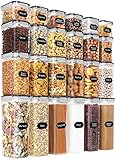
#1 Best Overall

- Help Organize Your Kitchen and Pantry: Imagine every time walking to your kitchen or pantry, found everything is neatly organized. No longer messy, you can get everything you want very quickly. With the stackable and space-saving design, these containers will make more efficient use of every inch of your kitchen pantry cabinets
- 4 Size Combinations Fit Your Needs: Our kitchen storage container set comes in 4 different sizes. Includes 6 Tall Container (2.5quart/2.8 liters), 6 Large Containers (1.8quart/2.0 liters), 6 Medium Containers (1.5quart/1.6 liters), 6 Small Containers (0.7quart/0.8 liters). Suitable for storing spaghetti, baking supplies, cereal, flour, sugar, oats, pasta, rice, coffee, tea, snacks, nuts and other dry goods
- Airtight Containers Keep Food Fresh: The side-locking lids with silicone gasket make these storage containers airtight, and the top flips open easily. The airtight storage system will always keep your food dry and fresh. All have the same lids make it easy to wash dry and reuse with ease
- BPA Free and Food Grade Material: Vtopmart pantry storage containers are made of durable plastic, BPA free, which have a longer life than many other brands plastic containers. Clear containers make it convenient to see what's inside, you can easily get what you want without opening every container
- 24 Reusable Labels: Except 24pcs dry food storage containers, you will also receive 24pcs labels. They are reusable, you can switch contents whenever you need. Just wipe clean with a damp cloth to change what you have written, Peel and Re-stick
The coconut layer also creates a quality issue independent of safety: it can dry out, absorb refrigerator odors or deteriorate before the rice portion reaches the broad end of a general leftover window. For that reason, storage instructions should give both a safety limit and a practical quality check without promising a precise homemade expiration date.
Kaya has a different risk profile
Kaya is a coconut spread commonly made with coconut milk or extract, eggs, sugar and pandan. The combination and the heat process vary by recipe and manufacturer. Commercial jars therefore carry formulation-specific instructions. Sugar content or a sealed jar does not remove the need to follow the label once the jar is opened.
How long can onde onde stay out?
Use the two-hour rule
FoodSafety.gov’s government guidance, reviewed in 2025, says to refrigerate leftovers within two hours of preparation, with the refrigerator at 40°F (4°C) or below. Count the time from when the cooked onde onde leaves heat or refrigeration, including time on a serving plate, in a lunch bag or during transport. This is the controlling safety rule for homemade cooked onde onde.
What’s actually slowing this PC down?
Pick the symptom - the matching free tool is one click away.
Use the one-hour limit in hot conditions
If the food is exposed to temperatures above 90°F (32°C), the limit falls to one hour. A hot outdoor table, an uncooled car or a warm kitchen can reach that threshold even when the dessert feels only mildly warm. When the temperature history is uncertain, use the shorter, more cautious interpretation rather than adding estimated time.
Do not reset the clock by moving it to the refrigerator
Refrigeration slows further growth but does not erase time already spent warm. If onde onde has remained out beyond the applicable limit, chilling it later is not a reliable rescue step. FoodSafety.gov also cautions against relying on smell or taste to decide whether food is safe after extended room-temperature storage.
Rank #2
- Bundle Set: This kitchen & pantry organizers and storage set comes with 24 containers, they are inlaid together, so at first glance you may think there is only the same size, but when you take it apart, you will find FOUR different sizes. Includes 6 Large Tall Containers (2.5 quart /2.8 liters), 6 Large Containers (1.8 quart /2.0 liters), 6 Medium Containers ( 1.3 quart /1.4 liters), 6 Small Containers (0.7 quart /0.8 liters). Perfect for storing flour, sugar, spaghetti, rice, nuts, cereal, snacks, pasta, and more
- Sealing Safe: These flour and sugar containers are equipped with a silicone sealing strip and four locking lids to ensure that water and air cannot enter it, So as to better ensure the freshness and health of the ingredients in the clear storage containers for organizing and make the food very dry
- Well Organizer: These air tight sealable containers for food are designed to be superimposed, which is neat and saves space. Cereal containers storage set can be easily placed in cabinets and other places where you want to place them, They can be cleaned in the dishwasher (but not the lids), easy to use and convenient
- Premium Materials: You won't have to worry about the health of your family, as PRAKI airtight food storage containers for pantry set is made of premium plastic. These pasta storage containers for pantry make it easy to find the food item in the cabinet
- No Confusion: Except 24 PCS kitchen storage containers, you will also receive 40 pieces Labels and 1 Marker, which will help you never confuse flour with powdered sugar or baking powder with baking soda. The clear plastic let you see what is in the large pantry storage containers, you can get what you want easily
Safe refrigeration workflow for homemade onde onde
- Prepare a shallow covered container. Divide the pieces into a shallow airtight food-storage container rather than putting a deep, hot mass into a large tub. FoodSafety.gov recommends shallow containers because they allow cooked food to cool quickly.
- Transfer promptly. Once serving is finished, move the onde onde into the container and refrigerate within the two-hour limit, or within one hour when exposure exceeds 90°F (32°C). Do not wait for an arbitrary “room-temperature” point if the safety window is running.
- Keep the container covered. A fitted lid limits moisture loss from the coconut and helps prevent the dessert from absorbing odors from other foods. Avoid stacking heavy items on the container, which can deform the rice balls and squeeze out palm-sugar syrup.
- Set the refrigerator to 40°F (4°C) or below. A cold-looking interior is not proof of a safe temperature. Use the appliance’s temperature control or a refrigerator thermometer and keep the container in the main refrigerated compartment rather than a warm door shelf.
- Mark the preparation time. A note with the date and approximate time helps everyone apply the same two-hour rule and prevents a container from being forgotten. The mark is especially useful when several batches are prepared for an event.
- Use the food promptly. FoodSafety.gov’s general guidance for refrigerated leftovers is three to four days. Treat that as a broad leftover framework, not as a validated homemade onde onde shelf life. If the coconut coating loses quality earlier, discard the batch rather than trying to extend it to the final day.
What the three-to-four-day guidance does and does not mean
The three-to-four-day figure is general guidance for refrigerated leftovers. The cited guidance does not validate a specific recipe, coconut moisture level, preparation method or storage container for homemade onde onde. It is therefore more accurate to describe it as an upper planning window for properly chilled leftovers, while acknowledging that fresh coconut can become unacceptable sooner.
Packaged or shop-bought onde onde
Read the seller’s serving deadline first
Commercial sellers may set a shorter window than general leftover guidance because they account for their recipe, coconut handling, packaging and distribution. Nyonya Lab’s product page advises consuming its onde onde before 2 PM and notes that it may be refrigerated for later eating (accessed October 16, 2026). That instruction is specific to the product page and should take priority over a generic estimate.
The Tool Desk
Outbyte Driver Updater FREEScan for outdated or missing drivers - takes under a minuteDriver Scan →Outbyte PC Repair FREEClear out junk files and repair common Windows errorsFree Scan →Keep the original instructions with the food
If a seller supplies a use-by time, storage temperature or reheating direction, retain the label or delivery note when transferring the dessert to another container. Do not assume that a packaged item has the same storage period as a homemade batch, or that refrigeration makes it suitable for several additional days.
Transport it as a chilled food
For a commute, party or gift, minimize the interval between purchase and refrigeration. Use an insulated carrier with cold packs when a refrigerator is not immediately available, and record when the food left controlled refrigeration. The carrier does not create an unlimited holding period; the same room-temperature limits apply once the food is no longer kept cold.
How to store kaya after opening
Refrigerate every opened jar unless its label clearly says otherwise
FairPrice’s Nonya Kaya listing identifies sugar, eggs and coconut milk and states “Refrigerate after opening.” Glory Nonya Kaya’s listing says to refrigerate after opening and consume within one month. KayaPappa’s manufacturer guidance likewise says to chill the product after opening and use it within one month refrigerated. These examples show why the jar’s own instruction controls: commercial formulations and validation periods can differ.
Rank #3
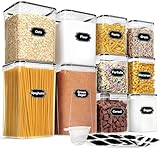
- 3 Sizes for Different Purpose: Our 10 pack flour sugar storage container set includes 3 different sizes, including 2 extra-large rice containers (6.5L/220fl oz/6.8qt) that can hold 10lb rice; 2 large flour containers (5.2L/176fl oz/5.5qt), each holding 5lb flour; and 6 medium sugar containers (2.5L/84.5fl oz/2.6qt), each holding 2lb sugar. The pantry organizers and storage containers also includes 20PCS label, a measuring cup and a marker, making it the perfect canister set for bakers and home organizers to store flour and sugar
- Airtight and Leak-proof: These airtight food storage containers feature four-sided locking lid with a silicone gasket that creates a tight seal. Kitchen storage containers effectively keep air and water out, ensuring flour, sugar and snacks stay fresh, dry and clump-free for much longer
- Food Grade Clear Material: HKJ Chef pantry storage containers are made of durable, BPA free plastic and designed for long-term daily use, ensuring safer and healthier food storage for your family. Clear containers make it convenient to see what's inside, you can easily get what you want without opening every plastic containers with lids
- Stackable Space-Saving Design: The canisters sets for the kitchen feature a stackable design that maximizes space in kitchen and pantry. Flour storage container fit perfectly in counter, cabinets and fridge. The large food storage containers with lids eliminate clutter and the risk of torn food bags, keep everything in order for a neater cooking space
- Useful and Convenient Accessories: The wide opening makes snack containers easy to use measuring cups, and the included labels and marker allow you to label food items and expiration dates, making these containers for flour and sugar highly practical for daily home baking. Dry food storage containers with lids perfect for storing flour, sugar, rice, cereal, baking supplies, spaghetti, oats, pasta, snacks and other dry goods
Prevent contamination at each serving
- Close the lid immediately after portioning. A closed jar limits exposure to air, kitchen humidity and accidental splashes.
- Use a clean, dry spoon or knife. KayaPappa specifically advises this practice. A wet utensil introduces water, and a utensil that has touched bread, butter or another spread can introduce food particles.
- Keep the jar cold between uses. Take out only the amount needed, then return the closed jar to the refrigerator rather than leaving it on the breakfast table.
- Write the opening date on the lid. This makes the label’s post-opening period actionable, especially when the jar is shared.
- Follow the shortest applicable instruction. If the jar gives a use-by date, an after-opening period and a temperature requirement, observe all of them. The after-opening period does not override an earlier printed date.
Unopened and opened are different states
An unopened jar remains governed by its printed date and storage statement. Once the seal is broken, switch to the after-opening instruction even if the original date is far away. Do not transfer kaya to an unlabelled container unless you also preserve the original date and opening information.
Refrigerator setup and container choice
Why shallow containers matter
FoodSafety.gov recommends dividing cooked food into shallow containers to speed cooling. For onde onde, choose a shallow airtight container that fits the quantity in a single or low layer. A deep container traps heat in the center and can delay cooling, while an oversized container leaves excess air space that encourages drying of the coconut coating.
Separate batches and flavors
Store different preparation times in separate containers and label each one. If one batch has spent too long at room temperature, separating it prevents the questionable pieces from being mixed with a properly chilled batch. Keep strongly scented foods away from the onde onde container because the coconut coating can pick up refrigerator odors.
Keep the cold chain visible
Check that the refrigerator is operating at 40°F (4°C) or below. If power fails or the door is left open, note how long the food may have been above that temperature and apply the time limits conservatively. A container that feels cool is not evidence that the interior stayed within the safe range throughout an outage.
Can you freeze onde onde?
No validated homemade freezing schedule is established in the available guidance. Freezing can therefore be treated only as an optional quality experiment when the recipe maker or seller provides explicit freezing and thawing instructions. Do not publish or rely on a universal number of freezing days, a thawing method or a claim that frozen onde onde will retain its original texture without supporting instructions.
Quick wins for a faster PC:
Clear out junk files and repair common Windows errorsFree Scan →Fix the driver behind crashes, sound loss and screen glitchesFind Drivers →Repair Windows errors before they cause bigger problemsFix Now →Rank #4
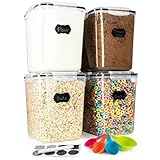
- COMPLETE CONTAINER SET: This set comes with 4 premium large rice airtight containers (5.3L/179oz), a 4pc measuring scoop set, a chalkboard marker & 8 reusable labels. With this perfect bundle you will enjoy your organized pantry and perfect kitchen experience.
- LARGE SQUARE CONTAINERS: These large containers are square shaped and roomy allowing you to effortlessly reach in till the bottom and scoop out any food without getting yourself dirty. Stop bothering with the rice flour and sugar bags or perhaps the slim narrow containers that give you little to no access to reach your food.. Enjoy your next scoop!
- SOLID AIRTIGHT SEAL: The silicone gasket on the lids and the 4 sided locking hinges create a full airtight seal ensuring that no air or water seeps in, keeping your food to its maximum freshness. No need for the old clips on the bags, with these canisters you will have a true pantry dream.
- STACKABLE & ORGANIZED: This container set is designed to get you organized and maximize your space. With the large flat lids and identical bottom, these containers are perfect to be stacked on top of each other without tipping over, and when not in use the perfect design allows you to store them away one inside another to maximize your space.
If a seller supplies a freezing method, follow that method exactly, including packaging, date marking and thawing location. If no such direction exists, make only the amount that can be safely refrigerated and eaten within the applicable window. Freezing does not make food safe after it has already exceeded the room-temperature limit.
Serving, reheating and leftovers
Serve in small portions
Put out only the amount likely to be eaten soon and keep the remainder refrigerated. Returning a full serving dish to the refrigerator after it has sat out for an extended period does not undo the exposure time. For gatherings, replenish a smaller dish from the covered container rather than exposing the entire batch.
Reheat only when the preparation calls for it
Onde onde is often eaten chilled or at room temperature, so reheating may not be necessary. When reheating is applicable, FoodSafety.gov lists 165°F (74°C) as the target for reheated leftovers. Heat the portion evenly, check the center with a food thermometer when practical, and serve promptly. Reheating should not be used to salvage food that was held warm too long.
Handle kaya as a spread
Kaya generally does not need reheating for ordinary serving. Use a clean utensil, take the required amount, and return the jar to refrigeration. If a recipe uses kaya in a cooked dish, follow that recipe’s heating instructions while preserving the jar’s storage limits for any remainder.
Homemade versus packaged storage decisions
| Decision factor | Homemade onde onde | Packaged onde onde | Commercial kaya |
|---|---|---|---|
| Fresh coconut present | Usually yes; the coating is fresh shredded coconut and can lose quality quickly. | Check the seller’s description and handling note. | Usually a spread formulation; follow the jar rather than assuming fresh coconut behavior. |
| Eggs or coconut milk | Recipe-dependent. | Recipe and seller-dependent. | Commonly included; FairPrice’s Nonya Kaya listing identifies eggs and coconut milk. |
| Opened versus unopened | Prepared food is already exposed and should be chilled promptly. | Use the seller’s instructions after purchase or opening. | Opening activates the label’s refrigeration and post-opening period. |
| Primary time control | FoodSafety.gov’s two-hour rule, or one hour above 90°F (32°C), followed by general refrigerated-leftover guidance. | Seller’s stated serving or use-by instruction. | Jar label; cited examples specify one month refrigerated after opening. |
| Temperature target | Refrigerate at 40°F (4°C) or below. | Use the seller’s stated cold-storage requirement. | Refrigerate after opening unless the label explicitly directs otherwise. |
| Serving or transport exposure | Count every minute out of refrigeration, including preparation, transport and display. | Keep within the seller’s deadline and maintain cold storage during transport. | Return the closed jar to the refrigerator between servings. |
Common mistakes and the correct fix
Leaving a covered container on the counter
A lid protects against dust and odors but does not stop bacterial growth at warm temperatures. Apply the two-hour limit, or the one-hour hot-weather limit, even when the container is covered.
Best Value
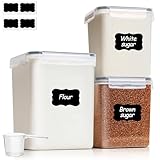
- Suitable for Flour and Sugar Set: Our air tight pantry storage containers include a 5.5 Qt flour container that easily holds 5 lb flour and two 2.6 Qt sugar containers that each can easily hold 2 lb sugar, perfect for baking supplies; They are also suitable for storing cereal, pasta, rice, oatmeal, snacks, beans and other pantry dry foods
- Keep Your Food Fresh: Our air tight containers for food has strong side-locking lids to block moisture and preserve freshness.The excellent seal may make lids firm initially—hold down the lid and lock both side clips with both hands for an easy lock
- Useful and Convenient Accessories: The set of cereal container included 4 labels and a 120 mL measuring cup; The flour storage container accessories help you differentiate between similar ingredients and ensure precise measurement during baking or cooking
- Food Grade Clear Material: Crafted from food grade plastic, the rice container is durable for everyday use; The clear kitchen storage containers allow you to quickly check the quantity and quality of contents at a glance, suitable for your pantry storage
- Space-Saving Design: The pantry organizers and storage are designed to be stackable, making them great helpers for pantry and kitchen; The large food storage containers with lids eliminate clutter and the risk of torn food bags, keep everything in order
Putting hot food in a deep pot
Depth slows cooling. Divide the onde onde into shallow containers so heat can leave more quickly, as FoodSafety.gov recommends.
Trusting smell or taste
FoodSafety.gov warns that smell and taste are not reliable safety tests after extended room-temperature storage. When the time limit has been exceeded or the temperature history is unknown, discard the food instead of sampling it.
Assuming sugar makes kaya shelf-stable
Kaya’s sugar content does not replace the manufacturer’s storage instruction. The cited commercial listings all direct refrigeration after opening, with one-month periods for the named products.
Do these 3 things before closing this tab:
1Clear out junk files and repair common Windows errors2Fix the driver behind crashes, sound loss and screen glitches3Repair Windows errors before they cause bigger problemsUsing a wet knife in the jar
Moisture and crumbs introduced by a utensil can compromise the product. Use a clean, dry utensil every time, close the lid and chill the jar promptly.
Applying a commercial deadline to homemade onde onde
A one-month kaya instruction or a seller’s onde onde deadline cannot be transferred to a homemade recipe. Use the food category’s own handling rule and the recipe or seller’s directions.
When to discard
- Discard onde onde that has exceeded two hours at ordinary room temperature or one hour above 90°F (32°C).
- Discard food whose time or temperature history cannot be established and could have exceeded those limits.
- Discard refrigerated homemade onde onde when its quality has deteriorated, even if the broad three-to-four-day leftover window has not ended.
- Discard kaya when the label’s after-opening period or printed use-by date has passed.
- Discard any item if the container, seal or lid is compromised and safe handling cannot be confirmed.
Do not taste food to decide whether it is safe. The safest action is to follow the applicable time, temperature and label rules before serving.
A practical checklist
- Note when the onde onde was cooked, purchased or removed from refrigeration.
- Refrigerate it within two hours, or within one hour when the surrounding temperature exceeds 90°F (32°C).
- Use a shallow, covered container and keep the refrigerator at 40°F (4°C) or below.
- Label the container and plan to use refrigerated homemade leftovers within the general three-to-four-day framework, recognizing that fresh coconut may deteriorate sooner.
- For packaged onde onde, obey the seller’s deadline; Nyonya Lab’s page, for example, says to consume before 2 PM and permits refrigeration for later eating.
- For kaya, refrigerate after opening, use a clean dry utensil, close the lid and follow the jar’s shortest stated period.
- Freeze onde onde only when the recipe maker or seller provides a specific method; otherwise treat freezing as unvalidated.
- When in doubt about time, temperature or label instructions, discard rather than taste-test.
Bottom line
Safe storage depends on a short warm-time limit, rapid cooling in a shallow covered container, a refrigerator at 40°F (4°C) or below, and strict obedience to product-specific kaya and packaged-onde-onde instructions. Homemade onde onde has no validated universal shelf life or freezing schedule, so conservative timing is the soundest choice.
Quick Recap
Product prices and availability are accurate as of the date/time indicated and are subject to change. Any price and availability information displayed on Amazon at the time of purchase will apply.

