
iTechGuides is reader-supported. When you buy through links on our site, we may earn an affiliate commission. As an Amazon Associate I earn from qualifying purchases. Learn more
Store spare household batteries in their original packaging, at room temperature in a dry, ventilated place away from metal, heat, sunlight, chemicals and children. Remove batteries from devices that will sit unused for a long time. Keep lithium-ion packs away from anything combustible and stop using any cell that is swollen, cracked, leaking, unusually hot, discolored, odorous or making odd noises. Recycle used batteries through your local collection program rather than household garbage.
The safe-storage rules that prevent most leaks and shorts
Most preventable battery damage comes from a few storage and handling mistakes: loose cells touching metal, batteries left inside unused equipment, mixed cell types, incorrect polarity, heat, moisture or physical damage. Use this checklist whenever you buy, store or retire batteries:
- Keep removable household batteries in the package they came in whenever possible.
- Store them at room temperature in a dry, well-ventilated area.
- Separate batteries from coins, keys, tools and other conductive metal. Contact between both terminals and metal can create a short circuit.
- Keep batteries away from heaters, hot cars, direct sunlight, household chemicals and combustible materials.
- Store them where children cannot see or reach them, with extra care around button and coin cells.
- Remove batteries from toys, decorations, flashlights and other equipment that will not be used for an extended period.
- Install the correct battery type and follow the plus and minus markings. Do not mix old and new cells, rechargeable and non-rechargeable cells, or different chemistries in one device.
- Take cells that no longer power equipment out of the device instead of leaving them in place.
- Use manufacturer instructions for any device or battery pack with more specific requirements.
These practices reflect guidance from Health Canada’s Battery safety tips (page details dated September 29, 2026), the U.S. Army’s battery-handling guidance and the U.S. Fire Administration’s lithium-ion safety information.
What’s actually slowing this PC down?
Pick the symptom - the matching free tool is one click away.
Why batteries leak or become hazardous in storage
A household battery is a chemical container with two electrical terminals. A loose cell can discharge rapidly when both terminals touch a conductive object, such as a coin or key. Heat accelerates unwanted chemical reactions and can damage seals. Leaving cells in equipment for months allows a depleted battery to remain connected to a circuit; corrosion and leakage can then damage contacts and surrounding parts. Incorrect polarity, mixed cell ages and mixed chemistries can also make cells heat up or discharge unevenly.
#1 Best Overall

- Double-Sided Battery Organizer: The Ontel Battery Daddy is a compact & portable way to organize, store and protect a boatload of batteries! Clear 'Easy View' cover lets you see everything at a glance and prevent any unwanted contact
- Maximize Battery Organization: Battery Daddy uses both sides to store up to 180 batteries of various sizes and types. This sleek, compact battery case holds 76 AA, 72 AAA, 8 9-Volt, 10 C, 12 Coin Cell and 8 D batteries (Batteries not included)
- Help Prevent Battery Drainage: Don't let loose batteries touch and drain other batteries. Stay organized and be prepared for power outages or battery-operated household items like remote controls, flashlights, toys and emergency gadgets
- Battery Tester Included: This battery storage case comes with a tester that can check whether your single-use or rechargeable batteries are still good. Align the battery's positive and negative ends on the tester to view the result on the indicator
- Durable and Portable Design: With a clear locking lid, secure latches, and a built-in carrying handle for easy portability and storage in many drawers, shelves or emergency kits. Great for professionals, technicians or anyone needing batteries on the go
Lithium-ion batteries add a different hazard. Their rechargeable cells store substantial energy, and a damaged cell can enter thermal runaway, a self-heating failure that may produce fire. The storage rules for ordinary alkaline cells therefore are not sufficient for lithium-ion packs, laptops, power tools, cameras or other rechargeable devices.
Storage guidance by battery type and situation
| Situation | Recommended storage | Do not do this | When to seek specific advice |
|---|---|---|---|
| Loose alkaline, zinc-carbon or other removable household cells | Keep in original packaging; room temperature; dry, ventilated location; separated from metal, heat, sunlight, chemicals and children. | Do not carry loose cells with coins or keys, or leave them in a hot vehicle. | Follow the product and device maker’s instructions when they differ. |
| Batteries installed in equipment used regularly | Check polarity and use matching cells. Remove a cell as soon as it no longer powers the equipment. | Do not mix old and new batteries, rechargeable and non-rechargeable batteries, or different chemistries. | Inspect equipment that shows corrosion, overheating or abnormal operation. |
| Equipment being stored for a season or longer | Remove the batteries and store them separately under the loose-cell rules. | Do not leave cells in seasonal decorations, old toys or other dormant equipment. | Use the equipment maker’s long-term-storage procedure for built-in packs. |
| Rechargeable lithium-ion pack or device | Keep at room temperature when possible, away from combustibles, direct sun and hot cars; follow the maker’s instructions. | Do not use a pack that is swollen, cracked, leaking, unusually hot, discolored, smelly or making odd noises. | Contact the manufacturer, collection program or local authority for damaged, defective or recalled packs. |
| Loose 18650 lithium-ion cell | Do not use a loose cell separated from its intended battery pack. | Do not handle it as a normal household AA or AAA battery; exposed terminals and missing protection circuits increase short-circuit and thermal-runaway risk. | Use only complete, manufacturer-approved packs and chargers. |
| Used batteries awaiting recycling | Use the municipal or approved collection route. Health Canada advises covering terminals with non-conductive tape when taking batteries to a drop-off centre. | Do not put batteries in household garbage. Lithium batteries also do not belong in general recycling. | Ask the program how to transport damaged, defective or recalled lithium batteries. |
How to store ordinary household batteries
Keep the original package
The retail package keeps terminals from contacting metal and makes the chemistry and size easy to identify. Return unused cells to that package after opening it. If the package is lost, use a clean container that keeps each cell from touching coins, keys, tools or other batteries’ terminals. An organizer can help keep cells together, but no storage case has been established as a guarantee against leakage; packaging and environmental controls remain the important safeguards.
Choose the location
Use a cupboard or drawer that stays near room temperature, is dry and has some ventilation. Do not use a windowsill in direct sun, a shelf above a radiator, a damp basement area, a garage that becomes very hot or cold, or a place next to solvents and cleaning chemicals. Keep the storage spot inaccessible to children. Button and coin cells deserve particular attention because a child can swallow one.
Free tools Windows power users keep installed
One-click scans. No signup required.
Rank #2

- Fireproof Explosion Proof Waterproof: Fireproof Battery Organizer Case is made of upgraded non-itchy silicone coated fiberglass that can withstand temperatures up to 2000. It's also highly water-resistant. And the special material has a certain explosion-proof performance, we design this Battery Organizer Box to minimize the hazards and losses caused by battery explosion
- Stores For More Type Batteries: It can hold 79*AA, 56*AAA, 8*C, 6*D, 9*9V, 30*Button type batteries( 3V lithium - CR 2032,CR 2016,CR 1632, CR 2025,LR44 etc.), total over 200 batteries. Keeping your batteries organized and helps extend the life of your batteries
- Safely Stores Batteries: Our fireproof battery organizer bag features a double zipper and durable handle to keep batteries from shock in the event that a defective battery were to swell, leak, or explode, our bag is designed to contain this and keep your family safe. This battery case neatly holds the batteries snugly in place within the foam pre-cut slots and keeps the contact ends from contacting each other, making it easy for you to find whatever battery
- Lightweight & Portable Battery Box Containers: You can not only hang the battery pouch on the wall, put it in a storage room or drawer and anywhere away from fire, but also take it with you on trips and to various outdoor activities. It is suitable for birthdays, New Year, Christmas, Valentine's Day, Mother's Day, Father's Day and many other holidays
- Please Note: BATTERIES NOT INCLUDED. YOHAWJER included a battery tester is suitable for all types of batteries with the organizer but Does NOT include any batteries. Super convenient for you to distinguish which batteries need to be recycled
Install cells correctly
Read the plus and minus symbols molded into the battery compartment and place every cell in the indicated direction. A reversed cell can overheat. Use the battery type specified by the equipment maker, and replace the complete set when the device requires multiple cells rather than combining cells of different ages or charge states.
How to prepare a device for long-term storage
Health Canada specifically recommends removing and safely storing batteries from equipment that will not be used for a long time, including seasonal decorations and old toys. The U.S. Army gives the same general advice for equipment in long-term storage because a leaking cell can destroy contacts, wiring and plastic parts.
- Turn the equipment off. Disconnect external power and allow motors, lamps or other loads to stop completely.
- Open the battery compartment. Check the polarity diagram before touching the cells so you know how they were installed.
- Remove every removable cell. Do not leave a partly used set in place simply because one battery still appears charged.
- Inspect the compartment. If you see leakage, corrosion, swelling or heat damage, stop and follow the equipment maker’s service or disposal instructions rather than reinstalling cells.
- Store intact cells separately. Return usable batteries to their original package and place them in the cool, dry storage location described above.
- Mark the equipment. A note such as “batteries removed” prevents someone from powering it up later without checking the compartment.
- Reinstall a fresh, matched set when needed. Confirm polarity and chemistry before closing the compartment.
Devices with built-in rechargeable packs may not have a removable battery. For those, use the manufacturer’s long-term-storage instructions instead of opening the device or trying to extract the pack.
Rank #3
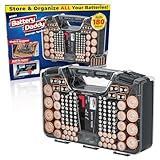
- Double-Sided Battery Organizer: The Ontel Battery Daddy is a compact & portable way to organize, store and protect a boatload of batteries! Clear 'Easy View' cover lets you see everything at a glance and prevent any unwanted contact
- Maximize Battery Organization: Battery Daddy uses both sides to store up to 180 batteries of various sizes and types. This sleek, compact battery case holds 76 AA, 72 AAA, 8 9-Volt, 10 C, 12 Coin Cell and 8 D batteries (Batteries not included)
- Help Prevent Battery Drainage: Don't let loose batteries touch and drain other batteries. Stay organized and be prepared for power outages or battery-operated household items like remote controls, flashlights, toys and emergency gadgets
- Battery Tester Included: This battery storage case comes with a tester that can check whether your single-use or rechargeable batteries are still good. Align the battery's positive and negative ends on the tester to view the result on the indicator
- Durable and Portable Design: With a clear locking lid, secure latches, and a built-in carrying handle for easy portability and storage in many drawers, shelves or emergency kits. Great for professionals, technicians or anyone needing batteries on the go
Lithium-ion batteries need a separate fire-safety plan
Store packs away from combustibles
The U.S. Fire Administration advises storing spare lithium-ion batteries away from anything that can burn. Keep packs and devices away from paper, fabrics, fuels and other combustibles, as well as direct sunlight and hot cars. Room-temperature storage is preferred when practical. Follow the device maker’s instructions if they specify a different storage state or environment.
Quick wins for a faster PC:
Clear out junk files and repair common Windows errorsFree Scan →Fix the driver behind crashes, sound loss and screen glitchesFind Drivers →Do not turn charging limits into storage targets
The U.S. Fire Administration page says not to charge lithium-ion batteries below 32°F (0°C) or above 105°F (40°C). Those are charging-temperature limits from that agency’s guidance, not a universal temperature range for storing every lithium-ion battery. Storage requirements vary by pack and device, so use the maker’s instructions for storage and charging.
Recognize a battery that must be removed from service
Stop using a lithium-ion battery if it develops an unusual odor, changes color or shape, becomes excessively hot, leaks or makes hissing, popping or other unusual noises. A swollen or cracked pack is not safe to keep using. Do not puncture, crush, open or attempt to repair it. Isolate people from the area if a battery is actively venting; Army guidance says to ventilate the area and move away until venting stops. Contact the manufacturer, local fire authority or an approved collection program for handling instructions.
Rank #4

- Portable battery storage box with battery tester
- Can hold 110 total batteries, including 36 AAA, 48 AA, 4 C, 4 D, 4 9V, 14 coin cells
- Carrying handle for easy portability; wall mountable
- Battery tester included; tests 1.5V and 9V batteries for usability
- Transparent cover allows you to see batteries without opening the lid
Never use a loose 18650 cell
The U.S. Consumer Product Safety Commission warns consumers not to use loose 18650 lithium-ion cells separated from battery packs. These cylindrical cells can have exposed terminals and lack the protection circuits built into a complete pack, creating short-circuit and thermal-runaway hazards. Use only an intact, purpose-built pack with the correct charger and device.
Independent reader supportYour contribution helps us test, update, and keep practical guides available for everyone.How to handle batteries waiting for recycling
Use the correct local channel
Battery disposal rules vary by municipality. Follow your local household hazardous-waste, battery-recycling or retailer take-back instructions. Health Canada says batteries are not safe in household garbage. The U.S. Department of Transportation’s Pipeline and Hazardous Materials Safety Administration likewise directs household lithium batteries to appropriate recycling channels rather than trash or general recycling.
The Tool Desk
Outbyte PC Repair FREERepair Windows errors before they cause bigger problemsFix Now →Outbyte Driver Updater FREEFix the driver behind crashes, sound loss and screen glitchesFind Drivers →Tape terminals only for drop-off transport
When Health Canada recommends covering terminals with non-conductive tape, such as electrical tape, it is describing preparation for taking used batteries to a drop-off centre. It is not a recommendation to tape every battery during routine home storage. Keep tape from covering labels needed by the collection program, and follow that program’s packaging rules.
Best Value

- Double-Sided Battery Organizer: The Ontel Battery Daddy is a compact & portable way to organize, store and protect a boatload of batteries! Clear 'Easy View' cover lets you see everything at a glance and prevent any unwanted contact.
- Sleek and Compact Design: Battery Daddy uses both sides to store up to 150 batteries of all types. Holds 58 AAs, 68 AAAs, (4) 9 Volt, 8 Cs, 8 Ds, & 8 Button Cells. Easily stores away in any drawer. Includes Battery Tester
- Find the Right Battery: Incorrect storage drains batteries. Stay organized and be prepared for power outages, new gifts, or any time you need to replace a dead battery. Built-in carrying handle lets you take it anywhere
- Battery Tester Included: Battery Daddy comes with a tester that can check whether your single-use or rechargable batteries are still good. Just align the negatives and positives of the batteries on the tester and you can see the result on the indicator
- Easy Storage: The compact size allows for storage in drawers and shelves along with your other supplies and household items. The portable design has a sturdy carrying handle and secure heavy-duty latches so you can easily transport
Ask before moving a damaged pack
Damaged, defective or recalled lithium batteries present greater fire risk than intact cells. Do not place one in a household bin or an ordinary recycling box. Call the manufacturer, collection program or local authority first and describe the damage; they can tell you whether the pack may be transported and how it must be contained.
What to do when a battery has leaked or looks damaged
- Do not reinstall it. A leaking, swollen, cracked, discolored or unusually hot battery is no longer a normal usable cell.
- Separate it from metal and combustibles. Keep people away from the damaged item and avoid crushing or puncturing it.
- Do not mix it with intact batteries. Place no damaged lithium pack in a household battery container unless the collection program specifically approves that method.
- Check the device maker’s instructions. Corrosion or residue inside equipment may require service or replacement rather than continued use.
- Contact the correct authority. For lithium-ion damage, ask the manufacturer, fire authority, municipal hazardous-waste service or recycling program for handling and transport directions.
Because official guidance differs by chemistry and by the condition of the cell, do not improvise a disposal method for a swollen, hissing or leaking lithium-ion pack.
A practical inspection routine
Monthly or before a long trip
- Look for damaged packaging, crushed cells, corrosion, swelling, discoloration or residue.
- Confirm that loose batteries are not sharing a pocket or drawer with keys, coins, screws or tools.
- Check that stored devices have had removable batteries taken out.
- Move batteries away from any new heat source, sunlight or chemical storage.
Before installing a battery
- Read the device’s specified chemistry and size.
- Check each cell for damage or leakage.
- Use a matched set rather than combining old and new cells.
- Align every plus and minus mark.
- Remove the set promptly when the device stops working or will return to storage.
Before recycling
- Sort intact household cells from damaged or recalled lithium packs.
- Find the municipal or approved collection route.
- Insulate terminals with non-conductive tape when the collection program or Health Canada guidance calls for it.
- Ask the program how to package and transport anything swollen, leaking, hot or otherwise damaged.
Common storage mistakes and the safer alternative
| Mistake | Why it creates risk | Safer alternative |
|---|---|---|
| Keeping spare cells loose in a drawer or bag | A key, coin or tool can bridge the terminals and short the cell. | Retain the retail package and separate batteries from metal. |
| Leaving batteries in a seasonal decoration or old toy | A depleted cell can leak while connected to the equipment and damage it. | Remove cells before long-term storage. |
| Combining a new cell with an old one | Cells discharge unevenly and the weaker cell may leak or overheat. | Replace the complete matched set. |
| Mixing rechargeable and non-rechargeable cells | Their electrical behavior differs and can produce unsafe heating or discharge. | Use only the chemistry specified for the device. |
| Leaving lithium-ion packs in a hot car | High heat increases fire and battery-failure risk. | Keep packs at room temperature when possible and out of direct sun. |
| Using a swollen or hissing lithium pack | These are warning signs of internal failure and possible thermal runaway. | Stop using it, move away if it is venting and obtain disposal instructions. |
| Putting batteries in household garbage | Waste handling and compaction can create fires, especially with lithium cells. | Use an approved local battery or hazardous-waste collection route. |
What the official guidance does—and does not—establish
Health Canada, the U.S. Army, the U.S. Fire Administration, PHMSA and the CPSC provide handling, storage and disposal precautions, but they do not establish a household battery-leak percentage or prove that a particular organizer eliminates leaks. The reliable benefit comes from controlling the conditions that cause shorts, overheating, prolonged discharge and physical damage. Treat an organizer as a way to keep batteries identified and separated, not as a safety certification.
Recommended Free Tools
Quick Recap
Product prices and availability are accurate as of the date/time indicated and are subject to change. Any price and availability information displayed on Amazon at the time of purchase will apply.

