
iTechGuides is reader-supported. When you buy through links on our site, we may earn an affiliate commission. As an Amazon Associate I earn from qualifying purchases. Learn more
The safest general routine is simple: handle each card as little as possible on a clean, dry surface; put it in a correctly sized sleeve made from a disclosed, stable plastic; add a supportive enclosure; and keep the enclosure in a cool, relatively dry, stable, dark location away from heat, water and large humidity swings. Use display cases only when you can control light and security. These steps are based on Library of Congress preservation guidance for paper and comic collections and Pokémon’s competition sleeve guidance, not on a Pokémon-card-specific conservation standard or testing of any particular product.
What damages rare Pokémon cards?
Most preventable damage comes from ordinary handling and unstable surroundings rather than a single dramatic event. Finger oils, dust, food residue, pressure, abrasion, bends, spills, heat, humidity swings and light can all reduce a card’s condition. A valuable card can also be damaged while being moved between a binder, box, deck or display.
Paper-preservation guidance treats light, temperature, relative humidity, cleanliness and physical support as connected risks. A sleeve can reduce contact and abrasion, but it cannot correct a hot room, a leaking roof or prolonged sun exposure. The goal is a low-risk system in which every layer performs one job.
- Clean handling: limits oils, grit and accidental stains.
- A chemically suitable sleeve: keeps the card from direct contact with hands and nearby materials.
- Supportive storage: reduces bending, edge impact and friction during movement.
- Stable surroundings: slow paper deterioration and reduce mold, moisture and warping risks.
- Controlled light: prevents cumulative fading and discoloration.
A low-risk storage routine
- Prepare a clean, dry, uncluttered work surface. Wash and dry your hands, remove food and drinks, and keep pets, liquids and loose debris away.
- Handle cards by their edges. Avoid sliding a card across a gritty surface or repeatedly taking it in and out of an enclosure.
- Choose a sleeve that fits the card and clearly discloses its plastic. Prefer polyethylene, polypropylene or polyester (PET) without added slip or coating agents; avoid PVC and plastics whose composition is not stated.
- Insert the card slowly, supporting it so a corner does not catch. Do not force a tight sleeve or bend the card to make it fit.
- Place the sleeved card in a supportive box or holder that prevents uncontrolled movement and pressure. The enclosure should be clean, dry and free of sharp edges.
- Store the enclosure in a cool, relatively dry, stable room with minimal light. Keep it away from radiators, vents, windows with strong sun, plumbing and places that could flood.
- Inspect periodically for sleeve damage, moisture, dust, pests, unusual odor or signs of mold. Correct the environment before transferring cards again.
How to handle cards safely before sleeving
Set up a clean work area
Use a smooth, dry table that has been cleared of grit and clutter. A clean sheet of plain paper can provide a temporary work barrier, but replace it if it becomes dirty or damp. Keep drinks, snacks, lotions, pens and cleaning chemicals away from the cards. Even a small spill can wick into paper fibers and leave a permanent tide mark.
#1 Best Overall
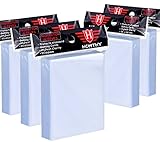
- High Capacity: Each package contains 5 pack ( one pack contains 500 Pcs card sleeves), a total of 500 clear card sleeves. Enough to meet your need for storing and protecting cards.
- High Quality: Superior plastic material are made of non-PVC and no acid polypropylene ensures it sturdy and durable, and largely prevents your cards from damaging, scratching,and fad, provide perfect protection for your trading cards.
- Transparent Card Sleeves: The trading card sleeves are made by transparent and clear material, your cards will be displayed clearly in the card sleeves, convenient for you to insert and take out your trading cards.
- Wide Application: Compatible with all standard sized trading cards, such as Football cards, baseball cards, Gaming Cards, MTG cards, Yugioh cards, proxy cards, mini photos, etc.
- Ideal Present for Card Collectors: It's a perfect present to send your friends who have a hobby of collecting cards, it can provide a home to store your cards. If you encounter any issues with our product, you can contact us and we will try our best to help you.
Clean, dry hands are preferable to gloves for routine handling because gloves can reduce tactile control and make corners easier to catch. If your hands become sweaty or contaminated, stop and wash them again. Touch edges rather than the printed face whenever possible.
Minimize handling and pressure
Plan the sequence before opening a pack, binder or box so cards are not repeatedly sorted and re-sorted. Lift one card at a time without dragging it under neighboring cards. Never use paper clips, rubber bands, adhesive tape or glue to bundle collection materials. These can imprint, stain, tear or transfer chemicals to the card.
Do not attempt to flatten a bend by pressing the card under books or another heavy object. Pressure can create a sharp crease, damage layers or transfer texture from the surface below. The preservation guidance reviewed here does not provide a safe home treatment for bent or creased Pokémon cards.
Choosing sleeves for rare Pokémon cards
A sleeve is a sensible first protective layer, but marketing words alone do not prove long-term safety. Look for a product that identifies its plastic and dimensions. The Library of Congress identifies polyethylene, polypropylene and polyester (PET) sleeves without added slip or coating agents as stable, inert plastics in a general preservation context.
| Material or description | What the preservation guidance supports | How to use that information |
|---|---|---|
| Polyethylene | Identified by the Library of Congress as a stable, inert plastic for sleeves. | Reasonable material choice when the sleeve fits and the product discloses the material. |
| Polypropylene | Identified as a stable, inert plastic for sleeves. | Reasonable material choice when composition and fit are clear. |
| Polyester (PET) | Identified as stable and inert, but polyester film can generate static. | Use with care around loose media and choose an enclosure appropriate to the card; static is a trade-off, not proof of damage. |
| PVC | The Library of Congress advises avoiding PVC for collection storage. | Do not choose a PVC sleeve for a valuable card. |
| Unknown plastic | Composition is not established. | Do not assume that “archival,” “acid-free” or “premium” proves the plastic is suitable. |
This is general paper and archival guidance, not certification of a particular trading-card sleeve. A sleeve can still be unsuitable if it is too small, has a rough seam, sheds residue, traps moisture or requires force to load. Replace any sleeve that is split, cloudy, sticky, warped, heavily scratched or contaminated.
Fit matters as much as material
Select a size intended for the card dimensions. A loose sleeve allows movement and edge abrasion; an undersized sleeve can put pressure on corners or make insertion hazardous. Test the fit with a less valuable card before sleeving a rare card. Insert slowly, keeping the card square and supporting its edges.
Single-sleeving and double-sleeving
Pokémon’s official “Proper Deck State” document addresses competition, not long-term collecting. It tells players to inspect sleeves, replace sleeves that are bent, damaged or marked, and use consistent single- or double-sleeving for a competitive deck. It also states: “It is recommended to change to new card sleeves when attending a competition.” Follow the tournament’s current rules when playing, but do not treat competitive replacement guidance as proof that a particular sleeve system is best for decades of storage.
Rank #2
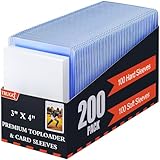
- CARD SLEEVES TOP LOADERS SETS:(100ct Hard Card Sleeves and 100ct Soft Card Sleeves) are colorful and meet different collection needs. Each set is carefully packaged to prevent damage during transportation.
- PERFECT FIT FOR STANDARD SIZE CARDS: Top Loader measures 3“ x 4” and holds game and sports cards up to 2.5“ x 3.5” and up to 35pt thick. Soft Sleeve measures 2.6“ x 3.7” and is designed to fit standard-sized cards, keeping every card in good hands: designed to securely hold and display trading cards in place and protect them from damage.
- HIGH QUALITY MATERIAL&CLEAR AND DURABLE: The Card Top Loader is made of high quality PVC, acid-free, scratch-resistant, abrasion-resistant, durable and tough, like a strong shield. High quality ensures worry-free daily use for card collectors, and high transparency makes the contents of the card visible at a glance.
- MULTIPURPOSE PROTECTION FOR PEACE OF MIND: The Baseball Card Top Loading pouch is extremely sturdy and prevents valuable collectible cards from bending, fraying and damaging during transportation. They also protect cards from water, scratches, fading and fingerprints during everyday storage and display. Soft card sleeves protect against scratches. Deuble protection keeps cards in perfect condition after long-term storage,Ideal for storing and displaying cards of all types and sizes.
- APPLICABILITY AND VALUE: The Hard Card Sleeves is suitable for collecting all kinds of standard cards, such as baseball cards, soccer cards, MTG cards, game cards, K-pop photo cards and so on. All-round protection of cards from damage, important for transportation and collection.
Adding a supportive enclosure
After sleeving, use a clean enclosure that keeps cards upright or evenly supported and limits sliding. The Library of Congress recommends supportive enclosures for paper and comic materials because support reduces handling stress and physical deformation. That principle applies to a collection box or holder, but the sources do not establish that one trading-card format is superior to another.
Boxes and rigid holders
A supportive trading-card box can be practical for larger groups because it limits movement and keeps light out. Rigid individual holders can add impact protection for especially valuable cards, provided the card is not forced into a tight opening and the holder does not press on corners. A holder is useful only when it is clean, stable and sized correctly.
Binders, slabs and magnetic-style holders
Binders, encapsulated slabs and magnetic-style holders may offer different combinations of visibility, portability and support. The available preservation sources do not compare their materials, archival lifetimes or performance for Pokémon cards. Choose based on disclosed composition, fit, support and how often the card will be handled rather than assuming a product label guarantees preservation.
Do not seal in moisture
A plastic outer container can provide secondary protection against a brief splash, but the Library of Congress warns that plastic containers can increase mold risk in high humidity. Do not place a damp card or a damp enclosure into an airtight container. Resolve the moisture problem first and seek qualified conservation advice for a valuable item.
Do these 3 things before closing this tab:
1Clear out junk files and repair common Windows errors2Scan for outdated or missing drivers - takes under a minute3Repair Windows errors before they cause bigger problemsWhere to store the collection
Temperature and relative humidity
Choose a room that is cool, relatively dry and stable rather than chasing a constantly changing number. Library of Congress guidance for comic books and works on paper gives approximately 35% relative humidity as a preservation recommendation. That figure is not validated specifically for Pokémon cards and is not a universal target for every home. The important practical point is to avoid dampness, excessive dryness and rapid swings.
Large changes can make paper and enclosure materials expand and contract, encouraging warping. Persistent high humidity raises mold risk; excessive dryness can make paper more brittle. A simple humidity monitor can reveal whether a proposed room is consistently damp or fluctuating, but the monitor does not replace controlling leaks, ventilation problems or heating.
Rank #3
- 🔸【UPGRADED MATERIAL】- JIQEZNL penny card sleeves made of hard PVC which is acid-free, ensure that clear card sleeves is sturdy and durable; Meanwhile high clarity easy to use and offer a clear view of your cards, making them perfect for displaying and storing your cards
- 🔸【EXCELLENT PROTECTION】- Soft sleeves for trading cards are made by durable flexible material ensures that your cards are pristine during long-term storage without the trouble of fading; Also keep your valuable collectible trading cards from dust in the mail or in the carrying; Even protect your cards against dust, water and fingerprints for storage and display; offering a cost-effective, convenient, and hassle-free solution for collectors
- 🔸【UNIVERSAL SIZES】- Penny card sleeves with dimensions: 66 X 91mm, perfectly sized fit for standard 2 1/2 x 3 1/2 trading or sports game cards; and the snug yet easy-to-use opening allows for effortless card insertion and removal, so you can be sure that your lovely cards will stay secure and easy to handle
- 🔸【WIDE APPLICATION】- Pokemon penny sleeves are good to organizing and displaying your collection and will fit various types of cards, such as trading cards, baseball cards, sports cards, Pokemon Card, MTG, Yugioh cards, Kpop photo cards... An ideal gift for card collector, player, hobbyist, or professional trader
- 🔸【WORRY FREE AFTERSALES】- 1-Year money back protection by JIQEZNL! If you're not completely satisfied with your sport card sleeves for any reason, simply let us know and we promise will solve it for you with whatever it takes!
Keep cards away from heat and air vents
Do not store valuable cards beside radiators, heaters, fireplaces, hot electronics or supply vents. Heat can accelerate deterioration and vents can blow dust across exposed cards while creating local temperature and humidity changes. Place the enclosure where air is relatively still and conditions remain consistent.
Avoid attics, basements and garages
The Library of Congress identifies attics, basements and garages as risky locations because of environmental extremes and leaks or floods. A basement may feel cool but still have high humidity or flood exposure; an attic can become extremely hot; a garage experiences broad swings and airborne contaminants. If those are your only available areas, treat them as high-risk rather than relying on a plastic tub to solve the problem.
Windows Errors? Fix Them Before They Spread
Repair common Windows errors and clear accumulated junk for a smoother, more stable PC - no reinstall needed.Free scan · no reinstallOutdated Drivers Are Slowing You Down
One free scan finds every outdated or missing driver and matches the right update for your exact hardware.Free scan · exact hardware matchPlan for water emergencies
Keep storage off the floor and away from pipes, windows, exterior doors and known leak paths. Secondary water protection can buy time, but it is not a substitute for a dry, stable room. If a leak or flood occurs, move unaffected cards first, avoid opening wet stacks unnecessarily and seek professional advice for valuable damaged items.
Light and display: should you show valuable cards?
Light damage is cumulative and can be irreversible. The Library of Congress states that “Light damage is cumulative and follows the reciprocity principle.” In practical terms, a lower-intensity light for a shorter time is safer than bright, prolonged exposure, but there is no reset after a card is returned to darkness.
| Consideration | Enclosed storage | Display |
|---|---|---|
| Light exposure | Can be kept minimal when the enclosure remains closed and out of strong light. | Continuous or repeated exposure adds cumulative fading and discoloration risk. |
| Physical support | Box or holder can keep cards supported with little movement. | Requires a secure mount that will not allow slipping, pressure or falls. |
| Environmental stability | Can remain in a consistently conditioned room. | Must avoid window heat, hot lighting and humid display locations. |
| Handling and security | Cards can remain undisturbed for long periods. | Viewing, cleaning and rearranging create more handling and theft or impact opportunities. |
If you display a card, keep it out of direct sunlight and intense lamps, reduce the duration and intensity of illumination, and consider UV-absorbing glazing. UV filtering addresses one part of the risk only: visible light also contributes to damage, and glazing does not correct heat, humidity or poor physical support. Rotate displayed cards or return them to dark storage when practical.
What to do when a card is bent, dirty, wet or moldy
Bends, creases and warped cards
Isolate the card from further pressure and put it in a correctly sized protective sleeve or supported enclosure without forcing it flat. Do not iron it, wet it, press it under a weight or apply household chemicals. Those methods can create permanent surface or layer damage, and the sources reviewed do not establish a safe do-it-yourself treatment for collectible cards. For a high-value card, consult a qualified paper conservator before attempting any intervention.
Rank #4

- 1000 COUNT BULK VALUE FOR LARGE COLLECTIONS: Stock up with 1000 clear penny sleeves designed for card breakers, card shops, online sellers, collectors and hobby stores. The large bulk pack makes it easier to sort, protect, display and prepare thousands of cards while reducing the need for frequent reordering—an economical choice for high-volume card storage and daily packing needs.
- STANDARD SIZE FOR TRADING AND SPORTS CARDS: Each soft card sleeve measures approximately 66 x 91 mm and is designed to fit standard 2.5 x 3.5-inch cards. Ideal for baseball cards, football cards, basketball cards, hockey cards and other collectible cards, providing a smooth fit without adding unnecessary bulk to your collection.
- CLEAR PP MATERIAL FOR EASY CARD VIEWING: Made from transparent polypropylene material, these trading card sleeves help keep card artwork, names, statistics and details clearly visible. The lightweight soft plastic creates a protective barrier against dust, fingerprints and everyday surface scratches, making the sleeves suitable for organizing, displaying, selling and long-term card storage.
- FITS INSIDE TOP LOADERS AND BINDER PAGES: Use these soft penny sleeves as the first protective layer before placing valuable cards into compatible rigid top loaders, storage boxes or 9-pocket binder pages. The slim design helps cards slide in smoothly while reducing direct contact with harder plastic surfaces, giving collectors a practical two-layer protection solution for valuable or frequently handled cards.
- VERSATILE PROTECTION FOR COLLECTORS AND CARD BREAKERS: Perfect for sorting new card breaks, preparing online orders, organizing large collections, storing sports cards or protecting cards during trading events. Whether used at home, in a hobby shop or at a breaker station, the bulk card sleeves keep supplies ready for everyday use and help make card handling, packaging and collection management more efficient.
Surface dirt or suspected residue
Handle the card by its edges and stop rubbing. Household cleaners, solvents, adhesive removers and abrasive cloths can dissolve inks, alter gloss or spread a stain. A professional can assess whether treatment is appropriate; an improvised cleaning attempt can reduce both condition and value.
Wet cards
Address wetness promptly while controlling temperature and humidity. Separate wet items carefully if they can be moved without tearing or sticking, provide clean support and avoid sealing moisture inside plastic. Because collectible-card-specific treatment is not established by the cited guidance, valuable wet cards should go to a qualified conservator rather than being dried with a hair dryer, radiator or direct sun.
Visible mold or a musty odor
Quarantine the affected enclosure from the rest of the collection and avoid brushing or shaking spores through the room. Lower the humidity and stabilize the area, but do not put moldy cards into an airtight plastic container while they are damp. Seek professional conservation advice for valuable items and address the building’s moisture source before returning unaffected cards.
Independent reader supportYour contribution helps us test, update, and keep practical guides available for everyone.Maintenance and inspection checklist
A preservation routine works only if it is maintained. Set a recurring inspection schedule appropriate to the room and the collection’s value; inspect more often after a move, leak, heating change or storage-room renovation.
What’s actually slowing this PC down?
Pick the symptom - the matching free tool is one click away.
- Check sleeves for splits, clouding, stickiness, residue, scratches and bent seams.
- Look for cards shifting inside boxes or leaning without support.
- Check for dust, insects, musty odor, condensation or visible mold.
- Confirm that boxes remain away from floors, windows, radiators, vents and plumbing.
- Review whether displayed cards are receiving direct sun or intense light.
- Replace damaged sleeves and compromised enclosures using the same careful handling routine.
- Record unusual changes, such as a new warp or odor, so you can identify an environmental cause.
Common mistakes to avoid
- Trusting a label without checking composition: “Archival,” “acid-free” and “premium” are not substitutes for a disclosed plastic.
- Using PVC or unknown plastics: the Library of Congress specifically advises avoiding them for collection storage.
- Overpacking a box: excessive pressure makes removal risky and can bend edges.
- Leaving cards in direct light: UV filtering does not stop visible-light damage or heat.
- Storing in a garage, attic or basement: these locations bring temperature extremes, humidity swings and leak exposure.
- Using tape, glue, rubber bands or clips: these can stain, imprint or tear collection materials.
- Trying a home “repair” first: flattening, cleaning or drying experiments can turn a recoverable problem into permanent damage.
- Assuming a sealed plastic tub is always safer: trapped humidity can promote mold.
When professional conservation is the safer choice
Seek a qualified paper or objects conservator when a rare card has water damage, active or suspected mold, a severe crease, adhered layers, unknown residue or substantial staining. Tell the conservator the card’s approximate value, what happened, how long it was exposed and what materials touched it. Do not clean, press, laminate, trim or glue the card before assessment. Professional advice is especially important when preserving the original condition matters more than making the card look temporarily flatter or cleaner.
How to decide between storage and display
For most valuable cards, dark storage in a stable room is the lower-risk default. Display is a deliberate trade-off: it increases light exposure, security concerns and handling while providing visibility and enjoyment. Before displaying, confirm that the mount supports the card, the case is away from heat and sun, illumination can be limited and the card can be returned to protected storage without repeated risky handling.
Best Value

- 【PACKAGE INCLUDED】 You will get 200ct Hard Sleeves and 200ct Soft Sleeve, which will keep your collectible trading cards safe from water, dirt, and dust while keeping them looking new.
- 【STANDARD SIZE】 3" x 4" sized card protectors hold 2-1/2" x 3-1/2" standard size trading cards and sports cards up to 35pt thickness. 2-5/8"x3-5/8" standard size soft soft sleeves.
- 【CLEAR & THICK MATERIAL】 The card holders are made of quality PVC which is acid-free, anti-scratch, and heavy-duty, premium quality allows it stands up to your daily use by any card collectors. High clarity lets you read your cards effortlessly.
- 【EXCELLENT INVEST & PROTECTION】 The hard plastic card sleeves are sturdy enough to keep your valuable collectible trading cards from bending, scuffs, and marring, and protect your cards against water, scratches, fading, and fingerprints for daily storage and display.
- 【WIDE APPLICATION】 Perfect for collecting any type of standard cards, such as Sports Cards, Baseball Cards, Football Cards, Yu Gi Oh, MTG, Kpop Photocard Cards, and more other cards.
The practical decision is not whether one holder type is universally “best.” It is whether your complete setup controls the four relevant exposures: light, physical support, environmental stability and handling frequency. A correctly fitted sleeve plus a clean, supportive box meets the general storage concept supported by the cited preservation guidance; display requires additional controls for every exposure.
Frequently Asked Questions
What sleeves are safe for Pokémon cards?
Prefer correctly sized sleeves that clearly identify polyethylene, polypropylene or polyester (PET) and avoid added slip or coating agents. Avoid PVC and plastics whose composition is unknown. This is general preservation guidance, not a certification of any particular trading-card product.
Free tools Windows power users keep installed
One-click scans. No signup required.
Is the Library of Congress recommendation of about 35% relative humidity mandatory?
No. About 35% relative humidity is a recommendation in Library of Congress guidance for comic books and works on paper, not a Pokémon-card-specific standard or universal household target. Use it as context while prioritizing a cool, relatively dry, stable environment without large swings.
Should I double-sleeve cards kept in storage?
Double-sleeving is addressed by Pokémon’s official competition guidance for consistent deck play and sleeve replacement, not as a validated long-term storage requirement. For storage, choose a well-fitting, disclosed-material sleeve and a supportive enclosure; add layers only if they fit without pressure or trapped moisture.
Can I clean or flatten a valuable card at home?
Avoid household cleaners, solvents, pressing, ironing, gluing and improvised drying. The cited guidance does not establish safe home treatment for damaged Pokémon cards. For a valuable wet, moldy, stained or creased card, consult a qualified conservator.
Quick Recap
Product prices and availability are accurate as of the date/time indicated and are subject to change. Any price and availability information displayed on Amazon at the time of purchase will apply.
Quick wins for a faster PC:
Fix the driver behind crashes, sound loss and screen glitchesFind Drivers →Clear out junk files and repair common Windows errorsFree Scan →Scan for outdated or missing drivers - takes under a minuteDriver Scan →
