
Do these 3 things before closing this tab:
1Scan for outdated or missing drivers - takes under a minute2Clear out junk files and repair common Windows errors3Fix the driver behind crashes, sound loss and screen glitchesiTechGuides is reader-supported. When you buy through links on our site, we may earn an affiliate commission. As an Amazon Associate I earn from qualifying purchases. Learn more
The safest way to evaluate a Zelda statue or collectible is to verify the exact product first, then check licensing evidence, compare the object and packaging with product-specific documentation, and assess the seller and transaction separately. A missing Nintendo seal can indicate an unlicensed product, but it does not by itself prove that a particular vintage, custom, or fan-made piece is counterfeit. Conversely, a convincing seal or box does not prove that every component or resale listing is genuine.
Nintendo’s public guidance is strongest for identifying licensed merchandise and warning signs seen in counterfeit games and hardware. It does not provide a universal authentication checklist, serial-number database, or complete catalog for Zelda statues. Use the process below to reach a defensible conclusion without treating one visual detail as conclusive.
What “counterfeit” means for a Zelda collectible
These terms describe different situations:
- Licensed product: Merchandise made or authorized under Nintendo’s licensing arrangements and normally marked with the Official Nintendo Licensed Product Seal appropriate to its market and era.
- Unlicensed product: An item made without the relevant permission. It may be openly sold as a fan-made, custom, or independent design, or it may be presented misleadingly as official.
- Counterfeit product: An item made or sold to deceive buyers about its identity, licensing, manufacturer, or authenticity. A counterfeit may copy a genuine product’s name, packaging, artwork, or marks.
- Custom or fan-made piece: A personally sculpted, modified, or 3D-printed object that is not represented as an official Nintendo release. It can be legitimate as a craft item while still being unlicensed.
Calling every unlicensed object “counterfeit” overstates what the available evidence proves. If a listing clearly says “fan-made,” “custom,” or “unlicensed replica,” the licensing issue is different from a seller claiming that the same object is an official release.
Recommended Free Tools
Nintendo identifies The Legend of Zelda as a trademark and says its rights cover characters, packaging, manuals, labels, and artwork. That explains why copied branding and packaging matter, but it does not turn a single visual discrepancy into a legal finding about a particular item.
#1 Best Overall
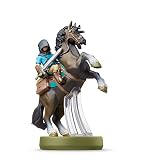
- Made for Play! Discover New Characters, Explore New Game Modes, and So Much More!
- You can use amiibo on your Wii U by tapping them to the NFC touchpoint on the Wii U GamePad.You can also use amiibo on your New Nintendo 3DS and New Nintendo 3DS XL by tapping them to the NFC area on the bottom screen. Alternatively, using the NFC Reader/Writer Accessory you can use amiibo on your Nintendo 2DS, Nintendo 3DS and Nintendo 3DS XL. amiibo are also compatible with the Nintendo Switch
- See individual games for full amiibo functionality
How can I tell if a Zelda statue is fake?
Work through these questions in order. Stop at the point where the evidence is insufficient; “authenticity cannot be determined from the available evidence” is a more accurate result than a forced yes or no.
- What exact item is being claimed? Record the character, game or version, product name, manufacturer, product number, release period, region, dimensions, materials, and whether the seller calls it licensed, custom, handmade, fan-made, or a replica.
- Does that product identity exist? Look for a product-specific manufacturer page, official Nintendo record, original catalog, or contemporaneous documentation. A generic title such as “Zelda statue” is not enough.
- What licensing mark should the item have? Check the seal expected for the product’s market and date rather than demanding only the current artwork.
- Do the object and packaging agree with the documented release? Compare the character version, pose, base, materials, dimensions, printed names, included pieces, and package layout.
- What does the seller actually show? Require clear, seller-created photographs of the whole item, underside or base, markings, packaging, inserts, and any damage or repairs.
- Is the price explainable? Compare completed sales for the exact product and condition. A very low price is a reason to investigate, not proof of counterfeiting.
- Can you recover your money if the claim is wrong? Check the return window, dispute process, payment protections, and whether the seller has a consistent history.
Keep screenshots of the listing, messages, photographs, payment record, and the item as received. Those records are useful if the description changes or a dispute becomes necessary.
Does an official Nintendo seal prove a Zelda figure is authentic?
Nintendo says licensed merchandise such as toys displays the Official Nintendo Licensed Product Seal. Its support wording is: “The official seal is your assurance that this product is licensed by Nintendo. Always look for this seal when buying video game systems, accessories, and related products.” This makes the seal an important licensing clue, not a complete authentication service for a used collectible.
Free tools Windows power users keep installed
One-click scans. No signup required.
Check the seal against the item’s date and market
The North American support guidance displays a current gold starburst seal and notes that earlier versions appeared on licensed products sold in North America before 2012. Older packaging may therefore show a glossy starburst or a black starburst rather than the current artwork. Do not reject a pre-2012 North American item solely because it lacks today’s design.
That historical note is specific to North America. Licensing marks, packaging, and distribution can differ by country and release period. If the seller claims a European, Japanese, or other regional release, seek documentation for that market instead of applying the North American rule globally.
What a seal can and cannot establish
- A seal supports the claim that the merchandise was licensed for the relevant market.
- A copied, damaged, or transplanted seal can appear on an unlicensed or altered item.
- A seal on a box does not prove that the contents are the original contents, that every accessory is present, or that a repaired item remains in factory condition.
- A missing seal may indicate an unlicensed product, but it can also require explanation for an older item, a regional package, a loose item separated from its box, or a product category with different documentation.
Photograph the seal straight on and include enough of the surrounding print to show whether it belongs to the package design. A cropped close-up is difficult to evaluate and can hide a mismatched box or a pasted label.
Establish the product’s identity before inspecting tiny details
Authentication starts with proving what the seller says the object is. Record the exact official name, character and game version, manufacturer, release window, region, approximate dimensions, materials, base design, and included parts. Ask the seller to distinguish an official statue from an amiibo figure, prize item, promotional display, garage kit, custom repaint, or fan sculpture.
What’s actually slowing this PC down?
Pick the symptom - the matching free tool is one click away.
Use a product-specific official page or reliable original documentation when one exists. Compare the claimed item with multiple attributes rather than relying on a stock image. A listing can use a genuine promotional photograph while shipping a different object.
What Nintendo’s amiibo records can confirm
Nintendo’s CPSIA compliance index documents several named Zelda amiibo entries. For example, it lists:
Rank #2
![Nintendo Amiibo Link Ocarina of Time (The Legend of Zelda Series) [Japan Import]](https://m.media-amazon.com/images/I/41iXtGnQR+L._SL160_.jpg)
- amiibo
- gl Product group type: toy
| Documented entry | Date shown in the compliance index | What the record is useful for |
|---|---|---|
| amiibo, The Legend of Zelda: TOTK, LINK | Certificate dated October 10, 2023 | Supports the existence and identity of this named amiibo release. |
| Zelda & Loftwing | September 14, 2021 | Supports comparison with that specific amiibo product. |
| Wolf Link | March 25, 2019 | Supports comparison with the named Wolf Link entry. |
| Link from Ocarina of Time | September 18, 2019 | Supports comparison with that named release. |
| Link: Majora’s Mask | August 9, 2019 | Supports comparison with that named release. |
| Other Breath of the Wild figures | Dates vary by entry | Supports checks for the specific figures listed. |
These are documented amiibo products, not a universal catalog of Zelda statues. The index does not establish that every statue, retailer exclusive, regional issue, or collectible exists, nor does an entry authenticate an individual used unit. If the seller’s object is not one of the listed products, find a record for that exact item or treat the identity as unverified.
Compare the physical item and its packaging
Once the claimed identity is clear, make a side-by-side comparison with product-specific documentation. Use the same lighting and a ruler where possible, and ask for photographs from several angles.
Quick wins for a faster PC:
Fix the driver behind crashes, sound loss and screen glitchesFind Drivers →Clear out junk files and repair common Windows errorsFree Scan →Scan for outdated or missing drivers - takes under a minuteDriver Scan →Object details to record
- Character, costume, weapon, facial expression, and pose.
- Base shape, underside markings, feet, supports, and attachment points.
- Approximate height, width, and depth, measured consistently.
- Material and finish as described by the manufacturer.
- Number and placement of removable parts, accessories, and inserts.
- Factory labels, copyright text, molded marks, or manufacturer information.
- Repairs, repainting, glue, recasting, replacement parts, fading, and restoration.
A difference is meaningful only when a dependable reference establishes what the genuine release should look like. Sculpt sharpness, paint color, seam lines, or a particular hologram should not be treated as universal tests; official guidance reviewed for this topic does not define such rules for Zelda statues.
Packaging details to compare
- Official product name, character and game designation, manufacturer, and regional labeling.
- Expected Nintendo licensing seal for the market and release period.
- Typography, logos, language, barcode placement, warnings, and copyright lines.
- Internal tray shape, protective materials, inserts, manuals, and accessory count.
- Evidence that the box belongs to the object, rather than being paired later from another listing.
Nintendo’s counterfeit guidance mentions poor-quality package printing and missing packaging or manuals as warning signs for games and hardware. Those observations can justify questions about a statue listing, but Nintendo does not present them as a statue-specific authentication checklist. A loose, legitimately purchased item can lack its box, and a counterfeit can be placed in a convincing box.
Evaluate the seller and listing as a separate risk
Object evidence and transaction evidence answer different questions. A well-photographed listing can still misrepresent the item, while a poorly photographed listing may simply belong to an inexperienced seller. Assess both.
Prefer listings that provide
- Original photographs of the actual item, including the base, marks, box, and all sides.
- A precise description of provenance, condition, repairs, missing parts, and whether the piece is custom or official.
- A seller history consistent with the type and value of collectible being offered.
- Clear answers when you ask for dimensions, labels, or additional photographs.
- An intelligible return, refund, or marketplace dispute process.
Ask questions that expose uncertainty
- What is the exact manufacturer and product name?
- Where and when was it acquired?
- Is the pictured item the one that will ship?
- Are any parts repaired, replaced, repainted, or recast?
- Can you photograph the underside, package seal, barcode, and included inserts?
- Is the item being sold as licensed, custom, fan-made, or a replica?
Be cautious when a seller uses only repeated stock photos, refuses to show markings, changes the product name, claims an implausibly rare release without provenance, or will not explain an unusually low price. These are transaction-evaluation warning signs, not proof that the object is counterfeit.
Use price as context, not as an authentication test
Compare the asking price with credible completed sales of the exact product, region, condition, completeness, and packaging. Do not compare a boxed first release with a damaged loose item or unrelated “Zelda statue” listings. Include shipping, taxes, platform fees, and the cost of missing accessories when judging whether two sales are genuinely comparable.
Nintendo’s public counterfeit guidance identifies prices far below average retail as a caution signal for games and hardware. Applied cautiously to collectibles, an unusually low price should prompt questions about condition, authenticity, stolen images, or a seller’s urgency. It does not establish that the item is fake, and a high price does not establish that it is genuine.
Make a calibrated decision instead of forcing certainty
Write down what the evidence supports and what it does not. The following wording keeps the conclusion proportional:
Rank #3
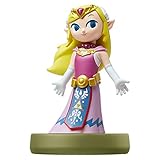
- Import Game - European labelled edition.
- Compatible with US/NA systems (region free)
- Manual and packaging in English/Spanish/French,etc language
- Recommended for children ages 6+
| Evidence level | Appropriate wording | Buying implication |
|---|---|---|
| Strong match | “The item matches the documented release in the identified respects, and the seller supplied consistent photographs and provenance.” | Proceed only if the return and payment protections are acceptable; retain the records. |
| Warning signs | “The listing has unresolved discrepancies, such as an unexplained package mismatch, missing marks, or an implausible price.” | Pause and request evidence. Do not pay until the discrepancy is explained. |
| Insufficient evidence | “Authenticity cannot be determined from the available photographs and documentation.” | Pass, or buy only under protections that allow inspection and return. |
| Misrepresentation indicated | “The item is being represented as an official release, but the available product record and physical evidence conflict.” | Do not purchase; preserve the listing and report the transaction through the marketplace or payment provider. |
Do not announce “genuine” or “counterfeit” from one missing logo, paint difference, seller rating, or price. Confidence should increase only when independent pieces of evidence agree.
The Tool Desk
Outbyte PC Repair FREERepair Windows errors before they cause bigger problemsFix Now →Outbyte Driver Updater FREEScan for outdated or missing drivers - takes under a minuteDriver Scan →Common situations that need extra context
Vintage North American packaging
A pre-2012 North American licensed item may use an earlier glossy or black starburst seal. The absence of the current gold artwork is not, by itself, a disqualifier. Confirm the release period, region, and other package details.
Loose items with no box
Loss of packaging reduces the available evidence but does not prove counterfeiting. Request clear photographs of the base and markings, identify the exact release, compare dimensions and accessories, and value the item as incomplete if the documentation cannot be recovered.
Custom, fan-made, or 3D-printed work
A custom piece should be described as custom or fan-made rather than official. Ask whether the seller altered an existing licensed figure or created a new object, and do not pay an official-release premium for an unlicensed work unless you knowingly want that type of collectible.
Repainted, repaired, or recast pieces
Alterations can obscure factory paint, seams, labels, and materials. Require before-and-after photographs and a precise condition statement. A genuine base with a replacement or recast figure is not the same product as a complete factory release.
PC Slower Than It Used to Be?
A free scan shows the junk files, broken settings and background clutter dragging Windows down - then fixes them in one click.Free scan · Windows 10 & 11Outdated Drivers Are Slowing You Down
One free scan finds every outdated or missing driver and matches the right update for your exact hardware.Free scan · exact hardware matchRegional or retailer-exclusive claims
Ask for region-specific documentation and acquisition history. A seller’s statement that an item was an exclusive does not substitute for a product record, contemporaneous catalog, or verifiable provenance.
What to do if you suspect a counterfeit
- Stop further payment or communication that could erase evidence, but remain factual and non-accusatory in messages.
- Save the complete listing, seller profile, photographs, messages, invoice, payment confirmation, and shipping label.
- Photograph the received item, packaging, seals, labels, damage, and the parcel before returning anything.
- Use the marketplace’s counterfeit or “not as described” process and contact your payment provider within its stated deadline.
- Request a refund according to the platform’s rules; do not send the item back outside the documented process.
- For suspected counterfeit manufacturing or piracy, Nintendo’s FAQ lists
piracyscene@noa.nintendo.comas a reporting contact. Consult Nintendo’s current guidance to confirm that the contact fits your situation and region.
Do not publicly accuse a seller when the evidence only shows that authenticity is unresolved. Report specific discrepancies and attach records.
Buyer’s checklist for a Zelda statue or collectible
- Exact product name, character/version, manufacturer, release period, and region recorded.
- Official or reliable product documentation located, or its absence clearly acknowledged.
- Licensing seal checked against the correct market and era, including the North American pre-2012 note where relevant.
- Seller-created photographs show the whole object, base, markings, packaging, inserts, and damage.
- Object dimensions, materials, pose, base, accessories, and package layout agree with the identified release.
- Custom, fan-made, repaired, repainted, recast, or incomplete status disclosed.
- Completed-sale comparisons use the same product and condition.
- Return, dispute, and payment protections understood before purchase.
- Listing and payment records saved.
What official guidance does not establish
The available Nintendo material does not provide a general Zelda statue serial-number database, a universal statue authentication checklist, or a complete catalog of every collectible. Its counterfeit warning examples focus on games and hardware, and its compliance index covers named products such as amiibo rather than every statue or regional release. No prevalence rate or counterfeit percentage is established by that guidance.
That limitation is useful: it tells you when to seek product-specific confirmation from the named manufacturer or rights holder instead of inventing a rule about sculpting, paint, holograms, serial numbers, or box construction. The most defensible result may be that the listing is well documented, has warning signs, or remains unverified.
Quick Recap
Product prices and availability are accurate as of the date/time indicated and are subject to change. Any price and availability information displayed on Amazon at the time of purchase will apply.

