
Quick wins for a faster PC:
Fix the driver behind crashes, sound loss and screen glitchesFind Drivers →Repair Windows errors before they cause bigger problemsFix Now →Scan for outdated or missing drivers - takes under a minuteDriver Scan →iTechGuides is reader-supported. When you buy through links on our site, we may earn an affiliate commission. As an Amazon Associate I earn from qualifying purchases. Learn more
Set up your Garmin Venu 3 in this order: pair it with Garmin Connect, install updates, confirm wrist heart-rate monitoring, enter your usual sleep schedule, wear the watch overnight, add the Stress glance, and start activities from the watch when you exercise. Sleep and stress features become useful only after consistent wear; Health Status needs roughly three to four weeks of sleep measurements to establish your typical ranges.
The numbers are wellness estimates, not diagnoses. Use them to notice patterns and decide when to adjust habits or seek professional advice—not to make medical decisions from a single reading.
What you need before configuring the Venu 3
Have the Venu 3 charged, a compatible smartphone with Garmin Connect installed, and the Bluetooth connection enabled. Keep the watch and phone close together during pairing. Garmin’s Venu 3 series Owner’s Manual (version 8, December 2025) treats phone pairing and software updates as core setup tasks. Wi‑Fi, music, Garmin Pay, safety features, and a complete user profile are optional additions that you can configure during or after initial setup.
- Garmin Connect installed and signed in on your phone.
- Bluetooth enabled, with the phone near the watch.
- Your normal bedtime and wake time, including different weekday and weekend schedules if they apply.
- A plan to wear the watch for at least two hours before bed and throughout the night.
- Access to a charger before a long sleep or workout session.
Menu wording can change with watch firmware and Garmin Connect releases. If a label below differs on your phone, use the equivalent sleep, device, or health setting rather than assuming a feature is missing.
#1 Best Overall

- OFFICIAL GARMIN REFURBISHED WITH COMPLETE ACCESSORY BUNDLE: Get the trusted Garmin Venu 3 (45mm, Black) at a great value. Professionally inspected, tested, and restored to look and work like new. Includes a Desk Charging Stand, an Extra Backup Charging Cable, and Silicone Port Protector Plugs that help protect the charging port from sweat and everyday wear while keeping your smartwatch ready for workouts, travel, and daily use.
- 14-DAY BATTERY LIFE & AMOLED DISPLAY: Say goodbye to the daily charging hassles that plague other smartwatches. While competitors only offer 24 hours of use, the Venu 3 delivers an outstanding up to 14 days of battery life in smartwatch mode (or up to 26 hours in GPS mode). Features a brilliant, crystal-clear 1.4" AMOLED touchscreen display with optional always-on mode for effortless data viewing.
- ADVANCED SLEEP COACH & NAP DETECTION: Know your sleep score and get personalized sleep coaching to understand how much rest your body needs. Venu 3 automatically tracks and logs your daytime naps, showing exactly how they recharge your Body Battery energy monitoring. Wake up to a comprehensive Morning Report summarizing your sleep stages, recovery outlook, HRV status, and daily weather.
- 30+ SPORTS APPS & WHEELCHAIR MODE: Find new ways to keep your body moving with more than 30 built-in indoor and GPS sports apps, including walking, running, cycling, swimming, HIIT, and golf. Features a dedicated Wheelchair Mode that tracks pushes instead of steps, offering push and handcycle activities with preloaded workouts for strength, cardio, and Pilates.
- ON-WRIST CALLS & VOICE ASSISTANT COMPATIBILITY: Stay connected on the go. When paired with your compatible iPhone or Android smartphone, make and take phone calls right from your wrist. Effortlessly use your smartphone’s voice assistant (fully compatible with Amazon Alexa and Siri) to reply to text messages, control smart home devices, or ask questions via the built-in speaker and microphone.
Pair the Venu 3 and complete the first setup
- Open Garmin Connect. Sign in or create your Garmin account, then choose the option to add a device.
- Put the watch in pairing mode. Follow the on-screen prompt on the Venu 3 and confirm the pairing code shown on both devices.
- Finish the initial prompts. Enter profile information requested by Garmin, such as sex, birth date, height, weight, and activity-related settings. These details help personalize calculations.
- Install watch updates. In Garmin Connect, open the Venu 3 device page and check for software updates. Keep the watch charging and within Bluetooth range until the installation finishes. Garmin’s manual says, “For the best experience, you should keep the software on your watch up to date.”
- Add optional services. Configure Wi‑Fi, music, Garmin Pay, safety features, and notifications only if you plan to use them. They are not required for sleep, stress, or basic workout recording.
After pairing, open the device page once more and verify that the watch has synchronized. A successful sync confirms that settings and health data can move between the watch and Garmin Connect.
Configure sleep tracking
Set your normal sleep and wake times
Garmin uses your expected schedule to help identify sleep periods. In Garmin Connect, open the Venu 3 device settings and find the sleep schedule. Garmin documents paths that vary by device and software, including System > Sleep Mode > Schedule and User Profile > Sleep Schedule. Select the current equivalent in your app, then enter your usual bedtime and wake time. If your workdays and days off differ, set the schedules separately when the app offers that option.
A schedule is a reference, not a command to go to sleep. The watch still relies on wearing the device and its sensors to detect the night.
Recommended Free Tools
Keep wrist heart rate active
Sleep tracking requires the optical wrist heart-rate sensor to remain enabled. Do not disable wrist heart rate for overnight wear. If you recently changed battery or privacy settings, check the heart-rate setting on the watch and in Garmin Connect before your first tracked night.
Wear the watch before bed and all night
Garmin recommends wearing the device for at least two hours before going to bed. Fasten it securely above the wrist bone without making it uncomfortably tight, and keep the optical sensor in contact with clean skin. Leave it on while you sleep and until you are up for the day. Removing it for charging, showering, or another activity creates gaps that the app cannot reconstruct from the schedule alone.
Choose the Primary Wearable when you own more than one Garmin watch
If you use multiple Garmin wearables, designate the device you will actually wear to bed as the Primary Wearable for sleep. Garmin uses that device for the overnight record. Wearing a different watch than the one selected as primary can leave sleep data on the wrong device or prevent the expected record from appearing in Connect.
Know what manual sleep entry can and cannot do
You can manually add a sleep interval in Garmin Connect when the watch missed it. That entry records a duration for your log, but it does not recreate the optical-sensor measurements collected during sleep. It will not generate the underlying sleep stages, sensor-derived measurements, or a sleep score for that period. For automatic Sleep Score and Insights, Sleep Coach recommendations, and richer trends, the watch must be worn overnight with wrist heart rate active. Venu 3 supports Sleep Score and Insights and Sleep Coach.
Rank #2

- OFFICIAL GARMIN REFURBISHED WITH COMPLETE ACCESSORY BUNDLE: Get the trusted Garmin Venu 3 (45mm, Silver/Whitestone) at a great value. Professionally inspected, tested, and restored to look and work like new. Includes a Desk Charging Stand, an Extra Backup Charging Cable, and Silicone Port Protector Plugs that help protect the charging port from sweat and everyday wear while keeping your smartwatch ready for workouts, travel, and daily use.
- 14-DAY BATTERY LIFE & AMOLED DISPLAY: Say goodbye to the daily charging hassles that plague other smartwatches. While competitors only offer 24 hours of use, the Venu 3 delivers an outstanding up to 14 days of battery life in smartwatch mode (or up to 26 hours in GPS mode). Features a brilliant, crystal-clear 1.4" AMOLED touchscreen display with optional always-on mode for effortless data viewing.
- ADVANCED SLEEP COACH & NAP DETECTION: Know your sleep score and get personalized sleep coaching to understand how much rest your body needs. Venu 3 automatically tracks and logs your daytime naps, showing exactly how they recharge your Body Battery energy monitoring. Wake up to a comprehensive Morning Report summarizing your sleep stages, recovery outlook, HRV status, and daily weather.
- 30+ SPORTS APPS & WHEELCHAIR MODE: Find new ways to keep your body moving with more than 30 built-in indoor and GPS sports apps, including walking, running, cycling, swimming, HIIT, and golf. Features a dedicated Wheelchair Mode that tracks pushes instead of steps, offering push and handcycle activities with preloaded workouts for strength, cardio, and Pilates.
- ON-WRIST CALLS & VOICE ASSISTANT COMPATIBILITY: Stay connected on the go. When paired with your compatible iPhone or Android smartphone, make and take phone calls right from your wrist. Effortlessly use your smartphone’s voice assistant (fully compatible with Amazon Alexa and Siri) to reply to text messages, control smart home devices, or ask questions via the built-in speaker and microphone.
Understand naps and their side effects
Compatible Garmin watches can detect a nap after a period of inactivity or let you start one manually. Nap records feed Sleep Coach recommendations and can change Stress and Body Battery values. Garmin says naps shorter than one minute are not recorded. A nap longer than three hours can overwrite that day’s sleep details, so an unusually long daytime sleep may change how the day is summarized.
Turn on and interpret stress tracking
Find the Stress glance
On the watch, swipe through the glances until you find Stress. If it is not visible, open the glance-management controls and add it. The watch can show a live stress estimate, while Garmin Connect provides daily history and longer-term trends after synchronization.
Understand the HRV-based estimate
Garmin calculates the stress number from heart-rate variability (HRV). In general, less beat-to-beat variability corresponds to a higher estimated stress level, while greater variability corresponds to a lower estimate. The number is a 0–100 wellness scale, not a clinical stress test or a diagnosis of anxiety, fatigue, or illness.
| Stress value | Garmin label | How to use it |
|---|---|---|
| 0–25 | Resting state | A low estimate during a calm period; it does not prove that every aspect of recovery is good. |
| 26–50 | Low | Lower estimated strain during the measured interval. |
| 51–75 | Medium | Moderate estimated strain; look for repeated patterns rather than reacting to one value. |
| 76–100 | High | Higher estimated strain; consider context such as activity, poor sleep, caffeine, or an uncomfortable fit. |
Why the chart has gaps
Garmin does not record a stress level during periods of high activity, such as a workout. Those intervals are marked unmeasurable rather than treated as zero or high stress. A day with many gaps may simply contain a lot of movement. Compare similar quiet periods on different days instead of averaging workout intervals into a stress judgment.
PC Slower Than It Used to Be?
A free scan shows the junk files, broken settings and background clutter dragging Windows down - then fixes them in one click.Free scan · Windows 10 & 11Crashes, No Sound, or Screen Glitches?
Random freezes, missing sound and display glitches usually trace back to one bad driver. Find and replace yours safely.Free scan · under a minuteUse trends instead of isolated readings
Sync the watch regularly and review the daily stress graph in Garmin Connect. Look for changes that persist across several days and compare them with sleep duration, naps, training load, illness, travel, alcohol, or other circumstances you track yourself. Garmin’s estimate cannot identify the cause of a high value and should not be used to diagnose a health condition.
Record a workout on the Venu 3
Start an activity from the watch
- Open the activity list on the Venu 3.
- Select the activity that matches what you are about to do, such as a run, walk, cycle, or indoor workout.
- Allow the activity screen to load, then start the recording from the watch’s start control.
- For an activity that needs location data, wait for GPS readiness when the watch prompts you. GPS turns on automatically after an activity requiring it starts; you do not need a separate GPS app.
- When finished, stop the activity and save it. Discard only if you intentionally do not want the session in your history.
Use the closest built-in activity profile so the watch applies the appropriate sensor and GPS behavior. Indoor sessions that do not need location can be recorded without waiting for a satellite lock.
Add an optional wireless sensor
An external wireless heart-rate monitor or another compatible sensor is optional for ordinary activity recording. If you want to use one, pair it before starting the workout:
Rank #3

- Designed with a bright, colorful display, get a more complete picture of your health, thanks to battery life of up to 10 days in smartwatch mode
- Body Batter energy monitoring helps you understand when you’re charged up or need to rest with even more personalized insights based on sleep, naps, stress levels, workouts and more
- Get a sleep score and personalized sleep coaching for how much sleep you need — and get tips on how to improve plus key metrics such as HRV status to better understand your health (data presented is intended to be a close estimation of metrics tracked)
- INCLUDED IN THE BOX: Venu 3 | Charging/Data Cable | Documentation | Garmin Limited Protection
- BUNDLE INCLUDES: Additional 2 YR CPS Enhanced Protection Pack
- Open the Venu 3 settings and go to the sensors or accessories section.
- Wake the external sensor and keep it next to the watch.
- Choose the sensor type, select the discovered device, and confirm pairing.
- Start the activity only after the sensor shows as connected.
Pairing first prevents a workout from starting with wrist data when you expected the external sensor. The watch can still record a workout without an external sensor.
What’s actually slowing this PC down?
Pick the symptom - the matching free tool is one click away.
Check the recorded session in Garmin Connect
After saving, synchronize the watch and open the activity in Garmin Connect. Confirm that the date, duration, route (for GPS activities), heart-rate data, and other available metrics match the session you intended to record. If a route is absent, verify that the chosen profile required GPS and that you allowed the watch time to acquire satellites before moving away.
Build a useful Health Status baseline
Health Status compares recent overnight measurements with your personal typical ranges. Garmin says the feature can use overnight heart rate, HRV, respiration, skin temperature, and Pulse Ox. It may take about three to four weeks of sleep-worn measurements to establish those typical ranges, so do not expect meaningful baseline comparisons after one or two nights.
Enable the measurements you want included
- Wrist heart rate: keep it enabled, including during sleep.
- Pulse Ox: enable it during sleep or all day if you want Pulse Ox data to appear in Health Status. Continuous all-day measurement can reduce battery life.
- Overnight wear: wear the watch consistently, because missed nights slow baseline formation.
Health Status is a wellness feature. Garmin explicitly states: “This data is not intended to be used for medical purposes, nor is it intended to diagnose, cure, or prevent any disease or condition.” Treat unusual results as a reason to review context and, when appropriate, speak with a qualified clinician—not as a diagnosis.
Troubleshoot missing or unreliable data
No sleep record appears
- Confirm that wrist heart rate is enabled.
- Check that the correct Venu 3 is the Primary Wearable.
- Verify the sleep and wake schedule in Garmin Connect.
- Wear the watch for at least two hours before bed and keep it on overnight.
- Open Garmin Connect and synchronize after waking.
Manually entering the interval can document how long you slept, but it cannot restore the sensor measurements or create a sleep score.
Stress shows unmeasurable periods
Check whether the gaps coincide with workouts or other high-activity periods. Garmin intentionally omits stress readings during high activity. Review quiet intervals and daily trends instead.
Health Status has no typical range
Continue wearing the watch overnight for roughly three to four weeks, keep wrist heart rate enabled, and enable Pulse Ox during sleep or all day if that metric is required. Baselines need repeated measurements; changing devices or frequently removing the watch delays them.
Rank #4
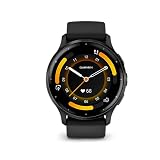
- Designed with a bright, colorful display, get a more complete picture of your health, thanks to battery life of up to 14 days in smartwatch mode
- Body Battery energy monitoring helps you understand when you’re charged up or need to rest with even more personalized insights based on sleep, naps, stress levels, workouts and more
- Get a sleep score and personalized sleep coaching for how much sleep you need - and get tips on how to improve plus key metrics such as HRV status to better understand your health (data presented is intended to be a close estimation of metrics tracked)
- Find new ways to keep your body moving with more than 30 built-in indoor and GPS sports apps, including walking, running, cycling, HIIT, swimming, golf and more
- Enjoy the convenience of making and taking phone calls from your wrist - even use your smartphone’s voice assistant to respond to text messages and more (when paired with your compatible iPhone or Android smartphone); plus, you can respond to texts via voice, or Android users can text directly from the smartwatch
The workout lacks GPS or external heart-rate data
Confirm that you selected an activity profile that uses GPS, allowed GPS to acquire before starting, and saved the activity normally. For an external sensor, verify that it was awake, paired in the sensor settings before the workout, and shown as connected when recording began.
Fine-tune your routine after the first week
Once the basic setup works, avoid changing several health settings at once. Consistent conditions make the trends easier to read. Keep the same Primary Wearable for sleep, wear it for the recommended two hours before bed, and synchronize each morning. If your schedule changes because of travel, shift work, or a weekend routine, update the sleep schedule rather than treating the old times as a fixed bedtime. The schedule helps classification, while the overnight sensor data remains essential.
The Tool Desk
Outbyte PC Repair FREEClear out junk files and repair common Windows errorsFree Scan →Outbyte Driver Updater FREEFix the driver behind crashes, sound loss and screen glitchesFind Drivers →Review a missed night before manually editing it. First check wrist-heart-rate status, watch fit, battery level, and whether the watch was actually selected as primary. A manual interval is useful for keeping a diary of sleep duration, but it cannot restore Sleep Score, Sleep Coach inputs, HRV, respiration, or other measurements that were never collected.
For stress, compare like with like: a quiet morning meeting is more comparable to another quiet morning than to a run. A high value during a calm period may be worth watching as a pattern, but one reading cannot identify whether the cause was poor sleep, caffeine, illness, emotional strain, or sensor fit. High-activity intervals are intentionally unmeasurable, not evidence of either low or high stress.
Independent reader supportYour contribution helps us test, update, and keep practical guides available for everyone.Choose the simplest workout sensor setup
| Setup | Best fit | What to remember |
|---|---|---|
| Wrist heart rate only | Most ordinary runs, walks, cycles, and indoor sessions | No extra purchase or pairing is needed; keep wrist heart rate enabled. |
| Optional wireless heart-rate monitor | When you specifically want data from a paired external sensor | Wake and pair it in the sensor settings before starting the activity; it is not required to record the workout. |
| GPS activity profile | Outdoor activities where route or location metrics matter | Start the matching profile and allow GPS to become ready before moving away. |
| Indoor profile | Sessions that do not need a route | There is no reason to wait for a satellite lock when location is not part of the activity. |
This approach keeps setup proportional to the workout. Add a sensor only for a clear reason, and confirm the connection before the timer starts so the saved file reflects the data source you intended.
Keep charging and software checks in the routine
Charging is part of reliable overnight tracking. Top up the Venu 3 before a long night or demanding workout, and avoid leaving it off your wrist during the sleep window merely because it needs power. If you need a replacement or spare charging cable, verify the exact Venu 3 connector and compatibility with Garmin or the listing before buying; cables are model-specific accessories.
Free tools Windows power users keep installed
One-click scans. No signup required.
Check for watch software updates after the initial pairing and periodically thereafter. Firmware and Garmin Connect labels can change, so an updated device may present a slightly different path to Sleep Mode, schedules, sensors, or glance management. When a menu name moves, look for the same function under the device, system, sleep, health, or sensor settings rather than disabling a feature because an older instruction no longer matches.
Best Value

- Physical size - 45 x 45 x 12 mm - Fits wrists with a circumference of 135-200 mm
A simple setup and review routine
- Once: pair the Venu 3, update software, complete your profile, and configure optional services.
- Before the first night: set sleep and wake times, confirm wrist heart rate, choose the Primary Wearable if necessary, and enable desired Pulse Ox behavior.
- Every night: wear the watch for at least two hours before bed and keep it on until morning.
- Each morning: synchronize Garmin Connect and review sleep details, Sleep Score, Sleep Coach guidance, and any Health Status readings that are available.
- During exercise: select an activity, let GPS start when required, confirm optional sensors are connected, then save the session when finished.
- Weekly: look for recurring stress and sleep patterns instead of reacting to a single number. Allow several weeks before judging Health Status ranges.
Frequently Asked Questions
How do I set up my Garmin Venu 3 for sleep tracking?
Pair the watch with Garmin Connect, install updates, set your usual sleep and wake times, keep wrist heart rate enabled, and wear the Venu 3 for at least two hours before bed and throughout the night. If you own multiple Garmin watches, make the one you wear to bed the Primary Wearable.
Will manually entering sleep create a Sleep Score?
No. Manual entry records a sleep duration in Garmin Connect, but it cannot recreate optical-sensor data, sleep stages, HRV, or a Sleep Score. Automatic Sleep Score, Insights, and Sleep Coach features require overnight wear with wrist heart rate active.
How do I turn on stress tracking?
Find the Stress glance on the watch and add it through glance management if it is hidden. Garmin Connect shows daily history and trends after synchronization. The 0–100 number is an HRV-based wellness estimate, not a clinical diagnosis.
Why does Garmin show no stress value during my workout?
Garmin marks high-activity periods, including workouts, as unmeasurable. Those gaps are intentional and are not counted as zero or high stress. Review quiet periods and compare similar days instead.
How do I track a workout on my Venu 3?
Open the activity list, choose the closest profile, and start the recording. GPS turns on automatically for activities that require it; wait for readiness when prompted. Stop and save the activity, then synchronize Garmin Connect to review the file.
Do I need an external heart-rate monitor?
No. The Venu 3 can record ordinary workouts with wrist data. An external wireless sensor is optional; wake and pair it in the sensor settings before the activity, and confirm it shows as connected before starting.
How long does Health Status take to establish a baseline?
Garmin says about three to four weeks of sleep-worn measurements may be needed to establish typical ranges for overnight heart rate, HRV, respiration, skin temperature, and Pulse Ox. Keep wrist heart rate enabled and enable Pulse Ox during sleep or all day if you want that metric included.
Can naps change my Garmin metrics?
Yes. Compatible watches can detect naps or let you start one manually. Nap records can affect Sleep Coach, Stress, and Body Battery. Naps shorter than one minute are not recorded, and a nap longer than three hours can overwrite that day’s sleep details.
The Bottom Line
Pair and update the Venu 3 first, then make overnight wear and active wrist heart rate consistent. Set your schedule, select the correct Primary Wearable, use the Stress glance as an HRV-based trend rather than a diagnosis, and start workouts from the matching activity profile. Give Health Status roughly three to four weeks of measurements before judging your personal ranges, and remember that an external sensor is optional.
Quick Recap
Product prices and availability are accurate as of the date/time indicated and are subject to change. Any price and availability information displayed on Amazon at the time of purchase will apply.

