
iTechGuides is reader-supported. When you buy through links on our site, we may earn an affiliate commission. As an Amazon Associate I earn from qualifying purchases. Learn more
A workplace recycling program succeeds when the correct bin is the easiest option at the moment waste is created. Start with an audit of your own waste, verify every accepted material with the local hauler or property manager, place clearly labeled recycling beside trash, train employees and custodians, and review contamination and service data often enough to fix problems. Assign one coordinator or a small team so the program has an owner after launch.
What an effective workplace recycling program looks like
Employees generally do not stop to study complicated disposal rules. They make a quick decision while carrying a cup, opening a package, clearing a desk, or leaving a meeting. A usable program therefore combines four conditions:
- Correct scope: the bins accept only materials your local program or contracted hauler actually takes.
- Convenient placement: recycling is located where materials arise and directly beside trash.
- Unambiguous instructions: labels use large words and pictures, with consistent colors throughout the building.
- Visible maintenance: someone checks contamination, overflow, storage, pickup and employee feedback, then changes the system when evidence shows a problem.
EPA commercial-building guidance says recycling should be as easy as throwing something away. Its archived setup guidance similarly says that making recycling easy and convenient increases public and vendor participation. Those principles matter more than a launch poster or a one-time announcement.
1. Give the program a named owner
Put one coordinator or a small recycling team in charge of design, questions, training, service coordination and progress tracking. The owner does not have to perform every task; the role is to make sure each task has an accountable person and a deadline.
#1 Best Overall

- Space Saving Profile - The Highboy bin is perfect for tight or compact spaces; its narrow design and sleek shape make it ideal for the kitchen, garage, office, or other areas where space is limited while still large enough for household recycling.
- Easy Bag Removal - This indoor or outdoor recycle bin was designed with a tapered shape and vented sides to make it simple to remove a trash bag. Eliminate the struggle to remove a full bag of waste. The recommended bag size for ideal use is 33 gallons.
- Dustpan Edge - Sweep debris directly into the slim trash can with a dustpan edge that eliminates the need for a separate dustpan, making it easy and efficient to clean. The waste container is also made with smooth plastic to ensure easy cleaning.
- Swing Top Lid – The Highboy comes with the premium feature for functionality; a swing top lid to conceal trash while also providing easy access to discard waste. Remove the lid to empty the receptacle and reattach it with ease.
- Easy to Carry - Designed with you in mind, the Highboy durable plastic recycling bin has sturdy pass-through handles on top and a hand groove on the bottom. This makes moving the heavy-duty garbage can easier than ever.
Bring operators into the design early
Include facilities or property management, custodial supervisors, office representatives and the local hauler before buying bins or publishing instructions. Custodians know which containers are difficult to empty and where overflow occurs. Facilities staff know storage limits and building rules. The hauler can explain accepted materials, preparation requirements, contamination rules and pickup constraints.
Write down responsibilities
- Coordinator: audit, employee communications, training schedule, issue log and review meetings.
- Facilities or property management: container locations, storage room, access and building approvals.
- Custodial team: emptying interior bins, keeping streams separate, reporting contamination and overflow.
- Hauler or service provider: accepted-material specification, containers, pickup frequency, quality requirements and service reporting.
- Department representatives: local reminders, onboarding support and feedback from employees.
A short responsibility matrix prevents a common failure: everyone assumes somebody else will replace a full bin, answer a sorting question or call the hauler.
2. Audit the waste your workplace actually produces
Do not begin with a generic list of recyclable materials. Walk through the building and review existing trash and recycling for several normal workdays. Note the material, approximate volume, location and time at which it appears.
Crashes, No Sound, or Screen Glitches?
Random freezes, missing sound and display glitches usually trace back to one bad driver. Find and replace yours safely.Free scan · under a minuteWindows Errors? Fix Them Before They Spread
Repair common Windows errors and clear accumulated junk for a smoother, more stable PC - no reinstall needed.Free scan · no reinstallMap the major streams
- Desk and printer areas: office paper, envelopes, cardboard packaging and disposable supplies.
- Kitchen and break rooms: beverage containers, food packaging, paper products and food waste where a separate organics service exists.
- Meeting rooms: cups, cans, bottles, catering packaging and handouts.
- Shipping, receiving and storage: corrugated cardboard, pallets, shrink wrap and other packaging.
- Special areas: confidential paper, batteries, electronics, toner or laboratory materials that may require separate handling rather than ordinary recycling.
Use quantity and quality as decision tests
EPA collection guidance says a candidate material should be available in sufficient quantity, meet quality requirements and be economically transportable. Apply those tests before adding a stream. A material that is technically recyclable somewhere may still be unsuitable for your workplace because it is too scarce, too contaminated, too expensive to move or not accepted by your provider.
Record recurring trouble spots during the audit. A recycling station that is always full needs more capacity or more frequent service; a station with almost no material may be unnecessary or misplaced. Keep the inventory as a baseline for later comparisons.
Rank #2

- Recycling & Garbage Bin: This spacious blue bin makes waste disposal and recycling easy. With a generous capacity, it’s designed to help you collect and sort rubbish efficiently.
- Blue Waste Bin: Measuring 22.25" L x 17.25" W x 14.25" H, this recycling trash can offers a 17-gallon capacity and weighs only 3.92 lbs. It has a low profile and fits discreetly in any space.
- Home Recycling Tote: Built with tall side walls, carry handles, and injection-molded construction with a cross-stacking design, this bin ensures durability, ease of use, and easy storage.
- Versatile Bin: Ideal for home, office, garage, or outdoor use, this versatile recycling container features an easy-to-identify Mobius loop symbol and address bar for simple sorting and organization.
- Create a Gracious Home: At Gracious Living, we’re committed to making innovative and high-quality products to help people live more organized and gracious lives in homes they love.
3. Confirm what is accepted locally
There is no universal workplace recycling list. Municipal programs and commercial contracts differ, even within the same region. Before printing signs, obtain the current accepted-material and preparation rules from your hauler, property manager or local authority.
Ask the provider these questions
- Which materials are accepted in each stream?
- Must paper, cardboard, containers, food waste or other materials be separated?
- How clean and empty must containers be?
- Are plastic types, bags, films, coated cups or compostable products excluded?
- What contamination level triggers a warning, surcharge or rejected load?
- Who supplies carts, dumpsters, liners and labels?
- Where may material be stored, and how must it be prepared for pickup?
- What pickup frequency and container capacity are available?
- What reporting is provided for weights, rejected loads or service problems?
Publish only the rules you can support. If the provider says a material is not accepted, place it in trash or create a separate approved collection route; do not label it recyclable merely because a specialty processor accepts it in another location.
Free tools Windows power users keep installed
One-click scans. No signup required.
4. Design collection, storage and pickup before launch
Decide how material will move from an employee’s desk or kitchen to the loading area. The interior station, custodial route, storage room, container and pickup schedule must work as one system.
Set the physical flow
- Choose collection points beside the places identified in the audit.
- Specify which container is emptied by custodians and which material is taken directly to a larger central container.
- Assign a secure, accessible staging area that keeps streams separate and dry.
- Calculate practical capacity from observed volume and the agreed pickup interval, allowing room for busy periods.
- Document who checks fullness, who requests an extra pickup and who handles a rejected load.
Do not promise a universal collection schedule or price. Frequency, container size, storage requirements, labor and total cost depend on the building and contract. EPA identifies storage, hauling, container capacity and collection frequency as program-design questions rather than fixed settings.
Coordinate with custodians
Show custodial staff the accepted and unacceptable materials, the intended liner or no-liner arrangement, the route to staging and the method for reporting contamination. A sign that employees understand is useless if bags are later mixed, placed in the wrong cart or compacted with trash.
Rank #3

- PCR: Made of post-consumer recycled resin for commercial recycling use
- BUILT-IN HANDLES: Enable easier lifting and carrying
- DESIGNED TO EASILY STACK: Designed to stack or nest for increased productivity
- DURABLE: Commercial grade construction to withstand years of indoor and outdoor use
- EASY TO CLEAN: Texture and design prevent liquid and debris build up for easy cleaning
5. Make the recycling choice as easy as the trash choice
Place recycling near the point of generation and directly beside trash wherever possible. EPA recommends paired bins so a person can make the choice at one location instead of carrying an item across a room.
Choose containers using site evidence
Compare stations against the material streams and service pattern found in the audit. Consider:
- Capacity: enough room for the observed volume without encouraging overflow.
- Durability: construction that tolerates the building’s traffic and cleaning routine.
- Handling: weight, casters, removable liners and access for custodians.
- Cost: purchase price plus liners, maintenance, labor and any service changes.
- Label area: enough space for large words and pictures visible from the approach.
- Recycled content: an option to evaluate where it meets durability and budget requirements.
There is no evidence in the available guidance for one mandatory bin color or one universal container design. Consistency within your building matters more: the same color should represent the same stream everywhere.
Write labels for a hurried reader
Put the stream name in large type, add pictures of common accepted items and list only the most important exclusions. Use plain examples from your audit rather than an exhaustive paragraph. Place the same wording on interior bins, central containers, posters and digital instructions.
Label trash as well as recycling. An unlabeled trash opening can make recycling appear optional, while a clearly identified pair communicates that both streams are part of the normal disposal process.
Rank #4
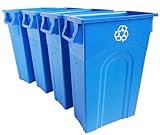
- Space Saving Profile - The Highboy bin is perfect for tight or compact spaces; its narrow tall design and sleek shape make it ideal for the kitchen, garage, office, or other areas where space is limited while still large enough for household recycling.
- Easy Bag Removal - This indoor/outdoor recycle bin was designed with a tapered shape and vented sides to make it simple to remove a trash bag. Eliminate the struggle to remove a full bag of waste. The recommended bag size for ideal use is 33 gallons.
- Dustpan Edge - Sweep debris directly into the slim trash can with a dustpan edge that eliminates the need for a separate dustpan, making it easy and efficient to clean. The waste container is also made with smooth plastic to ensure easy cleaning.
- Easy to Carry - Designed with you in mind, the Highboy durable plastic recycling can has sturdy pass-through handles on top and a hand groove on the bottom. This makes moving the heavy-duty recycling container easier than ever.
- Multipack of 4 – The Highboy comes in a pack of 4, making it the perfect for kitchen, patio, garage, or office recycling bin. This is an excellent slim trash can for business or commercial use and pairs well with United Solutions’ Highboy Waste Container.
6. Train employees and custodial staff
Training should answer three questions: what goes in each bin, what must stay out and whom to ask when a case is unclear. Announce the program through management, demonstrate the stations and leave time for questions.
Use several short learning moments
- Have a senior leader introduce the reason for the program and the expected behavior.
- Give employees a brief demonstration at a kitchen or printer station.
- Include the rules and contact person in new-employee orientation.
- Post the same picture-based instructions near every station.
- Send short reminders through the workplace channel when a recurring error appears.
- Train custodial staff separately on collection, storage, contamination and escalation.
Keep a single source of truth for accepted materials. If an employee receives conflicting answers from a poster, a manager and a cleaner, confidence in the whole system drops.
7. Launch with communication that continues
A kickoff creates awareness; ongoing communication creates a habit. Set a launch date after bins, storage, service and training are ready. On launch day, station a coordinator or department representative near the busiest locations to answer questions and identify confusing labels.
Make progress visible without inventing targets
Share milestones such as a completed audit, a reduction in rejected loads or a station redesign. If you have reliable collection data, report the period and measurement method. Do not present a historical national statistic as a workplace goal or imply that every office should reach the same participation rate.
Use recognition and low-friction challenges
EPA employee-education guidance supports recognition, challenges, feedback and management support. A department shout-out, a short waste-sorting quiz or a suggestion board can keep attention without turning recycling into a burdensome contest. Invite employees to report a missing bin, confusing example or recurring overflow.
Best Value

- PACK OF 6: Comes with 6 18 Gal Recycling Boxes for use in various areas of a home or business
- PCR: Made of post-consumer recycled resin for home or commercial recycling use
- BUILT-IN HANDLES: Enable easier lifting and carrying
- DESIGNED TO EASILY STACK: Designed to stack or nest for easy storage when not in use
- DURABLE: Commercial grade construction to withstand years of indoor and outdoor use
8. Inspect, measure and improve the system
Plan the first review before launch. The program should be adjusted from evidence rather than defended as a finished project.
Check operations regularly
- Look for contamination in representative bins and staging areas.
- Check whether recyclable material is appearing in trash.
- Record overflow, odors, wet material, damaged containers and missed pickups.
- Review hauler notices, rejected loads and available weight or volume reports.
- Ask custodians which stations are difficult to service.
- Ask employees which labels or materials remain confusing.
Match the fix to the failure
| Observed problem | Likely adjustment |
|---|---|
| Recycling is empty while trash contains common recyclable items | Move the station beside the disposal point, improve the label and repeat a short demonstration. |
| Bins overflow before pickup | Increase capacity, add a station where material is generated or negotiate a different service frequency. |
| Loads are rejected for contamination | Remove unsupported items from signage, add pictures of frequent contaminants and retrain the affected area. |
| Custodians mix streams during collection | Clarify liners, cart markings, routes and staging responsibilities with the custodial supervisor. |
| Employees cannot tell which provider rule applies | Replace generic recycling language with the current local accepted-material list and a named contact. |
EPA commercial-building guidance recommends ongoing communication and an annual review. Review more often during the first weeks or after a move, renovation, service change or major change in staffing.
How to compare bins, haulers and program arrangements
Use a written comparison rather than selecting the cheapest container or the first service proposal. The following questions keep the decision tied to your workplace.
Do these 3 things before closing this tab:
1Clear out junk files and repair common Windows errors2Fix the driver behind crashes, sound loss and screen glitches3Repair Windows errors before they cause bigger problems| Decision area | What to compare | Evidence to request |
|---|---|---|
| Materials | Accepted streams and preparation rules | Current provider specification and contamination policy |
| Capacity | Container size against audited volume | Observed fullness, pickup interval and busy-period needs |
| Service | Pickup frequency, missed-pickup process and reporting | Contract terms and sample service report |
| Storage | Space, access, weather protection and stream separation | Facilities walkthrough and hauler requirements |
| Labor | Interior emptying, transport and cleaning responsibilities | Custodial route and time estimate |
| Containers | Durability, handling, label visibility, cost and recycled content | Specifications, warranty and total installed cost |
| Financial impact | Fees, equipment, liners, labor and possible material revenue | Site-specific proposal; market prices can fluctuate |
EPA notes that markets and prices fluctuate and that vendors specify quality requirements. A proposal that appears inexpensive can become costly if it requires extra labor, more storage or frequent rejected loads.
A practical 30-, 60- and 90-day rollout
Days 1–30: understand and design
- Name the coordinator and invite facilities, custodial, office and provider representatives.
- Complete a walk-through and practical waste inventory.
- Confirm accepted materials, preparation rules, contamination limits and service options.
- Map collection points, storage and the custodial route.
- Draft labels, employee instructions and the escalation contact.
Days 31–60: install and teach
- Buy or reassign containers based on audited streams and capacity.
- Place paired waste and recycling stations near generation points.
- Mark central storage and verify pickup access.
- Train custodial staff and department representatives.
- Announce the launch and include instructions in onboarding materials.
Days 61–90: observe and correct
- Inspect representative stations for contamination, overflow and misplaced recyclables.
- Collect provider feedback and any available service or weight data.
- Ask employees and custodians to identify confusing locations or rules.
- Change labels, placement, capacity, training or frequency based on findings.
- Set the next review date and maintain a simple issue log.
What the historical numbers do—and do not—tell you
EPA material has cited commercial waste as about 40 percent of total municipal solid waste in an older fact sheet. That figure is historical context from an older document, not a current estimate of your workplace’s waste or a participation target.
EPA also reported that 62.5 percent of paper and paperboard produced in the United States was recovered for recycling in 2011. That is a historical national recovery statistic, not evidence that 62.5 percent of employees will participate in an office program.
No current workplace employee-participation benchmark is established by the reviewed guidance. Measure your own contamination, collected material, service reliability and employee feedback instead of promising a percentage that does not apply to your site.
What’s actually slowing this PC down?
Pick the symptom - the matching free tool is one click away.
Quick Recap
Common mistakes to avoid
- Copying another building’s accepted list: local programs and contracts differ.
- Buying bins before auditing: the wrong capacity or stream arrangement creates overflow and unnecessary cost.
- Putting recycling in a remote corner: distance turns a correct choice into an inconvenient one.
- Using text-only signs: pictures and examples help people decide quickly.
- Ignoring custodians: collection staff determine whether the designed system survives daily service.
- Launching once and disappearing: reminders, feedback and review are part of normal operation.
- Calling every technically recyclable item accepted: quality, transport economics and local market requirements control what belongs in your bins.
Product prices and availability are accurate as of the date/time indicated and are subject to change. Any price and availability information displayed on Amazon at the time of purchase will apply.

