
Recommended Free Tools
iTechGuides is reader-supported. When you buy through links on our site, we may earn an affiliate commission. As an Amazon Associate I earn from qualifying purchases. Learn more
A reliable local game night starts with the game, not the console: confirm the exact title’s local-player limit and controller rules, choose between one-console and multi-system play, then test the display, sound, game mode, and every controller before guests arrive. For most couch sessions, one console and one shared TV or monitor are enough; extra systems are only necessary when the specific game supports linked local play or the group exceeds the one-console limit.
Start with the player count and game mode
Write down three things before moving furniture or buying equipment: how many people will play, which game and edition you will use, and whether everyone will share one console. The console’s technical capability is not the same as a game’s local-player support. A Boys & Girls Clubs equipment guide makes this distinction for the consoles it covers: check the individual game’s instructions rather than assuming the platform limit applies to every title.
| # | Preview | Product | Price | |
|---|---|---|---|---|
| 1 |
|
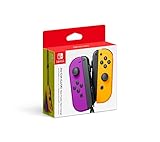
Nintendo Neon Purple/Neon Orange Joy-Con (L-R) - Switch | $87.95 | Buy on Amazon |
| 2 |

|
Nintendo Joy-Con (L/R) - Neon Red/Neon Blue (Renewed) | $60.00 | Buy on Amazon |
| 3 |

|
Nintendo Blue/Neon Yellow Joy-Con (L-R) - Switch | $79.99 | Buy on Amazon |
| 4 |

|
Nintendo Joy-Con (L)/(R) - Pastel Purple/Pastel Green | $87.00 | Buy on Amazon |
Ask these questions first
- How many people are actually playing? Count active players, not spectators who might take a turn later.
- Which mode is required? A game may offer local racing, a local battle, party play, or only online multiplayer. Confirm the mode you intend to use.
- What hardware is in the room? List the console or consoles, compatible controllers, display, power connections, and any stands or docks required by your setup.
- Does the title support one-console play? If not, determine whether it documents local play between multiple systems.
Do this check for the exact edition and console in use. Instructions can differ between games, between modes in the same game, and between console generations.
Choose one-console or multi-system play
Most living-room sessions use one console connected to one screen. A multi-system arrangement is a different format: each system may need its own display or a documented shared-display method, and every system must join the same local session. Do not buy or borrow extra consoles until the game’s support page confirms that mode.
#1 Best Overall
- Two Joy Con can be used independently in each hand, or together as 1 game controller when attached to the Joy Con grip
- They can also attach to the main console for use in handheld mode, or be shared with friends to enjoy two player action in supported games
- Each Joy Con has a full set of buttons and can act as a standalone controller, and each includes an accelerometer and gyro sensor, making independent left and right motion control possible
| Setup | What it means | Best when | What to verify |
|---|---|---|---|
| One console, one screen | All players join the local mode on a single console and view one TV or monitor. | The title supports the whole group on one system and the room can see one screen. | Local player limit, controller count, controller types, and the game’s player-selection screen. |
| Multiple consoles, local link | Two or more systems connect in the same room for a supported local multiplayer mode. | The group is larger than the one-console limit or the game is designed around one system per player or team. | Exact game support, maximum number of linked systems, network or link procedure, displays, power, and controllers for every system. |
Nintendo’s Play Together guidance says compatible Nintendo Switch and Nintendo Switch 2 games can link up to eight systems in one room. That is a Nintendo-specific capability for compatible games, not a promise that eight people can play on one console or that every title supports the link mode.
Confirm the game’s local multiplayer rules
Use the publisher’s current support instructions for the title you selected. Look specifically for local play, player count, mode restrictions, and controller setup. An online multiplayer label alone does not establish couch multiplayer support.
Mario Kart 8 Deluxe
Nintendo’s current support instructions describe up to four local players on one Nintendo Switch or Nintendo Switch 2 for Mario Kart 8 Deluxe. At startup, players select a player count and controller type. The instructions may prompt you to detach Joy-Con controllers or connect additional controllers. Therefore, a four-person plan requires four supported player inputs in the configurations the game accepts; the exact combination depends on the controllers you own.
Use that four-player figure only for Mario Kart 8 Deluxe in the stated one-console setup. It is not a general limit for every Switch game.
Super Smash Bros. Ultimate
Nintendo’s support material describes a local battle option for two to eight players. Treat that range as belonging to the specific mode and instructions Nintendo describes. Confirm the selected ruleset, player count, and controller assignment on the day, especially if you are changing from a smaller free-for-all to a larger battle.
Mario Party Superstars
The support instructions for Mario Party Superstars require the host to set the player count and connect a controller for each player. That setup flow illustrates why you should count controllers against the game instructions rather than against the console’s advertised capability.
Why these examples cannot be generalized
Mario Kart 8 Deluxe, Super Smash Bros. Ultimate, and Mario Party Superstars each have separate support guidance. A title on the same console may support fewer local players, require a particular controller configuration, or offer local play only in selected modes. Recheck the current support page whenever the game, console, or software version changes.
The Tool Desk
Outbyte Driver Updater FREEFix the driver behind crashes, sound loss and screen glitchesFind Drivers →Outbyte PC Repair FREEClear out junk files and repair common Windows errorsFree Scan →Count controllers by player and configuration
Make a controller plan after choosing the game. Count one usable input for every simultaneous player unless the title explicitly allows a shared controller or another arrangement. A pair of detachable controllers may be usable separately in one title and require a different configuration in another, so do not count physical pieces without checking how the game identifies them.
Build a controller checklist
- Write the target player count beside the game mode.
- Read the game’s controller instructions and note accepted controller types.
- Assign one controller or permitted controller combination to each player.
- Mark which inputs are already charged or connected and which require pairing or cables.
- Keep one compatible spare if your group depends on a single older or unreliable controller.
If you need an extra controller, buy or borrow a model explicitly compatible with both your console and the selected game. No exact model, price, retailer stock, or country-specific availability is established here, so verify those details locally before spending money.
Prepare the screen and room
A TV or monitor is core equipment for a shared-screen session. Place it where every player can see the action without twisting around furniture, and leave enough space for people to reach their controllers comfortably. The equipment guidance supports using a TV or monitor and adaptable controller options, but it does not establish a recommended screen size, resolution, cable model, or viewing distance.
Use one shared screen deliberately
- Put the screen at a height and angle visible from every seat.
- Keep the console close enough to its supported display connection and power source without creating a trip hazard.
- Leave room for players to pass controllers without blocking ventilation openings or standing on cables.
- Set the room lighting so the screen is readable without harsh reflections.
- Place drinks and snacks away from the console, display, and controller charging area.
For a multi-system event, decide whether each system will use its own screen or whether the game documents another arrangement. Do not assume that a second console automatically means a second playable view on one television.
Outdated Drivers Are Slowing You Down
One free scan finds every outdated or missing driver and matches the right update for your exact hardware.Free scan · exact hardware matchWindows Errors? Fix Them Before They Spread
Repair common Windows errors and clear accumulated junk for a smoother, more stable PC - no reinstall needed.Free scan · no reinstallSet up and test everything before guests arrive
Run the complete path from a powered-off room to an actual local match. This catches the problems that are hardest to solve once people are waiting.
Rank #3
- Two Joy Con can be used independently in each hand, or together as 1 game controller when attached to the Joy Con grip
- They can also attach to the main console for use in handheld mode, or be shared with friends to enjoy 2 player action in supported games
- Each Joy Con has a full set of buttons and can act as a standalone controller, and each includes an accelerometer and gyro sensor, making independent left and right motion control possible
- Choose the format. Decide one-console or multi-system play using the exact game’s documented player limit and local mode.
- Prepare the display. Connect the console using its supported display connection, turn on the TV or monitor, and select the input used by the console.
- Start the console and game. Allow time for startup, an update, or a controller-pairing prompt. Do not wait until guests arrive to discover that software maintenance is required.
- Open the local multiplayer mode. Avoid an online lobby if the plan is couch play. Follow the title’s on-screen path for local or multiplayer play.
- Set the player count. Select the number of active players shown by the game. If the game does not offer the number you planned, stop and revise the group or choose another supported mode.
- Connect and assign controllers. Pair, detach, or connect controllers as the instructions request. Have each player press the required confirmation button and verify that the game shows the correct participant.
- Check picture and sound. Confirm that the intended screen shows the game, the selected input remains correct, and game audio is audible at the seating positions.
- Play one short test round. Let every participant move, select, and confirm once. This reveals a missing assignment or an intermittent input before the main session.
- Reset to a ready state. Return to the game’s lobby or mode-selection screen so the first guest can join without navigating through settings.
The official Mario Kart 8 Deluxe setup flow specifically includes selecting player count and controller type, which is why those checks belong in the rehearsal rather than being left to chance.
When a multi-system local night makes sense
Use multiple systems only when the exact game documents a local link mode and the room can support the added hardware. Nintendo’s guidance for compatible Switch-family games allows up to eight systems in one room. That number refers to linked systems, not eight players on one console.
Plan each station
- Give every system a labeled position, display, power connection, and controller set.
- Use the same game edition and a compatible software state where the game’s instructions require it.
- Follow the title’s process for creating or joining the local session on each system; the host and joining stations may have different menus.
- Test the link with two systems before assembling the full group.
- Keep a written station map so a disconnected controller or display can be traced to the correct setup.
Multi-system play increases setup time and the number of possible failure points. If the one-console mode supports your group, it is usually the simpler host choice because everyone shares one game view and one set of menus.
Troubleshoot by symptom
The screen says there is no signal
- Confirm that the display is powered on and showing the console’s input.
- Check that the console is powered and that the display connection is seated at both ends.
- Try the console’s supported alternate input or connection only if your hardware documentation permits it.
- Restart the display and console in the order recommended by their manufacturers, then repeat the input selection.
If the console works on a known-good display but not the event screen, the issue is likely in the display input or connection rather than the game’s player setup.
A controller is not recognized
- Confirm that the controller is compatible with the console and the selected game.
- Check its charge or power, then pair or connect it using the console’s normal procedure.
- Return to the game’s controller-selection screen and assign it to the intended player.
- Remove and reconnect one controller at a time so you can see which assignment changes.
- Swap in a known-compatible controller to distinguish a game-setting problem from a hardware problem.
The game will not offer the planned player count
Check that you opened the local mode rather than an online or single-player mode, and verify the title’s documented limit for that exact console and edition. If the limit is lower than your group, reduce the active players, rotate turns, select another mode supported by the title, or choose a different game. Do not try to force an unsupported player count by adding controllers.
The multi-system session will not form
Re-read the game’s local-link instructions and confirm that every station is using a compatible system and game state. Test with two systems, then add stations one at a time. If the title does not document the link mode, treat the feature as unavailable rather than improvising a network arrangement.
Rank #4
- Expand your collection with these colorful pastel Joy-Con controllers.
Design the evening around the room, not just the specification
A supported maximum is not always a comfortable target. Eight players may fit a documented local battle, yet the room may offer only one small viewing angle or too few seats. Decide whether everyone plays simultaneously, rotates after each round, or forms teams. Explain the rotation before starting so controller handoffs do not interrupt the game.
What’s actually slowing this PC down?
Pick the symptom - the matching free tool is one click away.
Useful host roles
- Host: starts the game, sets the mode, and resolves menu questions.
- Equipment helper: watches charging, pairing, and display connections.
- Scorekeeper or rotation caller: tracks turns when the room is larger than the comfortable simultaneous player count.
For younger players or guests unfamiliar with the console, complete the controller assignment before explaining game rules. A short practice round is more useful than a long menu demonstration.
Three example planning scenarios
Four people, one Switch-family console, Mario Kart 8 Deluxe
Confirm the game is Mario Kart 8 Deluxe, choose its local mode, and plan for up to four players on one Nintendo Switch or Nintendo Switch 2 as described by Nintendo Support. Count four accepted controller inputs, prepare the shared screen, and rehearse the player-count and controller-selection prompts. If you have only two usable inputs, the game’s four-player support does not create two additional controllers; borrow or obtain compatible ones or plan a rotation.
Two to eight people, one console, Super Smash Bros. Ultimate local battle
Use the local battle guidance for the exact mode, then set the player count to the number your room and controller inventory can comfortably support. Nintendo’s stated range is two to eight players for that local battle option. Check each controller assignment in the lobby before starting.
More players than one console supports
First check whether the chosen game documents a multi-system local mode. For compatible Switch and Switch 2 games, Nintendo describes linking up to eight systems in one room. Prepare a station plan, displays, controllers, and the game’s joining procedure for every system. If the title lacks that documentation, use turns or select a game that supports the group on one console instead of assuming the platform can link it.
Final host checklist
- Player count matches the exact game’s documented local mode.
- Every simultaneous player has a compatible, powered controller configuration.
- The console launches the intended game and local mode.
- The display shows the console on the correct input.
- Sound is audible from the planned seats.
- Each controller appears under the correct player.
- Any multi-system link has been tested with the actual game and systems.
- Cables and power connections are out of walkways.
- A backup plan exists: spare controller, rotation order, or alternate supported game.
Once these checks pass, leave the game at its ready screen. Guests should be able to pick up a labeled controller, join the assigned player slot, and start playing without changing the room’s wiring.
Quick Recap
Product prices and availability are accurate as of the date/time indicated and are subject to change. Any price and availability information displayed on Amazon at the time of purchase will apply.

