
iTechGuides is reader-supported. When you buy through links on our site, we may earn an affiliate commission. As an Amazon Associate I earn from qualifying purchases. Learn more
Secure farm equipment and industrial control systems by removing unnecessary internet exposure, replacing default credentials, patching supported systems, planning replacement for unsupported devices, and putting all required remote access behind a monitored jump host with multifactor authentication where possible. Build an inventory first, because you cannot protect controllers, gateways, cameras, telematics units, or vendor connections that you do not know exist.
Farm OT security must preserve safety and uptime. Do not unplug, reboot, or patch a safety-relevant controller solely because a checklist says to do so. Assess the operational effect, coordinate with the equipment manufacturer and qualified OT personnel, and test changes during an approved maintenance window.

Why farm OT needs a different security approach
Farm operations increasingly combine traditional machinery with programmable logic controllers (PLCs), supervisory control and data acquisition (SCADA) servers, industrial internet of things (IIoT) sensors, cellular gateways, cloud dashboards, GPS systems, automated feeding or milking controls, irrigation systems, grain handling equipment, and building-management controls. These systems can influence pumps, motors, valves, heaters, conveyors, ventilation, chemical dosing, and other physical processes.
Outdated Drivers Are Slowing You Down
One free scan finds every outdated or missing driver and matches the right update for your exact hardware.Free scan · exact hardware matchWindows Errors? Fix Them Before They Spread
Repair common Windows errors and clear accumulated junk for a smoother, more stable PC - no reinstall needed.Free scan · no reinstallThat connection creates a different risk than a compromised office laptop. An attacker who reaches a control network might stop a process, alter a set point, hide an alarm, or create unsafe conditions. A joint advisory issued by the U.S. Cybersecurity and Infrastructure Security Agency (CISA) and partners on May 1, 2024, identified Food and Agriculture among sectors targeted by pro-Russia hacktivist activity. The agencies described much of that activity as unsophisticated, but warned that insecure or misconfigured operational technology (OT) could be exposed to techniques with physical consequences.
#1 Best Overall

- User-friendly NAT functionality simplifies network integration
- Hands-free network access control through automatic whitelisting of locally connected devices
- Integrated security features to ensure device and network safety
- Ultra-compact size and robust industrial design suitable for cabinet installation
- Supports secure boot for checking system integrity
The Food and Agriculture Sector-Specific Plan published in 2015 described the sector’s use of ICS and SCADA and its growing dependence on connected technology. That document is useful context, not a current measure of attack frequency. No reliable farm-specific loss or incident statistic is established here, so decisions should be based on the equipment, exposure, process hazards, and recovery requirements at your operation.
Start with an asset and exposure inventory
Inventory is the foundation of every other control. CISA’s Internet Exposure Reduction Guidance, published June 4, 2025, emphasizes routinely assessing internet-accessible assets because exposure changes when a vendor adds a service, a cellular modem is replaced, or a machine is connected for a temporary project.
Record every system that can affect operations
Include assets that are obvious and those that are often overlooked:
What’s actually slowing this PC down?
Pick the symptom - the matching free tool is one click away.
- PLCs, remote terminal units, variable-frequency drives, robots, and machine controllers.
- SCADA servers, engineering workstations, historian databases, alarm servers, and human-machine interfaces (HMIs).
- IIoT sensors, gateways, edge computers, wireless bridges, cellular routers, and radio links.
- Automated irrigation, fertigation, grain-drying, storage, ventilation, refrigeration, feeding, milking, and environmental-control systems.
- Telematics, GPS guidance, autonomous-equipment consoles, fleet-management portals, and mobile applications.
- Physical-security systems, badge controllers, cameras, access points, and building-management devices connected to the same networks.
- Remote desktop services, virtual private networks (VPNs), cloud management portals, vendor tunnels, and maintenance modems.
- Backup servers, removable-media workflows, configuration files, firmware packages, and spare controllers.
Capture the information needed for decisions
For each asset, record the manufacturer, model, serial number, firmware and software versions, owner, physical location, network address, communications protocols, connected devices, internet-facing services, vendor or contractor access, safety or production role, maintenance window, support status, backup method, and recovery time requirement. Mark whether the device can be safely stopped and who has authority to approve a change.
Do not rely only on a network scanner. Some controllers and fragile devices can react poorly to aggressive probing, and a scanner may miss equipment connected through a cellular provider or a vendor’s cloud. Reconcile switch and router records with maintenance logs, purchase records, vendor portals, wireless-controller inventories, and interviews with operators.
Find direct and indirect internet exposure
For every asset, ask how traffic can reach it from outside the farm. Look for public IP addresses, forwarded ports, exposed web interfaces, default cloud accounts, remote desktop, vendor VPNs, cellular management portals, peer-to-peer support software, and controllers that share a flat network with an internet-connected office system. Document the path, not just the device: for example, “vendor laptop → cloud gateway → cellular router → pump PLC.”
Rank exposure by consequence. A public HMI controlling a grain dryer or chemical pump deserves faster action than a read-only soil sensor, even if both use the same router. Review the inventory whenever equipment is installed, moved, replaced, connected for seasonal work, or transferred to a different vendor.
Recommended Free Tools
Rank #2

- Great Variety of Sizes: 32 Pcs of the most commonly used 15 sizes assorted rubber grommet assortment kit.With retractable box cutter and velcro straps
- High Quality: Rubber washers are made of flexible and durable rubber material, they are of good electric resistance capability.
- Easy To Use: Wire grommets are quicker and easier to install since they can be placed on one side only.
- Wide Range of Applications: Very useful for auto and other projects where wiring cable needs to be run through metal or plastic openings.
- Packaging Includes:2-3/8''Drill Hole(2 Pcs),2''Drill Hole(2 Pcs)(2 Pcs),1-9/16''Drill Hole(2 Pcs),1-3/8''Drill Hole(2 Pcs),1-3/16''Drill Hole(2 Pcs),1''Drill Hole(2 Pcs),7/8''Drill Hole(2 Pcs),2-3/8''Drill Hole(2 Pcs),2''Drill Hole(2 Pcs),1-9/16''Drill Hole(2 Pcs),1-3/8''Drill Hole(2 Pcs),1-3/16''Drill Hole(2 Pcs),1''Drill Hole(2 Pcs),7/8''Drill Hole(2 Pcs),13/16''Drill Hole(2 Pcs).With retractable box cutter and velcro straps
Reduce the attack surface before adding technology
Remove unnecessary public access
Control interfaces should not be directly reachable from the public internet. Remove unused port forwards, disable remote services that are not required, close dormant vendor tunnels, and place management interfaces on networks that are not routable from the internet. If a service must remain reachable, document the business reason, owner, authentication method, monitoring, and planned review date.
Do not treat a firewall or segmentation appliance as a complete solution. It is one possible implementation detail. A device that is badly configured, unpatched, unsupported, or bypassed by a second modem does not provide meaningful protection. The design must account for controller compatibility, safe availability, logging, update support, and the skills available to maintain it.
Separate business IT, farm OT, and safety functions
Use network zones and explicit traffic rules rather than one shared flat network. A practical design might contain:
| Zone | Typical contents | Access principle |
|---|---|---|
| Office IT | Accounting, email, general file storage, staff computers | Internet access is allowed as needed; it should not initiate arbitrary connections to controllers. |
| Operations DMZ | Jump host, patch repository, remote-support broker, replicated historian | Only approved, logged connections cross between IT, vendors, and OT. |
| Control network | SCADA servers, HMIs, PLCs, drives, and process gateways | Permit only the protocols and peers required for operation. |
| Safety or critical process network | Safety controllers, emergency systems, protective interlocks | Keep the smallest possible trust boundary; changes require specialist review. |
| Field and wireless devices | Sensors, cameras, radios, cellular endpoints, and mobile equipment | Prevent a compromised field device from becoming a route into core control systems. |
Segmentation can be physical, virtual, or enforced by industrial network controls. Choose the least complex design that reliably enforces the intended boundaries. Test that a compromised office workstation cannot browse controller interfaces and that a field gateway cannot reach unrelated systems.
Free tools Windows power users keep installed
One-click scans. No signup required.
Fix identity, passwords, and privileges
Eliminate default credentials
Change factory usernames and passwords before a device enters production. CISA specifically recommends changing default passwords on exposed systems. Use a different, long password for every device, service, and vendor account; store credentials in an approved password manager rather than in a shared spreadsheet or label attached to a panel.
Where a controller cannot support individual accounts, compensate with network restrictions, a controlled maintenance account, physical access controls, and a documented credential-rotation procedure. Never leave a universal vendor password active simply because changing it is inconvenient. Confirm with the manufacturer that a password change will not break a service account or invalidate a support contract.
Apply least privilege
Separate operator, engineer, administrator, and vendor roles. Operators generally need to view status and perform approved control actions, while engineers may change logic or parameters. Reserve administrator rights for a small number of named people, require approval for logic changes, and remove accounts when employees or contractors leave.
Use multifactor authentication (MFA) for remote access, cloud portals, email accounts that can reset OT credentials, and administrative systems whenever the product supports it. CISA’s guidance says to enable MFA where possible; an older controller that cannot perform MFA should be placed behind an MFA-protected access gateway rather than exposed directly.
Patch supported systems and replace unsupported ones
Build a safe patch process
Patch management in OT is a controlled engineering activity, not an automatic desktop update. For each update:
- Confirm the exact model, firmware, operating-system version, and dependencies from the inventory.
- Read the manufacturer’s release notes, security advisories, compatibility warnings, and rollback instructions.
- Obtain a current configuration backup and verify that it can be restored.
- Test the update in a lab, spare controller, or vendor-approved test environment when possible.
- Assess effects on process timing, communications, safety interlocks, recipes, calibration, and regulatory records.
- Schedule the work during an approved maintenance window with an operator, OT specialist, and vendor contact available.
- Record the change, verification results, and rollback decision; monitor the process after returning it to service.
Prioritize internet-facing devices, remote-access gateways, authentication systems, and vulnerabilities that could affect process control. If a patch cannot be applied promptly, reduce exposure, disable the affected service if safe, add compensating monitoring, and set a dated remediation decision rather than leaving the exception open-ended.
Plan for end-of-support equipment
CISA recommends replacing unsupported software or devices. “Still running” is not the same as “securely supportable”: an obsolete PLC or Windows-based HMI may lack security fixes, modern authentication, logging, or compatible backup tools. Create a replacement plan that includes engineering design, spare parts, migration testing, operator training, and a budgeted date.
Until replacement, isolate the asset as tightly as practical, remove direct internet access, restrict maintenance paths, monitor connections, maintain offline configuration backups, and document the residual risk. Do not claim that a perimeter appliance makes an unsupported controller equivalent to a supported one.
Quick wins for a faster PC:
Fix the driver behind crashes, sound loss and screen glitchesFind Drivers →Repair Windows errors before they cause bigger problemsFix Now →Provide remote access through a monitored jump host
Remote maintenance is often necessary, but direct vendor access to a PLC, HMI, or engineering workstation creates a high-value path for attackers. Use a jump host or equivalent controlled access point in an operations DMZ. The user authenticates to the gateway, receives only the approved destination and time window, and the connection is logged.
- Create a named account for each employee or contractor; prohibit shared vendor credentials.
- Require MFA at the gateway and use a unique, strong password.
- Approve access for a specific system, purpose, start time, and end time.
- Permit only the protocols and destinations needed for the task.
- Record authentication, session start and end, commands or screen activity where technically and legally appropriate, and data transfers.
- Disable the account or tunnel automatically when the approved window closes.
- Have an operator observe changes to live process screens and verify the equipment after the session.
If the vendor supplies a cloud-managed gateway, treat its account, update process, logs, and recovery path as part of your OT security boundary. Ask who can access the system, where logs are retained, how MFA is enforced, how emergency access works, and how the connection is disabled during an incident.
Rank #4

- MOXA EDR-810-2GSFP Industrial Secure Router Switch with 8 10/100BaseT(X) ports, 2 1000BaseSFP slots, 1 WAN, Firewall/NAT, -10to60C -- NO VPN --
Monitor traffic and detect abnormal behavior
Monitoring should answer three questions: who connected, what did they reach, and did the activity match the process? Collect firewall, VPN, jump-host, authentication, switch, wireless, cloud, and controller logs where supported. Synchronize clocks so an event can be reconstructed across systems.
Establish a normal operating baseline
Document normal communications between SCADA servers, PLCs, engineering stations, gateways, and cloud services. Record expected maintenance windows, vendor addresses, polling rates, and protocols. Alert on new public exposure, a new device, an unexpected country or network, a controller communicating with office endpoints, repeated failed logins, configuration downloads, logic changes, disabled alarms, or traffic outside the normal schedule.
Do these 3 things before closing this tab:
1Fix the driver behind crashes, sound loss and screen glitches2Clear out junk files and repair common Windows errors3Scan for outdated or missing drivers - takes under a minuteUse passive monitoring where active scanning could disrupt fragile devices. A qualified OT security provider or network engineer can help tune alerts so operators are not overwhelmed by harmless industrial chatter. Keep logs long enough to investigate an incident and protect them from alteration by ordinary administrators.
Make alerts actionable
Assign an owner and response time to each alert. An alert that no one reviews is not a control. Define when an operator should call the OT lead, when a vendor must be contacted, and which indicators justify isolating a connection. Test that alerts reach a person outside normal business hours if the process runs continuously.
Protect safety and availability during changes
Cybersecurity controls can create operational hazards if applied without process knowledge. Before isolating a controller, changing firewall rules, rebooting an HMI, or updating firmware, identify the safe state, manual fallback, interlocks, alarms, and consequences of losing communications. Obtain approval from the process owner and qualified OT personnel.
- Keep current control-logic, configuration, recipe, calibration, and network backups offline or otherwise protected from ransomware.
- Maintain printed or offline operating procedures for critical processes when electronic systems are unavailable.
- Keep tested spare hardware for components with long replacement lead times.
- Verify that emergency-stop and protective functions remain independent and operational after a network change.
- Use change control with a named approver, rollback plan, maintenance window, and post-change test.
Never make a safety-critical device reachable from the internet merely to simplify support. If the manufacturer requires a temporary connection, use the jump-host process, limit its duration, monitor it, and remove it when work is complete.
Prepare and test an OT incident-response plan
An ICS response plan must exist before an incident and reflect the owner’s risks and operational needs. The plan should cover both cyber decisions and physical continuity, not just IT forensics.
Best Value
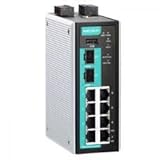
- 8+2G all-in-one firewall/NAT --- NO VPN-------/router/switch
- Build up secure remote access tunnel / Protect critical assets by stateful firewall
- Inspect industrial protocol with PacketGuard technology / Easy network setup with network address translation (NAT)
- RSTP/Turbo Ring redundant protocol enhances network redundancy / -40 to 75°C operating temperature range
- Security features based on IEC 62443 / NERC CIP / Check firewall settings with intelligent SettingCheck feature
Define roles and decision authority
- Incident lead: coordinates decisions, records actions, and maintains the timeline.
- Operations lead: determines safe states, manual operation, production priorities, and when equipment can be stopped.
- OT or engineering lead: validates isolation, backups, firmware, and restoration steps.
- IT and security lead: contains accounts, endpoints, networks, and evidence.
- Vendor and regulator contacts: provide product-specific guidance and handle required notifications.
- Communications lead: informs staff, customers, insurers, law enforcement, and management through approved channels.
Write playbooks for realistic scenarios
Create separate procedures for ransomware on an engineering workstation, a compromised vendor account, unauthorized PLC logic changes, loss of a SCADA server, a disabled alarm, and suspected manipulation of a physical process. Each playbook should state who can disconnect a network, which equipment must remain powered, how to preserve evidence, how to switch to manual operation, and what conditions permit restoration.
Exercise the plan
Run tabletop exercises at least periodically and after major system changes. Include night-shift operators and vendors, not just office security staff. Test contact numbers, backup restoration, jump-host shutdown, manual procedures, spare hardware, and the ability to operate safely while systems are isolated. Record gaps, assign owners, and set due dates.
Independent reader supportYour contribution helps us test, update, and keep practical guides available for everyone.Recover without reintroducing the attacker
- Stabilize the physical process and protect people before attempting technical recovery.
- Preserve logs, affected media, and a timeline when doing so does not endanger operations.
- Contain compromised accounts, remote sessions, endpoints, and network paths.
- Determine which controllers, recipes, credentials, backups, and vendor systems may have been altered.
- Rebuild or restore from known-good backups; do not reconnect an unverified image simply to resume production.
- Change credentials, rotate keys, and remove unauthorized persistence before reconnecting remote access.
- Validate logic, set points, alarms, interlocks, communications, and physical outputs with the process owner.
- Monitor closely after restoration and document lessons, control changes, and remaining risk.
A practical implementation roadmap
| Time frame | Priority actions | Evidence of completion |
|---|---|---|
| First 30 days | Inventory internet-reachable assets; remove unnecessary port forwards; change default credentials; disable dormant remote accounts; identify unsupported devices. | Approved asset register, exposure list, credential-change record, and emergency contacts. |
| Days 31–90 | Deploy or configure a controlled jump host; require MFA where possible; segment office, operations, and control networks; begin passive monitoring; back up configurations. | Tested access workflow, network diagram, monitored log sources, and verified backup restores. |
| Months 4–12 | Patch supported systems; execute replacement projects for unsupported equipment; formalize vendor access and change control; write and exercise OT incident playbooks. | Patch records, replacement milestones, signed procedures, exercise findings, and assigned remediation owners. |
| Ongoing | Review internet exposure whenever systems change; rotate credentials; test recovery; tune alerts; reassess suppliers, cloud portals, and cellular connections. | Dated review records, current diagrams, exercised plans, and closed or accepted risks. |
Common mistakes that leave farms exposed
- Buying a firewall and stopping there: A boundary device cannot compensate for default credentials, unmanaged vendor accounts, unsupported firmware, or a second unprotected connection.
- Scanning controllers like office computers: Aggressive scans can disrupt fragile OT; use passive discovery and vendor-approved methods.
- Applying patches without a process test: An update can affect timing, drivers, recipes, or communications. Back up, test, schedule, and retain rollback capability.
- Leaving temporary remote access enabled: Close tunnels and disable accounts automatically after the maintenance window.
- Using one password everywhere: A stolen office or vendor credential should not unlock controllers, cloud portals, and backups.
- Ignoring unsupported equipment: Isolation lowers exposure but does not create a security-support lifecycle. Fund and schedule replacement.
- Writing an IT-only response plan: OT incidents require operators who understand safe states, manual workarounds, and physical consequences.
- Failing to test backups: A backup that has never been restored is an assumption, not a recovery capability.
Farm OT security checklist
- Every controller, gateway, SCADA component, remote service, and vendor connection has an owner and documented support status.
- No control interface is directly exposed to the public internet without a documented, reviewed exception.
- Default credentials are changed, accounts are unique, privileges are limited, and MFA protects remote access where possible.
- Remote maintenance uses a monitored jump host with time-limited, approved sessions.
- Supported systems are patched through a tested process; unsupported systems have isolation and replacement plans.
- Office, field, operations, and safety networks have deliberately controlled communication paths.
- Logs cover authentication, remote access, network boundaries, and significant configuration changes.
- Offline or protected backups of logic, configurations, recipes, and documentation have been restored in a test.
- An OT incident plan names decision-makers, vendors, contacts, safe-state procedures, evidence handling, and recovery steps.
- The plan and the asset inventory are reviewed whenever equipment, suppliers, or network connections change.
Frequently Asked Questions
Should I disconnect all farm equipment from the internet immediately?
Not automatically. First identify what is exposed and what process would be affected. Remove unnecessary exposure, but coordinate any disconnection of safety- or production-critical equipment with the process owner, qualified OT personnel, and the manufacturer so the equipment remains safe and controllable.
What if an old controller cannot support MFA or security patches?
Do not expose it directly. Put remote access behind an MFA-protected jump host, restrict network paths, monitor connections, maintain tested backups, and create a funded replacement plan. Isolation is a compensating control, not a permanent substitute for vendor support.
Is a VPN enough to secure vendor maintenance?
A VPN alone does not establish least privilege or accountability. Use named accounts, MFA, an approved time window, destination restrictions, session logging, automatic expiration, and operator oversight through a jump host or equivalent controlled gateway.
How often should internet exposure be reviewed?
Review it whenever equipment, vendors, cellular links, cloud services, or network topology changes, and perform a scheduled recurring review as well. Record the date, systems checked, findings, and remediation owner so temporary connections do not become permanent.
Quick Recap
Product prices and availability are accurate as of the date/time indicated and are subject to change. Any price and availability information displayed on Amazon at the time of purchase will apply.
The Tool Desk
Outbyte PC Repair FREERepair Windows errors before they cause bigger problemsFix Now →Outbyte Driver Updater FREEFix the driver behind crashes, sound loss and screen glitchesFind Drivers →
