
Recommended Free Tools
iTechGuides is reader-supported. When you buy through links on our site, we may earn an affiliate commission. As an Amazon Associate I earn from qualifying purchases. Learn more
Secure communications for a maritime autonomous or remotely controlled system are not achieved by buying one encrypted radio or adding a firewall. The defensible approach is to map every shipboard, shore, satellite and control connection; identify which functions must remain available for safety; assess threats and consequences for that specific vessel and operating area; then apply and test controls under the vessel’s safety-management and cyber-risk processes.
The design must preserve recognized distress and safety communications, ship-to-ship information exchange and links to rescue authorities while protecting the communications and control networks on which autonomy depends. Requirements vary with the vessel’s architecture, mission, connectivity, flag, coastal-state rules and operating area. Current IMO guidance and applicable national and industry standards should be checked before claiming compliance.
What communications security means on an autonomous vessel
The International Maritime Organization (IMO) defines maritime cyber risk as “a measure of the extent to which a technology asset could be threatened by a potential circumstance or event, which may result in shipping-related operational, safety or security failures as a consequence of information or systems being corrupted, lost or compromised.” For an autonomous or remotely controlled vessel, communications are part of that technology asset: they carry navigation data, operator commands, machinery status, cargo information, alarms and coordination messages.
What’s actually slowing this PC down?
Pick the symptom - the matching free tool is one click away.
A communications failure can therefore be more than an IT outage. It can prevent an operator from supervising a voyage, delay a distress alert, corrupt a sensor feed, hide an engineering alarm or interrupt a safe fallback mode. The IMO states that the overall goal is “to support safe and secure shipping, which is operationally resilient to cyber risks.” Communications security should be planned against that outcome, not treated as a standalone product purchase.
#1 Best Overall

- Uniden's Marine Radios protect you from what lies ahead, as well as getting you out of dicey waters, by informing you the moment a storm starts brewing and transmitting your location should you need help.
- With triple watch features, DSC capabilities, a range of international marine channels and S. A. M. E Weather Alert—the UM385 brings everything you’ll need on the water into one compact design.
- The UM385 rugged handheld mic allows you to transmit easily from the wheel while keeping your focus on the waters ahead.
- Waterproof Radio – Complies with IPX4 waterproof standards, which means the radio is resistant to damage from rain or splashing water.
- DSC (Digital Selective Calling) - Includes Distress Button, Position Send and Request. Gives you the ability to press one button to call for help during an emergency. Full Class D DSC capability. High performance transceiver ensures clear communication and
Why autonomous and remote-controlled designs need vessel-specific decisions
There is no single communications architecture for maritime autonomous ships. A vessel may make decisions onboard, receive intermittent supervisory commands, or depend on a continuously staffed remote-control centre. It may operate close to shore with several terrestrial links, cross oceans through satellite services, or move between jurisdictions with different requirements. Redundant paths that are sensible for one design may be unnecessary, unavailable or unsafe for another.
Before selecting controls, document the autonomy concept, human-supervision model, operating area, expected loss-of-link behavior, and the systems that can change vessel movement or machinery state. The same radio or data link can have different risk significance depending on whether it carries a non-critical status update or the only command path to propulsion and steering.
Start with a complete communications and control inventory
Risk management begins with knowing what exists and how it is connected. Include equipment that is often managed by different departments or suppliers; an overlooked maintenance modem or vendor laptop can provide a route into an operational network.
Quick wins for a faster PC:
Fix the driver behind crashes, sound loss and screen glitchesFind Drivers →Repair Windows errors before they cause bigger problemsFix Now →Inventory shipboard assets and data flows
- Navigation, positioning and timing inputs, including systems that feed route planning or collision-avoidance functions.
- Recognized maritime radio equipment used for distress, urgency, safety and routine ship-to-ship traffic.
- Satellite terminals, terrestrial broadband, cellular links and any microwave or port-network connection.
- Remote-control consoles, supervisory servers, operator workstations and authentication services.
- Engineering and machinery-control networks, programmable controllers, propulsion, steering, power and alarm systems.
- Safety systems, cargo-management systems, environmental monitoring and emergency shutdown interfaces.
- Shipboard switches, routers, firewalls, gateways, wireless access points, serial converters and protocol translators.
- Cloud or shore services that store voyage data, distribute software, provide weather or chart information, or broker commands.
- Portable media, maintenance tools, vendor remote-access accounts and temporary connections used in port.
For each asset, record its owner, software and firmware version, physical location, network zone, external interfaces, data handled, required availability, maintenance method and recovery procedure. Draw the path of a command from the remote operator to the actuator and the reverse path for sensor data and alarms. Mark every trust boundary and every point at which data is transformed, buffered or filtered.
Classify links by function and consequence
A useful inventory labels each connection by what happens if it is unavailable, delayed, altered or disclosed. A link carrying a public weather feed has a different consequence from one carrying a steering command. Record maximum tolerable interruption and the safe state if the link is lost, rather than assigning a generic “critical” label to the whole vessel.
Rank #2

- Uniden's Marine Radios protect you from what lies ahead, as well as getting you out of dicey waters, by informing you the moment a storm starts brewing and transmitting your location should you need help.
- With triple watch features, DSC capabilities, a range of international marine channels and S. A. M. E Weather Alert—the UM385BK brings everything you’ll need on the water into one compact design.
- The UM385BK rugged handheld mic allows you to transmit easily from the wheel while keeping your focus on the waters ahead.
- Waterproof Radio – Complies with IPX4 waterproof standards, which means the radio is resistant to damage from rain or splashing water.
- DSC (Digital Selective Calling) - Includes Distress Button, Position Send and Request. Gives you the ability to press one button to call for help during an emergency. Full Class D DSC capability. High performance transceiver ensures clear communication and
| Communication function | Typical consequence to assess | Design question |
|---|---|---|
| Distress and safety alerts | Delayed assistance or inability to warn nearby vessels and rescue authorities | What independent, recognized means remains available if data networks fail? |
| Ship-to-ship exchange | Reduced situational awareness and collision risk | Can the crew or autonomous system receive and send required safety information in the operating area? |
| Remote supervision and control | Loss of command, unsafe maneuver or inability to recover from an abnormal condition | What is the vessel’s defined behavior during delay, spoofing or complete loss of the control path? |
| Navigation and sensor feeds | Incorrect position, route or collision-avoidance decision | How are conflicting, stale or implausible data detected and isolated? |
| Engineering and safety telemetry | Hidden machinery fault, delayed shutdown or environmental damage | Can alarms and protective actions operate locally when shore links are unavailable? |
| Maintenance and vendor access | Unauthorized change or malware entering operational technology | Who can connect, for what period, through which controlled gateway, and with what records? |
Preserve maritime safety communications first
Maritime telecommunications must support international interoperability, ship-to-ship communication, safety information and distress alerts. The United States Coast Guard (USCG) Navigation Center specifically states that cellular phones are not substitutes for regular maritime radio distress and safety systems recognized by the Federal Communications Commission and the International Radio Regulations, particularly VHF maritime radio.
This does not mean cellular connectivity has no operational role. It may provide useful crew, maintenance or shore-service connectivity where coverage exists. It does mean that a cellular-only design cannot be assumed to satisfy recognized distress and safety functions. Document which equipment and procedures perform those functions, how they are powered, who monitors them and how they work when autonomous control networks are isolated.
Define a minimum safe communications service
For each operating area, specify the communications that must remain usable during a cyber incident or equipment failure. Include distress alerting, receipt of urgent safety information, ship-to-ship exchange, contact with a rescue coordination centre and the channel used to coordinate a remote intervention. State whether each function is independent of the vessel’s ordinary IP network and whether it has separate power, antennas, equipment rooms or procedures.
Where a function can be degraded, define the acceptable degradation and the trigger for a safe state. For example, a vessel might continue a pre-authorized route for a limited period, reduce speed, stop in a safe location or request nearby assistance. The correct behavior depends on the vessel’s design and operating approval; do not copy a fallback rule from another ship.
Apply a vessel-wide cyber-risk process
The IMO describes cyber-risk management as identifying, analysing, assessing and communicating cyber-related risk, then accepting, avoiding, transferring or mitigating it to an acceptable level while considering costs and benefits. Use that cycle for communications and connect it to the vessel’s existing safety-management system.
Rank #3

- High Visibility Floating Core - The perfect compact VHF radio for marine use on any size vessel, designed with a high-visibility orange floating core for buoyancy and easy retrieval if dropped overboard
- 6 Watt VHF Power – Switchable between 1/3/6 Watts of power for range demands and battery optimization, use only the amount of power you need for vessels/stations near and far
- Day/Night Display - Day/Night selectable LCD display for easy viewing and high visibility at any time of day or night, regardless of weather conditions
- Tri-Watch Mode - Instantly access Channels 9, 16, and any user-specified channel with Tri-Watch, allowing you to monitor multiple channels at once in busy waterways for safety
- NOAA Weather Alerts - 12 weather channels and National Oceanic and Atmospheric Administration emergency broadcast channel access to stay informed and safe on the water
- Set the operating context. Record the autonomy mode, crew and remote-operator responsibilities, routes, ports, expected connectivity, weather exposure, third-party services and applicable flag or coastal-state rules.
- Identify credible threats. Consider unauthorized access, command injection, spoofed navigation data, denial of service, malware, insider misuse, supply-chain compromise, physical tampering and accidental misconfiguration. Include threats to availability as well as confidentiality.
- Analyse consequences. Trace how a compromised or unavailable link could affect navigation, propulsion, steering, cargo, environmental protection, personnel safety and the ability to summon help.
- Assess risk and set priorities. Rate likelihood and consequence using the organization’s approved method. Record assumptions such as satellite coverage, latency, service outages and the time available to reach a safe state.
- Select treatments. Choose controls, operational limits, redundancy, monitoring, training or contractual measures. Accept residual risk only at the authority defined by the safety-management and governance process.
- Communicate decisions. Give bridge or remote operators, engineers, shore managers, port interfaces and vendors clear responsibilities and escalation contacts.
- Verify and review. Test controls under realistic loss-of-link, degraded-bandwidth, corrupted-data and recovery scenarios. Reassess after software, route, supplier, network or autonomy changes.
Resolution MSC.428(98), adopted at IMO Maritime Safety Committee session 98 in June 2017, called on administrations to ensure that cyber risks are appropriately addressed in existing safety-management systems by the first annual company Document of Compliance verification after 1 January 2021. This is a governance expectation, not a universal technical communications specification.
Controls for communications and control networks
Specific mechanisms should follow the inventory and risk assessment. The cited IMO and USCG material supports protecting availability and control-network integrity, but it does not prescribe one cryptographic suite, authentication product or segmentation topology for every autonomous vessel.
Protect availability and resilience
- Identify single points of failure in radios, antennas, power, network switches, satellite services, shore gateways and remote-control centres.
- Provide an appropriately independent means for required distress and safety communication; do not count two services that share the same power, antenna, provider or control network as independent without analysing that dependency.
- Define behavior for loss of link, excessive latency, packet loss, conflicting commands and stale sensor data. Make the safe response executable locally where practicable.
- Monitor service quality, including link state, latency, bandwidth, packet loss, time synchronization and unexpected route changes.
- Keep offline procedures, spares and recovery configurations available for the operating area and maintenance model.
Protect command and data integrity
- Separate supervisory, navigation, engineering, safety and crew-service traffic according to consequence and trust. The exact zones and conduits should be justified by the vessel’s design.
- Permit only required data flows between shipboard operational technology, information technology, shore networks and vendor access points.
- Use authenticated identities for people, devices and services, with permissions limited to the commands and data each role needs. Control privileged and emergency accounts and review them when personnel or suppliers change.
- Protect data in transit and at rest with mechanisms selected for the device capability, operating environment, key-management process and applicable rules. Document how keys or credentials are issued, rotated, revoked and recovered.
- Validate commands and telemetry at the receiving system. Detect replay, impossible values, unexpected rates, conflicting sources and messages from an unauthorized mode or location.
- Keep clocks and event records sufficiently reliable to reconstruct an incident, while planning for loss of external time sources.
Control maintenance and third-party access
Vendor and shore access should be approved for a defined purpose and duration, routed through a controlled point, monitored and removed when the work ends. Record the software version, configuration change, person or service account, time, affected equipment and test result. If a supplier requires remote access while the vessel is underway, the risk assessment should explain why, what local safeguards apply and how the access can be stopped.
Design around the vessel’s connectivity profile
Connectivity choices should be compared by safety function, interoperability, resilience, protection of control networks, coverage, operating-area rules and lifecycle support—not by bandwidth alone.
| Connectivity profile | Questions to answer | Typical risk focus |
|---|---|---|
| Near-shore or port operation | Which coastal networks are authorized, and what happens outside coverage or during port-system outages? | Exposure to shared infrastructure, changing jurisdictions and temporary port connections |
| Ocean-going satellite operation | What are the service’s coverage, latency, outage, beam-transition and shore-gateway dependencies? | Limited bandwidth, long delays, provider dependency and difficulty of rapid intervention |
| Intermittent-contact autonomous operation | How are commands queued, expired, acknowledged and reconciled after reconnection? | Stale or duplicated commands and uncertain vessel state during the communication gap |
| Continuous remote control | What independent fallback keeps the vessel safe if the operator, link or control centre fails? | Concentration of risk in the control centre and command path |
| Mixed-link operation | Which link is authoritative, how is failover decided, and can a compromised path force repeated switching? | Conflicting data, failover abuse and common dependencies hidden behind nominal redundancy |
For every profile, document who is responsible for monitoring the link, who can authorize a change, and how the vessel proves that it is receiving current and authentic data after a handover.
Outdated Drivers Are Slowing You Down
One free scan finds every outdated or missing driver and matches the right update for your exact hardware.Free scan · exact hardware matchWindows Errors? Fix Them Before They Spread
Repair common Windows errors and clear accumulated junk for a smoother, more stable PC - no reinstall needed.Free scan · no reinstallRank #4

- High Visibility Floating Core - The perfect compact VHF radio for marine use on any size vessel, designed with a high-visibility orange floating core for buoyancy and easy retrieval if dropped overboard
- 6 Watt VHF Power – Switchable between 1/3/6 Watts of power for range demands and battery optimization, use only the amount of power you need for vessels/stations near and far
- Day/Night Display - Day/Night selectable LCD display for easy viewing and high visibility at any time of day or night, regardless of weather conditions
- Tri-Watch Mode - Instantly access Channels 9, 16, and any user-specified channel with Tri-Watch, allowing you to monitor multiple channels at once in busy waterways for safety
- NOAA Weather Alerts - 12 weather channels and National Oceanic and Atmospheric Administration emergency broadcast channel access to stay informed and safe on the water
Governance, standards and regulatory checks
Separate three questions: what an international body recommends, what a flag or coastal state legally requires, and what an industry standard or company procedure adds. A presentation from the 2024 IMO–Republic of Korea MASS Symposium lists the IMO maritime cyber-risk circular, MSC.428(98), IACS Recommendation 166 and a MASS goal-based instrument development item as relevant material. That presentation shows active discussion of MASS cyber risk; it does not by itself establish that a binding MASS instrument is in force or that every listed item is mandatory.
The IMO guidance index dates MSC-FAL.1-Circ.3 to 5 July 2017, while the IMO’s current maritime cyber-risk page lists MSC-FAL.1/Circ.3/Rev.4. A copy of Rev.2 hosted by the USCG discusses ongoing risk management for critical systems affecting maritime operations and information exchange and points readers to material including IACS Recommendation 166, ISO/IEC 27001, the NIST Cybersecurity Framework and port guidance from IAPH. Use Rev.2 for the principles visible in that copy, but verify the exact wording and current revision before quoting or using it as current compliance text.
At project start, make a register containing the vessel flag, operating states, ports, recognized radio obligations, safety-management documents, class or contractual requirements, applicable privacy or telecommunications rules, and the versions of standards used. Assign an owner and review date to each entry. Never infer legal applicability solely from a guidance document’s title.
Independent reader supportYour contribution helps us test, update, and keep practical guides available for everyone.Build, test and maintain the design
Before commissioning
- Review the architecture and data-flow diagrams with navigation, engineering, safety, remote-operations and communications specialists.
- Test authentication, authorization, logging, secure configuration, update procedures and recovery on representative equipment.
- Exercise loss of each communication path, degraded bandwidth, high latency, corrupted telemetry, conflicting commands and a compromised shore account.
- Confirm that distress and safety communication remains operable when ordinary IP networks, remote-control services or satellite links are unavailable.
- Train onboard and shore personnel on the defined safe state, escalation route, manual or local controls and evidence-preservation steps.
During operation
- Monitor for unusual login attempts, command rates, route changes, protocol errors, configuration changes and unexplained link switching.
- Reconcile ship and shore system inventories after every maintenance visit and software change.
- Review alerts with operational context; an apparent network fault may be a navigation, machinery or safety event.
- Revalidate assumptions when the vessel changes route, autonomy mode, communications provider, cargo, remote-control centre or operating jurisdiction.
After an incident
- Protect people and the vessel first by entering the documented safe operating mode and preserving required distress communications.
- Declare the incident to the designated vessel and shore authorities; record time, affected links, observed commands, alarms and actions.
- Isolate suspected paths without disabling a safety function unless the risk decision explicitly requires it.
- Verify navigation, propulsion, steering, engineering and safety-system state from trusted local sources before restoring remote commands.
- Rebuild or reconfigure affected systems from known-good baselines, rotate compromised credentials or keys, and test communications before returning to normal autonomy.
- Update the risk assessment, procedures, training and supplier controls using lessons from the event.
Common mistakes and how to correct them
“We have an encrypted satellite link, so communications are secure.”
Encryption does not address stolen credentials, malicious commands from an authorized account, denial of service, compromised endpoint equipment, incorrect sensor data or loss of power. Correct this by assessing confidentiality, integrity, authenticity and availability separately and tracing the complete command path.
The Tool Desk
Outbyte Driver Updater FREEFix the driver behind crashes, sound loss and screen glitchesFind Drivers →Outbyte PC Repair FREEClear out junk files and repair common Windows errorsFree Scan →“Cellular coverage is our backup for distress.”
Coverage is variable, roaming and provider-dependent. The USCG’s stated position is that cellular telephones are not substitutes for recognized maritime radio distress and safety systems, particularly VHF maritime radio. Correct the design by documenting the recognized safety system and testing it independently of cellular service.
Best Value
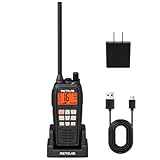
- IP68 waterproof marine radio; the RM15 VHF radio marine resists saltwater corrosion; rated for water immersion up to 1.5 meters for 30 minutes; corrosion-resistant charging contacts; perfect for offshore fishing, bass fishing, and fishing tournaments
- Floating design; the RM15 vhf radio marine stays on the water’s surface if dropped overboard; a water activated emergency strobe light indicates its location; suitable for marine activities such as boating fishing or kayaking; RM15 complies with PART 80
- Dual-way noise reduction system; the RM15 VHF marine radio reduces noise on both transmit and receive audio for clearer two-way communication; a powerful 1000mW (1W) speaker delivers loud, crisp sound even in noisy marine environments
- 16km long range communication;6W vhf marine radio;designed for open water marine activities;whether racing sailboats or navigating choppy seas during fishing trips;helps you stay connected in demanding offshore environments
- Long battery life; the RM15 VHF marine radio features a 2000mAh battery, USB-C ports on both the radio body and charger, and a included cable for 5V/2A or 5V/1A adapter charging. Enjoy over 10 hours of operation and up to 100 hours standby.
“Redundant links eliminate the risk.”
Two links may share a provider, antenna, power supply, router, credential store, shore gateway or software defect. Correct this by mapping common dependencies and testing failover, failback and conflicting-link conditions.
“The standard tells us exactly which product to install.”
IMO guidance connects cyber risk to safety management but does not prescribe one universal communications architecture. Correct this by turning the risk assessment into requirements, evaluating candidate controls against those requirements and documenting residual risk.
“Remote access can stay enabled for convenience.”
Persistent vendor access expands the attack surface and complicates accountability. Correct this with time-bounded, approved access, least privilege, monitoring, change records and a tested emergency disable procedure.
When to obtain specialist help
An organization may need an independent maritime operational-technology assessment, incident-response capability or secure-network design review when it lacks expertise to trace control paths, test autonomy failure modes, interpret flag or coastal-state requirements, or validate a supplier’s security claims. Select the service by documented scope and vessel-specific competence; the IMO does not endorse a particular provider, product or commercial architecture.
Final decision checklist
- Are every shipboard, shore, satellite, terrestrial, wireless and maintenance connection documented?
- Can the vessel still perform recognized distress, safety and ship-to-ship communication when ordinary data networks fail?
- Are remote commands, navigation inputs, engineering data and safety alarms assigned consequences and safe fallback behavior?
- Have common dependencies defeated by nominal redundancy been identified?
- Are identities, privileges, updates, keys or credentials, logs and vendor access governed throughout the lifecycle?
- Have loss-of-link, latency, corrupted-data, failover, recovery and incident scenarios been tested with operators?
- Have current IMO revisions, flag rules, coastal-state requirements and applicable standards been verified for this vessel and date?
Secure communications is therefore a vessel-engineering and cyber-risk-management problem. The right architecture is the one that keeps required safety functions available, limits and detects unauthorized influence on control systems, and remains supportable throughout the ship’s real operating life.
Quick Recap
Product prices and availability are accurate as of the date/time indicated and are subject to change. Any price and availability information displayed on Amazon at the time of purchase will apply.

