
iTechGuides is reader-supported. When you buy through links on our site, we may earn an affiliate commission. As an Amazon Associate I earn from qualifying purchases. Learn more
The life-saving rule: Run a portable generator only outdoors, at least 20 feet from doors, windows, and vents, with its exhaust pointed away from the building. Never operate it inside a home, basement, garage, shed, crawlspace, porch, carport, or any other enclosed or partly enclosed space—even if a door or window is open.
Why generator placement matters more than anything else
A portable generator produces carbon monoxide (CO), a colorless, odorless gas that can overcome people before they realize anything is wrong. Opening a garage door, raising a window, or placing the generator on a porch does not make the location safe. Air movement can change, and exhaust can enter through nearby openings or accumulate in partially enclosed areas.
The U.S. Consumer Product Safety Commission (CPSC) estimated that about 750 people died from generator-associated carbon-monoxide poisoning in the United States from 2012 through 2022. That is a 10-year estimate, not a current annual rate, but it illustrates why placement must be treated as a life-safety decision rather than a convenience.
What’s actually slowing this PC down?
Pick the symptom - the matching free tool is one click away.
The 20-foot setup
- Measure at least 20 feet from every door, window, and ventilation opening—not just the nearest entrance.
- Position the exhaust so it points away from the house and from neighboring buildings or occupied areas.
- Keep the entire generator outdoors in an open area with adequate clearance around it, as specified in the owner’s manual.
- Before starting, look for less-obvious openings such as basement windows, crawlspace vents, bathroom exhaust vents, and air-intake grilles.
CDC guidance expresses the rule directly: “When you’re using a generator, keep it outside at least 20 feet away from any doors, windows, or vents.” If wind, landscaping, fencing, or the building layout makes that distance difficult, do not improvise a closer arrangement; choose a safer location or do not operate the unit.
#1 Best Overall

- 𝗣𝗼𝘄𝗲𝗿𝗳𝘂𝗹 𝗢𝘂𝘁𝗽𝘂𝘁 - 4400 peak watts and 3400 running watts, perfect for RV camping and home backup
- 𝗠𝘂𝗹𝘁𝗶-𝗢𝘂𝘁𝗽𝘂𝘁 𝗢𝗽𝘁𝗶𝗼𝗻𝘀 - Includes 2*120V AC ports, 1*12V DC port, 1*RV port
- 𝗟𝗼𝗻𝗴 𝗥𝘂𝗻𝘁𝗶𝗺𝗲: Runs for up to 14 hours at 25% load with ECO mode, 2 gallon fuel tank with fuel gauge, allows you to check fuel levels at a glance, keeping you prepared
- 𝐋𝐨𝐰 𝐍𝐨𝐢𝐬𝐞: Under 72 dBA from 23FT away, this generator provides steady power for your home during a power outage or RV nights
- 𝗟𝗶𝗴𝗵𝘁𝘄𝗲𝗶𝗴𝗵𝘁 𝗮𝗻𝗱 𝗣𝗼𝗿𝘁𝗮𝗯𝗹𝗲: Only 56lbs, easy to move around
Locations that are never acceptable
- Inside the house or an attached room
- Basements and crawlspaces
- Garages, including a garage with the door fully open
- Sheds, workshops, and storage buildings
- Porches, balconies, and carports
- Under a building, deck, or other partly enclosed structure
- Inside a tent, vehicle, trailer, or any improvised enclosure
CPSC’s wording is unequivocal: “NEVER operate a portable generator inside a home, garage, basement, crawlspace, shed or other enclosed spaces.” A roof or wall that protects the generator from weather can also trap exhaust, so weather protection must never compromise open-air operation.
Install and use carbon-monoxide alarms
CO alarms are a second line of defense. They do not make an unsafe generator location acceptable and cannot replace the 20-foot outdoor placement rule.
Alarm locations and maintenance
- Use battery-operated CO alarms or alarms with battery backup.
- Place alarms outside sleeping areas and on every floor of the home, following the alarm manufacturer’s placement instructions.
- Test each alarm monthly. Replace batteries and the alarm itself according to its labeling and the manufacturer’s schedule.
- Make sure everyone in the household knows the alarm sound and the evacuation plan before an outage.
An alarm inside the house may warn occupants after exhaust has entered, but it cannot detect every hazardous condition early enough to protect people in another room or outdoors. Keep alarms operational even when the generator is used only occasionally.
Free tools Windows power users keep installed
One-click scans. No signup required.
What to do when an alarm sounds
- Stop what you are doing and get everyone, including pets, into fresh air immediately.
- Call 911. You can also contact Poison Control for medical advice, but do not delay leaving the building to investigate the generator.
- Do not re-enter until emergency personnel say it is safe. Do not go back inside to shut down, move, or troubleshoot the generator.
If anyone has a headache, dizziness, weakness, nausea, vomiting, chest pain, or confusion, treat it as a possible CO exposure even if no alarm sounded. Move to fresh air and call 911 or Poison Control. Symptoms can worsen quickly, and people who are asleep, very young, older, pregnant, or medically vulnerable may be affected before others notice a problem.
Connect appliances without creating an electrical hazard
Once the generator is in a safe outdoor location, connect only the equipment you intend to run and use the connection method the generator and appliance manufacturers allow.
Rank #2

- Ultra-Lightweight: At only 7.5 lbs, the Explorer 300 delivers a robust 292Wh capacity while remaining 17% lighter than the industry average. The sleek, integrated handle makes it effortless to carry on long hikes or pack with your camping gear, providing reliable off-grid power without adding bulk to your load.
- Versatile Power for 6 Devices: Equipped with 2 AC outlets, a 100W USB-C PD port, 2 USB-A ports, and a 120W car port. With a 300W rated output (600W peak surge), it easily handles laptops, drones, and cameras, while also serving as a dependable cpap battery for camping or a robust solar powered generator when paired with panels.
- Built to Last: Upgraded with premium LiFePO4 chemistry, this portable generator delivers over 4,000 charge cycles before reaching 70% capacity. This ensures more than 11 years of reliable service life, making it a sustainable and durable energy partner for a decade of exploration.
- Fast Solar Charging: Perfect for off-grid use, this solar powered generator pairs seamlessly with Jackery panels. Reach 80% capacity in approximately 2.8 hours with a 100W solar panel, or maintain your gear with a portable 40W panel (80% in 7.5 hours), making it an essential part of your hunting essentials.
- WHAT YOU GET: 1* Jackery Explorer 300 Portable Power Station, 1*AC adapter, 1* car charger cable, 1* user guide (𝐒𝐨𝐥𝐚𝐫 𝐏𝐚𝐧𝐞𝐥 𝐍𝐨𝐭 𝐈𝐧𝐜𝐥𝐮𝐝𝐞𝐝.)
Use outdoor-rated extension cords for individual appliances
An outdoor-rated extension cord can connect the generator to an appliance without energizing the home’s fixed wiring. The cord must be long enough to maintain the required separation from the building, and its rating must be suitable for the generator’s output and the connected appliance load. Check the generator manual, cord labeling, and appliance instructions; there is no single cord gauge that is correct for every generator and load.
- Inspect the cord for cuts, crushed sections, damaged plugs, melted insulation, or loose connections before use.
- Use a cord rated for outdoor service and for the electrical load you will place on it.
- Keep connections dry and away from standing water, while still following the generator’s weather instructions.
- Route cords where they will not become trip hazards, be pinched by doors, or be damaged by vehicles or equipment.
- Do not use a damaged cord, daisy-chain multiple extension cords, or overload a power strip.
Plan which loads matter most before the outage. Read each appliance’s running and startup requirements, then stay within the generator’s rated capacity. Starting motors, pumps, refrigerators, and similar equipment may require more power briefly than they use after starting. If the total demand is uncertain, leave that appliance disconnected or ask a qualified electrician for guidance.
Never plug a generator into a wall outlet
Connecting a generator’s output to a household wall outlet is backfeeding. It can energize wiring that was assumed to be dead, send electricity onto utility lines, damage the generator or home wiring, and seriously injure or kill utility workers and neighbors. A male-to-male “suicide cord” is especially dangerous and must not be used.
Turn off or unplug loads before starting or stopping the generator when the owner’s manual requires it, and use the generator’s receptacles and controls as described in that manual. Do not modify plugs, receptacles, breakers, or house wiring to make a connection fit.
Use a transfer switch for household circuits
If you need to power selected household circuits rather than individual appliances, have a qualified electrician install an appropriate transfer switch and any required equipment. The switch isolates the home from the utility supply before generator power is connected. Electrical-code requirements and equipment compatibility vary by installation, so this is not a do-it-yourself wiring procedure.
Rank #3

- Gasoline: 5300 Running Watts & 6500 Peak Watts; Propane: 4800 Running Watts & 5800 Peak Watts; 4.7 Gallon Fuel Tank with Fuel Gauge; Up to 14.5 Hours of Run Time with 120/240V Volt Selector Switch
- Features One 5–20R 120V 20V Household Duplex Receptacle, One RV-Ready TT-30R 30A Receptacle, and One Transfer Switch Ready L14-30R 30A Receptacle; All Outlets Have Rubber Covers for Added Safety
- Plug-and-Play: Comes with Oil, an Oil Funnel, Propane Hose, Tool Kit, Wheel Kit, and a User’s Manual to Get You Started Right Out of the Box (Minimal Assembly Required)
- Powered by a 274 CC Westinghouse 4-Stroke OHV Engine Featuring a Long-Lasting Cast Iron Sleeve with Automatic Low Oil and Carbon Monoxide (CO) Shutdown
- All Westinghouse Portable Generators are Functionally Tested in the Factory and May Contain Minimum Residual Oil and/or Fuel Odor; EPA Compliant; Backed By 3-Year Limited Service, Labor, and Parts Coverage and Nationwide Customer Service Network
| Connection method | What it powers | Safety boundary |
|---|---|---|
| Outdoor-rated extension cord | One or more permitted appliances directly from the generator | Keep the cord and connections suitable for the load and long enough to preserve outdoor separation; do not overload or damage it. |
| Transfer switch installed by a qualified electrician | Selected household circuits through the home’s wiring | Requires proper isolation from utility power and equipment compatible with the generator and installation. |
| Generator plugged into a wall outlet | Attempts to energize house wiring without isolation | Never use; this is backfeeding and creates a lethal shock and fire hazard. |
Rain, snow, and other weather conditions
Whether a particular generator may operate during rain or snow depends on its design and the manufacturer’s instructions. Water can create shock hazards and damage electrical components, but there is no universal sheltering method that is safe for every model.
Quick wins for a faster PC:
Repair Windows errors before they cause bigger problemsFix Now →Fix the driver behind crashes, sound loss and screen glitchesFind Drivers →Follow the owner’s manual
- Read the weather and moisture warnings before an outage, not while standing in a storm.
- Use only a manufacturer-approved operating arrangement for wet or snowy conditions.
- Do not place the unit under a porch, carport, tent, tarp enclosure, shed, or other structure that restricts exhaust or ventilation.
- Keep people away from wet electrical connections and stop operation if the manual says conditions are unsafe.
Never trade CO safety for weather protection. A cover that blocks rain but traps exhaust is not a safe solution. If the manual does not clearly permit operation in the conditions you face, shut down and wait for safer conditions or use another approved power plan.
Refuel only after shutdown and cooling
Never refuel a generator while it is running. CPSC’s instruction is explicit: “Never refuel a generator while it is running.” Shut the unit off and allow it to cool for the period specified by the manufacturer before adding fuel.
- Turn off connected loads as directed by the owner’s manual.
- Stop the generator using its normal shutdown control.
- Wait until the engine and fuel-fill area have cooled as specified by the manufacturer.
- Refuel outdoors, away from ignition sources, and clean up any spill before restarting.
- Secure the fuel container and return it to the storage location required by local rules and the fuel manufacturer’s instructions.
Keep fuel decisions model-specific. Generators differ in fuel type, tank design, approved containers, runtime, and procedures for restarting after a shutdown. Never substitute a fuel or additive that the manual does not approve.
Start-up and shutdown procedure
The controls, grounding requirements, choke sequence, and load limits differ among generators. The following is a safety sequence, not a replacement for the model manual.
Windows Errors? Fix Them Before They Spread
Repair common Windows errors and clear accumulated junk for a smoother, more stable PC - no reinstall needed.Free scan · no reinstallOutdated Drivers Are Slowing You Down
One free scan finds every outdated or missing driver and matches the right update for your exact hardware.Free scan · exact hardware matchRank #4
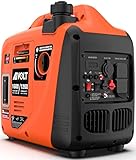
- 🔌 Safe for Sensitive Electronics | <3% THD Clean Power Inverter Generator - This portable inverter generator with advanced inverter tech delivers stable, clean power (THD <3%), safe for your phones, laptops, or small tools. It’s the perfect for home office backups during blackouts or generator for camping - keep your devices charged without worry
- ⚡ Powerful & Fuel-Efficient | Runtime: 8 hrs at 25% load, 2 hrs at full load – This AIVOLT quiet gas inverter generator, powered by a 60cc 4-stroke OHV engine with copper windings, delivers 1600 starting watts and 1260 running watts. The eco-mode switch intelligently adjusts fuel consumption, enabling up to 8 hrs of continuous operation at 25% load for significant fuel savings, while full 1260W operation runs approximately 2 hrs (refuel as needed). Perfect for camping, RV trips, tailgating, job sites, and home backup.
- 🔇 Ultra-Quiet (57 dBA) & Lightweight - This portable quiet generator (57 dBA at 23ft) is quieter than a normal conversation— no more noisy distractions during camping or backyard gatherings, truly a silent gas generator. At just 28lbs, it’s 20% lighter than similar models, a handy small inverter generator easy to carry to campsites or job sites as your go-to quiet generator for camping
- 🔌🔗 Multifunctional Panel & Parallel Capability - This portable inverter generator comes with 2x120V outlets and 2 USB ports (Type-A/C), perfect for charging phones while running a camping fridge. 3 indicator lights and an hour meter let you monitor power status in real time. Need more power? Connect two AIVOLT VS1600101 quiet inverter generators via a parallel kit (not included) to double your output seamlessly
- 🛡️ CO Protect & Comprehensive Safety - This gas powered generator features built-in CO Alert tech that auto-shuts down when unsafe CO levels are detected, protecting your family. Low oil auto-shutdown and overload protection also safeguard both the generator and your electronics - make it a safe for home or RV use, no safety worries
Before starting
- Confirm the generator is outdoors in an open location and its exhaust is directed away from buildings and openings.
- Verify that CO alarms in the home are powered and operational.
- Inspect the unit, fuel system, plugs, receptacles, and extension cords for visible damage.
- Disconnect appliances or switch off circuits before starting if the manual directs you to do so.
- Check oil, fuel, and other maintenance items using the manufacturer’s specified procedure.
- Tell household members where the generator is and establish a no-entry area around it.
While operating
- Monitor the generator for abnormal noise, smoke, leaks, overheating, or warning indicators.
- Keep the unit’s air inlets and exhaust clear of leaves, snow, boxes, and other obstructions.
- Add loads one at a time and stay within the rated running and startup capacity.
- Keep children and pets away from hot surfaces, moving parts, fuel, and electrical connections.
- Never leave a running generator in a location where a change in wind, flooding, or drifting snow could direct exhaust toward the building.
When shutting down
Remove or switch off loads and use the shutdown sequence in the owner’s manual. Let the unit cool before moving it, covering it for storage, or refueling. If you smell fuel, see a leak, or notice an electrical fault, stop operation only if you can do so without approaching an immediate hazard; otherwise leave the area and call for help.
Independent reader supportYour contribution helps us test, update, and keep practical guides available for everyone.Prepare before the next outage
Most generator accidents become more likely when people are working in darkness, cold, rain, or stress. Prepare the equipment and the household plan in advance.
Make a power plan
- List essential loads such as medically necessary equipment, refrigeration, communications, and limited lighting.
- Record each device’s running and startup requirements from its label or manual.
- Decide which appliances will remain disconnected so the generator is not overloaded.
- Identify a safe outdoor operating location that preserves the required separation and keeps exhaust away from openings.
- Decide how the household will receive weather and utility updates if internet or cellular service is limited.
Inspect equipment while the power is on
- Read the complete generator manual and keep it with the unit.
- Test CO alarms monthly and replace batteries before they are depleted.
- Inspect approved extension cords and replace any that are damaged or undersized for the intended load.
- Follow the manufacturer’s maintenance schedule for oil, filters, spark plugs, fuel storage, and other service items.
- If a transfer switch is installed, have the electrical system maintained by a qualified electrician.
Ask a retailer about portable generators equipped with automatic high-CO shutoff. CPSC recommends considering that feature, but it is an additional safeguard—not permission to operate indoors or closer to openings.
Quick answers to common outage questions
How far away must a generator be from the house?
For a portable generator, use a minimum distance of 20 feet from doors, windows, and vents, with the exhaust pointed away from the building. Check the owner’s manual for any greater clearance requirement.
Can I run it in a garage if the door is open?
No. An open garage door does not prevent carbon monoxide from accumulating or entering the home. A garage is an enclosed space and is prohibited for portable-generator operation.
Best Value

- Perfect as a backup power source for larger homes or a dependable source of portable power
- 14,500 peak watts, 11,500 running watts (gasoline); 13,500 peak watts, 10,500 running watts (propane); 12,000 peak watts, 9,500 running watts (natural gas)
- Powered by a heavy duty 550cc 4-Stroke OHV Westinghouse Engine constructed with a durable cast iron sleeve; Runs for up to 19 hours on a 9.5 gal. fuel tank with built-in fuel gauge; up to 7 hours on a 20 lb. propane tank
- Engineered with low THD, so it's safe for sensitive electronics. Power phones, computers, TVs and more. Stay connected with people, news and entertainment during power outages, or on jobsites and campsites. Durable copper windings help your generator produce cleaner power, run cooler and last longer
- All Westinghouse portable generators are gunctionally tested in the factory and may contain minimum residual oil and/or fuel odor; EPA compliant; Backed by 3-Year limited service, labor, and parts coverage and Nationwide Customer Service Network
Can it run on a porch or in a carport?
No. Porches and carports are partly enclosed and can channel exhaust into the home. Use an open outdoor location that meets the distance and exhaust-direction requirements.
Can I run a generator in the rain?
Only if the generator’s manufacturer provides instructions that permit operation in those conditions and you can follow them without creating a CO or shock hazard. Do not improvise an enclosure; when in doubt, stop and consult the manual.
Can I plug a generator into a wall outlet?
No. That backfeeds the home’s wiring and can kill people working on the electrical system. Use properly rated outdoor cords for individual appliances or have a qualified electrician install a compatible transfer switch.
Recommended Free Tools
Outage checklist
- Generator outdoors, in an open area, with exhaust directed away from buildings and openings
- CO alarms powered, correctly located, and recently tested
- Only approved, undamaged outdoor-rated cords and equipment connected
- No wall-outlet connection, homemade adapter, or modified wiring
- Loads selected so running and startup demand remain within generator capacity
- Weather operation confirmed against the owner’s manual
- Generator stopped and cooled completely before refueling
- Everyone knows to leave for fresh air and call 911 if an alarm sounds or symptoms appear
Safe generator use is a sequence: open-air placement, working CO alarms, proper connections, model-specific weather precautions, and disciplined refueling. If any one of those conditions cannot be met, do not operate the portable generator.
Quick Recap
Product prices and availability are accurate as of the date/time indicated and are subject to change. Any price and availability information displayed on Amazon at the time of purchase will apply.

