
Do these 3 things before closing this tab:
1Fix the driver behind crashes, sound loss and screen glitches2Repair Windows errors before they cause bigger problems3Scan for outdated or missing drivers - takes under a minuteiTechGuides is reader-supported. When you buy through links on our site, we may earn an affiliate commission. As an Amazon Associate I earn from qualifying purchases. Learn more
Stop disturbing the find, leave it where it is, document it in place, and contact the archaeology authority for the property’s jurisdiction. Keep people and vehicles away, do not clean or dig around the object, and do not publish its exact location. Photograph the find and its surroundings, record the date and ownership, and save the precise coordinates privately. If the material could be human remains or a burial, stop immediately and call law enforcement or the medical examiner before contacting heritage officials.
Whether you may keep, sell, move, or excavate an object depends on the country, state, territory, tribal jurisdiction, land status, and how the discovery occurred. The federal rules that apply to public or Indian lands are not the same as rules for ordinary finds on private land, and a private project can still trigger federal review when it involves federal money, a permit, license, approval, or other federal undertaking.
What to do in the first few minutes
Archaeological information is often more valuable in its original context than the object is by itself. A moved or cleaned artifact can lose the evidence that shows its age, use, and relationship to other materials. Use this sequence for a chance discovery during gardening, farming, landscaping, utility work, or construction.
- Stop the activity. Shut down digging, grading, trenching, vehicle traffic, or construction in the immediate area. Do not resume until the responsible authority or a qualified archaeologist tells you how to proceed.
- Leave everything in place. Do not pick up, clean, scrape, probe, turn over, or dig around the object. Leave associated soil, stones, stains, structures, and nearby objects undisturbed.
- Protect the area. Keep people, pets, and vehicles away without driving stakes or barriers into the ground. Limit access to reduce accidental damage and looting.
- Photograph before touching anything. Take overview images that show the feature’s setting and closer images of the object. Include a scale, such as a ruler, only if it can be placed safely without moving the find.
- Record the context. Write down the date and time, who owns or controls the property, what work was occurring, the visible soil and surrounding materials, and whether anything else was found nearby.
- Save the location privately. Record GPS coordinates or make a detailed map tied to permanent landmarks. Do not post exact coordinates, photographs that reveal the location, or access instructions publicly.
- Notify the right people. Contact the state or territorial archaeology office, State Historic Preservation Office (SHPO), land manager, or a qualified archaeologist. If you are not the landowner, notify the owner and do not remove anything.
- Check for human remains. If bones, a burial, a grave feature, or material that could be funerary is possible, stop and immediately contact law enforcement or the medical examiner. Preserve the scene and follow their instructions before any heritage investigation.
Illinois and Washington guidance follows this basic approach: preserve the discovery and its context, document it, and report it to the appropriate archaeology authority rather than trying to identify or recover it yourself.
#1 Best Overall

- Crafted from the highest quality materials
- Built for performance and durability
- Made in United States
First determine which legal system applies
There is no single “private-property artifact law.” Before deciding what you can do, identify the governing jurisdiction and the circumstances of the discovery.
| Question | Why it changes the answer |
|---|---|
| What country, state, territory, or tribal jurisdiction is the property in? | Reporting duties, permits, ownership, deadlines, confidentiality, penalties, and consultation requirements are set locally unless a federal rule applies. |
| Is the land private, public, federal, or Indian land? | Federal archaeological-resources rules generally focus on public and Indian lands. Private-land rules can be materially different. |
| Is the find a surface observation or the result of planned excavation? | A passive discovery may call for reporting and preservation. Planned digging can require an archaeological plan or permit even when the land is privately owned. |
| Is there a federal connection? | Federal funding, a federal permit or license, federal approval, or another federal undertaking can trigger Section 106 review on private property. |
| Could it be human remains, a grave, a funerary object, or a sacred object? | Emergency scene-preservation and law-enforcement rules may apply, along with heritage and tribal consultation duties. |
| Who owns and curates recovered material? | Ownership may belong to the landowner, a public body, a tribe, or another party under state or local law. Curation and disposition must be settled before recovery. |
If you cannot answer these questions, preserve the site and ask the state or territorial archaeology office for the correct contact. Do not assume that a deed gives unrestricted authority to excavate or export archaeological material.
How U.S. federal law affects private property
ARPA is primarily a public- and Indian-land statute
The Archaeological Resources Protection Act (ARPA) is directed at archaeological resources on public lands and Indian lands. A private landowner should not treat ARPA as a universal permission to dig or as a universal prohibition on every private find. State, local, and tribal rules can still regulate the property, and other federal statutes can apply because of a project’s funding or approvals.
Outdated Drivers Are Slowing You Down
One free scan finds every outdated or missing driver and matches the right update for your exact hardware.Free scan · exact hardware matchWindows Errors? Fix Them Before They Spread
Repair common Windows errors and clear accumulated junk for a smoother, more stable PC - no reinstall needed.Free scan · no reinstallSection 106 can reach a private project
Section 106 review applies when a project is a federal undertaking—for example, because it receives federal funding, needs a federal permit or license, receives federal approval, or is otherwise carried out by a federal agency. In that situation, the responsible federal agency evaluates historic properties and consults with the SHPO and, where appropriate, tribes before an undertaking proceeds. A private parcel does not remove that federal-review requirement.
Before ground disturbance on a federally connected project, ask the responsible federal agency and the SHPO whether Section 106 review is required and what survey, avoidance, monitoring, reporting, and consultation steps apply. Do not rely on a contractor’s assumption that a private title ends the inquiry.
Rank #2

- WEATHERPROOF PAPER: 64 pages / 32 sheets per side spiral notepad. All-weather paper won’t turn to mush when wet and will repel water, sweat, grease, mud, and even survive the accidental laundry mishap. Make sure your pocket notebook stays RIGHT in the Rain.
- WIRE-O BINDING: Tough impact-resistant Wire-O binding won't lose its shape in your backpack or book bag. Unlike a standard spiral notebook, Wire-O keeps your open pages aligned and intact.
- WRITE IN THE RAIN: When wet, use a standard #2 pencil or an all-weather pen. Standard ballpoints and permanent markers will work when paper is dry. Water-based inks will bead or wash off Rite in the Rain Paper.
- WATERPROOF NOTEBOOK COVER: Polydura material creates a tough but flexible outer shell. Whether you're needing a hiking journal, outfitting your police gear, starting a golf journal, or just keeping a shower notebook, the Polydura cover material will defend your field notes from scratches and stains.
- RECYCLABILITY: Unlike synthetic waterproof paper, wood-based Rite in the Rain is completely recyclable. Please recycle Rite in the Rain as you would other office printer paper.
Who owns material recovered during Section 106 work?
The Advisory Council on Historic Preservation states: “Artifacts recovered from private lands during archaeological survey and excavation during the course of Section 106 review are usually the property of the landowner, unless state or local law mandates otherwise.” “Usually” is not a blanket rule. Confirm the applicable state or local law, the federal agency’s terms, tribal interests, and the approved curation or disposition plan before anyone removes material.
What state and territorial examples show
The following examples illustrate why a location-specific answer is essential; they are not a substitute for checking the law where the property is located.
| Jurisdiction | Rule or official guidance | Practical implication |
|---|---|---|
| Texas | Texas describes no general legal protection for ordinary archaeological sites on private property unless a landowner voluntarily uses a designation or conservation easement. | That description does not authorize careless removal. Preserve the context, check local rules, and ask the state archaeology authority before excavation, sale, or export. |
| Oregon | Oregon regulates excavation and requires stopping excavation and reporting when human remains may be involved, using specified state and tribal contacts. | Treat possible remains as an emergency and follow the required state and tribal notification process. |
| Florida | Florida states that unauthorized disturbance of human remains and graves is illegal, even on private property. | Private ownership does not permit disturbance of a burial. Stop work and contact law enforcement or the medical examiner immediately. |
| Washington | The Washington State Department of Archaeology and Historic Preservation says: “Do report sites discovered on your property to the Office of Archaeology and Historic Preservation.” | Reporting a site is the prudent response even when the initial discovery is on privately owned land. |
| Indiana | Indiana requires an approved plan for certain private-property work beyond surface survey outside Section 106. | Planned subsurface work may need approval before digging, even without a federal nexus. |
| Queensland | Queensland requires reporting discoveries and warns that fines can apply for failure to report. Its guidance says: “Relatively recent and/or small finds can be important—if in doubt, report your find.” | Do not dismiss a small, modern-looking, or apparently ordinary object; report it through the Queensland heritage process. |
These examples also show why a universal reporting deadline or fine amount cannot be supplied. Those details vary by statute and agency. Ask the relevant authority what deadline, form, confidentiality rule, and penalty provision applies.
Human remains and burials require an emergency response
Possible human remains are not an ordinary artifact question. A bone can be ancient, historic, or recent, and a non-specialist cannot safely make that determination from appearance alone. Treat a suspected burial, grave shaft, coffin material, or cluster of bones as a protected scene.
- Stop excavation, construction, landscaping, and vehicle movement immediately.
- Do not touch, clean, lift, re-bury, or rearrange bones or associated objects.
- Keep the public away and prevent photography that exposes the exact location online.
- Call local law enforcement or the medical examiner without delay, then follow their scene-preservation instructions.
- After the emergency contact has been made, notify the applicable heritage authority and follow state, territorial, and tribal consultation requirements.
Florida expressly states that unauthorized disturbance of human remains and graves is illegal even on private property. Oregon likewise requires excavation to stop and directs reports to specified state and tribal contacts. Those examples should not be generalized into one nationwide procedure; use the contacts designated by the jurisdiction where the remains were found.
Rank #3
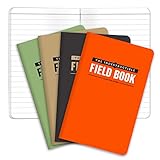
- BUILT TO LAST – WATERPROOF, TEAR-RESISTANT, WEATHERPROOF – Completely Indestructible! Suitable for any condition.
- GET MORE VALUE 4-PACK consists of 192 PAGES IN TOTAL - Each book contains 48 PAGES (24 sheets). GET MORE, SPEND LESS!
- STONE PAPER – WATERPROOF so you can write in the rain or even under water.
- POCKET SIZED - This mini memo pad is 3.5x5.5 inches and contains LINED pattern. NO SPECIAL PENS REQUIRED use regular ball point pens or pencils
Do you need a permit to dig on your own land?
Ownership alone does not answer the permit question. A casual surface observation, a permitted archaeological survey, a septic trench, a subdivision, and a federally funded highway project can trigger different rules.
The Tool Desk
Outbyte Driver Updater FREEFix the driver behind crashes, sound loss and screen glitchesFind Drivers →Outbyte PC Repair FREERepair Windows errors before they cause bigger problemsFix Now →Before ordinary construction or landscaping
Ask the local building or environmental authority and the SHPO/state archaeology office whether the work area is recorded as a historic or archaeological site and whether a survey, monitoring, plan, or permit is required. This is especially important for grading, foundation excavation, road work, utility trenches, shoreline work, and other activities that remove soil rather than merely observing the surface.
Before a federally connected project
Identify the federal agency, funding source, permit, license, or approval that creates the federal nexus. Contact that agency and the SHPO before ground disturbance. The agency may require a cultural-resources survey, consultation with tribes, avoidance or data recovery, a qualified cultural-resource-management archaeologist, and a written curation or disposition plan.
Before independent archaeological excavation
Do not begin a private “test dig” simply because the parcel is yours. Check state and local permit requirements, professional-standards requirements, tribal consultation duties, artifact ownership rules, and repository arrangements. Indiana’s requirement for an approved plan for certain private-property work beyond surface survey demonstrates that a state can regulate this activity even when Section 106 is not involved.
How to document a discovery without damaging it
A useful report lets an archaeologist understand the find without requiring you to recover it. Keep the original notes and image files; do not edit out landmarks from the private copy sent to officials.
Rank #4

- WEATHERPROOF PAPER: 160 pages / 80 sheets per book. All-weather paper won’t turn to mush when wet and will repel water, sweat, grease, mud, and even survive the accidental laundry mishap. Make sure your book stays RIGHT in the Rain.
- COVER / BINDING: Everything in this bound book is designed to survive Mother Nature's wrath. The Fabrikoid cover, the Rite in the Rain paper, the sewn-in pages, even the glue is weatherproof.
- WRITE IN THE RAIN: When wet, use a standard #2 pencil or an all-weather pen. Standard ballpoints and permanent markers will work when paper is dry. Water-based inks will bead or wash off Rite in the Rain Paper.
- ADMISSIBLE: For legal defensibility, a notebook is required to have sequentially numbered, sewn-bound pages.
- RECYCLABILITY: Unlike synthetic waterproof paper, wood-based Rite in the Rain is completely recyclable. Please recycle Rite in the Rain as you would other office printer paper.
- Location: GPS coordinates, parcel or lot information, a sketch map, and nearby permanent landmarks. Share exact coordinates only with the responsible authority or archaeologist.
- Context: surface or subsurface position, approximate depth if already exposed, soil color and texture, nearby rocks or structural traces, and whether materials appear associated.
- Condition: what was visible before anyone approached, any damage caused by the original work, and whether water, erosion, animals, or machinery exposed it.
- Time and activity: date, time, weather if relevant, and the activity that exposed the material.
- Ownership and access: who owns or controls the parcel and who has permission to enter it.
- Images: overview, mid-range, and close photographs with a safe scale. Do not move an object to obtain a better angle.
- People and equipment: names of anyone who observed the discovery and the machinery or tools being used, if that information helps explain disturbance.
A waterproof field notebook can be a convenient way to keep notes and maps, but no special equipment is legally required for the initial report. Ordinary paper notes and a phone photograph are preferable to delaying notification or disturbing the site.
Independent reader supportYour contribution helps us test, update, and keep practical guides available for everyone.Can you keep, sell, donate, or export an artifact?
Do not make a disposition decision until the governing law and the object’s status are confirmed.
Keeping an ordinary artifact
ACHP’s Section 106 guidance says artifacts recovered from private land during Section 106 survey and excavation are usually the landowner’s property unless state or local law says otherwise. That statement applies to the circumstances described; it is not proof that every object found on every private parcel belongs to the finder or landowner.
Selling or donating
Sale or donation can be unlawful if the object is state-owned, associated with human remains, funerary or sacred, protected by a site designation, recovered under a permit with a repository requirement, or subject to a curation agreement. Obtain a written determination from the relevant authority or qualified archaeologist before transferring an item, and retain the discovery documentation.
Free tools Windows power users keep installed
One-click scans. No signup required.
Exporting or moving across borders
Export rules can add customs, cultural-property, treaty, or source-country restrictions even when domestic ownership appears clear. Do not ship or carry an archaeological object out of the state, territory, country, or tribal jurisdiction until the responsible authority confirms that movement is lawful and documents are complete.
Best Value

- Weatherproof Paper: 24 Pages / 12 Sheets Per Pocket Notepad. All-Weather Paper Won’T Turn To Mush When Wet And Will Repel Water, Sweat, Grease, Mud, And Even Survive The Accidental Laundry Mishap. Make Sure Your Stapled Notebook Stays Right In The Rain.
- Cover Material: Field-Flex Is Rite In The Rain'S Most Flexible Cover Material. Mud And Water Run Right Off, Protecting Your Field Notes In Adverse Weather Conditions.
- Binding: Tough Nickel-Plated Rust-Resistant Staples Hold The Notebook Together.
- Write In The Rain: When Wet, Use A Standard #2 Pencil Or An All-Weather Pen. Standard Ballpoints And Permanent Markers Will Work When Paper Is Dry. Water-Based Inks Will Bead Or Wash Off Rite In The Rain Paper.
What happens after you report
The receiving office may ask for photographs, coordinates, parcel information, and details about the activity that exposed the material. It may arrange a site visit, recommend an archaeologist, notify a land manager, or coordinate with a tribe or law-enforcement agency. Cooperate with access requests, but confirm who is authorized to enter the property and what will happen to any recovered material.
Confidentiality and looting risk
Exact site locations can attract looting. Ask the authority how location information is protected under its records law and whether photographs or coordinates will become public records. Keep public descriptions general and do not post maps, distinctive landmarks, or directions to the site.
Tribal and community interests
Artifacts connected with Indigenous communities, burials, funerary objects, or sacred places may require consultation beyond a state office. Do not interpret silence from a state agency as permission to collect. Ask whether tribal notification or consultation is required and follow the designated process.
Decision guide for common situations
| Situation | Immediate action | Next contact |
|---|---|---|
| Object noticed on the surface of your private land | Leave it, photograph it, map it privately, and stop any activity that could disturb the area. | SHPO/state or territorial archaeology office or a qualified archaeologist. |
| Object exposed by a contractor or machine | Stop the machine and secure the work area; preserve the soil profile and associated material. | Property owner, project manager, SHPO/state archaeology office, and any agency tied to project funding or approval. |
| Possible human bone, grave, or burial feature | Stop immediately; do not touch or move anything. | Law enforcement or medical examiner first, then the heritage authority and required tribal contacts. |
| Find on someone else’s property | Do not remove it; leave the area and document only from a safe position. | Landowner or land manager and the jurisdiction’s archaeology authority. |
| Planned excavation on private land | Do not dig until permit, plan, federal-review, consultation, ownership, and curation questions are answered. | SHPO/state archaeology office, local authority, responsible federal agency if applicable, and a qualified archaeologist. |
| Find may be funerary, sacred, or culturally sensitive | Preserve the site and restrict publicity. | Heritage authority and the tribal or community contacts designated by local law. |
Common mistakes that create legal and archaeological problems
- “It is my land, so I can dig.” A federal nexus, state permit rule, burial law, designation, easement, or tribal requirement can limit that assumption.
- Cleaning the object for identification. Washing or brushing can remove residues and soil relationships that specialists need.
- Taking only the object. Removing it without the surrounding context can destroy evidence and may violate ownership or site-protection rules.
- Posting the coordinates. Publicity can expose the site to looting and may breach confidentiality requirements.
- Waiting for certainty about the date. Queensland’s guidance emphasizes that relatively recent or small finds can matter; report when in doubt.
- Continuing work while making calls. A delayed trench, grading pass, or vehicle movement can destroy the evidence an authority needs to evaluate the find.
- Assuming one state’s rule applies elsewhere. Texas, Oregon, Florida, Washington, Indiana, and Queensland demonstrate materially different approaches.
What to ask the authority before work resumes
- Is the material an archaeological resource, human remain, funerary object, or protected site under this jurisdiction?
- Must the area remain closed, and for how long?
- Is a survey, permit, approved plan, monitoring, or federal Section 106 review required?
- Who must be notified, including tribal governments or communities?
- Who owns any material that is lawfully recovered?
- Which museum, repository, or other custodian will curate it?
- Are there reporting deadlines, forms, confidentiality protections, or penalties that apply?
- May construction proceed elsewhere on the parcel while the find is evaluated?
Get instructions in writing when possible. Keep the photographs, maps, correspondence, and any agency reference number with the property records so a future owner or contractor understands the site’s status.
Quick Recap
Product prices and availability are accurate as of the date/time indicated and are subject to change. Any price and availability information displayed on Amazon at the time of purchase will apply.

