
Do these 3 things before closing this tab:
1Fix the driver behind crashes, sound loss and screen glitches2Clear out junk files and repair common Windows errors3Scan for outdated or missing drivers - takes under a minuteiTechGuides is reader-supported. When you buy through links on our site, we may earn an affiliate commission. As an Amazon Associate I earn from qualifying purchases. Learn more
The fastest way to reduce water use during a drought is to follow your local utility’s current rules, stop leaks, and cut discretionary outdoor watering. Check restrictions before changing irrigation, because a drip line, smart controller, or drought-tolerant plant does not make watering legal during a ban. Then verify your home is not losing water, reduce landscape demand where watering is permitted, and choose efficient fixtures when replacements are already due.
1. Check your local drought stage before using water outdoors
Drought rules are set locally and can change quickly. Start with the website or customer portal for the utility that bills you, and look for its current drought stage, watering schedule, prohibited uses, and enforcement notices. If you do not know the utility’s name, it is usually printed on your water bill or listed on your city or county website.
The U.S. Environmental Protection Agency (EPA) states: “Always observe state and local restrictions on water use during a drought.” Restrictions may begin as voluntary conservation requests, then move to limits on watering days or hours, and eventually to a prohibition on outdoor watering. A rule that applied last month may no longer apply today.
Free tools Windows power users keep installed
One-click scans. No signup required.
Questions to answer before changing your routine
- Is your area experiencing drought, and what is the current severity or stage?
- Which utility supplies your address, and where does it publish emergency notices?
- Are outdoor watering days, hours, or methods restricted?
- Are exceptions allowed for newly planted vegetation, food gardens, trees, hand watering, or irrigation repairs?
- What reporting, inspection, or fine rules apply?
Keep a screenshot or printed copy of the current rule if household members, tenants, or a landscaper need to follow it. When a utility prohibits watering, skip the outdoor-watering steps in this guide until the utility changes the rule.
#1 Best Overall

- High Pressure Shower Head with 5 Different Shower Modes: HOPOPRO keeps upgrading showerheads to be more water-saving without making compromise to high water pressure shower experience, which makes this high pressure shower head with 5 different shower modes become one of U.S. Most-Loved Showerheads and recommended by The Washington Post, NBC News, Today TV show, etc
- Superior Material and Exclusive Water Pressurized Design: This high flow rain showerhead is constructed of premium ABS plastic, which makes it lightweight, durable and rust-proof. 4.1 inch panel with 66 easy-to-clean shower nozzles jets out high-pressure rain of hot water and ensures steady shower coverage, high water pressure stream and SPA experience
- Widely Compatible with Different Bathroom Styles: Modern product appearance equipped with universal G1/2" thread makes this fixed showerhead easily connected to standard or universal shower arms. 360¡ã adjustable brass ball connection joint design brings more flexibility for more shower angles or heights
- 1-Minute Tool-free Quick Installation: Installation is about as easy as it gets. No plumber needed, as the package includes all the practical accessories for installation, even a roll of anti-leaking plumbers tape and a small wrench to ensure a snug fit. An ideal bathroom replacement option to upgrade your older showerhead
- Brand Professionalism and Advantage: HOPOPRO is a brand tested by Consumer Reports and recommended by Consumer Reports, The Washington Post, NBC News, Today TV show as its premium product quality and fabulous shower experience. We're specialized in providing comfortable shower solutions and bringing luxury shower experience
2. Find leaks before buying equipment
Leak repair is usually the highest-value first action because it can reduce use without changing how your household showers, washes dishes, or maintains plants. Check both visible fixtures and hidden supply lines.
Inspect indoor fixtures
- Faucets: Look for drips at the spout, handles, aerator, supply connections, and shutoff valves. A worn washer, cartridge, gasket, or loose connection may be responsible.
- Toilets: Listen for periodic refilling and look for water moving in the bowl when no one has flushed. A faulty flapper or fill valve can waste water continuously.
- Showerheads: Check the connection and wall fitting for seepage while the shower is running and after it is turned off.
- Under-sink plumbing: Inspect supply hoses, traps, and cabinet floors for dampness, staining, or swelling.
- Appliances: Examine washing-machine and dishwasher hoses, valves, and floor areas for moisture.
Turn off the local fixture shutoff before replacing a part. If water is reaching electrical equipment, ceilings, walls, or structural materials, close the main shutoff if necessary and use a qualified plumber.
Check irrigation and outdoor plumbing
Walk the entire irrigation route while the system is operating only if operation is allowed. Look for broken sprinkler heads, geysering fittings, flooded patches, water running down pavement, and tubing that has pulled out of a connector. Inspect hose bibs, backflow devices, exposed pipes, and pool or fountain supply lines for dampness.
Recommended Free Tools
An irrigation leak can be hidden beneath mulch or soil. Unusually lush growth, a persistently muddy area, or erosion near a valve may indicate a buried break. If local rules prohibit irrigation, do not turn the system on merely to test it; ask the utility or an irrigation professional about an allowed inspection method.
Use your bill or meter to confirm unexplained use
Compare the latest bill with the same month in the previous year, accounting for household size, visitors, weather, and any change in occupancy. Some utilities offer automatic leak alerts through a customer portal or email; enable them if available.
You can also perform a basic meter check:
- Stop all water use inside and outside. Make sure toilets have finished filling and automatic ice makers, water softeners, and irrigation controllers are not scheduled to run.
- Record the meter reading, or photograph the display.
- Wait for a period during which no water is used, then read the meter again.
- A changed reading indicates water moved through the meter. Recheck for a missed appliance cycle or fixture, then investigate for a leak if the change cannot be explained.
This test identifies flow somewhere downstream of the meter; it does not locate the leak. A plumber or utility leak-investigation service may be needed for concealed plumbing.
Understand what a leak monitor can and cannot do
Leak-monitoring devices are optional. EPA describes two broad approaches: moisture sensors that alert when an unexpected area becomes damp, and flow monitors that identify unusual water-use patterns. These are different capabilities, not interchangeable product labels.
| Device approach | What it can reveal | Questions to verify before purchase |
|---|---|---|
| Moisture sensor | Water in a monitored location such as under a sink, near a water heater, or beside an appliance | Where sensors can be placed, alarm volume, battery or power requirements, connectivity, and whether alerts work during an internet outage |
| Flow monitor | Continuous flow, unusual duration, or patterns that differ from normal household use | Pipe-size compatibility, installation location, data privacy, alert thresholds, and whether it distinguishes fixtures |
| Monitor with shutoff | Detection plus the ability to close a valve when programmed conditions occur | Main-line compatibility, manual override, failure behavior, power backup, plumbing installation, and whether automatic shutoff can be disabled for essential uses |
Some devices only send an alert; others can identify a pattern or close a valve. Confirm the exact function, required plumbing changes, and compatibility with your home before paying for one. A monitor supplements inspection and meter checks; it does not repair a leak.
Rank #2
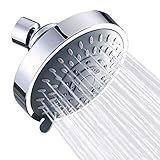
- Powerful Functions - High pressure shower head form rhythmic water pulse, which relieve your body stress and ache, let you enjoy the natural SPA at home
- Advanced Material- High quality ABS plastic body polished chrome shower head, more durability and beautiful. On the 4.1 Inch panel, self cleaning nozzles increase water impact force to form high pressure
- Easy Installation - Easily installs fixed shower head with G 1/2 connection thread interface to any standard shower arm in minutes, without plumbers or tools
- Upgraded 5 Functions: By swinging the lever, you can switch to the mode you like: Power Mist Mode, Power Rain Mode, Pulsating Mode, Rain Massage Mode, Rain Mist Mode
- 360 Rotating: The adjustable metal ball joint with effortless 360 degree rotation allows this rain shower head to be flexible to any angle or direction for a more comfortable shower experience
3. Reduce outdoor water use within the rules
Residential outdoor use is a major conservation opportunity. EPA describes U.S. residential outdoor water use as nearly 8 billion gallons per day, mainly for landscape irrigation. During drought, reduce or stop irrigation as the local rule requires.
If watering is allowed, use the permitted window efficiently
- Water only on the days and during the hours your utility allows. Cooler parts of the day generally reduce evaporation.
- Apply water to the root zone rather than spraying leaves, sidewalks, driveways, or building walls.
- Repair tilted, clogged, or broken sprinkler heads before running a permitted cycle.
- Use drip lines, soaker hoses, or trickle irrigation where they suit the plant and are allowed. These methods can deliver water near roots, but they do not create an exemption from a ban.
- Use a controller only after confirming its schedule complies with the current rule. Disable automatic schedules when watering is prohibited.
Prioritize plants when water is limited
If the utility permits some watering but not enough for the whole landscape, prioritize established trees and valuable plants that are difficult to replace. Reduce or stop watering ornamental turf and seasonal displays first when that is consistent with local guidance. Letting grass grow longer can reduce its demand compared with maintaining a very short lawn.
Native or locally appropriate plants may require less supplemental water after establishment, but replacing a lawn is a landscape project, not an emergency fix. New plants often need regular establishment watering, so schedule a redesign for a time when the utility’s rules and your budget allow it.
Improve soil and surface conditions during maintenance
Keep irrigation off sidewalks and paved areas, where water cannot benefit plants. Mulch around suitable plants can help the soil retain moisture and reduce evaporation, but keep mulch away from trunks and stems to avoid creating persistently wet contact. Remove irrigation leaks and compacted-soil problems before increasing run times.
Do not treat equipment as permission
A drip hose, soaker hose, smart controller, rain sensor, or drought-tolerant planting does not override a utility prohibition. The legal question is whether watering is allowed at that time and for that use. Equipment choices matter only after the local rule permits the activity.
4. Make indoor savings when a fixture needs replacement
Replacing a functioning fixture solely for drought response may be less urgent than repairing a leak or reducing outdoor use. When a toilet, faucet, or showerhead is already due for replacement, look for the EPA WaterSense label. EPA says WaterSense-labeled products use less water and may qualify for utility rebates.
| Replacement decision | What to check | Why timing matters |
|---|---|---|
| Toilet | WaterSense label, rough-in dimensions, bowl shape, flush performance, and local plumbing requirements | Installation can address an aging or leaking unit without discarding a working fixture prematurely |
| Faucet | WaterSense label where applicable, sink compatibility, supply connections, and user comfort | Changing a faucet during a planned remodel avoids a separate installation visit |
| Showerhead | WaterSense label, connection size, spray pattern, and household pressure expectations | Replacement is easiest when the existing head is damaged or being renovated |
Rebate programs, eligible models, application deadlines, and required documentation vary by utility. Check the utility before purchase; a rebate is not guaranteed merely because a product carries a label.
The Tool Desk
Outbyte Driver Updater FREEFix the driver behind crashes, sound loss and screen glitchesFind Drivers →Outbyte PC Repair FREEClear out junk files and repair common Windows errorsFree Scan →5. Reuse suitable water carefully
EPA suggests collecting water that would otherwise run down the drain while a shower warms, or water used to wash pots, and using it for container plants or flower beds. Keep this practice small, practical, and consistent with local rules.
Rank #3

- LIFETIME LIMITED WARRANTY: You can install with confidence, knowing this Delta shower head is backed by Delta Faucet's Lifetime Limited Warranty
- INTENSELY POWERFUL: Immerse yourself in the steady, intensely powerful full body spray with forceful streams of water to satisfy all of your showering needs
- 2 CONVENIENT SPRAY OPTIONS: Shower head spray options include full body spray and pause
- PAUSE FEATURE: Pause feature reduces water to a trickle, giving you space for shaving, lathering and other shower tasks while maintaining your temperature settings
- DURABLE: This Delta shower head is made of durable, all-metal construction
- Use a clean container and label it if several people share the home.
- Apply the water to appropriate outdoor plants rather than storing it for long periods.
- Avoid water containing bleach, strong cleaners, solvents, grease, or concentrated food waste.
- Do not assume that collecting household water creates permission to operate an unapproved greywater system. The EPA drought guidance cited here does not establish a general greywater-system rule; local plumbing and health requirements control.
6. Choose the next action by urgency and effort
When several improvements are possible, use the following order. Local permission is always the first filter.
| Action | Best use | Expected effort | Upfront cost | Important limitation |
|---|---|---|---|---|
| Check restrictions | Every household before outdoor watering | Low | None | Rules differ by utility and can change |
| Inspect fixtures and irrigation | Immediate leak reduction | Low to moderate | Usually none for inspection | Hidden leaks may require professional diagnosis |
| Meter or bill check | Confirm unexplained use | Low | None | Shows that flow exists, not where it is |
| Reduce permitted irrigation | Short-term outdoor conservation | Low once scheduled | None to low | Never use when prohibited |
| Drip, soaker, or trickle delivery | Landscape work where watering is allowed | Moderate | Varies by layout | Does not override restrictions and can still leak |
| WaterSense fixture replacement | Planned remodel or failed fixture | Moderate | Purchase and installation cost vary | Rebates and eligibility vary by utility |
| Moisture or flow monitor | Alerts for dampness or unusual use | Low to high, depending on installation | Product-specific | Sensing method, alerts, and shutoff capability differ |
| Landscape redesign | Long-term reduction for an established property | High | Project-specific | New plants need establishment care and are not an emergency drought measure |
7. A practical seven-day conservation plan
Day 1: establish the rule set
Identify the supplying utility, record the drought stage, and write down allowed watering days, hours, and exceptions. Turn off automatic irrigation schedules if the current rule prohibits watering.
Day 2: inspect obvious leaks
Check toilets, faucets, showerheads, under-sink plumbing, appliance hoses, hose bibs, and visible irrigation parts. Photograph damage before disassembly if a landlord, insurer, or plumber may need a record.
Quick wins for a faster PC:
Scan for outdated or missing drivers - takes under a minuteDriver Scan →Clear out junk files and repair common Windows errorsFree Scan →Fix the driver behind crashes, sound loss and screen glitchesFind Drivers →Day 3: verify unexplained flow
Compare the bill with the same month last year and perform a no-use meter check. Enable the utility’s leak-alert service if it offers one.
Day 4: repair or escalate
Replace accessible washers, cartridges, flappers, gaskets, or hose fittings when you can do so safely. Escalate concealed, pressurized, structural, or electrical-adjacent leaks to a qualified professional.
Day 5: reset permitted irrigation
If watering remains legal, shorten schedules, use the allowed cooler window, correct overspray, and target roots. If it is banned, leave the system off and maintain only activities expressly permitted by the utility.
Day 6: plan replacements
List fixtures that are already failing or scheduled for renovation. Check WaterSense options and ask the utility about current rebate terms before buying.
Day 7: decide whether monitoring or redesign is justified
Choose a monitor when alerts would solve a specific problem, such as an unoccupied home or recurring unexplained flow. Consider landscape redesign only when you can follow the establishment-watering requirements and local rules.
Rank #4

- STEADY PRESSURE: Our Niagara Conservation fixed shower head provides high performance at most water pressures. You get a steady spray thanks to our patented pressure-compensation technology.
- CONSERVES WATER: Our California Compliant water saving shower head gives you significant annual savings in water and heating costs while you get the feel and function of a luxury bathroom accessory.
- DURABLE SHOWERHEAD: Enjoy years of reliable use from this bathroom essential. Our adjustable shower heads are mounted on sturdy ball joints that swivel 360 degrees and can direct a luxurious downward spray where you need it.
- CORROSION RESISTANT: High impact-resistant polycarbonate thermoplastic is also used in the construction of our bathroom shower heads. This gives you added toughness and helps fight corrosion.
- WATERSENSE COMPLIANT: Our efficient and cost-saving showerhead is ANSI certified, NSF certified, ASME listed, CSA listed, and Watersense compliant in EPA criteria in water efficiency.
8. Troubleshoot common drought-conservation problems
The bill rose, but no faucet drips
Use the meter test, inspect toilets for silent refilling, check irrigation valves and buried lines, and review appliance cycles. If the meter changes with all use stopped, request utility assistance or professional leak detection.
The irrigation controller keeps running during a restriction
Disable automatic schedules at the controller and any connected app. Confirm that a second controller, well pump, or seasonal program is not operating. Do not rely on a rain sensor or smart schedule to interpret a legal prohibition.
A plant is wilting during an outdoor-watering ban
Check the utility’s published exceptions before watering. Some jurisdictions distinguish newly planted vegetation, food crops, or trees, while others do not. If no exception applies, contact the utility for direction rather than assuming a particular hose or time of day is allowed.
A monitor gives repeated alerts
First check for a running toilet, ice maker, water softener regeneration, irrigation cycle, or appliance operation that coincides with the alert. Then review the device’s threshold and sensor placement. Repeated unexplained flow still warrants a physical inspection; an alert is not proof of a particular failure.
A WaterSense fixture feels different
Verify that the product is installed correctly and that household pressure and supply valves are adequate. If performance remains unacceptable, use the manufacturer’s installation and troubleshooting information or consult a plumber. Do not remove a working fixture solely to chase an assumed rebate; confirm the utility’s requirements first.
9. What the national figures mean for an individual home
EPA’s Fix a Leak Week material says household leaks nationwide can waste nearly 1 trillion gallons of water annually and describes more than 9,300 gallons per year as the average household’s potential leak waste. These are national EPA figures, not a forecast for your address. Your actual avoidable use depends on the leak size, household behavior, plumbing, climate, and local rules.
The outdoor-use figure of nearly 8 billion gallons per day likewise describes U.S. residential use, mainly landscape irrigation. It signals why outdoor watering is a large conservation opportunity, but it does not tell you how much water your yard should receive or what your utility currently permits.
What’s actually slowing this PC down?
Pick the symptom - the matching free tool is one click away.
Quick Recap
10. The priority order
- Check and follow the current local drought restrictions.
- Stop unexplained flow by inspecting and repairing leaks.
- Reduce or stop outdoor watering according to the rule, prioritizing efficient delivery only where watering is allowed.
- Reuse suitable water in small, safe ways that comply with local requirements.
- Choose WaterSense fixtures when replacement is already planned, and verify rebate terms with the utility.
- Add monitoring or redesign the landscape when a specific household problem justifies the cost and effort.
Product prices and availability are accurate as of the date/time indicated and are subject to change. Any price and availability information displayed on Amazon at the time of purchase will apply.

