
iTechGuides is reader-supported. When you buy through links on our site, we may earn an affiliate commission. As an Amazon Associate I earn from qualifying purchases. Learn more
You can lower the climate impact of your diet without abandoning protein, counting every gram, or becoming fully vegetarian. The most consequential practical change is to make some meals center on beans, lentils, peas or tofu instead of beef or lamb. Keep eggs, poultry, fish, dairy or meat when they suit your budget, culture and nutritional needs, but use lower-emission protein foods more often and waste less of what you buy.
The figures below compare greenhouse-gas emissions per 100 grams of protein. That unit asks a useful substitution question: how much climate-warming pollution is associated with obtaining a similar amount of protein from each food? The values are global averages from the Poore and Nemecek (2018) dataset as processed by Our World in Data, based on studies with a median reference year of 2010. They describe broad production categories, not a particular farm, brand, meal or person’s complete diet.
Start with substitutions, not elimination
Protein is a nutrient category, not a synonym for meat. The NHS Eatwell Guide places beans and pulses alongside fish, meat, eggs and other protein foods. That makes a flexible approach possible: change the protein at selected meals rather than trying to redesign your entire diet at once.
Quick wins for a faster PC:
Scan for outdated or missing drivers - takes under a minuteDriver Scan →Clear out junk files and repair common Windows errorsFree Scan →A useful first move is to replace a beef- or lamb-centered meal with one built around lentils, beans, peas or tofu. A lentil-and-tomato sauce can fill the role of minced meat in pasta; black beans can anchor tacos; chickpeas can make a curry substantial; tofu can take the place of diced meat in a stir-fry. These are substitutions, not extra side dishes, so the meal remains familiar while its main protein source changes.
#1 Best Overall
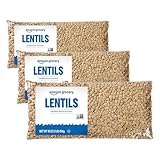
- The information below is per-pack only
- One 16 ounce bag of lentils
- Excellent source of fiber
- Non GMO
- May contain traces of wheat
If a complete switch is unrealistic, use a blended transition. Replace half the minced meat in a chilli with lentils, mushrooms or beans, then increase the plant portion as the recipe becomes familiar. The climate effect depends on the amount and type of food you replace, so a part-swap can still be worthwhile.
How the climate comparisons work
Why use emissions per 100 grams of protein?
Food can be compared per kilogram of product, per serving, per calorie or per nutrient. Those units answer different questions. A kilogram of a low-protein food is not equivalent to a kilogram of a concentrated protein food. When the question is “What can replace this protein?”, emissions per 100 grams of protein put the foods on a more comparable nutritional basis.
The figures are kilograms of carbon-dioxide equivalent (kg CO₂e) per 100 g of protein. Carbon-dioxide equivalent combines several greenhouse gases by expressing their warming effect in a common unit. It does not mean that a serving literally contains that mass of carbon dioxide.
Global averages, not a shopping scorecard
The underlying meta-analysis screened 1,530 studies, added data from 139 authors, retained 570 studies after assessment and covered about 38,700 commercially viable farms in 119 countries and 40 products. Its median reference year was 2010. Our World in Data processed the results into the nutritional-unit figures used here.
That scale makes the data useful for understanding broad patterns, but it cannot predict the footprint of a named product or local farm. Production methods, yields, feed, land, transport, storage and processing vary. The numbers also do not represent the marginal effect of one purchase, a complete meal or your whole diet.
What the published averages show
The table lists the food categories for which the cited comparison provides protein-normalized values. Lower numbers indicate lower average greenhouse-gas emissions in this dataset; they are not a complete environmental ranking.
| Protein food or category | kg CO₂e per 100 g protein | How to read the category |
|---|---|---|
| Beef from beef herds | 49.89 | A beef-herd category; not every beef production system |
| Lamb and mutton | 19.85 | Global average for the category |
| Pork | 7.61 | Global average for the category |
| Poultry meat | 5.70 | Global average for the category |
| Eggs | 4.21 | Global average for the category |
| Tofu | 1.98 | Global average; product and production method vary |
| Other pulses | 0.84 | Beans, lentils and comparable pulse categories in the dataset |
| Peas | 0.44 | Global average for the category |
On these averages, beef from beef herds is associated with about 25 times the emissions per 100 g of protein as tofu and about 59 times those of peas. Lamb and mutton also sit far above poultry, eggs, tofu and pulses. The exact ratio should not be applied to a particular label or farm; it simply illustrates the scale of the category-level difference in this dataset.
Free tools Windows power users keep installed
One-click scans. No signup required.
Choose swaps in order of likely impact
Replace beef first when it is practical
Beef has the highest value in the table. If you eat beef regularly, replacing even one beef-centered meal each week with beans, lentils, peas or tofu is a clear place to start. You do not need to remove every beef dish to move the average in a lower-emission direction.
Consider lamb and mutton next
Lamb and mutton also have a high average value. A lentil shepherd’s pie, chickpea tagine or bean stew can preserve the hearty structure of familiar dishes while changing the central protein.
Rank #2

- WHAT'S INSIDE: 16 ounces of whole, dry lentils
- WHY YOU'LL LOVE IT: These lentils are an excellent source of fiber and contains no GMOs. Great addition to soups, salads, or as a side dish.
- HIGH QUALITY, LOW PRICES: Amazon Fresh brand products are all about high-quality food that fits every budget, every day.
- ONLY FROM AMAZON: Look for the Amazon Fresh label to find great deals on a wide selection of grocery essentials.
Use poultry, eggs and pork as intermediate options
Poultry, eggs and pork have lower averages than beef and lamb in this comparison, but they remain above tofu and pulses. They can be useful transitional foods when a plant-based substitute does not work for a particular recipe, household member or occasion. Their lower value should not be presented as a reason to increase total meat consumption.
Make pulses, peas and tofu routine staples
Pulses include foods such as beans and lentils. They are versatile in soups, salads, curries, pasta sauces, burgers and grain bowls. Peas can be folded into risotto, pasta, fried rice or a blended soup. Tofu absorbs marinades and sauces, so pressing it, browning it and seasoning it well can make it a convincing center for a meal.
The Tool Desk
Outbyte PC Repair FREEClear out junk files and repair common Windows errorsFree Scan →Outbyte Driver Updater FREEScan for outdated or missing drivers - takes under a minuteDriver Scan →A meal-by-meal method that works
- List your usual protein-centered meals. Write down a normal week rather than an ideal one. Mark which meals use beef or lamb, which use pork or poultry, and which already use eggs, dairy, fish or plants.
- Pick two repeatable meals for a plant-protein swap. Choose recipes whose seasoning and texture already suit beans, lentils, peas or tofu. Familiar formats reduce the need to learn several new cooking techniques at once.
- Replace the main protein, not just the garnish. Use a drained can of beans, cooked lentils, peas or tofu in the same structural role that meat occupied. Keep vegetables, grains, herbs and sauce if they help the meal feel recognizable.
- Cook enough for a second meal. A pot of lentil chilli or bean curry can become lunch, a baked-potato topping or a filling for wraps. Reusing cooked food makes the lower-impact option easier on busy days.
- Evaluate the result by practical fit. Note taste, texture, cost, cooking time, availability and whether everyone in the household ate enough. Adjust seasoning or format before deciding that a protein source does not work.
- Repeat before expanding. Once two swaps are reliable, add another. A gradual pattern is more durable than a short-lived attempt to change every meal.
Build satisfying meals without prescribing a personal protein target
The cited climate evidence does not establish an individualized protein requirement, and needs vary with age, body size, activity, health status and medical treatment. Do not use these figures as medical nutrition advice. If a clinician or dietitian has given you a protein plan, keep that plan and ask how substitutions can fit it.
For general meal planning, combine a protein food with the other components that make food filling and enjoyable: vegetables or fruit, a grain or starchy food, and a source of flavor such as spices, herbs, sauce or dressing. Beans and lentils can be added to a grain bowl; tofu can accompany noodles and vegetables; peas can be mixed through a pasta dish. This approach changes the centerpiece without treating protein as the only feature of a meal.
Read labels when you buy packaged alternatives, because products differ in salt, saturated fat, added sugars and fortification. The dataset’s emissions values cannot tell you whether a particular product meets your health, allergy or dietary requirements.
Keep animal foods when they serve your needs
A lower-climate diet does not require one universal menu. Some people retain fish, eggs, dairy, poultry, pork or occasional red meat for taste, tradition, convenience, access or nutritional reasons. The useful question is how often a higher-emission category is the default and where a practical substitute can take its place.
For a mixed diet, you might use lentil bolognese on one night, eggs or fish on another, poultry for a family meal and a smaller portion of meat in a dish where it matters most. This is a pattern of allocation, not a rule that ranks people by purity. If you have allergies, digestive limitations, cultural requirements or limited food access, choose the swaps that are safe and realistic.
Simple formats for familiar dishes
Chilli and pasta sauce
Replace all or part of minced beef with cooked lentils or beans. Keep the tomato, onion, garlic, chilli and herbs that carry the flavor. A partial replacement is a practical starting point when diners are unsure about a fully plant-based version.
Curry and stew
Use chickpeas, split peas or lentils as the protein base. They work with tomatoes, coconut-based sauces, stock, aromatics and warming spices. Add peas near the end so they retain color and texture.
Rank #3

- Iberia dry lentils can be used in a variety of recipes
- These high-quality lentils great for preparing lentil soup, adding into salads or stews or pairing with rice.
- No sugar, No cholesterol, No saturated fat and No trans fat.
- It's the perfect choice for a healthy diet.
Stir-fry
Press tofu, cut it into cubes, brown it in a hot pan and add it to the vegetables and sauce. If tofu is unfamiliar, use it alongside a smaller amount of a familiar protein during the transition.
Salads, grain bowls and packed lunches
Add beans, lentils, peas or tofu to grains and vegetables rather than serving a salad as leaves alone. A dressing, pickled vegetable, toasted seed or fresh herb can provide contrast without changing the protein comparison.
Climate is not the only environmental measure
The underlying analysis also considered land use, eutrophying emissions, freshwater withdrawals and scarcity-weighted water use. A food that has a lower greenhouse-gas value is not automatically the best choice on every environmental dimension in every location. Water scarcity, local pollution, land conditions and production practices can change the wider comparison.
Use the table for the specific question it can answer: average climate impact per 100 g of protein. Do not turn it into a claim that one food is universally superior, that transport always dominates production, or that a particular local product matches the global mean.
Reduce waste alongside protein substitutions
Food that is produced but not eaten creates avoidable impacts. Plan portions, store leftovers promptly, freeze what will not be used soon and use older vegetables in soups, sauces or stews. Buy dried lentils and beans when you can use them, and choose canned versions when convenience prevents waste; the lower-impact food is not useful if it repeatedly spoils in your cupboard.
NHS England states: “Reducing food waste and promoting healthy and low carbon diets, high in seasonal fruit and vegetables, beans, pulses and other lower carbon sources of protein, will help bring health benefits as well as carbon emissions reduction.” The point is complementary: changing the protein source and eating what you buy address different parts of the food system.
Independent reader supportYour contribution helps us test, update, and keep practical guides available for everyone.How to interpret labels, claims and online comparisons
Check the denominator
Ask whether a number is reported per kilogram of food, per serving, per calorie or per 100 g of protein. Do not compare values with different denominators as though they were interchangeable.
Check the category
“Beef,” “seafood,” “poultry” or “plant protein” can cover multiple production systems. A value for beef from beef herds does not describe beef from dairy herds, and a broad pulse category does not predict every packaged product.
Check the scope and date
The figures here are global means derived from studies whose median reference year was 2010. They are valuable for broad direction, not a current footprint guarantee for a product purchased in 2026.
Recommended Free Tools
Rank #4

- CERTIFIED GLYPHOSATE RESIDUE FREE by the detox project.
- HIGH STANDARD OF EXCELLENCE: Palouse Brand foods are Certified Non-GMO Project Verified, Kosher, farmed Sustainably and cleaned in a food safe HACCP Certified facility.
- PROUDLY GROWN ON OUR FARM: Palouse Brand foods are proudly grown on our Washington State farm providing our customers truly authentic farm to table experiences. We grow our foods on our 125+ year old farm, harvest them, transport them, triple clean, and package them to be sent directly to our customers.
- LONG-TERM SHELF LIFE: Through food safety regulations we provide a Best By date of 3 years. However, when stored in an air-tight container, in a cool, dry location, Palouse Brand foods can last decades.
- Product packaging may vary.
Check what is included
Life-cycle studies can include farm inputs, land-use change, processing, transport, retail and other stages in different ways. Look for the boundary before drawing a conclusion about a meal or a supply chain.
A realistic four-week experiment
Week 1: observe
Record the protein at each main meal and identify the meals that most often use beef or lamb. Do not change anything yet; find the easiest opportunities.
Week 2: make two swaps
Choose one beef meal and one lamb meal. Cook a pulse-, pea- or tofu-based version using the same cuisine and similar side dishes. Record what worked and what did not.
Week 3: improve convenience
Prepare a batch, freeze portions or keep a shelf-stable option available. Solve the practical reason you might otherwise return to the old meal: time, texture, planning or access.
Do these 3 things before closing this tab:
1Scan for outdated or missing drivers - takes under a minute2Clear out junk files and repair common Windows errors3Fix the driver behind crashes, sound loss and screen glitchesWeek 4: set a sustainable pattern
Decide how many meals you can keep plant-centered without resentment or nutritional problems. Retain animal foods where they genuinely add value, and schedule the lower-emission meals rather than relying on last-minute willpower.
Common problems and fixes
“The meal does not keep me full.”
Increase the overall meal structure with a grain or starchy food, vegetables, sauce and an adequate portion of the chosen protein. If fullness remains a concern or you have a medical condition, seek individualized advice rather than guessing from an emissions table.
“The texture is disappointing.”
Change the preparation. Brown tofu instead of simmering it unseasoned; use mashed beans in a thick sauce; keep lentils slightly firm for salads and cook them softer for soups. Texture often reflects technique and recipe design rather than the ingredient alone.
“My household will not accept a complete swap.”
Start with a blended dish, offer the plant protein as an option, or change one meal that is already strongly seasoned. A repeatable partial substitution is more useful than a failed all-or-nothing rule.
Outdated Drivers Are Slowing You Down
One free scan finds every outdated or missing driver and matches the right update for your exact hardware.Free scan · exact hardware matchWindows Errors? Fix Them Before They Spread
Repair common Windows errors and clear accumulated junk for a smoother, more stable PC - no reinstall needed.Free scan · no reinstall“I cannot find a particular product.”
Use interchangeable categories: dried or canned beans, lentils, split peas, frozen peas or plain tofu. The climate comparison concerns broad food categories, not a requirement to buy a specific branded product.
“I am worried that plant protein is automatically healthy.”
It is not automatically so. Check the full ingredient list and nutrition panel of packaged foods, account for allergies and intolerances, and keep advice from a qualified professional when you have a diagnosed condition.
A decision checklist for your next shop
- Which one or two beef or lamb meals can become pulse-, pea- or tofu-based?
- Will dried, canned or frozen ingredients make the swap easier to repeat?
- What cooking method will provide the texture the meal needs?
- Have you checked the comparison’s unit and food category before trusting a climate claim?
- Can you plan, store or freeze the food so it is eaten rather than wasted?
- Does the change fit your health advice, budget, culture, household and access?
Use the global averages as a direction of travel: making beans, lentils, peas and tofu more frequent substitutes for beef and lamb generally lowers the average greenhouse-gas intensity of the protein in those meals. Keep the comparison in its proper scope, pay attention to the other environmental impacts and choose a pattern you can maintain.
Quick Recap
Product prices and availability are accurate as of the date/time indicated and are subject to change. Any price and availability information displayed on Amazon at the time of purchase will apply.
What’s actually slowing this PC down?
Pick the symptom - the matching free tool is one click away.

