
What’s actually slowing this PC down?
Pick the symptom - the matching free tool is one click away.
iTechGuides is reader-supported. When you buy through links on our site, we may earn an affiliate commission. As an Amazon Associate I earn from qualifying purchases. Learn more
The most effective household strategy is to wash synthetic garments only when hygiene requires it, then use a properly filled machine on a cold, short, gentle cycle. A washing-machine microfiber filter on the drain line adds the strongest capture step in this evidence set. Front-loading or high-efficiency machines may shed less than some alternatives, while laundry bags and balls are secondary controls rather than complete solutions.
Why synthetic clothes release microplastic fibers
Polyester, nylon, acrylic and fleece are made from plastic-based fibers. During laundering, mechanical agitation, fabric-to-fabric friction, water movement and chemical stress can break or pull fibers from the yarn. The released pieces range from long lint strands to short fibers that are difficult to see and measure.
Every wash is a shedding event, so reducing the number of wash cycles is the first control. When a garment can be aired, brushed or spot-cleaned safely, those options avoid the agitation and water flow that carry fibers toward the drain. Hygiene still comes first: underwear, activewear, items exposed to bodily fluids and clothing with visible soil generally need washing according to the care label and normal health practice.
Do these 3 things before closing this tab:
1Scan for outdated or missing drivers - takes under a minute2Clear out junk files and repair common Windows errors3Fix the driver behind crashes, sound loss and screen glitchesHow much microfiber can a wash release?
Published measurements vary with fabric, garment construction, machine, load size, cycle and sampling method. The figures below are useful for scale, but they are not a universal emissions rate for every washer or item of clothing.
#1 Best Overall
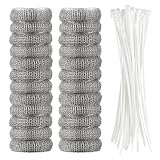
- Package includes: 24 pieces washing machine lint traps and 24 pcs cable ties, common size to fit most washing machine discharge hoses.
- Washing machine lint trap size: expand length of the lint trap is 27 cm and 5 cm in width, fits most washing machine discharge hoses. Cable tie: length is 19.7 cm, good help to securely fasten lint Trap to the drain pipe. Fits all household laundry hoses Fits 1" to 3" diameter hoses.
- Usage: It is very easy to install, traps can slips easily onto end of hose, no tools needed for installation, easy to put on the discharge hose and they are easy to remove.
- Material: lint traps are made with high-quality stainless steel. These lint traps will not rust, do not readily tear, prevent clogging of drains.
- Note: the traps work on a washing machine hose only used on the hose that drains into a sink. Not applicable for stand-pipe drains or pipes that go into the wall.
| Finding | Conditions or source qualification | What it means at home |
|---|---|---|
| More than 700,000 fibers | Reported for an average 6 kg acrylic wash load by Napper and Thompson (2016). | A single full load can release a very large number of fibers even when the lint is not visible. |
| 114 ± 66.8 ppm microfiber per kilogram of fabric | Mean measured in real consumer laundry in a 2020 PLOS One study. | Results differ substantially between loads; fabric and laundering conditions matter. |
| About fivefold more release from a smaller load | Scientific Reports study (2021) found approximately five times more microfiber when the wash load was decreased. | Running a lightly filled drum can increase the water and movement available per garment. |
| 30% lower generation | A 15°C, 30-minute cycle compared with a 40°C, 85-minute cycle in the 2020 PLOS One study. | Cold, short programs can reduce shedding, provided they still clean the garment adequately. |
| Up to 80% reduction | European Environment Agency (2022) synthesis of one washing-machine filter study; the result is not a guarantee for every product. | Drain filtration can be a major additional control, but performance depends on design and testing. |
| 87% average capture | National Park Service summary of a 2018 study testing one aftermarket filter on fleece blankets. | A filter can capture most measured fibers in a particular test while still allowing some through. |
Wastewater treatment removes a substantial share of textile fibers, but not all of them. Removal varies with fiber size, treatment process and plant design. Preventing and capturing fibers before they leave the home therefore remains useful.
A low-shedding washing routine
1. Wash only as often as the garment needs
Follow the care label, but distinguish odor or a small mark from a need for a complete wash. Air a clean outer layer between wears, brush off dry dirt and spot-clean a localized spill when the fabric and stain allow it. The U.S. Environmental Protection Agency consumer guidance explicitly advises, “Wash clothing less often.” Fewer cycles mean fewer opportunities for fibers to detach.
- Wash underwear, socks, swimwear and heavily soiled or sweaty garments after use.
- Air or spot-clean lightly worn jackets, trousers and other outer layers when appropriate.
- Do not delay washing items contaminated with body fluids, chemicals, mold or other hazards.
2. Sort by care needs and fabric behavior
Keep garments within their care-label requirements and avoid combining a delicate synthetic knit with abrasive items such as rough denim, towels or garments with exposed hook-and-loop fasteners. Close zippers, hooks and snaps, and turn fleece or brushed fabrics inside out if the label permits. These steps reduce snagging and surface abrasion; they do not make a garment fiber-free.
The Tool Desk
Outbyte Driver Updater FREEFix the driver behind crashes, sound loss and screen glitchesFind Drivers →Outbyte PC Repair FREERepair Windows errors before they cause bigger problemsFix Now →Rank #2

- Reduce Lint Buildup in Washer Drain Lines Capture loose lint, hair, and fabric debris from washing machine drain water before they enter your drain system. Designed as a washer hose lint trap to help reduce buildup and keep laundry areas cleaner.
- Dual-Layer Mesh Filtration Design Featuring a dual-layer nylon mesh design, this washing machine hose filter helps collect lint and hair particles while allowing proper water drainage when replaced regularly.
- Check Your Drain Setup Before Ordering Designed for washing machine drain hose ends that empty into open utility sinks or laundry basins. Please check your setup before purchase. Not intended for standpipe drains or direct wall drains.
- Quick Installation with Complete Replacement Kit Includes 100 washing machine lint traps and 100 cable ties for convenient replacement. Simply slide the filter over the drain hose end and secure it firmly for installation without extra tools.
- Regular Replacement for Best Performance Lint and pet hair buildup varies by laundry habits. Check the filter regularly and replace when filled, especially after washing towels, blankets, fleece, or pet bedding.
3. Fill the drum, but do not pack it solid
A normally full load reduces the water-to-fabric ratio and can limit the amount of rubbing and movement per item. The load must still have room to tumble or circulate. If clothes are compressed into a rigid mass, detergent and water cannot distribute properly and mechanical stress can rise.
- Use the washer’s stated capacity as a maximum, not a target for stuffing.
- For a mixed load, leave enough space to move the load through the drum and close the door without compression.
- Avoid repeatedly washing one or two synthetic items alone unless the care requirement makes it necessary.
The approximately fivefold increase observed with a decreased load in the 2021 Scientific Reports study supports avoiding very small loads. That result describes the tested conditions, not a precise multiplier for every washer.
4. Select cold water and the shortest gentle cycle that works
Choose the lowest temperature that gives acceptable cleaning and the shortest program with gentle agitation. A real-laundry comparison in the 2020 PLOS One study measured 30% less microfiber generation at 15°C for 30 minutes than at 40°C for 85 minutes. The comparison combines both temperature and cycle duration, so it does not prove that temperature alone caused the entire difference.
Rank #3

- Package Contents: 10 x Washing Machine Filter Paper
- Material: Using excellent materials, the fiber gap effectively filters impurities and adsorbs fine particles
- Size: 6 * 19 cm/2.36 * 7.48 in
- Double filtration: high permeability, dual filtration, reducing the number of times to clean the filter box
- Trimmable: You can cut according to the size of your filter box, using non polluting materials that will not harm clothing, etc
- Use a cold or 15°C setting when the detergent and garment-care label support it.
- Choose a delicate, synthetics or other low-agitation program instead of a long intensive cycle for lightly soiled items.
- Avoid unnecessary prewash, extended soaking and extra-rinse options; they add water movement and may increase the number of fiber-transport events.
- Use a hotter or longer cycle when hygiene, stain removal or the care label requires it, rather than leaving a garment inadequately cleaned.
5. Use detergent that works at the chosen temperature
The European Environment Agency summarizes evidence that powder detergent can increase abrasion and shedding. Findings for fabric softener and detergent type vary between studies, so no detergent can be claimed to eliminate microfiber release. A liquid detergent formulated to dissolve at the selected low temperature is a practical choice when it is compatible with the garment and washer.
- Measure detergent according to the product instructions and soil level; excess product does not prevent shedding.
- Do not switch to a low-temperature detergent if the garment label or washer instructions prohibit it.
- Treat softener as optional rather than a microfiber-control product, because reported effects are inconsistent.
6. Keep the machine and load from adding avoidable abrasion
Remove objects from pockets, secure fasteners and separate items with abrasive trims. Clean the washer’s door seal, lint areas and detergent drawer according to the manufacturer’s instructions. A clean machine helps prevent old lint from being redistributed, although routine cleaning alone does not capture all fibers leaving with wastewater.
Capture fibers before they enter the drain
External washing-machine filters
An external microfiber filter is installed in the washer’s drain path so discharge passes through a collection chamber before entering the household drain. The European Environment Agency reports reductions of up to 80% in one study, and the National Park Service summarizes an 87% average capture result for one aftermarket filter tested on fleece blankets. Those percentages are product- and test-specific: a different washer, fabric, cycle or fiber-size distribution can produce a different result.
Rank #4
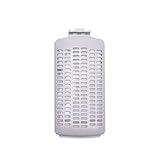
- PERFECT COMPATIBILITY - Specifically designed for 0.9 cubic foot portable washers including Black+Decker, Magic Chef and similar 0.9 cu ft models
- SUPERIOR LINT CAPTURE - High-density mesh filter effectively traps lint, hair, and debris while maintaining optimal water flow for thorough cleaning
- EASY INSTALLATION - Simple snap-in replacement for worn or damaged filters - no tools required, just remove old filter and insert this replacement
- DURABLE CONSTRUCTION - Made from corrosion-resistant plastic and stainless steel mesh for long-lasting performance and repeated use
- MAINTAIN MACHINE PERFORMANCE - Regular filter replacement prevents clogging, reduces wear on your washer, and ensures clean laundry every time
When evaluating a filter, check:
- Capture location: A drain-line filter intercepts wastewater after it leaves the drum; an in-drum bag or ball acts inside the washer.
- Fiber-size performance: Look for a test method that states the smallest fibers measured, not only a claim about “microplastics.”
- Test conditions: Fabric type, load mass, cycle, water volume and number of washes should be disclosed.
- Flow and compatibility: Confirm hose diameter, pump requirements, mounting position and whether the filter is approved for your washer model.
- Maintenance: Verify how often the collection chamber must be emptied, whether cartridges or screens are replaceable and how blocked flow is indicated.
How to install and use a drain filter safely
- Read both manuals. Confirm that the filter is suitable for your washer, drain hose and electrical environment. Follow the filter maker’s mounting and flow-direction instructions.
- Disconnect power before handling the hose. Turn off and unplug the washer, close the water supply if the installation instructions require it, and place a shallow tray or towels under the drain connection.
- Route the drain through the filter. Secure every hose clamp, keep the hose free of sharp bends and mount the unit where it can be inspected without moving the washer.
- Run a short empty rinse. Check every connection for leaks and confirm that the washer drains without an error or pump strain.
- Inspect after the first few loads. Record how quickly lint accumulates under your normal cycles; the correct cleaning interval depends on the garments and filter capacity.
- Empty captured lint into household trash. Do not rinse the collected material into a sink, toilet or floor drain, because that simply moves the fibers back into wastewater.
- Restore flow promptly if the filter blocks. A clogged screen can cause slow draining, pump faults or an overflow. Stop the washer, isolate power and clean the unit using its instructions.
Do laundry bags and balls catch microplastics?
They can reduce some fiber escape, but they are secondary controls and should not be treated as complete capture systems. The EPA lists laundry bags and laundry balls among consumer options. Published testing summarized in a PubMed-indexed study found that a lint-filter bag retained fibers larger than 1,000 micrometres but did not retain fibers under 500 micrometres. Shorter fibers can therefore pass through even when a bag visibly contains lint.
| Option | Where it works | Strength | Limit to account for |
|---|---|---|---|
| Mesh laundry bag | Inside the drum around selected garments | Collects some detached lint and reduces garment-to-garment contact. | Testing found retention for fibers over 1,000 µm but not under 500 µm; capacity and mesh size vary. |
| Lint-catching ball | Loose in the drum | May gather visible lint and is simple to use. | Capture performance depends on its surface and load movement; it is not proven complete filtration. |
| Drain-line filter | Between washer discharge and household drain | Intercepts fibers from the whole load and can achieve high capture in particular tests. | Requires installation, cleaning and compatibility checks; reported percentages are not universal. |
If you use a bag, do not overfill it, leave room for water and movement, and empty the collected lint into household trash. A bag does not remove fibers released by garments washed outside it, nor does it guarantee capture of short fibers.
Quick wins for a faster PC:
Repair Windows errors before they cause bigger problemsFix Now →Scan for outdated or missing drivers - takes under a minuteDriver Scan →Clear out junk files and repair common Windows errorsFree Scan →Should you replace a top-loader with a front-loader?
Machine design affects water volume and fabric movement. Studies summarized by the European Environment Agency and a PubMed-indexed review associate lower water volume and front-loading designs with lower release in some conditions. The relationship depends on the particular model, program and load, so a front-loader is not a guaranteed emission limit.
Best Value

- Nylon washing machine lint traps, no rust, dense fabric mesh, small holes catch a lot hair and lint, stop fur from clogging drain pipes. Wide cable tie clamps, no falling off.
- 50 lint catcher 300-mesh fine mesh. 50 nylon cable ties, 4mm width and 9 inches length. one trap and one tie works together catches pet hair, dog hair and lint.
- 3.15 inches width, Fit for 1" to 3" diam hoses, 9 inches length, flexible, extend to 13 inches length, traps a lot lint. Suit for washer and dryer. Collect lint, fur, pieces of tissue, dog hair,cat hair, other pet hair from laundry, stop washer hose from clogging drain of basin, bathtub and sink
- Easy to install, put lint snare on the hose, fasten it with cable tie, it starts to work. No installation tools required. Work with top load washer, front load washer, portable washer.
- Attention please, as small holes design, it collects a lot lint and hair, get full quickly, we need to check and change a new one frequently, please keep in mind. Not intended to work with stand-pipe drains or pipes go into wall.
If you are already replacing a washer, compare the manufacturer’s water-use data, available cold and gentle programs, maximum load, drain access and compatibility with an external filter. For an existing machine, changing wash frequency, load size and cycle settings usually offers a more immediate intervention than replacing a functioning appliance solely for microfiber reasons.
Diagnose common problems
The washer leaves visible lint or fibers on clothes
- Check whether the load is too small, overloaded or mixed with towels and other lint-producing items.
- Inspect the door seal, drum and any built-in lint screen for accumulated material.
- Run the manufacturer’s cleaning cycle and review the care labels for the affected garments.
- Use a cold, shorter, gentler cycle and a normally full load on the next wash.
The filter fills very quickly
- That may reflect fleece, brushed synthetics, blankets or a newly purchased garment releasing loose fibers.
- Do not extend the cleaning interval beyond the maker’s limit; a blocked filter can restrict drainage.
- Separate high-shedding items, wash them only when needed and inspect seams and fabric surfaces for pilling or damage.
The washer drains slowly after a filter is installed
- Stop the cycle and disconnect power before opening the filter or hose.
- Check for a full collection chamber, kinked hose, incorrect flow direction or debris in the screen.
- Reinstall clamps and seals exactly as instructed, then test with an empty rinse.
- If the pump still reports an error, remove the accessory only as the manufacturer permits and contact qualified appliance service.
A garment needs a hot or intensive wash
Do not sacrifice required hygiene to achieve a lower shedding estimate. Instead, wash the item only as often as necessary, use the correct full-load configuration, and route the discharge through a maintained filter if compatible. The 30% comparison between 15°C/30 minutes and 40°C/85 minutes applies to those tested protocols; it is not a reason to use an ineffective cycle for contaminated laundry.
A practical decision order
- Reduce frequency: Air, brush or spot-clean suitable garments between washes.
- Improve the load: Wash a normally full drum without compressing it and keep abrasive items separate.
- Reduce stress: Select cold water and the shortest gentle program that still cleans the load.
- Choose compatible detergent: Use a liquid product that performs at the selected temperature when allowed by the care label.
- Add capture: Install and maintain an external drain filter where the washer and plumbing permit it.
- Use accessories selectively: Treat bags and balls as supplemental controls, especially because short fibers can pass through.
- Dispose correctly: Put collected lint in household trash rather than rinsing it into a drain.
What these measures can and cannot guarantee
No household setting prevents all microfiber release. Garment age, fiber type, yarn construction, surface finish, detergent, water level, agitation and machine design all change the result. The reported 700,000-plus fibers, 114 ± 66.8 ppm mean, fivefold small-load difference, 30% cycle comparison, 80% filter reduction and 87% filter capture are measurements from specified studies or products, not guarantees for every load.
Filters also need responsible maintenance. Captured lint is concentrated textile debris; putting it in household trash keeps it out of the drain, whereas rinsing a screen transfers the material back to wastewater. Because treatment plants remove a substantial but incomplete and variable share of fibers, source reduction and capture work best together.
Quick Recap
Quick checklist for the next synthetic-clothing load
- Can the item be aired or spot-cleaned instead of washed?
- Are zippers, hooks and fasteners closed, and abrasive items separated?
- Is the drum normally full rather than nearly empty or tightly packed?
- Is a 15°C or cold, short, gentle program adequate for the soil and care label?
- Will the detergent dissolve and clean effectively at that temperature?
- Is an external filter installed, unobstructed and within its cleaning interval?
- Will collected lint go into household trash, never down a drain?
Product prices and availability are accurate as of the date/time indicated and are subject to change. Any price and availability information displayed on Amazon at the time of purchase will apply.

