
Free tools Windows power users keep installed
One-click scans. No signup required.
iTechGuides is reader-supported. When you buy through links on our site, we may earn an affiliate commission. As an Amazon Associate I earn from qualifying purchases. Learn more
The most defensible ways to reduce potential microplastic exposure are to use a properly maintained household water treatment system when appropriate, choose reusable glass or stainless-steel containers, limit unnecessary contact with disposable plastic packaging, and avoid heating food in plastic unless the container is specifically authorized for that use. These are precautionary steps—not proof that ordinary detected levels cause illness. The U.S. Food and Drug Administration (FDA) says that finding microplastics or nanoplastics in food does not by itself establish a health risk, while the World Health Organization (WHO) says major uncertainties remain.
Microplastics have been detected in bottled water, tap water and foods. Detection methods, particle definitions and exposure estimates are not yet standardized enough to support a universal “safe” or “unsafe” household product list. A practical plan therefore starts with your local water-quality information, matches treatment to a clearly stated contaminant or particle claim, and treats packaging changes as reasonable risk-reduction choices rather than medical treatment.
What microplastics are—and what detection does (and does not) tell you
FDA typically describes microplastics as plastic particles smaller than 5 millimeters in at least one dimension. Nanoplastics are generally described as smaller than 1 micrometer. Those boundaries are useful working definitions, not perfectly settled scientific standards: FDA notes that standardized definitions and analytical methods are still developing.
Particles have been reported in foods, bottled water and tap water. A laboratory finding answers “were particles detected under this method?” It does not automatically answer “will this amount harm a person?” FDA states that “The presence of microplastics and nanoplastics in food alone does not indicate a risk and does not violate FDA regulations unless it creates a health concern.” Its current position is that available evidence does not demonstrate that the levels detected in foods pose a health risk.
#1 Best Overall

- PATENTED DESIGN – The top-mounted fastener allows for easy countertop installation entirely from above, eliminating the hassle of tightening the nut from underneath the sink.
- MINERAL BOOST – The patent-pending natural mineral AK stage delivers spring water with a balanced, healthy pH and multiple essential minerals.
- SEE WHAT’S CAUGHT – The transparent first-stage filter housing makes it easy to monitor contaminant buildup, ensuring timely filter changes.
- NSF 58 CERTIFIED RO SYSTEM – Unlike other brands that lack NSF certification or full system certification, our RCC7AK is certified to NSF/ANSI 58 standards for the entire water filtration system.
- EFFECTIVE FILTRATION – Reduces TDS (93-98%), PFAS (96-99%), Chlorine (95-99%), Asbestos (>99.7%), Barium (>98.4%), Cadmium (>98.8%), Chromium (>99.2%), Copper (>97.8%), Fluoride (>97.4%), Lead (>98.9%), Selenium (>99.0%), and over 1,000 other contaminants.
WHO’s 2022 assessment, which reviewed environmental-exposure evidence published through December 2021, also identified substantial research needs. Questions include how different particle sizes and shapes behave in the body, whether chemical additives or attached contaminants change risk, how particles are absorbed and eliminated, and which exposure measurements are comparable. These uncertainties are a reason to avoid both complacency and sensational claims.
For drinking water, FDA notes that the U.S. Environmental Protection Agency (EPA) sets limits for regulated contaminants in public tap water, but there are currently no regulatory levels specifically for microplastics or nanoplastics in drinking water. A water report can still be very useful: it tells you about conventional contaminants for which treatment choices and legal limits are better established.
The highest-value water steps
Start with your local water-quality report
If you receive water from a public utility, read its annual consumer confidence report or equivalent local report. Look for the source water, treatment processes, monitoring results, violations and any advisories. If you use a private well, arrange testing through a qualified local laboratory and follow local health-department guidance; private wells are not covered by public-utility reporting in the same way.
Do these 3 things before closing this tab:
1Fix the driver behind crashes, sound loss and screen glitches2Clear out junk files and repair common Windows errors3Scan for outdated or missing drivers - takes under a minuteUse this information to identify the contaminants that actually matter in your supply. A filter selected solely because its marketing mentions “microplastics” may leave a known chemical or microbial problem unaddressed. Conversely, a device certified for a chemical contaminant should not be assumed to remove plastic particles unless its documentation separately supports that claim.
Use treatment that is designed and maintained for the job
WHO’s drinking-water guidance says suppliers should optimize treatment for particle removal and microbial safety; that work will incidentally improve removal of microplastic particles. At home, treatment performance depends on the system design, particle characteristics, installation and maintenance. No single technology should be treated as a universal answer.
Rank #2
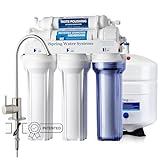
- EFFECTIVELY REDUCES CONTAMINANTS - The iSpring RO system delivers clean, pure, and great-tasting drinking water by removing up to 99% of over 1,000 harmful contaminants, including PFAS, chlorine, fluoride, lead (up to 98%), arsenic, asbestos, calcium, and sodium. It also reduces TDS by 80-90% and reduces hard water minerals that cause scale buildup.
- CERTIFIED TO NSF/ANSI 58 - Produced to strict American quality standards, this iSpring reverse osmosis system is NSF/ANSI 58 certified. For over 15 years, it has provided American families with unlimited, crisp, and refreshing water, superior to bottled water
- LOW MAINTENANCE & LEAK-FREE DESIGN - Engineered with premium components for long-term reliability and minimal upkeep. The transparent first-stage filter housing allows for quick inspections. This compact system fits under most kitchen sinks, requires no power source, and features a check valve to prevent backflow, ensuring safety and leak prevention. The AS-material filter housing offers impact resistance while making filter condition checks effortless.
- HIGH-QUALITY DESIGN & GREAT TASTE - Enjoy clean, safe, and fresh-tasting water with the iSpring under sink RO system. It includes a 100% lead-free designer faucet and food-grade tubing, ensuring crystal-clear ice cubes, fresher tea and coffee, better-tasting food, and healthier baby formula. The system’s advanced filtration reduces contaminants down to 0.0001 microns, while a fine GAC filter provides final polishing for exceptional water quality.
- 100% CUSTOMER SATISFACTION - The RCC7-BN is one of America’s highest-rated under sink reverse osmosis systems. It comes with a 1-year limited manufacturer warranty upon registration, lifetime personalized support from GA, USA, and premium-quality components to deliver bottled-quality drinking water for years to come—helping reduce plastic waste
Do not rely on boiling to remove microplastics
Boiling is an important method for reducing many microbial hazards when public-health authorities advise it, but the reviewed FDA and WHO materials do not recommend boiling as a validated household microplastic-removal solution. Boiling can also concentrate nonvolatile substances as water evaporates. Use it for the hazard it is intended to address, not as a substitute for a particle-removal claim.
How to choose a household water filter
Compare a filter’s documented scope rather than its headline. A credible decision includes the treatment process, the exact contaminant or particle claim, independent certification, replacement interval, maintenance, flow rate, installation, wastewater and total cost.
Recommended Free Tools
| Question | Why it matters | What to verify |
|---|---|---|
| What technology is used? | Membranes, adsorption media and mechanical filters remove different contaminants and particle sizes. | Whether the manufacturer identifies the process and provides performance data for the specific model. |
| What exactly is certified? | Certification applies to a defined standard, contaminant and test condition—not to every possible claim. | The certifier, standard, model number and the scope of the listing. |
| Is microplastic or nanoplastic removal tested? | A certification for another contaminant does not automatically establish particle removal. | A test report or certification that expressly covers the relevant particle claim, if one exists. |
| How often is the cartridge replaced? | Clogging, exhausted media and neglected membranes can reduce performance or create hygiene problems. | Time, volume and water-quality limits, plus the replacement indicator or procedure. |
| What is the water flow? | A very slow device may be bypassed in daily use; a high-flow claim may involve different test conditions. | Rated flow at the stated pressure and temperature, and whether a storage tank is used. |
| What are installation and maintenance demands? | Leaks, incorrect connections and unclean housings can defeat an otherwise suitable design. | Installation requirements, sanitation instructions and service intervals. |
| Does it waste water? | Some membrane systems send a reject stream to drain. | The product’s stated recovery or wastewater ratio and how that affects your water use. |
| What is the total cost? | The purchase price is only one part of ownership. | Equipment, installation, cartridges, membrane replacement, testing and wastewater costs. |
Reverse osmosis
Reverse osmosis (RO) pushes water through a semipermeable membrane and is used in the production of purified bottled water. Its membrane process can reject many dissolved substances and particles, but performance varies with membrane condition, pretreatment, pressure and system design. Do not accept a claim that an individual consumer product removes “all microplastics” unless that model’s own test data support the wording. RO systems commonly produce a reject-water stream and require scheduled filter and membrane changes.
Activated carbon and other filters
Activated-carbon systems are often selected for taste, odor and particular dissolved chemicals. Their suitability for plastic particles depends on the complete design, including any sediment or membrane stages; carbon alone should not be presumed to remove microplastics or nanoplastics. Other mechanical or membrane designs can have useful particle claims, but the claim must identify what was tested, at what size and under which conditions.
What EPA certification guidance means
EPA guidance emphasizes using certified drinking-water filters and following maintenance instructions. The cited EPA material concerns PFAS treatment. PFAS certification is not proof of microplastic removal, so a filter carrying a PFAS-related certification should not be advertised or interpreted as certified for microplastics unless a separate scope says so.
Rank #3

- [Trusted certifications]: Waterdrop G3P600 reverse osmosis system is certified against NSF/ANSI 58 for TDS reduction and NSF/ANSI 372 certified for lead-free material. Also it has been tested and certified against NSF 42 to reduce chlorine, bad taste and odor. The tankless reverse osmosis system is also certified by the Federal Communications Commission. Besides, it meets the EU Standards and UKCA Standards for safety
- [8-stage filtration]: Tested by official third-party laboratory (SGS), the reverse osmosis system can effectively reduce TDS, chromium, PFAS, radium, fluoride, arsenic salt, iron, calcium, particles, chloride, chlorine and radioactive substances in your tap water. And our RO water filter system can reduce chemicals such as vinyl chloride, ethylhexyl acrylate, isobutylene, ethylene glycol, according to the reverse osmosis membrane technical manual
- [Smart display faucet]: The tankless reverse osmosis system is built with a smart display faucet. For instance, the TDS monitor tells you the quality of your filtered water, while the filter life tracker shows how soon you need to replace your filter
- [High capacity, 2:1 low drain ratio]: As an upgraded reverse osmosis system, this reverse osmosis water system produces 600 gallons of filtered water per day. By its low drain ratio, this system can produce only one cup of waste water for every two cups of pure water produced. Furthermore, with a fast and stable water flow rate, this RO system fills a 8 oz cup of water in 8 seconds, which is ideal for drinking and washing vegetables
- [Tankless design]: Waterdrop G3P600 reverse osmosis system has a stylish look. This tankless design saves 70% under sink space. You can change a filter in 3 seconds without moving the system or using any tools. Note: This reverse osmosis system requires under-sink electricity
A purchasing and installation checklist
- Record the problem you are solving. Write down the utility or well results, taste concerns and any advisory. Distinguish regulated contaminants from a general desire to reduce particles.
- Read the performance sheet. Find the exact model, test method, influent conditions, rated capacity and limitations. Treat “up to,” “helps reduce” and “tested for” as different statements.
- Check independent certification. Confirm that the listing covers the model and the contaminant or particle claim you need. Do not infer microplastic performance from an unrelated certification.
- Calculate ownership cost. Add equipment, installation, replacement parts, electricity if applicable, wastewater and any laboratory testing over the period you expect to use it.
- Install without bypasses. Follow the manufacturer’s flow direction, pressure limits and connection instructions. A bypass valve or incorrectly fitted cartridge can send untreated water to the tap.
- Set maintenance reminders. Record the installation date and meter reading. Replace cartridges and membranes on the stated schedule or sooner if the system indicates exhaustion, flow falls sharply or water quality changes.
- Recheck after maintenance. Inspect for leaks, flush the system as directed and confirm that the treated outlet—not an unfiltered faucet—supplies drinking and cooking water.
Bottled water versus tap water
Neither category can be declared universally better for microplastics. Microplastics and nanoplastics have been detected in both bottled and tap water, and results vary with the source, packaging, cap, handling and analytical method. Bottled water may have undergone processes such as reverse osmosis, but the treatment and quality controls differ by product. A bottle is still plastic packaging that can be exposed to abrasion, heat and repeated handling.
Tap water gives you access to a utility’s treatment and monitoring information and can be further treated at home. Its particle profile depends on source water, treatment, storage and distribution. Use your local report and, where justified, testing rather than assuming that “bottled” or “tap” answers the question by itself.
If you choose bottled water temporarily because of an advisory, travel or a supply interruption, follow the relevant public-health instructions. Do not reuse single-use bottles indefinitely, store them in heat or sunlight, or treat a particular brand’s packaging as proof of lower exposure unless specific, current evidence supports that conclusion.
Food, cooking and beverage habits
Reduce unnecessary disposable-plastic contact
Choose unpackaged or minimally packaged foods when practical, and use glass or stainless-steel containers for storage and transport. These materials can reduce reliance on disposable plastic packaging. This is a precautionary packaging choice, not a proven medical intervention or a guarantee that exposure becomes zero.
Do not heat food in plastic unless it is authorized for that use
FDA says food-contact materials must be authorized for their intended conditions of use. “Food safe” at room temperature does not necessarily mean suitable for a microwave, oven, dishwasher or hot oily food. Check the container’s instructions and intended-use labeling. If heating instructions are absent, transfer the food to glass or ceramic before heating. Avoid using damaged, cloudy, cracked or heavily scratched plastic for hot food, because wear can change how the container performs even when a specific microplastic risk has not been established.
Quick wins for a faster PC:
Fix the driver behind crashes, sound loss and screen glitchesFind Drivers →Repair Windows errors before they cause bigger problemsFix Now →Rank #4

- 𝗘𝗳𝗳𝗶𝗰𝗶𝗲𝗻𝘁 𝗣𝘂𝗿𝗶𝗳𝗶𝗰𝗮𝘁𝗶𝗼𝗻, 𝗣𝗲𝗮𝗰𝗲 𝗼𝗳 𝗠𝗶𝗻𝗱: The DREO 7‑in‑1 RO water filter filters out 99.9% of possible contaminants in water including PFOA, PFOS, chlorine, fluoride and more. It was tested by SGS meeting NSF/ANSI 58 Standards.
Handle reusable containers correctly
- Wash bottles and food containers thoroughly, especially around threads, seals and lids.
- Replace parts that crack, shed flakes or no longer clean effectively.
- Do not put a container in a freezer, microwave or dishwasher unless the manufacturer authorizes that use.
- Keep hot liquids in containers designed for heat, such as suitable glass or stainless steel with a compatible lid.
- Prevent abrasion from sharp utensils, scouring pads and loose grit.
Food preparation is not a reason to discard everything plastic
FDA’s current assessment does not show that detected microplastic levels in food pose a demonstrated health risk. A sensible approach is targeted substitution where it is easy—such as a glass container for reheating—rather than assuming every plastic item is dangerous or trying to eliminate every possible contact.
Independent reader supportYour contribution helps us test, update, and keep practical guides available for everyone.A practical low-effort plan
- This week, identify your water source. Download the latest public-utility report or arrange appropriate well testing. Note advisories and conventional contaminants before shopping for treatment.
- Choose the point of use. Decide whether you need treated water at one drinking tap, throughout the kitchen or for the entire home. A smaller point-of-use system may reduce cost and wastewater compared with whole-home treatment when drinking water is the only goal.
- Screen filter claims. Reject products that provide no model-specific data, certification scope or maintenance instructions. Ask the seller for the particle test method if microplastic removal is the central reason for purchase.
- Change the highest-contact packaging. Carry water in glass or stainless steel and store leftovers in glass or another container explicitly suitable for the intended temperature.
- Remove heat and abrasion mistakes. Transfer food before microwaving when authorization is unclear, and retire visibly damaged containers.
- Maintain what you install. Calendar the replacement date, keep records and check that the treated outlet is actually being used.
Common mistakes and how to correct them
“Any filter removes microplastics.”
Correction: Identify the treatment stage and the model-specific particle test. Certification and maintenance are important, but certification for one contaminant does not establish performance for another.
“Reverse osmosis removes everything.”
Correction: RO is a membrane process with documented advantages, not a guarantee of total removal under every household condition. Check pressure, pretreatment, membrane life, reject-water production and the product’s actual test scope.
“Boiling solves the problem.”
Correction: Use boiling when public-health guidance calls for microbial control. The reviewed authorities do not validate it as a microplastic-removal method.
“Bottled water is automatically cleaner.”
Correction: Compare the source, treatment and packaging context. Both bottled and tap water have had particles detected, and no universal ranking is established.
Best Value
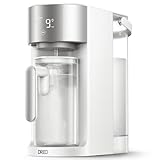
- 𝗘𝗳𝗳𝗶𝗰𝗶𝗲𝗻𝘁 𝗣𝘂𝗿𝗶𝗳𝗶𝗰𝗮𝘁𝗶𝗼𝗻, 𝗣𝗲𝗮𝗰𝗲 𝗼𝗳 𝗠𝗶𝗻𝗱: The DREO 7‑in‑1 RO water filter filters out 99.9% of possible contaminants in water including PFOA, PFOS, chlorine, fluoride and more. It was tested by SGS meeting NSF/ANSI 58 Standards.
- 𝗥𝗲𝗮𝗹-𝗧𝗶𝗺𝗲 𝗧𝗗𝗦 & 𝗙𝗶𝗹𝘁𝗲𝗿 𝗟𝗶𝗳𝗲 𝗠𝗼𝗻𝗶𝘁𝗼𝗿𝗶𝗻𝗴: Check raw water and pure water TDS in real time and get timely filter change reminders for a simple and worry-free maintenance
- 𝗔𝘂𝘁𝗼-𝗙𝗶𝗹𝗹 & 𝗦𝗲𝗹𝗳-𝗖𝗹𝗲𝗮𝗻𝗶𝗻𝗴: The DREO water pitcher features an auto-fill sensor for hands-free refills, while the self-cleaning system auto-flushes internal tubes for consistently pure water
- 𝗘𝗰𝗼-𝗖𝗼𝗻𝘀𝗰𝗶𝗼𝘂𝘀 & 𝗖𝗼𝘀𝘁-𝗦𝗮𝘃𝗶𝗻𝗴: Advanced RO filtration delivers a 3:1 pure-to-drain ratio, reducing water waste and plastic trash. The filter lasts 265 gallons(1000L) of filtered water (about $0.025/bottle) and replaces in seconds with a simple twist-to-install design
- 𝗖𝗼𝗺𝗽𝗮𝗰𝘁, 𝗦𝗽𝗮𝗰𝗲-𝗦𝗮𝘃𝗶𝗻𝗴 𝗗𝗲𝘀𝗶𝗴𝗻: With a slim 14.51" L × 6.73" W × 13.35" H footprint, DREO countertop reverse osmosis system fits easily in kitchens, living rooms, bedrooms, or offices. A 3L tank plus 1.1L pitcher is ideal for daily use by 1 to 2 people
“A reusable bottle eliminates exposure.”
Correction: Glass and stainless steel can reduce disposable-plastic packaging, but they do not make exposure zero. Clean them, replace damaged components and use them within their temperature limits.
“A scary particle count proves danger.”
Correction: Ask how particles were defined and measured, what size range was included, whether the result applies to your water or food, and whether a health outcome was demonstrated. Different methods can produce results that are not directly comparable.
What remains unknown
There is no universal, current list of household products independently tested for both microplastic and nanoplastic removal. Product availability, certification scope, test methods and replacement requirements can change. Claims should therefore be checked against current manufacturer documentation and an independent certification database at the time of purchase.
It is also not responsible to quote a single personal-intake number without a primary study that matches the relevant population, foods, water source, particle-size range, laboratory method and date. Estimates that combine unlike studies can create a false sense of precision.
For now, the most evidence-aligned strategy is proportional: understand your local water, use a maintained treatment system with a claim that matches your goal, reduce avoidable disposable-plastic and heat contact, and keep the uncertainty in view. WHO has said that, regardless of unresolved human-health risks from drinking-water microplastics, policymakers and the public should better manage plastics and reduce plastic use where possible.
Quick Recap
Product prices and availability are accurate as of the date/time indicated and are subject to change. Any price and availability information displayed on Amazon at the time of purchase will apply.

