
Free tools Windows power users keep installed
One-click scans. No signup required.
iTechGuides is reader-supported. When you buy through links on our site, we may earn an affiliate commission. As an Amazon Associate I earn from qualifying purchases. Learn more
When outdoor air is unhealthy, reduce indoor exposure by closing windows and doors, switching a forced-air HVAC system to recirculation if possible, filtering indoor air, and stopping activities that create particles. Check your local air-quality advisory and follow instructions from local health authorities; the U.S. Environmental Protection Agency (EPA) identifies AirNow as a source for local conditions.
The most detailed steps below address wildfire smoke and outdoor particle pollution. They can reduce particle exposure, but they are not a universal treatment for every gas or pollutant. Ventilation, filtration and protective actions must match the specific hazard and your home’s equipment.
Do these things first
Use this sequence as soon as an official advisory says outdoor air is unhealthy. If the advisory includes emergency instructions, those instructions take priority.
What’s actually slowing this PC down?
Pick the symptom - the matching free tool is one click away.
- Check the current air-quality advisory. Use your local health department or emergency-management notices and AirNow information identified by the EPA. Conditions can change quickly during a smoke event.
- Close every exterior window and door. Keep them closed for as long as outdoor pollution remains high. Closing openings reduces entry, although it does not make a house perfectly sealed.
- Stop intentional outdoor-air intake. Set a central HVAC system to recirculate if that control is available. Close a manual outdoor-air damper only if the equipment instructions allow it; ask the manufacturer or an HVAC professional when you are unsure.
- Run compatible filtration. Install a properly fitted MERV 13 filter, or the highest rating your system can accommodate, and run the HVAC fan as often as is feasible.
- Create a cleaner room. Put a portable air cleaner in the room where occupants spend the most time, sized by its smoke CADR. Keep doors and windows closed in that room.
- Avoid making more particles. Do not smoke indoors, burn candles, use a fireplace, or cook at high temperatures during the smoke episode.
- Protect against heat. Use air conditioning or fans to stay cool. If you cannot remain safely cool with windows closed, move to a cooler safe location or follow local emergency guidance.
These actions work together: limiting incoming air, removing particles already indoors, and preventing new indoor emissions. A single measure cannot guarantee clean air.
#1 Best Overall

- Effortless Operation: Simplified control panel with intuitive design makes it easy to operate. No complicated setup—just one tap, and you're on your way to cleaner air, saving time and letting you relax with ease
- Compact Yet Powerful: Covers up to 1,076 ft² while maintaining a compact size of just 6.69 x 6.69 x 9.84 inches. Its small frame makes placement a breeze—whether on your desk or in a corner, it's ready to work hard wherever you need it (Laboratory Tested: Our air purifier efficiently cleans 250 ft² every 15 minutes, covering up to 1,076 ft² per hour)
- 360° Airflow & High Efficiency Filtration: The elegantly engineered 360° surround air intake, coupled with the sophisticated a triple-layer filtration system, meticulously captures an astounding 99.97% of airborne pollutants, transforming your living space into a sanctuary of purity and vitality
- Quiet with Essential Oil Option: Operates as quietly as 22dB, perfect for undisturbed sleep. The built-in essential oil tray lets you add 3–5 drops to infuse your space with soothing scents while enjoying purified air
- Fully Certified: Backed by DOE, ETL, FCC, CARB, CE, and ROHS certifications, our air purifier meets the highest standards for performance, giving you peace of mind with every use
Should you open windows when outdoor air quality is bad?
Usually, no. During a smoke or particle-pollution episode, opening windows directly brings polluted air inside. Keep windows and exterior doors closed while the advisory remains in effect, and use HVAC recirculation instead of an outdoor-air setting when your system provides that choice.
The EPA explains why closing windows is helpful but not absolute: “Outdoor and indoor air are constantly mixing together.” Particles can enter through cracks, gaps around doors, and other leakage paths even when windows are shut. Closing openings reduces the rate of entry; it does not create a sealed, laboratory-clean environment.
When ventilation is the right choice
General EPA ventilation guidance says to avoid bringing in outdoor air when outdoor pollution or pollen is high, then ventilate when outdoor conditions and weather permit. That means the usual advice to “air out” a home must be timed to a period when outside air is cleaner than the air indoors.
When the advisory improves, open windows briefly or restore the HVAC fresh-air intake to remove accumulated indoor pollutants. If smoke returns, close them again. Use the current local air-quality reading rather than a fixed clock time to decide when to switch.
Filter the home with a central HVAC system
A forced-air heating or cooling system can distribute filtered air throughout the areas it serves. During wildfire smoke, the EPA recommends a MERV 13 filter, or the highest efficiency rating compatible with the equipment. Do not install MERV 13 automatically in every furnace or air handler: a filter that is too restrictive for a particular system can reduce airflow or contribute to equipment problems.
Install and operate the filter safely
- Check the equipment requirement. Look in the owner’s manual for the maximum filter rating or pressure-drop specification. If it is not stated, contact the manufacturer or an HVAC professional.
- Buy the correct dimensions. Match the filter’s length, width and thickness to the existing filter. A filter that does not fit the slot cannot seal properly.
- Orient the airflow arrow. Install the filter with the arrow pointing toward the furnace, air handler or return-air side, as indicated by the equipment design.
- Confirm a snug fit. The filter should lie flat and should not be bent, crushed or forced into place. Gaps around the frame allow unfiltered air to bypass the media.
- Run the fan as often as feasible. Continuous operation can increase the amount of air filtered, but balance this with equipment limits, energy use and the manufacturer’s instructions.
- Inspect the filter. Smoke can load a filter faster than normal. Replace it according to the equipment guidance or sooner if it is visibly dirty or airflow falls.
If your system cannot safely accept MERV 13, use the highest compatible rating and add room-level filtration where people spend time. Never disable a furnace, air conditioner or safety control to force a filter to work.
Rank #2

- 🍃【𝙃𝙀𝙋𝘼 𝘼𝙞𝙧 𝙋𝙪𝙧𝙞𝙛𝙞𝙚𝙧】 FreAire air purifiers adopt a 3-level high-efficiency filtration system that effectively filters smoke, pollen, pet dander, odors, and air particles as small as 0.3 microns.
- ✨【𝟯 𝘼𝙢𝙗𝙞𝙚𝙣𝙩 𝙇𝙞𝙜𝙝𝙩】 This air purifiers for home integrates 3 kinds of lights, which not only provide you with healthy air but also decorate your home with beautiful and soothing atmosphere.
- 🚀【𝙃𝙞𝙜𝙝 𝙋𝙪𝙧𝙞𝙛𝙞𝙘𝙖𝙩𝙞𝙤𝙣 𝙍𝙖𝙩𝙚】Designed with dual-channel air inlet and 360-degree air outlet, this air cleaner can refresh the air in a room up to 1086 ft² hour. Quickly provide fresh air to your room
- 💤【𝙇𝙤𝙬-𝙉𝙤𝙞𝙨𝙚 𝙊𝙥𝙚𝙧𝙖𝙩𝙞𝙤𝙣】After switching to sleep mode, the speed of air purifiers for bedroom will slow down to its lowest level, reducing the noise to as low as 20 db. It's perfect for keeping your air fresh at night while you sleep.
- 🌸【𝘼𝙧𝙤𝙢𝙖𝙩𝙝𝙚𝙧𝙖𝙥𝙮 𝙁𝙪𝙣𝙘𝙩𝙞𝙤𝙣】By adding 4-5 drops of your favorite essential oil (not included) to the aroma pad, the delightful fragrance can flow with the fresh air and fill your entire room.
What a central filter can and cannot do
Central filtration serves only rooms connected to the forced-air circulation path and only while the fan is moving air. Rooms with closed vents, separate heating systems or substantial leakage may receive less benefit. A central filter also does not remove every gaseous pollutant; the detailed EPA recommendations in this guide are primarily about particles such as wildfire-smoke PM2.5.
Quick wins for a faster PC:
Fix the driver behind crashes, sound loss and screen glitchesFind Drivers →Clear out junk files and repair common Windows errorsFree Scan →Choose a portable air cleaner for a cleaner room
A portable air cleaner supplements closed windows and indoor source control. It is designed for a room or defined area, not automatically for an entire house. Select by independently stated particle-cleaning performance and room size rather than by labels such as “smoke remover” alone.
Size by smoke CADR
For a wildfire-smoke cleaner room, the EPA recommends a tobacco-smoke CADR of at least two-thirds of the room’s area in square feet. The calculation is:
Minimum smoke CADR (cubic feet per minute) = room area (square feet) × 2 ÷ 3.
For example, a 300-square-foot room calls for a smoke CADR of at least 200 cfm (300 × 2 ÷ 3). Measure the room’s length and width, multiply them, and use the published tobacco-smoke CADR—not a different CADR category—to apply this rule. If a room is open to a hallway or another large space, size for the combined area or close the door and treat the smaller room as the cleaner room.
Do these 3 things before closing this tab:
1Scan for outdated or missing drivers - takes under a minute2Repair Windows errors before they cause bigger problems3Fix the driver behind crashes, sound loss and screen glitchesCheck ozone emissions
Choose a cleaner that produces little or no ozone. The EPA points to California Air Resources Board (CARB) certification as one way to identify devices meeting a low-ozone standard. Avoid relying on an “ionizer” or “ozone” feature as a substitute for particle filtration.
Rank #3

- WHY CHOOSE AHAM VERIFIDE AIR PURIFIERS: AHAM (Association of Home Appliance Manufacturers) is an ANSI-accredited organization that sets strict standards for appliance performance. Air purifiers with the AHAM VERIFIDE seal have been independently tested for air cleaning performance and energy efficiency. When you choose an AHAM certified air purifier, you're choosing a product trusted for reliable and effective indoor air quality improvement
- HIGH-PERFORMANCE AIR PURIFICATION: A powerful 56W high-torque motor and 143 CFM CADR delivers fast, effective cleaning. The Levoit Original Filter is HEPA-grade while operating in Sleep Mode (Based on IEST RP C001.7). Ideal for home, bedroom, or office
- AHAM VERIFIDE, PROVEN PERFORMANCE: AHAM VERIFIDE with a CADR (Clean Air Delivery Rate) rating of 143 CFM for smoke, 153 CFM for dust, and 167 CFM for pollen—refreshing air in a 222 ft² room 4.8 times per hour and a 1,073 ft² room once per hour
- GENUINE REPLACEMENT FILTERS: For the best performance and longest lifespan, use official Levoit filters designed specifically for Levoit air purifiers. Levoit replacement filters ensure the best fit and high-efficiency filtration, while off-brand filters may be unreliable and may damage your Levoit air purifier
- FIND COMFORT: Our filter has strong filtration performance of fine particles. 99.97% filtration efficiency for 0.1 to 0.3μm airborne particulates, including pollen, dust, and animal dander allergens. Tested by an independent lab
Place and run the unit correctly
- Place it in the room where people spend the most time, with unobstructed intake and outlet openings.
- Keep it away from curtains, furniture and walls that block airflow.
- Close the room’s windows and door while outdoor smoke is high.
- Use a speed that occupants can tolerate for long periods; a quieter lower speed may filter less air than a higher speed.
- Run it continuously or as often as practical during the event, following the manufacturer’s maintenance schedule.
- Replace or clean the filter when the indicator or manual requires it. A loaded filter can reduce airflow.
Two or more room cleaners can sometimes provide better coverage, and may cost less to operate, than running a central system continuously with a high-efficiency filter. That trade-off depends on room layout, equipment efficiency, noise and electricity rates.
Compare the three practical filtration approaches
| Approach | Area served | What to verify | Limitations and trade-offs |
|---|---|---|---|
| Compatible central HVAC filter | Rooms connected to the forced-air system | MERV 13 or the highest compatible rating; correct size and airflow direction; snug fit; fan capability | May not serve rooms outside the circulation path; higher resistance can stress an incompatible system; benefits depend on fan operation |
| Portable air cleaner | One room or a defined open area | Tobacco-smoke CADR sized at least two-thirds of room area; low- or no-ozone design; tolerable noise; replacement-filter availability | Does not automatically clean the whole home; performance falls if doors are open to larger polluted areas |
| DIY box-fan and filter setup | Usually one room | Stable assembly, correct filter fit, safe electrical operation and airflow | Performance varies; noise, leakage and safety differ by design. EPA prefers commercial cleaners with known performance when they are available and affordable |
Use a DIY fan-and-filter setup only as a fallback
A box fan with a furnace filter can be a temporary, lower-cost option when a commercial room cleaner is unavailable or unaffordable. EPA notes that DIY performance varies, so it is harder to predict the particle-cleaning rate than with a unit that publishes CADR.
Safety checks
- Use a newer fan in good condition with an intact power cord and stable base.
- Attach the filter so air is pulled through the filter in the direction marked by its airflow arrow.
- Seal obvious gaps without blocking the fan motor or creating a tipping hazard.
- Keep the assembly away from water, children and pets, and do not leave a questionable setup unattended.
- Stop using it if the motor overheats, the cord becomes hot, the fan smells of burning or the assembly becomes unstable.
Do not treat a DIY setup as equivalent to a tested commercial cleaner. If a properly sized commercial unit is available and affordable, its stated performance and replacement parts make planning easier.
Stop adding particles indoors
During wildfire smoke, the EPA advises against indoor smoking, candles, fireplaces and high-temperature cooking. These activities can add particles to a home that is already receiving polluted outdoor air.
Cooking
Choose lower-temperature methods when possible and avoid searing, frying or broiling during the worst conditions. Use a range hood only if it vents safely and does not introduce polluted outdoor air through a makeup-air system; check the appliance design. If using the hood would pull unfiltered outdoor air into the home, follow the appliance manufacturer’s instructions and prioritize the local health advisory.
Combustion and fragrances
Do not smoke indoors or burn wood, gas, candles or incense during the event. Avoid aerosol sprays and other activities that create airborne particles. Keep doors between the cleaner room and the rest of the home closed when practical.
Rank #4

- 𝗪𝗛𝗬 𝗖𝗛𝗢𝗢𝗦𝗘 𝗔𝗛𝗔𝗠 𝗩𝗘𝗥𝗜𝗙𝗜𝗗𝗘 𝗔𝗜𝗥 𝗣𝗨𝗥𝗜𝗙𝗜𝗘𝗥𝗦: AHAM (Association of Home Appliance Manufacturers) is an ANSI-accredited organization that sets strict standards for appliance performance. Air purifiers with the AHAM VERIFIDE seal have been independently tested for air cleaning performance, safety, and energy efficiency. When you choose an AHAM certified air purifier, you're choosing a product trusted for reliable and effective indoor air quality improvement
- 𝗥𝗘𝗠𝗢𝗩𝗘 𝗣𝗢𝗟𝗟𝗨𝗧𝗔𝗡𝗧𝗦 𝗘𝗩𝗘𝗥𝗬𝗪𝗛𝗘𝗥𝗘: Our Pre-Filter and Main Filter capture lint, hair, pet dander, fine airborne pollutants, and smoke particles, helping achieve a cleaner environment for you
- 𝗛𝗘𝗟𝗣𝗦 𝗠𝗔𝗞𝗘 𝗢𝗗𝗢𝗥𝗦 𝗢𝗗𝗢𝗥𝗟𝗘𝗦𝗦: The air purifier helps neutralize smoke, odors, and fumes. You'll love the feeling of breathing clean air at home
- 𝗨𝗦𝗘 𝗜𝗧 𝗔𝗡𝗬𝗪𝗛𝗘𝗥𝗘: With the Levoit Core Mini-P, you can focus on your activities in the bedroom, kitchen, or office. It offers an auto-off display, sleep mode for fewer interruptions, and relaxing aromatherapy, all while operating more quietly than a whisper
- #𝟭 𝗔𝗜𝗥 𝗣𝗨𝗥𝗜𝗙𝗜𝗘𝗥 𝗕𝗥𝗔𝗡𝗗: Levoit has sold over 6.5 million products worldwide and has been a pioneer in air purification technology for 6 years.
Do not use ozone generators in occupied rooms
The EPA advises against ozone generators in occupied spaces. Ozone can irritate the respiratory system and, at concentrations that do not exceed public-health standards, is generally ineffective at controlling indoor air pollution. A device marketed as an “air cleaner” can therefore worsen the risk if its main mechanism intentionally produces ozone. Choose particle filtration with little or no ozone instead.
Balance pollution reduction with heat safety
Keeping windows closed can increase indoor temperature, especially during a heat wave or when air conditioning is unavailable. Use air conditioning or fans to stay cool while maintaining recirculation where possible. Fans move air and can improve comfort, but they do not remove smoke by themselves.
If the home becomes dangerously hot, do not remain inside solely to keep windows closed. Move to a cooler safe location, such as an appropriately filtered public or community space, or follow local emergency instructions. People who are older, pregnant, very young, or living with heart or lung disease can be more vulnerable to both smoke and heat; exposure-reduction decisions should follow current local health advice and a clinician’s guidance.
How much reduction should you expect?
There is no single indoor reduction percentage that applies to every house, pollutant or product. In wildfire-smoke conditions, the EPA reports that indoor PM2.5 levels are generally about 55% to 60% of outdoor levels when doors and windows are closed and portable air cleaners are not in use. The agency also reports a much wider range—about 30% to 100% of outdoor levels—across homes.
That variation reflects building leakage, duct design, filtration, fan operation, room layout, cooking and other indoor sources. Treat the figures as observations for typical wildfire-smoke conditions, not as a guarantee for your home or for gases and pollutants other than particles.
The Tool Desk
Outbyte PC Repair FREEClear out junk files and repair common Windows errorsFree Scan →Outbyte Driver Updater FREEScan for outdated or missing drivers - takes under a minuteDriver Scan →Adapt the plan to your home
Homes with central forced air
Use the highest compatible filter, recirculate air and run the fan as practical. Add a portable cleaner in a bedroom or other frequently occupied room if the central system does not reach it well.
Best Value
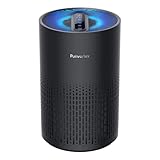
- Cleaner Air In Minutes: Purivortex is proven to filter common pollutants from your home’s air. This air purifier purifies rooms up to 880 ft² in one hour. It can purify a 215 ft² room in about 15 minutes, giving you noticeably fresher air in a short time. Breathe clean, crisp air and feel the difference in your space. (*Tested in an ISO 17025 certified laboratory under typical residential room ventilation conditions.)
- Breathe Easier with 99.97% Filtration: Purivortex HEPA air purifiers for home feature a powerful 3-layer filtration system — a pre-filter, HEPA filter, and activated carbon—that filter up to 99.97% of pollutants, including dust, smoke, pollen, pet dander, and VOCs. Purivortex air filters filter out particles as small as 0.1 microns, while the carbon filter helps reduce light household odors from smoke, pets, and cooking.**(**Independently tested in an ISO 17025 laboratory.)
- Bigger Filter, Better Purification: Purivortex goes beyond the standard—while most purifiers of this size use a 4 inch filter, Purivortex air filters stand tall at 6 inches. That’s nearly 1.5× larger, pulling in more air and delivering cleaner results, faster. Filter made of FSC-Certified paper, sourced from responsibly managed forests, ensuring both high performance and care for the environment.
- Backed by Science, Trusted by Standards: Purivortex air purifiers are rigorously tested to deliver powerful purification performance. Certified by ETL, FCC, and CARB for safety and energy efficiency, and verified through independent SGS laboratory testing to prove their effectiveness. With Purivortex, you get science-backed confidence in every breath.
- 2 Years of Guaranteed Confidence: Purivortex stands behind the quality and performance of every purifier, which is why Purivortex air purifiers come with a full 2-year warranty. More than 500,000 families have already chosen Purivortex for cleaner, fresher air. With added convenience features such as 3 timer settings (4H/8H/12H), 4 fan modes (Sleep/Low/Med/High), and 4 night light modes (Multicolor, Blue, Green, Purple), Purivortex delivers comfort tailored to your lifestyle.
Homes without central HVAC
Close windows and doors, select a cleaner room, and use a properly sized portable unit. A second unit may be useful for another occupied bedroom, but size each unit for its own room or combined open area.
Older or leaky homes
Closed windows still help, but leakage can permit substantial entry. Keep exterior doors closed, reduce unnecessary movement in and out, and prioritize the room with the best ability to be closed and filtered. Do not permanently seal required ventilation or combustion-safety openings without professional advice.
Multi-story or open-plan homes
One room cleaner may not clean an entire open floor plan. Use the published CADR against the full connected area, close interior doors where possible, or distribute multiple cleaners. Central HVAC filtration may provide broader circulation if the system can safely handle the filter.
When the outdoor air improves
- Check the latest local advisory rather than relying on yesterday’s conditions.
- Open windows briefly or restore the HVAC outdoor-air intake when outside air is cleaner and weather permits.
- Continue normal filtration until indoor odors and visible haze have cleared.
- Inspect HVAC and portable-unit filters; replace or clean them according to their instructions.
- Return the HVAC to its normal ventilation and fan settings once the event has ended, unless your local authority advises otherwise.
Ventilation is a timing decision: it can remove indoor pollutants after the outdoor air improves, but it can increase exposure while outdoor pollution remains high.
Common problems and fixes
The filter will not fit
Do not bend or crush it. Recheck the dimensions and equipment manual. A professional can identify the correct filter size and maximum compatible rating.
The HVAC system makes unusual noise or airflow drops
Turn down or stop continuous fan operation if the equipment manual calls for it, inspect for a loaded filter, and contact an HVAC professional. Do not force a higher-MERV filter into a system that cannot handle its resistance.
The portable cleaner seems ineffective
Verify that you used the tobacco-smoke CADR, that the room area was calculated correctly, and that doors and windows are closed. Move the unit away from obstructions and check whether its filter needs service.
Outdated Drivers Are Slowing You Down
One free scan finds every outdated or missing driver and matches the right update for your exact hardware.Free scan · exact hardware matchWindows Errors? Fix Them Before They Spread
Repair common Windows errors and clear accumulated junk for a smoother, more stable PC - no reinstall needed.Free scan · no reinstallThe room is too hot
Use air conditioning or fans, reduce heat-producing activities and relocate to a cooler safe place if necessary. Heat illness is an immediate hazard; do not sacrifice safety to maintain closed windows.
An air cleaner produces a sharp odor or irritation
Turn it off and ventilate only when outdoor air quality permits. Avoid ozone-generating devices and select a cleaner identified as producing little or no ozone.
Quick Recap
Product prices and availability are accurate as of the date/time indicated and are subject to change. Any price and availability information displayed on Amazon at the time of purchase will apply.

