
iTechGuides is reader-supported. When you buy through links on our site, we may earn an affiliate commission. As an Amazon Associate I earn from qualifying purchases. Learn more
To give digital photos the best chance of remaining usable for decades, keep multiple copies in separate places or on separate media, preserve the files’ identifying context, check that they open at least once a year, and refresh copies on current storage about every five years—or sooner if a copy becomes inaccessible. No single drive, file format, or cloud account guarantees access for decades without ongoing care.
Build a collection you can recognize and navigate
Start by gathering your photo files in a collection whose folders and names will make sense to you later. A folder full of default camera names may preserve the pixels but make it difficult to identify the people, places, or events in them. The Library of Congress recommends descriptive filenames and keeping information that helps explain what a photo depicts: Digital Photos – Personal Archiving.
- Use filenames that identify the subject or event where you can do so accurately.
- Retain useful information already associated with the files, including embedded metadata, rather than stripping it out during organization or copying.
- Keep a folder structure that helps you locate photos, such as by year or event, and use it consistently.
These habits are not a substitute for backups. They make the collection understandable when you, or someone else, need to retrieve a particular image in the future.
Keep more than one copy, and separate them
Maintain a copy on your computer or laptop and additional copies on separate media or in separate places. The Library of Congress gives portable hard drives and internet storage as examples of ways to keep another copy; it does not say that any one option is sufficient by itself. See its personal photo-archiving guidance.
#1 Best Overall

- Easily store and access 2TB to content on the go with the Seagate Portable Drive, a USB external hard drive
- Designed to work with Windows or Mac computers, this external hard drive makes backup a snap just drag and drop
- To get set up, connect the portable hard drive to a computer for automatic recognition no software required
- This USB drive provides plug and play simplicity with the included 18 inch USB 3.0 cable
- The available storage capacity may vary.
An external hard drive for photo backup can serve as one additional copy, but a drive stored beside the computer is still exposed to many of the same local events. Keeping another copy somewhere else can help preserve access if the computer or the location where it is stored becomes unavailable. Internet storage is one possible off-site copy, but access depends on being able to reach the files and the account. Choose an arrangement you can maintain and periodically check; the cited guidance does not compare providers, products, or their failure rates.
Check that the files still work
At least once a year, check stored photos to confirm they remain readable. The Library of Congress states: “Check your photos at least once a year to make sure you can read them.” Its photo guidance treats checking as part of preservation, not an optional step after making copies.
Rank #2

- High capacity in a small enclosure – The small, lightweight design offers up to 6TB* capacity, making WD Elements portable hard drives the ideal companion for consumers on the go.
- Plug-and-play expandability
- Vast capacities up to 6TB[1] to store your photos, videos, music, important documents and more
- SuperSpeed USB 3.2 Gen 1 (5Gbps)
- Open representative photos from each copy, including older files and files on storage you do not use regularly.
- Confirm that images display as expected and that the collection is still accessible from the device or account holding it.
- If a file will not open, or a copy is unavailable, make a fresh usable copy from another readable copy before that source is lost.
A yearly check is a practical routine, not proof that every file is intact or that a storage medium will last until the next check. Its purpose is to catch access problems while another copy may still be available.
Recommended Free Tools
Refresh copies on current storage
The Library of Congress advises making new media copies every five years or when necessary, and its preservation FAQ recommends migrating saved copies to a current storage medium about every five years. Treat that interval as a maintenance prompt—not as a guaranteed lifespan for any device. See Reformatting – FAQ.
Rank #3

- 【Versatile Storage Expansion – For Gaming, Work & Everyday Use】 Running out of space on your PS5 or Xbox Series X/S? This external hard drive lets you store and play PS4 / Xbox One games directly, instantly freeing up your console’s internal storage for next‑gen titles. At the same time, it handles work file backups, media libraries, and cross‑device data transfers with ease. One drive, all your needs. *(Note: PS5 / Xbox Series X|S games cannot be run or stored directly from the external hard drive. However, by offloading your PS4 / Xbox One games, you can free up valuable space for newer titles.)*
- 【Patented Silicone Sleeve – Data Protection You Can Count On】 Worried about drops? We’ve got you covered. The patented built‑in silicone sleeve acts like a shock‑absorbing armor, cushioning your drive against bumps and falls. Whether it’s important work documents, precious family photos, or hard‑earned game saves, your data deserves this level of protection.
- 【Plug & Play, Compatible with Computers & Consoles】 No complicated setup—just plug in and go. Works seamlessly with Windows, Mac, and Linux computers, as well as PS4, PS5, Xbox One, and Xbox Series X/S. Process files at the office, back up data at home, or enjoy gaming in your downtime—one drive handles all your devices, simply and hassle‑free.
- 【USB 3.0 Ultra‑Fast Transfer – No More Waiting】 Tired of watching progress bars crawl? With USB 3.0 speeds up to 5Gbps, large files transfer in seconds. Whether you’re moving work documents, transferring hundreds of gigs of games, or backing up a year’s worth of photos, you get more done in less time.
- 【Sleek, Lightweight, and Ready to Go】 Weighing just 0.16 kg—lighter than a can of soda—this compact drive features a stylish mirror‑and‑frosted finish. Toss it in your bag and go, whether you’re heading to the office, visiting a friend for a gaming session, or giving a presentation on the road.
When you refresh, copy the photos and their useful context to current storage, then check that the new copies open. Do not wait for a scheduled interval if a device, file, or account has become inaccessible. Keep the older readable copy until you have confirmed the replacement works and any other planned copies are in place.
Keep formats and metadata in perspective
There is no single file extension that can be promised to remain usable forever. The Library of Congress explains that an unknown or obsolete format may not render as expected if the necessary legacy software or codec is unavailable. Its preservation work addresses sustainable formats, metadata, storage monitoring, and related practices rather than relying on one permanent format: Digital Preservation at the Library of Congress and Bit Level Preservation and Long Term Usability.
Rank #4
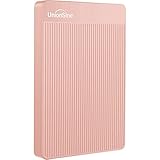
- 【Upgraded version】 - The mirror logo strip is combined with the striped non-slip design. The rounded corners of the shell are more suitable for holding. The strips play a heat dissipation function to ensure a stable and fast transmission process.
- 【Ultra-thin and quiet】 - The motherboard adopts JMicron 578 noise-free solution, giving you a quiet working environment. Lightweight and portable size designed to fit in your pocket for easy portability.
- 【Ultra-Fast Data Transfers】 - Pairing this external hard drive with JMicron 578 solution USB 3.0 and USB 2.0 interfaces enables blazing-fast data transfer. It boasts theoretical read speeds of up to 125MB/s and write speeds of up to 103MB/s."
- 【Plug and Play】 - With no software to install, just plug it in and the drive is ready to use.The hard disk chip is wrapped with an aluminum anti-interference layer to increase heat dissipation and protect data.
- 【What You Get】 - 1 x Portable Hard Drive, 1 x USB 3.0 Cable, 1 x User Manual, Gift-type shell packaging ,Three-year manufacturer's warranty and free technical support services.
For a personal collection, keep usable image files, retain available context, and revisit whether your files can still be opened as software and devices change. Avoid converting everything simply because one format sounds more archival; conversion can affect the image or its embedded information, and the cited guidance does not establish a universal household conversion requirement.
What’s actually slowing this PC down?
Pick the symptom - the matching free tool is one click away.
The National Archives and Records Administration (NARA) lists TIFF and JPEG and recommends unique identification and preservation of available EXIF information for certain permanent federal photographic records. Those are rules and recommendations for records transferred under its federal archival guidance, not a requirement that households convert every photo to TIFF. See Digital Photographic Records and Appendix A: Tables of File Formats.
Best Value

- All-in-One Design: 1TB external hard drive, multi-port hub and SD/TF card reader combine to provide ample storage and comprehensive connectivity in a single device for seamless multi-device connectivity to enhance your productivity.
- Multiple Interface Support: The product has a built-in 1TB hard disk and supports USB-C, USB 3.2, USB 2.0, SD card slot and TF card slot, which meets the needs of daily work. The product connects to the computer via data cable to realize multi-device interoperability.
- Dual Socket Data Connection Cable: Equipped with USB 3.2 and USB-C dual socket data connection cable, suitable for more models.
- Wide compatibility: Supports Windows, Mac OS, Linux, Android, iOS (iPhone 15 and Later) and other operating systems. Support Desktops, Laptops, SmartPhones, Tablets, TVs and other devices.
- Note: This is only compatible with Apple devices that have a USB‑C port (including iPhone 15 and later, as well as all iPads with USB‑C). Using a Lightning to USB‑C adapter will not resolve the compatibility issue.
A simple recurring routine
- Now: Gather and organize the collection, retaining descriptive information and available metadata.
- As you organize: Keep multiple copies on separate media or in separate places, including an off-site copy if practical.
- At least yearly: Open photos from each copy and confirm the collection remains readable.
- About every five years, or sooner when needed: Create fresh copies on current storage and verify that they work.
The Library of Congress summarizes the approach in its Preserve Your Photographs educational bookmark: “The best preservation measures for digital files of all kinds (image, audio, video, data) are good organization, redundancy (backups), and regular migration.”
Quick Recap
Product prices and availability are accurate as of the date/time indicated and are subject to change. Any price and availability information displayed on Amazon at the time of purchase will apply.

