
Quick wins for a faster PC:
Repair Windows errors before they cause bigger problemsFix Now →Fix the driver behind crashes, sound loss and screen glitchesFind Drivers →iTechGuides is reader-supported. When you buy through links on our site, we may earn an affiliate commission. As an Amazon Associate I earn from qualifying purchases. Learn more
The safest first track day is usually won before you arrive. Choose a novice-focused HPDE, follow that organizer’s current rules, have a qualified technician document the car’s condition, remove every unsecured item, and learn the event’s passing and flag procedures. A luxury badge, large engine, or high price does not make a road car track-ready. Your event’s tech form and operating rules are the controlling standard; club forms are not interchangeable.
Start with the event, not the modifications
For a first U.S. high-performance driver education (HPDE) day, select an event that places beginners in an instructed group. Confirm that the program supplies an instructor, explains classroom and on-track progression, and publishes a drivers’ meeting requirement. Read the current event page and tech form before registering or buying equipment. Requirements can change by organizer, region, track, car type, and date.
Compare the rules that actually affect you
| Organizer or form | Beginner instruction and passing | Equipment and eligibility details to verify |
|---|---|---|
| NASA national HPDE | HPDE 1 includes instructor guidance. The program publishes its own inspection and participation requirements. | Use NASA’s current tech form; verify the helmet language, convertible or rollover requirements, sound limits, paperwork, and passenger rules for your event. |
| NASA SoCal | Beginners attend a drivers’ meeting and receive classroom and on-track instruction. Its HPDE 1 rules describe passes on straights only and only after the lead driver signals. | Confirm the current helmet wording, number placement, rental availability, schedule, and any track-specific limits. |
| BMW CCA Puget Sound | Its program provides novice instruction and publishes local operating procedures. | Its stated rule requires an SA-rated helmet and does not accept M helmets for that program. It encourages qualified-shop inspection and has a local brake-fluid interval; neither is a universal standard. |
| PCA regional events | Each region sets its own student groups, passing zones, and briefing procedure. | The regional tech form may cover leaks, hoses and wires, brakes, brake lights, wheels, lug torque, gas-cap and battery security, loose equipment, numbers, and driver gear. |
Use this comparison to make a call, not to infer a universal rule. Ask the organizer directly about car eligibility, required rollover protection, noise limits, accepted helmet standard, inspection timing, passenger policy, number size and placement, and whether instruction is included in the entry fee. A helmet accepted by one club can be rejected by another. Follow the wording for the exact event you will attend.
Recommended Free Tools
Check the car before you spend on parts
Do not buy track tires, racing pads, fluid, suspension parts, or electronic add-ons solely because the car is powerful or expensive. First obtain the make, model, year, maintenance history, wheel-hardware details, and event requirements. Then ask a marque dealer or qualified independent performance shop to assess track suitability and complete the organizer’s form. A documented inspection is more valuable than a generic “track package” assembled without knowing the car’s condition.
#1 Best Overall

- Snell SA2025 Certified, made of Fiber Reinforce Plastic(FRP) shell, Double D-ring equipped, more lightweight and higher safety.
- Compatible with HANS/HNR M6 Threaded Inserts(not included), convenient for you to install Head&Neck Support devices to protect head and neck from getting hurt in auto racing sports.
- 40 MM sunshade film on the top of the visor helps to reduce giddiness caused by the sun/light while doing car racing acclivities.
- High density Expanded Polystyrene (EPS) fire retardant inner pads enhances comfort and safety.
- Tear-off posts button on the visor allows to install tear-off posts on the visor so as to ensure a clear view.
Have a qualified inspection performed
The driver remains responsible for the vehicle. A tech sticker or signed form is an event screen, not a warranty that the car cannot fail. If a technician finds a defect, repair it and have the relevant system rechecked before driving at speed.
Inspection areas that can end your day
| System | What the inspection should establish | What to do when the result is uncertain |
|---|---|---|
| Brakes | Pad and rotor condition, secure calipers and lines, normal pedal feel, functioning brake lights, and no leaks or warning indications. | Have a qualified technician measure and document the condition. Do not self-certify a marginal pad, soft pedal, damaged rotor, or unknown fluid history. |
| Wheels and fasteners | Correct wheel fitment, no cracks or damage, and lug nuts or bolts tightened using the vehicle maker’s procedure. | Use the owner’s manual and the correct tool. Center-lock wheels require dedicated equipment and trained handling; do not improvise. |
| Tires | Appropriate condition, age, tread, sidewalls, and absence of punctures, bulges, or other damage. | Ask the technician to assess suitability for sustained heat. Do not substitute a pressure value from another car or club. |
| Fluids and cooling | Engine oil at the proper level, sound hoses and wires, secure caps, no fluid leaks, and a cooling system in known good condition. | Resolve leaks or warning signs before the event. Use only fluids and service procedures specified for the vehicle unless a qualified specialist documents another requirement. |
| Battery and fuel system | Battery secure, gas cap secure, terminals protected as required, and no fuel or vapor leaks. | Repair movement, leakage, or damaged retention hardware before tech inspection. |
| Interior and trunk | No loose objects, unsecured accessories, or removable mats that can interfere with pedals. | Remove them rather than relying on a strap or hoping they stay put. |
| Safety equipment and body | Required rollover protection, belts, doors, windows, mirrors, and event numbers meet the organizer’s rules. | Send photographs and questions to the organizer before arriving if the car has a convertible roof, aftermarket cage, unusual seat, or other nonstandard equipment. |
Brake-fluid timing is not one-size-fits-all
BMW CCA Puget Sound publishes a local recommendation of brake fluid at least every six events or one year, whichever comes first. Treat that as that chapter’s rule, not a universal interval. Your manufacturer’s maintenance schedule, fluid history, technician’s inspection, and chosen organizer control the decision. If the fluid’s age or specification is unknown, ask a qualified shop to evaluate it rather than guessing.
Use a repeatable check before every session
NASA’s HPDE guidance specifically calls for checking engine-oil level, tire pressure, and lug torque before every track session. BMW CCA Puget Sound also recommends monitoring tire pressure and lug torque through the day. The exact pressure and torque values come from your vehicle documentation and wheel hardware, never from a generic chart.
What’s actually slowing this PC down?
Pick the symptom - the matching free tool is one click away.
Rank #2

- 【DOT Certified & High-Impact Protection】 This full face motorcycle helmet meets or exceeds DOT FMVSS-218 standards, ensuring professional-grade safety. Built with a rugged ABS shell and energy-absorbing EPS, these motorcycle helmets dot approved provide ultimate defense for street bikes, cruisers, and sport bikes
- 【Optimized Airflow for All-Weather Riding】 Experience superior ventilation with 4 strategically placed air intakes and exhaust vents. This full face helmet design minimizes wind resistance and fogging, keeping you cool during summer rides and providing a reliable full face helmet adult option for rainy or cold weather
- 【Quick-Release Dual Visor System】 Adapt to any light condition with ease. Our full face helmet motorcycle features a tool-free quick-release system. Each order includes a pre-installed tinted shield plus a bonus clear visor, making these full face motorcycle helmets for men and women versatile for both bright days and night riding
- 【Washable Lining & Comfort Fit】 Maintain freshness on every journey with our fully removable and machine-washable interior. The moisture-wicking sponge padding makes these motorcycle helmets for adults incredibly comfortable for long-distance trips, ensuring a snug fit for these full face motorcycle helmets dot certified
- 【Complete Bundle & Perfect Sizing】 We include a premium carrying bag for easy storage and scratch protection. Whether you are searching for motorcycle helmets for women or men, TRIANGLE offers 4 sizes (S-XL) to ensure a secure fit. Please measure your head circumference to find the perfect full face motorcycle helmet for women or men
- Park safely and let the car settle. Follow the paddock’s instructions, avoid touching hot components, and use the organizer’s designated work area.
- Check engine oil. Use the measurement procedure in the owner’s manual, including the required temperature and wait time if specified. Correct an abnormal level or investigate a change rather than simply adding oil and ignoring the cause.
- Measure tire pressure with a reliable gauge. Record cold readings and note changes after each session. Adjust only according to the vehicle maker’s guidance and the event’s instructions; there is no universal HPDE pressure.
- Verify wheel fasteners. Use a calibrated torque wrench and the manufacturer’s tightening sequence and specification. Center-lock systems may require a dedicated socket, torque procedure, and trained technician.
- Look and feel for new problems. Check for fresh leaks, damaged sidewalls, warning lights, smoke, unusual vibration, a soft or changing pedal, or anything loose. Tell your instructor or the grid marshal and sit out until the issue is resolved.
Keep a simple log of pressures, session time, symptoms, and work performed. The log helps a technician diagnose a change and prevents you from relying on memory during a busy day.
Prepare the driver as carefully as the car
Learn the track before you drive it
Study the official track map and flag meanings before the event. Know where pit entry and exit are, which corners lead onto straights, and where the organizer permits passing. At the required drivers’ meeting, listen for local variations, emergency procedures, pace-lap instructions, and signals from corner workers. An old printed schedule can be wrong; confirm the final timetable close to event day.
Understand novice passing and instructor signals
HPDE is an instructional activity, not an untimed public-road imitation. NASA describes instructor guidance for HPDE 1. NASA SoCal’s beginner rule permits passes only on straights and only after the lead driver signals. Another organization may use different zones or signals. Never pass because a gap appears; follow the event’s briefing, mirrors and point-by rules, and your instructor’s directions.
Rank #3
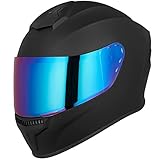
- 【Lightweight】Ultra Lightweight and Durable ABS Shell + Multi-Density EPS liner to meet or exceed FMVSS-218 and DOT Safety Standards
- 【Ventilated】Multiple vents for optimum ventilation and quick release metal buckle offer solid protection
- 【Removable & Washable】Equipped with fully removable, washable, and replaceable inner liners that are breathable and absorb sweat
- 【Protective】The helmet comes with One tinted shield which is on the helmet, beautiful glossy UV protective finish
- 【Detachable】The nose protector on the helmet can be removed if you needn't it
During the first sessions, prioritize smooth braking, a predictable line, vision through the corner, and leaving a margin. Do not chase another driver, disable a safety system because someone suggested it, or attempt a maneuver you have not discussed with your instructor. If a warning flag appears or the car feels different, reduce speed as directed and report it.
Crashes, No Sound, or Screen Glitches?
Random freezes, missing sound and display glitches usually trace back to one bad driver. Find and replace yours safely.Free scan · under a minutePC Slower Than It Used to Be?
A free scan shows the junk files, broken settings and background clutter dragging Windows down - then fixes them in one click.Free scan · Windows 10 & 11Pack for a functional paddock day
Bring the items your event and weather require, while keeping the load simple. Everything that enters the car must either be secured for transit or removed before driving.
| Item | Why it matters | Qualification |
|---|---|---|
| Compliant helmet | Required personal safety equipment for the driver. | Confirm the exact accepted rating and condition with the organizer. Ask about rentals before buying; NASA SoCal describes rentals as first-come, first-served, and BMW CCA Puget Sound reports that a limited number may be available. |
| Tire-pressure gauge | Allows session-to-session checks. | Use a readable, functioning gauge and compare readings consistently. |
| Automotive torque wrench and correct socket | Supports wheel-fastener checks. | Wheel hardware and the maker’s torque procedure govern. Do not use a center-lock tool without the required training. |
| Water and snacks | Helps you stay focused during a long, hot day. | Follow the venue’s container and paddock rules. |
| Sunscreen and eye protection | Practical protection while working and watching sessions. | Choose items compatible with your helmet and organizer’s requirements. |
| Blue painter’s tape | Can mark car numbers without permanent adhesive. | Use it only where the event permits it; number size and placement are organizer-specific. |
| Paperwork and emergency contacts | Speeds check-in and helps staff reach your contact. | Bring the signed forms, registration confirmation, medical information requested by the event, and proof of any required credentials. |
Remove floor mats, cameras, bottles, tools, phone mounts, luggage, and other loose objects from the passenger compartment and trunk before the car goes on track. Ask where to store removed items; do not leave them beside an active pit lane.
Rank #4

- Snell SA2025 Certified, made of Fiber Reinforce Plastic(GFRP) composite shell, Double D-ring equipped, more lightweight, and higher safety.
- Compatible with HANS/HNR M6 Threaded Inserts(not included), convenient for you to install Head&Neck Support devices to protect your head and neck from getting hurt when participating in auto racing sports.
- 40 MM sunshade film on the top of the visor helps to reduce giddiness and dizziness caused by the sun/light while doing car racing acclivities.
- High-density Expanded Polystyrene (EPS) fire retardant inner pads enhance comfort and safety when it happens to an accident.
- Tear-off posts button on the visor allows installing tear-off posts on the visor so to ensure a clear view according to the racer’s needs.
Decide what, if anything, to modify
Prioritize condition over performance parts
A sound road car on appropriate tires and brakes is a better first-day platform than a modified car with unknown reliability. Complete overdue maintenance, repair warning lights and leaks, and replace damaged or aged safety-critical components. A specialist can determine whether the existing brake, tire, cooling, and suspension systems are suitable for the expected sessions.
Do not copy another car’s settings
Exact tire pressures, alignment values, brake-pad thickness limits, fluid specifications, torque values, and electronic settings depend on make, model, year, wheel hardware, weather, and organizer rules. The available guidance does not establish universal numbers. Use the owner’s manual, service information, and a qualified technician. Ask the instructor about driving technique before changing stability-control or driver-assistance settings.
Free tools Windows power users keep installed
One-click scans. No signup required.
Review insurance before registration
NASA warns that many standard auto policies exclude on-track activity, including HPDE, time trial, autocross, and racing. Read your actual policy’s exclusions and ask the insurer a direct question about the exact event. Do not assume that road coverage applies because the event is instructional or because the car remains street legal.
NASA describes a Hagerty HPDE/Time Trial product underwritten by RLI that may cover certain physical damage, including on-track and paddock damage, subject to underwriting acceptance, state availability, limits, exclusions, and current policy wording. The description does not include liability insurance. Treat any specialist policy as a separate contract: confirm the covered vehicle, deductible, timing, storage, mechanical-failure exclusions, incident reporting, and whether the event and track qualify.
Use this event-day sequence
- At home: Read the current organizer page and tech form, schedule the inspection, confirm helmet compliance, verify insurance, and remove unnecessary cargo.
- At check-in: Complete registration and inspection exactly as instructed. Ask staff about numbers, paddock movement, pit entry, passing zones, and rental equipment.
- Before the drivers’ meeting: Walk the paddock, locate water and first aid, review the map and flags, and introduce yourself to your instructor.
- Before the first session: Empty the cabin and trunk, perform the oil, pressure, and fastener checks, set the driver’s seating position and mirrors, and line up early.
- After each session: Park where directed, note tire pressure and any symptoms, inspect for leaks or damage, hydrate, and discuss one or two improvements with the instructor.
- Before leaving: Reinstall only road-use items, inspect the car again, secure equipment, and confirm that no warning light or new vibration appeared.
Know when to stop
- Stop and report a soft, long, changing, or vibrating brake pedal.
- Stop for a tire-pressure warning, visible tire damage, a bulge, rapid pressure loss, or unusual vibration.
- Stop for fresh oil, coolant, fuel, or brake-fluid leakage; smoke; steam; or a warning light.
- Stop if a wheel fastener is loose or the wheel hardware cannot be checked with the correct procedure.
- Stop if the car’s handling changes suddenly, a belt or hose appears damaged, or an unsecured object enters the driving area.
- Stop if you are unsure what a flag, passing signal, or instructor instruction means; ask before re-entering.
Being asked to sit out is a safety decision, not a failure. A first HPDE should leave you with a sound car, a clearer understanding of the track, and specific skills to practice at the next event—not a repair bill created by ignoring a small warning.
Quick Recap
Product prices and availability are accurate as of the date/time indicated and are subject to change. Any price and availability information displayed on Amazon at the time of purchase will apply.
The Tool Desk
Outbyte PC Repair FREEClear out junk files and repair common Windows errorsFree Scan →Outbyte Driver Updater FREEFix the driver behind crashes, sound loss and screen glitchesFind Drivers →
