
Free tools Windows power users keep installed
One-click scans. No signup required.
iTechGuides is reader-supported. When you buy through links on our site, we may earn an affiliate commission. As an Amazon Associate I earn from qualifying purchases. Learn more
The best between-match routine is a short reset followed by one deliberate task. Let the previous set end, identify one moment that decided it, rehearse the matching punish, confirm, defensive response, or combo route only if the event allows practice, and stop as soon as you are called. Tournament rules—not habit—decide whether you may use a station, notes, a phone, coaching, or a particular controller.
There is no evidence establishing a universally optimal drill, duration, or guaranteed tournament benefit. The method below is a practical decision system built around current event rules and the training features documented for individual games.
What to do immediately after a set
1. End the previous match before analysing it
Move away from the match mindset for a moment. Take a breath, drink water if the venue permits it, and let the result register without trying to solve every mistake. This is a readiness step, not a claim that a particular breathing pattern improves performance.
The Tool Desk
Outbyte PC Repair FREEClear out junk files and repair common Windows errorsFree Scan →Outbyte Driver Updater FREEScan for outdated or missing drivers - takes under a minuteDriver Scan →2. Record one observation
Choose one concrete moment rather than a general judgment such as “my defense was bad.” Useful observations sound like:
#1 Best Overall

- Compatible with Switch/Switch 2, PS4, PS3, Xbox Series S/X, Xbox One, Xbox 360, PC Windows, macOS, Steam Deck, Android.
- Compatible with Sanwa Denshi buttons and joystick that is perfect for customization
- Supports the XINPUT and DINPUT when being used on PC
- Supports the Turbo functions with different speed settings.
- F300 is compatible with PS5 by MAYFLASH Magic-S Ultimate adapter or MagicBoots-S5 Converter.
- “I blocked the jump-in but missed the punish three times.”
- “After my fireball, I kept walking forward into the same counterattack.”
- “I reached the corner and pressed during the opponent’s plus frame.”
- “I opened them up but dropped the conversion afterward.”
3. Turn it into one next action
Write or say a single instruction you can execute in the next set: “Block the jump-in, then use heavy attack,” “wait after the fireball,” “hold block for the plus-frame sequence,” or “use the simpler meterless route.” One observation and one action are enough for an interval. Trying to repair neutral, defense, matchup knowledge, and execution simultaneously usually produces no clear test.
4. Drill only when the event permits it
If an authorised practice station is available, rehearse the selected action for a few clean repetitions. If the rules do not permit practice, use the same observation as a mental cue and return to the bracket. End immediately when an official calls your name or station.
Check the tournament rules before touching a station
A tournament setup is not automatically a warm-up setup. Read the current event rules and ask staff when the wording is unclear. Permissions can differ by game, platform, venue, and bracket stage.
Quick wins for a faster PC:
Fix the driver behind crashes, sound loss and screen glitchesFind Drivers →Repair Windows errors before they cause bigger problemsFix Now →Scan for outdated or missing drivers - takes under a minuteDriver Scan →Training stations and modes
Evo 2026’s event information states that its Training Room is not legal for tournament play. That means a player must not assume that an empty station near the bracket can be used for practice. A venue may provide a separate casual or warm-up area, but only the current event instructions determine what is allowed.
Phones, tablets, and other devices
The TEKKEN World Tour 2026 rules update dated June 24, 2026, says personal electronic devices are not allowed during a match. That is a tour-specific restriction, not a universal rule for every fighting-game event. Keep a device out of your match area unless the organizer explicitly permits it.
Written notes
The same TEKKEN World Tour 2026 update permits the player who lost the previous set to read written notes once, for up to one minute. The allowance is specific to that tour and situation. It does not establish a general right to consult notes between all matches, and it does not mean a phone note is acceptable. Confirm whether paper notes, the timing, and the eligible player are covered by your event’s current rules.
Rank #2

- Compatible with Switch and Windows.
- Supports ultimate software - customize button mapping and create macros
- Dynamic button layout - button mapping changes with mode functionally and visually
- Ultra-moddable arcade stick - Universal mounting plate supports Sanwa arcade sticks
- Three ways to connect: Bluetooth, 2.4g and wired USB-C. The included 2.4g receiver has a special hidden compartment to store it safely.
Coaching and outside advice
Do not presume that a teammate can coach you at the setup. Some brackets restrict communication during a set or between games, while others define coaching windows. If coaching is not expressly permitted, rely on your own one-action instruction and ask an official before accepting advice.
Choose a drill from the moment that mattered
The following decision table maps a common observation to a compact practice task. These are practical recommendations, not measured rankings.
| What happened | Single task to rehearse | What counts as ready |
|---|---|---|
| Missed punish | Record the opponent’s move and practise the fastest reliable punish from the correct distance. | You can identify the move and execute the punish without searching through options. |
| Repeated approach was stopped | Recreate the approach and test one change: wait, anti-air, check the landing, or use a safer entry. | You have one chosen response, not a menu of untested answers. |
| Defense failed in a sequence | Set the dummy to repeat the sequence and practise the specified block, gap, throw tech, or backdash response. | You can state what you are blocking and when you are allowed to act. |
| Hit was not converted | Practise the simplest dependable route from that starter, including the correct side or resource requirement. | The route works several times at tournament speed and you know its fallback. |
| Corner situation collapsed | Rehearse one escape or one safe defensive choice against the sequence that caused the loss. | You can recognise the trigger and commit to the selected option. |
Do not turn the interval into a laboratory session. If the problem cannot be represented quickly, keep the observation as a cue for the next set and study it after the event.
How to use training mode without wandering
Use the title’s documented tools
Capcom’s STREET FIGHTER V CHAMPION EDITION Official Online Manual documents Training, Combo Trials, demonstrations, controller settings, and match information. Other games use different names and expose different recording, playback, dummy, or frame-display controls. Open the manual for your exact title and version rather than assuming that a feature exists or behaves the same way.
A six-step drill
- Load the same version and character data. Select the game, stage rules, characters, assists, and resources that match the tournament setup as closely as possible.
- Set the starting situation. Put the dummy at the distance, side, corner position, or resource state that existed in the match.
- Reproduce the trigger. Record or select the opponent action that caused the problem. Avoid adding unrelated options until the first response is stable.
- Practise the response. Execute the one punish, confirm, block, throw escape, anti-air, or route chosen during review.
- Test a small variation. Change only one relevant condition, such as the opponent’s spacing or the side of the screen, to check that the solution is not tied to one accidental setup.
- Stop on schedule. Once the action is reliable enough to try, leave training mode. More repetitions are not automatically more useful, and no source establishes a universal number of repetitions.
Prefer reliability over laboratory perfection
A tournament response that is slightly less damaging but consistently executable can be a better interval choice than a difficult route you have not used under pressure. That is a decision principle, not a claim that simpler combos always outperform advanced ones. Select the option you can recognise and perform with the controller, game version, and rules in front of you.
Recommended Free Tools
When there is no legal practice station
Use a one-line mental cue
Repeat the next action in plain language: “anti-air the jump,” “wait after the blocked special,” or “take the corner throw.” Keep it tied to the observed trigger. Mental rehearsal cannot substitute for execution practice, but it preserves the adjustment when the venue provides no legal training access.
Rank #3

- 【8BitDo Ultimate Software】Customize button mapping and create macros with any button combination. It even has 2 dedicated macro buttons(P1/P2). Create controller profiles and switch between them at any time.
- 【Dynamic Button Layout】When you switch between Switch and PC (X-Input) mode, Arcade Stick's dynamic button layout instantly changes its visual layout.
- 【3 Ways to Connect】Bluetooth, 2.4g and wired USB-C. The included 2.4g receiver has a special hidden compartment to store it safely.
- 【Compatibility】Compatible with Switch, Windows.
- 【Ultra-moddable】You can swap out 30mm/24mm arcade buttons. Arcade Stick is even designed with a universal joystick mounting plate. It supports virtually every arcade stick ever made such as Sanwa JLF.
Use permitted paper notes
If the event allows written notes, keep them short enough to read within the permitted window. A useful note has three parts: the trigger, your response, and the fallback. For example: “After blocked dive kick: stand-block, punish; if too far, take space.” Do not write a full matchup guide during the interval.
Watch without losing your call
If spectating is allowed and the next match is not imminent, watch for the same situation in another set. Treat this as observation, not a replacement for practice. Leave enough time to reach your station, check the assigned setup, and respond to the official call.
Make the drill fit the time you actually have
Neither the cited event rules nor the academic discussion from the University of Oxford repository establishes a universal between-match duration. Your available time depends on bracket delays, station access, venue announcements, and how quickly the next match is called.
What’s actually slowing this PC down?
Pick the symptom - the matching free tool is one click away.
| Available window | Best use | Stop condition |
|---|---|---|
| Almost no time | Reset and repeat one mental cue. | Immediately when your bracket is called. |
| A short station visit | Run one recorded situation and one response; skip unrelated combo exploration. | After the selected action is usable or before leaving the station. |
| A longer delay with permission | Test one variation of the same situation, then restore tournament settings. | When staff gives a call or the next match becomes imminent. |
Keep your player card, controller, and other required items together. A technically useful drill is a failure if it makes you late, distracted, or uncertain about where to report.
Protect setup fidelity
Practice is most relevant when the conditions resemble the match you are about to play. Check:
- Game version: Use the event’s patch or build when the venue provides it. A move, combo, or system rule can differ between versions.
- Controller: Use the same layout and input device you will use in the set. Avoid changing hardware merely because a station has another device attached.
- Platform: Confirm the console or PC version and any platform-specific settings that affect input or display.
- Side and orientation: Test both player sides when the problem involves charge inputs, directional shortcuts, or side-specific execution.
- Resources: Match the relevant meter, drive, burst, assist, or round-start state instead of practising a route that requires unavailable resources.
These checks improve relevance; they do not prove that a particular setup produces better tournament results.
Rank #4

- FIGHT LIKE A PRO: Nacon Daija arcade stick officially licensed for PlayStation PS4|PS5 and PC was developed in collaboration with professional gamers and designed for top fighting games like Marvel Tokon Fighting Souls, Street Fighter, Tekken, Guilty Gear Strive, and Mortal Kombat.
- SANWA JOYSTICK & ACTION BUTTONS: A leading brand among professional fighting game players and a guarantee of premium quality and durability
- FULL BUTTON MAPPING: Buttons are fully configurable using the Nacon Daija Arcade Stick software on PC and Mac; you can easily create game profiles with the intuitive and user-friendly software
- COMFORT & PRECISION: Textured palm rest provides sturdy and comfortable support so you can remain at the top of your game for as long as possible; switch between two different joystick heads to choose the best solution for perfect control and precision
- LOCK FUNCTION: Enable the button lock feature to prevent accidental presses and avoid interrupting intense fights
Controller eligibility is a rules question
Bring the controller you have already learned, then verify that the event permits it. Capcom Pro Tour rules address input standards for leverless controllers, and the page is archived; consult the latest rules before relying on it. Bandai Namco’s published TEKKEN 7: TOURNAMENT RULES list arcade sticks and wired gamepads among permitted categories for that event, but that older example does not automatically govern a current tour.
| Controller choice | What to verify | Practical interval advice |
|---|---|---|
| Arcade stick | Platform compatibility, cable requirements, button mapping, and current event restrictions. | Use it only if it is your established tournament setup; do not buy one as a shortcut to improvement. |
| Leverless controller | Input-cleanliness standards, simultaneous-input rules, SOCD requirements, and event approval. | Confirm legality before travel and use the approved configuration. |
| Wired gamepad | Wired-only policies, adapter rules, platform support, and remapping limits. | Carry the same cable and layout you practised with. |
| Wireless device | Whether wireless operation is prohibited or must be disabled during play. | Do not rely on wireless functionality unless staff explicitly permits it. |
An optional arcade stick is equipment, not a requirement. The decisive factors are legality, platform support, and whether the player can execute reliably with it.
Independent reader supportYour contribution helps us test, update, and keep practical guides available for everyone.Event examples that show why assumptions fail
Evo 2026
Evo’s 2026 event information says its Training Room is not legal for tournament play. A player attending that event should seek the permitted warm-up arrangement rather than using a tournament station when it is empty.
TEKKEN World Tour 2026
The June 24, 2026 rules update limits personal electronic devices during a match and gives the previous-set loser one opportunity to read written notes for up to one minute. Treat both provisions as tour-specific. They do not establish a standard for every game or organiser.
Capcom Pro Tour rules
The available Capcom Pro Tour rules page is archived. It can illustrate controller-related considerations, but its age means you should verify the current season’s rules before travelling or changing hardware.
Older Tekken examples
Bandai Namco’s TEKKEN 7: TOURNAMENT RULES list arcade sticks and wired gamepads among permitted controller types for that event. Because it is an older, event-specific document, use it as context rather than as permission for a 2026 tournament.
Best Value
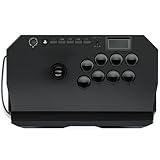
- Compatible with PlayStation5, PlayStation4, and PC
- Officially licensed Sony peripheral
- Authentic Qanba buttons and lever
- Full control panel, touch pad, Qanba 30-mm B30 buttons, and Qanba OV7 OMRON switch joystick
- 3.5-mm microphone input with mute button control
Common between-match mistakes and fixes
Practising an unrelated combo
Symptom: You spend the interval on a flashy route that never occurred in the set. Fix: Return to the one observed trigger and choose a response that can appear in the next match.
Assuming an empty station is available
Symptom: You enter a tournament setup without checking the rules. Fix: Read the event instructions and ask staff; Evo 2026 demonstrates that a designated Training Room can still be prohibited for tournament play.
Overloading yourself with notes
Symptom: You leave the page with several matchup plans and no priority. Fix: Keep one trigger, one response, and one fallback. If notes are not allowed, retain only the mental cue.
Windows Errors? Fix Them Before They Spread
Repair common Windows errors and clear accumulated junk for a smoother, more stable PC - no reinstall needed.Free scan · no reinstallOutdated Drivers Are Slowing You Down
One free scan finds every outdated or missing driver and matches the right update for your exact hardware.Free scan · exact hardware matchChanging hardware at the venue
Symptom: The drill works on a borrowed controller but your tournament inputs become uncertain. Fix: Use your established device and verify eligibility before the event.
Staying in training until the last second
Symptom: You are called while still adjusting settings or walking back from a station. Fix: Set your own earlier stop point and leave enough time to report, connect, and confirm the assigned setup.
Treating one successful repetition as proof
Symptom: A single clean input creates false confidence. Fix: Test a small, relevant variation, then use the response in the match. Do not extend the drill indefinitely in pursuit of certainty.
A practical between-match playbook
- Reset: Put down the result, breathe, and get water if permitted.
- Name the moment: Select one punish, approach, defensive sequence, conversion, or corner situation.
- Choose the instruction: Phrase the adjustment as one action you can recognise.
- Check permission: Confirm station, device, notes, coaching, and controller rules for this event.
- Recreate the situation: Match the game version, side, distance, and resources as closely as the legal setup allows.
- Rehearse briefly: Practise the selected response and one meaningful variation.
- Leave ready: Stop before the call, restore any borrowed settings, and report to the next station.
Before the tournament, write down the controls and one reliable fallback for your main character so that an interval is used for decisions rather than menu navigation. During the bracket, keep the scope narrow; deeper matchup study belongs in ordinary practice sessions after the event.
What is and is not established about this approach
The available material does not provide a properly attributed statistic showing that between-match drills improve tournament results, nor does it identify a universally correct interval length. The University of Oxford repository discussion, “Fighting Games and Go: Exploring the Aesthetics of Play in Professional,” offers contextual discussion of warm-up and etiquette rather than a current tournament rulebook or a quantified training prescription.
Accordingly, use the routine as a way to organise attention under event constraints, not as a guaranteed performance formula. The strongest claims in this guide are about checking rules, selecting a specific task, matching the legal setup, and protecting readiness for the next call.
Quick Recap
Quick checklist
- Have I identified one decisive moment from the previous set?
- Can I describe one response in a short sentence?
- Is this station or mode explicitly allowed by the current event?
- Are paper notes, devices, coaching, and my controller permitted?
- Does the setup match the tournament game version and my established controls?
- Can I stop immediately when called?
- Am I practising the selected situation instead of wandering through unrelated options?
Product prices and availability are accurate as of the date/time indicated and are subject to change. Any price and availability information displayed on Amazon at the time of purchase will apply.

